How Flexiloans’ Is Running A Systematic Fraud Of Damaging Your CIBIL?
From Fake Approval Texts to Hard Enquiries: The FlexiLoans Tactic That Harms Credit Scores


Systematic CIBIL Damage? The Disturbing Pattern Behind FlexiLoans’ Unsolicited Approval Messages
A customer receives an SMS and a WhatsApp message. The text is clear and urgent: your loan application has been approved for ₹27 lakh. He has not applied for any loan recently. An old application from years earlier was rejected. Confused, he clicks the link. He is asked to upload Aadhaar and PAN. Within moments a new message arrives: the application cannot proceed because he has failed the internal threat-detection check. His CIBIL score, he is told, is not strong enough.
What looks like a simple rejection is, according to the customer and others who have faced the same sequence, something far more calculated. Each time a person submits identity documents through such a link, a hard enquiry is reportedly registered on their credit report. Multiple hard enquiries in a short period pull the CIBIL score down. Once the score is damaged, the same ecosystem allegedly approaches the person again; this time offering secured or collateral loans (often gold loans) at significantly higher interest rates. The lower the score, the higher the rate the lender can justify.
This is a systematic fraud that FlexiLoans, an RBI-registered Non-Banking Financial Company is doing. The practice is not ordinary aggressive marketing. It is a systematic process that first creates the appearance of approval, then uses the customer’s own documents to damage their credit profile, and finally monetises that damage through costlier credit products.
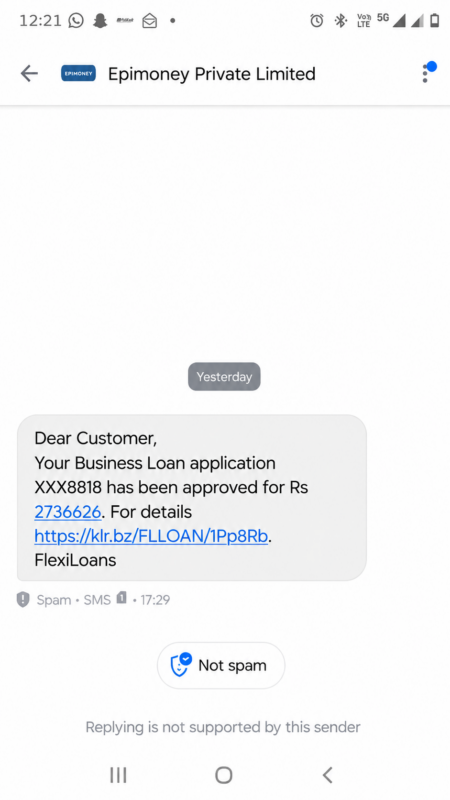
The regulatory violations begin even before the link is clicked. Under the joint Digital Consent Acquisition framework of the Reserve Bank of India and the Telecom Regulatory Authority of India, promotional messages require explicit, verifiable and revocable consent. A customer cannot be assumed to have given permanent marketing permission because of an old, rejected application.
Sending “loan approved” texts without current consent is already a breach. When those messages land on numbers registered under the Do Not Disturb (DND) facility, the breach becomes more serious. TRAI’s commercial communication regulations prohibit promotional SMS to DND-registered numbers. Penalties exist on paper; enforcement, customers say, remains weak.
The content of the messages compounds the problem. The RBI Fair Practices Code demands honesty and transparency in the offering of financial products. Declaring a loan “approved” when no current application exists, when no KYC has been completed, and when the subsequent step is immediate rejection, is inherently misleading. Regulators have previously flagged such “pre-approved” or “instantly approved” formats as deceptive bait. The customer is induced to share sensitive identity documents under the false impression that money is already sanctioned.
Once the documents are submitted, the alleged second stage begins. Hard enquiries accumulate. The credit score declines. The same individual who was told days earlier that a large unsecured loan was approved is now told his profile is too weak for that product — but a secured loan at a higher rate remains available.

Public forums contain similar accounts. Users report receiving identical approval texts, clicking through, submitting documents, and then facing rejection followed by new offers for higher-cost credit. The volume of such reports suggests the practice is not the work of a single rogue agent but a repeatable process. Whether every step is centrally directed or the result of loosely supervised partner channels, the outcome for the customer is the same: unsolicited contact, false expectation, data submission, credit impact, and subsequent pressure to accept more expensive credit.
FlexiLoans is not an unregistered fly-by-night operator. It is an RBI-registered NBFC. That status carries clear obligations: consent before marketing, truthful communication, separation of promotional and transactional messaging, and responsible use of credit information. Broadcasting “loan approved” messages without consent violates the first. Using those messages to harvest documents that trigger hard enquiries risks violating the spirit of fair credit reporting. Converting the resulting lower score into an opportunity to sell higher-interest products completes a cycle that many customers experience as systematic exploitation.
The human cost is concrete. A person who never sought a loan finds their phone flooded with messages. They share Aadhaar and PAN under the belief that money is already sanctioned. Their credit score drops. Future borrowing becomes more expensive or impossible. The original unsolicited message has set in motion a chain that leaves them worse off than before. When this sequence is repeated across large numbers of people, it ceases to look like isolated over-enthusiasm and begins to look like a business model that profits from the damage it creates.

Until that happens, the “loan approved” SMS will continue to arrive on phones across the country. Some recipients will ignore it. Others will click, submit documents, watch their scores fall, and later find themselves offered costlier credit. The pattern alleged by customers is simple, repeatable and deeply damaging. An RBI-registered company that allows or runs such a process is not merely marketing aggressively. It is, according to those who have lived through it, running a systematic fraud on the very people the regulatory framework was designed to protect.