FlexiLoans’ Google Reviews Expose How They Plot A Trap Of SMS To Damage Your CIBIL?
Across public reviews and customer accounts, FlexiLoans faces allegations of misleading “loan approved” messages that allegedly lead borrowers into KYC submissions, credit enquiries and, in some cases, damage to their CIBIL profiles. The emerging pattern raises serious questions about consent, transparency and whether aggressive digital lead generation is pushing customers toward higher-cost alternatives.


FlexiLoans Under Fire: Google Reviews Allege Misleading Approvals and CIBIL Damage
Across Google reviews, complaint forums and recorded customer conversations, a recurring set of allegations has emerged against FlexiLoans, the digital lending brand of Epimoney Private Limited. The complaints do not always use the word “scam,” but they describe a sequence that many borrowers experience as deceptive and damaging. An unsolicited message arrives announcing that a loan has been approved.
The recipient clicks, submits Aadhaar and PAN, and is then told the application cannot proceed. Later, some of those same people notice hard enquiries on their credit reports and a drop in their CIBIL score. A smaller number report being subsequently offered higher-cost or secured products. Whether every step is deliberate or the result of aggressive lead generation, the outcome for the customer is the same: raised expectations, shared identity data, and a credit profile that is often weaker than before.
The first and most frequent complaint is the language of the initial message. Customers report receiving SMS or WhatsApp texts that state a specific loan amount has been “approved.” In one documented case the figure was approximately ₹27 lakh. When he called the company, an agent confirmed there was no active approved application.
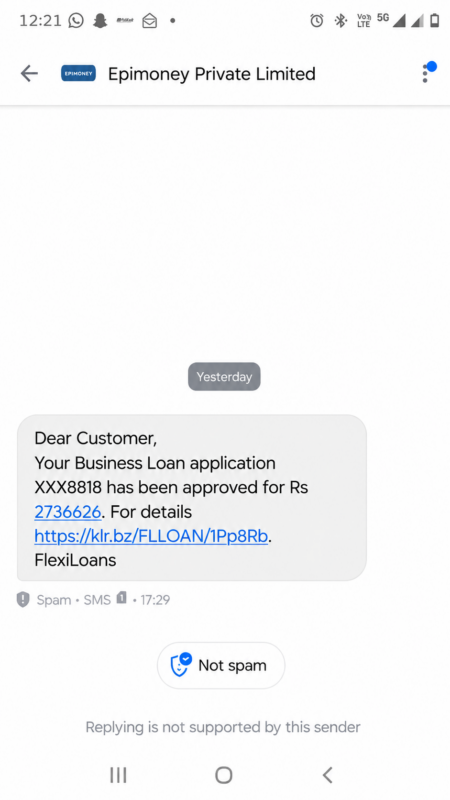
Similar accounts appear in public forums: people who never sought a loan suddenly find themselves told that one has been sanctioned. The psychological effect is powerful. “Approved” creates a far stronger expectation than “you may be eligible.” When that expectation is immediately followed by a demand for documents and then a rejection, the sense of having been misled is widespread.
The second stage of the complaint centres on data and credit enquiries. Once the customer clicks the link and uploads Aadhaar and PAN, a formal application process begins. Legitimate lenders are entitled to pull credit information when assessing an application. The problem arises when the original message has already declared the loan approved. Customers reasonably assume underwriting is complete.
Instead they discover that the submission itself can generate a hard enquiry. TransUnion CIBIL has stated that multiple enquiries in a short period can negatively affect a score. When the same person responds to several similar messages from different platforms or the same ecosystem, the enquiries accumulate. Reviewers and complainants describe checking their credit reports afterwards and finding recent searches they did not consciously initiate for a loan they never intended to take. The original unsolicited text has set in motion a process that leaves their credit standing worse.
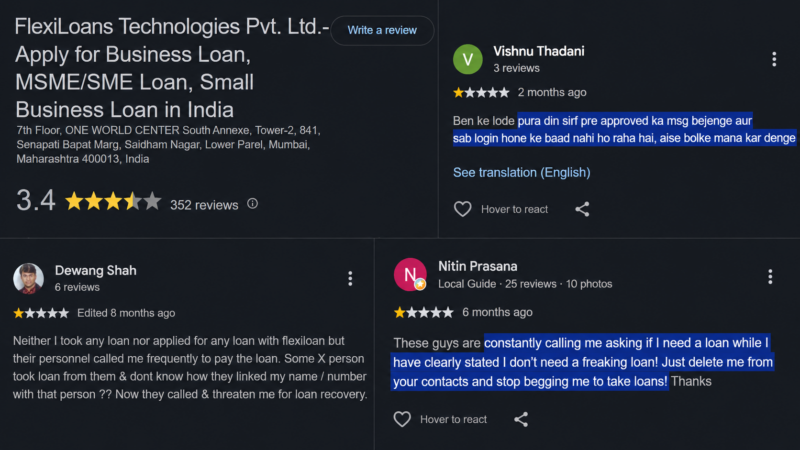
A third, more serious allegation is that the rejection is not the end of the interaction. Some customers report being contacted later with offers of secured or collateral-backed loans, often gold loans or similar products, at higher interest rates. The narrative they present is that the first “approved” message functioned as a high-intent lead generator. The customer’s data and credit profile are captured.
When the unsecured product is declined, the same ecosystem is positioned to offer a more expensive alternative. Proving that this second step is centrally orchestrated requires more evidence than individual reviews can supply. What the reviews do establish is that the sequence, of exciting approval claim, document submission, rejection, later higher-cost offer, is being experienced by multiple people and is being described in similar language.
These complaints sit against the regulatory backdrop that governs digital lending. RBI rules require explicit consent for promotional communications, clear disclosure of key loan terms, and responsible use of credit information. Using the word “approved” before a genuine credit decision has been taken sits uncomfortably with the transparency requirements of the digital-lending framework. Sending such messages to numbers registered under Do Not Disturb rules raises additional questions under TRAI commercial communication regulations. Generating hard enquiries through a process that began with a misleading premise raises consumer-protection concerns even if each individual step is technically permissible.
Nevertheless, the volume and consistency of the complaints matter. When numerous unrelated individuals describe the same sequence of unsolicited approval message, document request, rejection, credit-score impact, the pattern itself becomes the story. Digital lending is supposed to expand access to credit for small businesses and individuals who have been underserved by traditional banks.
That purpose is undermined when the first contact is a message that creates a false sense of certainty, extracts identity data, and leaves the customer’s credit profile damaged. The harm is not always dramatic. A few hard enquiries may shave only a limited number of points off a score. But for a person already operating near the margin of creditworthiness, those points can determine whether a future genuine loan is available and at what cost.
The deeper issue is one of incentives. Aggressive digital acquisition rewards messages that maximise clicks. “Your loan is approved” converts better than “you may be eligible.” Once the customer is inside the funnel, the commercial logic of capturing data and exploring alternative products is strong. Regulatory rules exist to constrain that logic, requiring truthful language, informed consent and responsible credit reporting. When customer after customer reports that those constraints are being stretched or ignored, the credibility of the entire digital-lending channel suffers.
The broader digital-lending market has seen repeated complaints about opaque communication, hard-enquiry practices and recovery pressure. What the Google reviews and related accounts specifically allege against this brand is a particular funnel: the false certainty of an approval message, the extraction of KYC under that certainty, the subsequent rejection, and the lingering damage to credit scores.
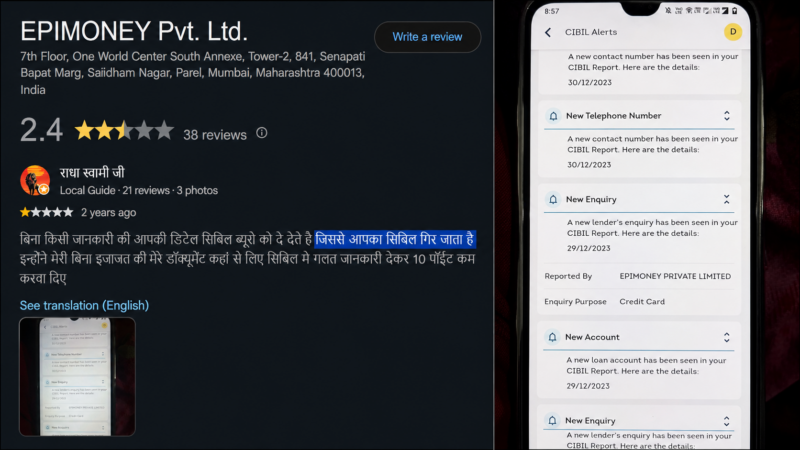
Until the language of “approved” is reserved for genuine credit decisions, and until the link between unsolicited messages and hard enquiries is tightly controlled, customers will continue to feel that they have been led into a process that leaves them worse off than when they received the first text. That is the compromising activity of FlexiLoans, now visible in public reviews, and it is a critique that both the company and its regulators should take seriously.