Sales Pipeline Swells to 27,308 Crore While CBI Names Indiabulls Entities In Homebuyer Fraud Probe
Indiabulls Limited has signed a Development Management agreement for a ₹3,700-crore residential project on Gurugram’s Dwarka Expressway, lifting its total portfolio Gross Development Value to ₹27,308 crore and reinforcing a narrative of turnaround and asset-light growth. Almost simultaneously, the CBI has filed chargesheets naming Indiabulls group entities in Supreme Court-monitored homebuyer fraud investigations. The numbers look impressive on exchange filings and investor presentations. For the families who paid life savings for homes that never arrived on time, or at all, the story is one of alleged false assurances, diverted funds and prolonged legal struggle. The profit, it appears, accrues to the company; the risk and the loss remain with the homebuyer.


Indiabulls’ ₹3,700-Crore Dwarka Deal and the CBI Chargesheets: Profit for the Company, Peril for Homebuyers
In late August 2026, Indiabulls Limited announced a Development Management agreement for a premium residential project spanning approximately 10.84 acres on the Dwarka Expressway in Gurugram. The project carries an estimated saleable area of 21 lakh square feet and a Gross Development Value of around ₹3,700 crore. With this addition, the company’s total project portfolio GDV rose to ₹27,308 crore. Phases 1 and 3 already hold RERA registration.
A mid-October 2026 launch is targeted to catch the festive demand cycle. The model is asset-light, where Indiabulls will bring development, branding, sales and marketing capabilities while a private landlord retains ownership of the land. No heavy upfront capital outlay. Zero added debt. A recent preferential equity raise of roughly ₹1,000 crore further cushions the balance sheet. In the first quarter of FY27 the company reported a consolidated net profit of ₹141 crore, reversing a small loss in the year-ago period.
The numbers are designed to impress. They do. Analysts and market commentary have described the move as strategic expansion into one of the National Capital Region’s most sought-after residential corridors, executed in a capital-efficient manner that preserves financial flexibility. For a company that has undergone restructuring and name changes over the years, the combination of a swelling sales pipeline and a return to profitability offers a clean growth narrative.
There is, however, another set of numbers and documents that deserve equal attention. Around the same period, the Central Bureau of Investigation filed its 18th chargesheet in the ongoing Supreme Court-monitored investigation into large-scale cheating of homebuyers. The chargesheet names MKHS Housing LLP, its designated partner Indiabulls Distribution Services Limited (also referred to as Indiabulls Nests Limited), and Indiabulls Investment Advisors Limited (also referred to as Indiabulls Urban Residency Limited), along with their directors and officials.
The case concerns alleged fraudulent activities linked to a housing project in the Rajarhat area of North 24 Parganas, West Bengal. According to the CBI, the accused, acting in alleged conspiracy with officials of a non-banking financial company, induced homebuyers and investors through false assurances and fraudulent representations and obtained financial benefits by illegal and deceptive means. The charges include criminal conspiracy, cheating and criminal breach of trust.
This is not an isolated filing. In July 2026 the CBI had filed chargesheets in Bengaluru matters that named Indiabulls Housing Finance Limited (now Sammaan Capital) alongside builder companies and officials of other banks. Those cases form part of the same larger probe ordered by the Supreme Court into the alleged nexus between builders and financial institutions that left homebuyers paying for incomplete or non-existent flats. Parallel proceedings continue before the Supreme Court concerning sets of allegations flagged by the Enforcement Directorate against Indiabulls Housing Finance and related entities, including questions of fund routing and related-party transactions.
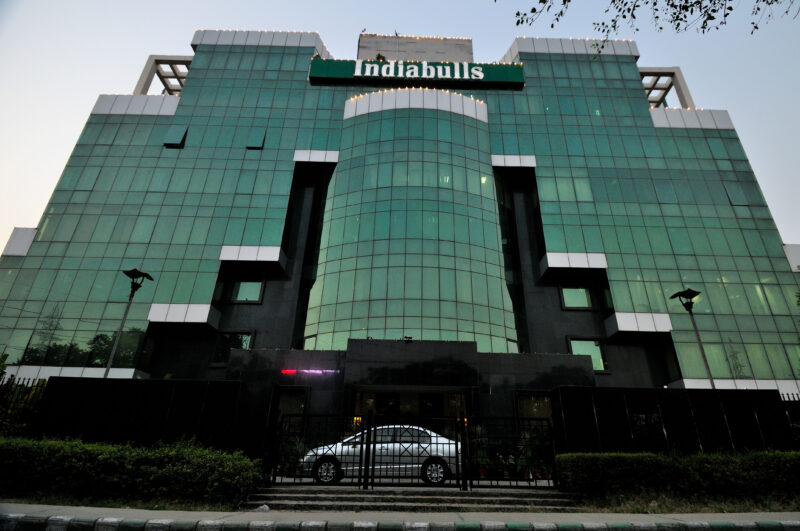
The contrast is stark. On one side stands a corporate announcement of expanding pipeline, asset-light expansion and returned profitability. On the other stands a series of criminal chargesheets alleging that entities associated with the Indiabulls group participated in, or facilitated, schemes that cheated ordinary homebuyers.
The sales machine and the delivery gap
Real estate has long specialised in celebrating the moment money changes hands rather than the moment keys change hands. Bookings, GDV, sales value and pipeline are the metrics that move share prices and attract institutional capital. Possession dates, construction quality, refund timelines and the actual experience of the allottee rarely appear with equal prominence in investor presentations.
Indiabulls’ recent announcement is a textbook illustration of this preference. A Development Management agreement allows the company to monetise its brand and execution capabilities without locking large amounts of capital into land. RERA registration for early phases reduces certain regulatory risks. A festive-season launch targets peak buyer sentiment. The narrative is one of disciplined growth.
Yet the homebuyer does not experience a real-estate company through its GDV figure. The homebuyer experiences it through the construction site that remains incomplete years after the promised date, through the “no pre-EMI till possession” scheme that collapses when the builder stops paying, through the refusal to refund after cancellation, and through the long queue at RERA, consumer forums and criminal courts.
Public records and buyer accounts over the past decade have documented delays in several Indiabulls-linked projects. In Gurugram, allottees in projects such as Centrum Park and Indiabulls Enigma reported multi-year slips beyond contractual possession timelines. Flat-buyer agreements that spoke of three years plus a short grace period stretched into five, seven or more years.
Some buyers who booked in the early 2010s were still fighting for possession or refunds well into the next decade. Haryana RERA and the National Consumer Disputes Redressal Commission have, in various matters, directed refunds with interest and, in some cases, compensation for mental agony. In Chennai, the Indiabulls Greens project generated a trail of complaints before the Tamil Nadu regulator over non-delivery and plan changes.

These are not abstract regulatory footnotes. Each delayed or aborted project represents families who paid large portions of the sale price upfront, continued to service loans or pay rent, adjusted life plans around a moving possession date, and then discovered that the legal and financial remedies available to them were slow, expensive and incomplete.
The alleged nexus and the “no pre-EMI” trap
A recurring theme in the CBI’s wider homebuyer-fraud investigation is the use of subvention or “no pre-EMI till possession” schemes. Developers marketed these arrangements aggressively: the buyer pays a booking amount, takes a home loan, and the builder promises to service the pre-EMIs until the flat is handed over. The promise is attractive. It lowers the immediate cash burden and creates the illusion of a risk-free path to ownership.
Investigation findings in multiple cases suggest that when the builder defaulted on those pre-EMI payments or failed to complete the project, the buyer was left with a loan liability, no home, and limited practical recourse. Financial institutions that sanctioned the loans have been named in chargesheets for allegedly overlooking norms or participating in the arrangements. Indiabulls Housing Finance has appeared in several of these filings. The agency’s case is that the combination of false assurances by the builder and the facilitation by lenders created a structure in which money was extracted from buyers and institutions while the underlying asset remained incomplete or non-existent.
Whether every allegation will ultimately be proved in court remains a matter for the judicial process. What is already established is that the CBI, acting under Supreme Court directions, has found sufficient material to file multiple chargesheets naming Indiabulls group entities. That fact alone sits uneasily beside any corporate narrative that presents the group solely as a disciplined, asset-light growth story.
Profit for the company, liability for the buyer
The fundamental public-interest problem is not that a real-estate company seeks to expand its pipeline or report profits. Companies exist to generate returns. The problem arises when the same ecosystem that celebrates GDV growth and quarterly turnarounds systematically transfers risk, delay and loss onto the individual homebuyer.
A booking is not a home. A Development Management fee is not possession. A RERA registration is not a guarantee that construction will finish on the original date. An asset-light model that protects the developer’s balance sheet does not automatically protect the buyer who has already paid 30, 50 or 90 per cent of the consideration.
When CBI chargesheets allege conspiracy, cheating and criminal breach of trust in projects linked to Indiabulls entities, the public is entitled to ask whether the institutional culture that produced those alleged outcomes has been meaningfully reformed. A fresh pipeline on the Dwarka Expressway does not, by itself, answer that question.
Homebuyers who have spent years in litigation or regulatory proceedings know the practical asymmetry. The company can announce new deals, raise preferential capital and report quarterly profits while individual allottees struggle to recover principal plus modest interest. Delay interest under RERA is a partial remedy; it rarely restores the full opportunity cost, the years of rent paid in parallel with EMIs, or the mental strain of an unresolved housing crisis. Criminal proceedings move even more slowly. By the time a chargesheet is filed and a trial concludes, many families have already paid an irreversible price.
Haryana and the Dwarka Expressway as the next test
The Dwarka Expressway corridor is currently one of the hottest residential markets in the country. Land values, infrastructure announcements and buyer demand have combined to create intense developer interest. Indiabulls’ decision to enter via a Development Management route is commercially rational. It allows participation in the upside without the full capital commitment of outright land ownership.
Yet the same corridor has also seen its share of delayed and contested projects. The question that follows Indiabulls into this market is whether the company will treat the new project as another sales opportunity or as a test of whether past patterns of delay, incomplete delivery and buyer distress have been left behind. RERA registration for early phases is a necessary condition; it is not a sufficient one. Timely construction, transparent communication, adherence to sanctioned plans, and a genuine willingness to refund or compensate when timelines slip will determine whether the project becomes another line in a GDV presentation or a source of renewed buyer complaints.
The larger pattern
India’s real-estate sector has produced repeated cycles in which aggressive sales, complex financing structures and optimistic possession dates are followed by incomplete projects, regulatory intervention and, in the worst cases, criminal investigation. The Supreme Court’s decision to direct a coordinated CBI probe into homebuyer fraud across multiple builders and financial institutions was itself an acknowledgement that ordinary civil and regulatory remedies had proved inadequate for the scale of the problem.
Indiabulls group entities appear in that probe. Simultaneously, Indiabulls Limited presents a narrative of expanding pipeline and financial recovery. Both facts can be true at the same time. The public-interest question is which fact should weigh more heavily when ordinary citizens decide where to place their life savings.
A company can report rising GDV and quarterly profits while families who trusted its brand or its associated financing arms continue to live with the consequences of delayed or aborted homes. The sales machine can keep moving. The construction and accountability machines must move at the same speed. When they do not, the profit remains with the company and the loss remains with the homebuyer.

That is the contradiction that the latest Dwarka Expressway announcement and the latest CBI chargesheets place in plain view. Until delivery reliability and clean resolution of past grievances match the ambition of the sales pipeline, every new deal will carry the shadow of the unresolved cases that preceded it. For the homebuyer, the only number that ultimately matters is the date the keys are handed over, and the certainty that the money already paid will not vanish into another cycle of delay, denial and protracted legal struggle.