BPTP Park Serene Residents Fight Back Against Maintenance Extortion
In Gurugram’s Sector 37D, residents of BPTP Park Serene have finally drawn a line: no more maintenance payments until the developer surrenders control. What looks like a routine handover dispute is in reality the latest chapter in a decades-long pattern of broken promises, inflated charges, incomplete infrastructure and calculated delays that have left thousands of families paying for homes they waited years to enter and continue paying for services they cannot control.

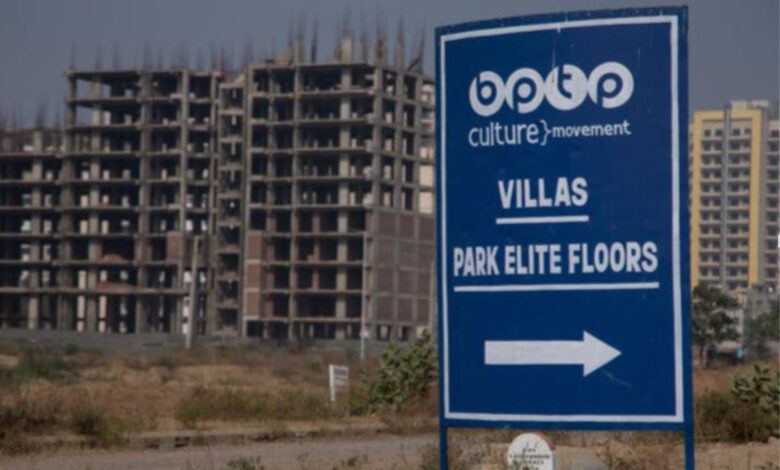
From Delayed Possession to Withheld Hand-over: BPTP’s Systematic Exploitation of Gurugram Residents
For more than a decade and a half, BPTP has perfected a particular kind of real-estate cruelty in the National Capital Region. It collects money early, delivers late or incompletely, retains control of common areas long after buyers have moved in, and then extracts recurring charges under the guise of “maintenance.” The latest flashpoint at Park Serene in Sector 37D, Gurugram, is not an isolated administrative hiccup. It is the logical continuation of a business model that treats homebuyers as permanent revenue streams rather than owners.
Residents of BPTP Park Serene, along with those in the neighbouring Park Generations and Spacio projects, have now resolved to withhold common-area maintenance (CAM) charges, club fees, water charges and allied payments. Their demand is straightforward: complete the formal legal handover of maintenance responsibilities to the elected Residents’ Welfare Association and stop imposing disputed levies.
The RWA alleges that the developer has stalled the process for years by repeatedly altering draft memoranda of understanding, inserting conflicting clauses, and refusing to share complete financial records. Meanwhile, residents say they continue to be billed management fees by both the builder’s agency and a private maintenance operator — an arrangement they describe as double charging that costs the community roughly ₹2 crore a year in excess and opaque outflows.
This is not the first time these residents have had to protest. Earlier demonstrations targeted steep hikes in maintenance rates, refusal to disclose audited accounts and vendor contracts, and the continued use of the clubhouse for the developer’s commercial events. After a five-year-old child drowned in the society swimming pool in 2024, the clubhouse remained closed for months; residents accused the builder of using the closure as leverage to force acceptance of an incomplete handover. Infrastructure complaints, inadequate storm-water drainage, overloaded power lines, seepage, incomplete external development have persisted long after occupancy certificates were issued.
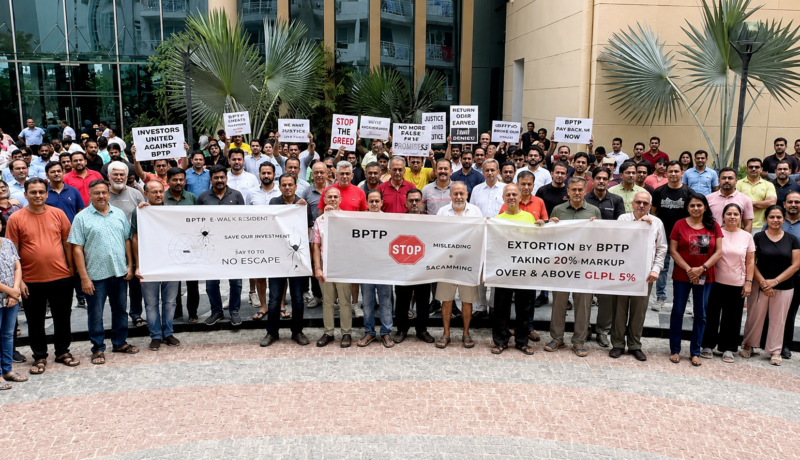
What makes the current standoff especially galling is that it occurs years after possession. Homebuyers who already endured multi-year construction delays are now being told, in effect, that ownership of their own common areas remains provisional. The developer’s continued control allows it to set rates, appoint vendors, collect charges and decide what information residents may see. When the RWA asks for transparency or a clean transfer of responsibility, the response is further negotiation, revised drafts and the quiet continuation of billing.
This pattern did not begin at Park Serene. Across BPTP’s Gurugram and Faridabad projects, buyers have documented the same sequence for close to two decades. Projects launched in the late 2000s and early 2010s routinely missed possession deadlines by four, five, even seven or more years. Buyers who paid 90–95 per cent of the cost found themselves still waiting while the company demanded escalation charges, additional area charges or pre-possession maintenance. Consumer forums, Haryana RERA and higher courts have repeatedly ordered refunds with interest, delay compensation and the return of illegally collected amounts. In multiple cases the authority has described the practice of making maintenance payment a precondition for handing over keys as an “unfair trade practice.”
Yet orders are one thing; enforcement and systemic change are another. Families who booked flats or plots between 2009 and 2014 still recount years of rent plus EMI, incomplete amenities at the time of eventual possession, and the discovery that basic external development remained unfinished. Some projects saw occupancy certificates issued while critical infrastructure — proper power supply, sewage, storm drains — was still pending. Residents who protested construction quality, falling balconies, faulty lifts or missing facilities faced legal notices and defamation suits from the developer. Courts have on occasion dismissed attempts to silence such protests, recognising the residents’ right to raise legitimate grievances.
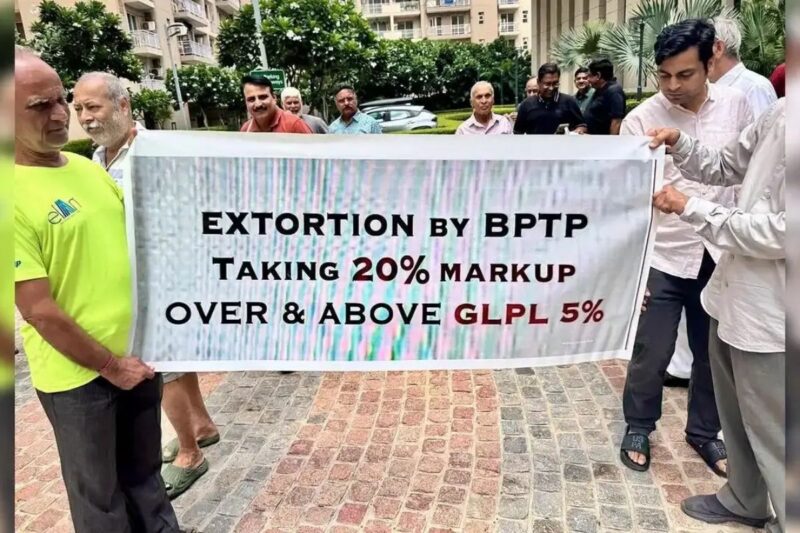
The harassment is not limited to construction delays. Once buyers take possession, the second phase begins: prolonged retention of maintenance control, opaque billing, dual management fees, and resistance to genuine RWA autonomy. In Sector 37D the same residents who waited years for their homes now find themselves paying elevated CAM rates while being denied full visibility into how the money is spent. Requests for income statements, bank transactions and vendor proofs have been met with partial disclosures or claims that accounts are “audited.” The practical result is that the developer continues to monetise the society long after the sales pitch of “dream home” has been cashed.
Critics of the company point to a larger record. Over the years BPTP has faced dozens of consumer complaints, RERA proceedings and allegations of fund diversion and non-delivery. Social media and buyer forums are filled with accounts of plots that changed location or size, cancelled allotments that retained deposits, and projects that remained incomplete while new launches were marketed. The company has at times attributed delays to external factors — regulatory clearances, economic conditions, the pandemic — yet regulators have in several instances rejected force-majeure claims when the original possession dates long predated those events.
The Park Serene episode is revealing precisely because it is so ordinary. No spectacular collapse of a tower is required for the system to fail the buyer. Ordinary middle-class families who stretched themselves to buy a home discover that the legal title they hold does not translate into control over the common areas they fund every month. The developer’s continued role generates recurring revenue while diluting accountability. When residents organise and threaten to withhold payments, they are not engaging in blackmail; they are responding to a power imbalance at BPTP that has been engineered over years.
The broader Gurugram context makes the situation worse. Multiple societies across the city struggle with similar transitions from developer-managed maintenance to RWA control. High CAM charges, lack of transparency and resistance to handover have become recurring flashpoints. Regulatory bodies issue occupation certificates, yet the practical responsibility for ensuring complete external development and clean transfer of assets often remains contested. Buyers are left to litigate, protest and now, at Park Serene, to stop paying.
BPTP’s defenders note that some projects have eventually been delivered, that the company has engaged with RWAs, and that audited accounts are shared annually. These claims do not erase the documented history of multi-year delays, RERA findings of unfair practices, or the current refusal to complete a straightforward maintenance handover. A developer that can modify MoU drafts indefinitely while continuing to collect charges is not facilitating transition; it is preserving a profitable status quo.
For the families living in Park Serene, Park Generations and Spacio the immediate stakes are practical: security, housekeeping, landscaping, power backup and water. Prolonged uncertainty over who is accountable risks deterioration of services. The larger stake is principle. Ownership without control is a hollow right. When a builder can delay possession for years, issue incomplete OCs, retain maintenance for further years, inflate charges and still face only episodic regulatory pushback, the message to homebuyers is clear: the risk and the cost are yours; the leverage remains with the company.
The decision by the RWA to withhold payments is therefore not reckless. It is the predictable response of people who have already waited too long and paid too much. Whether the standoff forces a clean handover or merely produces another round of partial concessions will depend on the resolve of the residents and the willingness of authorities to treat post-possession control as seriously as they claim to treat pre-possession delivery.
What is already evident is the continuity. From the late 2000s booking offices to the 2026 maintenance invoices, BPTP’s relationship with many of its customers has been marked by the same asymmetry: money extracted early and continuously, accountability deferred indefinitely. Park Serene is simply the latest place where that asymmetry has become impossible to ignore. Homebuyers who once believed they were purchasing a finished home are discovering, years later, that they are still tenants of a system designed to keep them paying.
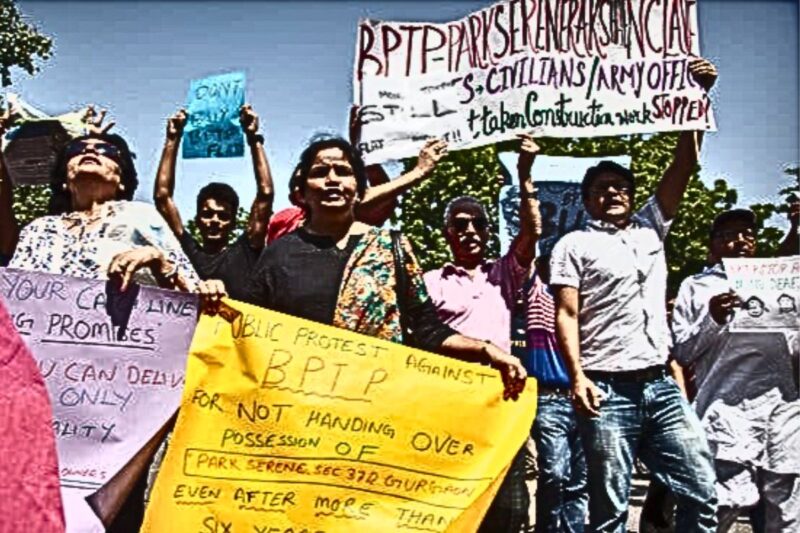
Until regulators enforce timely and complete handovers with the same seriousness they apply to registration and sales, and until developers face real commercial consequences for prolonged control of common areas, the pattern will continue. The residents of Sector 37D have chosen to stop funding it. Their protest is a public-interest demand for something that should have been ordinary: the right to manage their own homes without permanent extraction by the original seller.