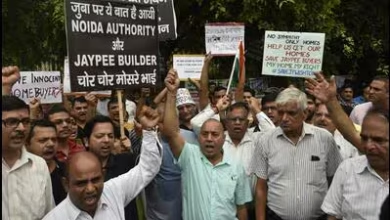
From TDI’s Taneja To DLF’s Talwar: How Delhi’s Most Expensive Home Moves From One Real Estate Tycoon To Another, While Homebuyers Cry In Pain!
In 2016 a bungalow on Prithviraj Road changed hands for ₹435 crore, the single largest residential transaction Delhi has recorded. The seller was Kamal Taneja of TDI, a company later accused by the Enforcement Directorate of collecting ₹4,619 crore from 14,105 homebuyers across projects that in some cases remain undelivered after 16–18 years. The buyer was Renuka Talwar, daughter of DLF’s K.P. Singh, a family whose own record includes a SEBI market ban later overturned, Panama Papers disclosures, the long-running Vadra land-deal probes, and an ongoing Supreme Court-monitored CBI inquiry into brochure deviations at The Primus. The mansion stands complete. Thousands of promised flats do not. This is the quiet arithmetic of India’s real-estate order.


From TDI To DLF: The Bungalow That Moved, The Homes That Were Never Delivered
There is a particular elegance to the way power rearranges itself in Lutyens’ Delhi. The trees are older than most of the controversies. The roads are wider than the access promised to middle-class societies in Sonipat or Sector 82A.
And the bungalows, when they change hands, do so with a discretion that borders on the theatrical. In 2016 one such property, 4,925 square metres of prime Prithviraj Road real estate, passed from Kamal Taneja, Managing Director of TDI Infratech, to Renuka Talwar, daughter of DLF’s honorary chairman K.P. Singh and a figure described in multiple reports as deeply involved in the family’s strategic decisions. The price was approximately ₹435 crore. It remains Delhi’s largest single residential transaction. The house is finished. The story is not.
What makes the transfer quietly devastating is not the sum of money. India’s ultra-rich move capital with practised ease. What stings is the simultaneous timeline of the two families’ other ledgers, the ones written in the language of delayed possession, diverted advances, regulatory notices, and court-ordered civil imprisonment.
While one family sold a completed mansion in the capital’s most exclusive enclave, another set of homebuyers continued to wait for flats that had been sold to them as long as sixteen or eighteen years earlier. While one family acquired a landmark address, another family of developers faced an Enforcement Directorate prosecution complaint under the Prevention of Money Laundering Act for allegedly collecting ₹4,619.43 crore from 14,105 customers across twenty-six projects and then failing to deliver. The contrast is not subtle. It is structural.

India’s real-estate mafia does not announce itself with film-style threats. It announces itself with glossy brochures, partial occupation certificates, and the patient knowledge that most buyers will exhaust themselves before the system does. The methods are varied and well-rehearsed. Launch a project with ambitious timelines and attractive layouts. Collect the bulk of the sale consideration early, often 90 to 95 per cent, while construction is still a promise. When delays mount, issue partial certificates that allow possession of incomplete units.
Convert promised roads into green patches or parking. Route customer advances into related entities under the polite heading of “land purchases and other purposes.” When buyers approach RERA, respond with technical objections and further delays. When RERA orders payment or possession, ignore the order until civil imprisonment is threatened. When the Enforcement Directorate attaches assets, treat it as a cost of doing business rather than a moral reckoning. The pattern repeats across Haryana, Uttar Pradesh, Maharashtra, and beyond. The players change; the architecture remains.
TDI’s chapter in this architecture is especially stark. According to the Enforcement Directorate’s own findings, between 2005 and 2014 the company launched multiple residential and commercial projects in Kundli and Sonipat and collected approximately ₹4,619 crore as advance booking amounts from 14,105 customers. Occupation certificates for several projects remained pending years later. One project, “Park Street,” was still incomplete.
Buyers in some cases waited 16 to 18 years. The ED’s investigation alleged that instead of using the funds for construction, substantial amounts were diverted to subsidiaries and associated entities. Assets valued at roughly ₹349.55 crore were provisionally attached. In 2026 a Special PMLA Court in Delhi issued notices to TDI Infrastructure Ltd. and its directors, Ravinder Taneja, Kamal Taneja, and D.N. Taneja, after the agency filed a prosecution complaint.
Around the same period, Haryana’s Real Estate Regulatory Authority ordered the civil imprisonment of five directors, including Kamal Taneja, D.N. Taneja, Ravinder Taneja, Renu Taneja, and Ved Prakash, for up to three months unless prior orders were complied with. Civil imprisonment is not a criminal sentence; it is a coercive measure designed to force compliance. That a regulator felt compelled to reach for it speaks volumes about the preceding years of non-compliance.
The same Kamal Taneja who appears in these orders was, in 2016, the seller of Delhi’s most expensive bungalow. The transaction itself was legal and publicly reported. No one suggests the house was purchased with proceeds of crime; the point is more subtle and more corrosive. In the same decade that thousands of families paid for homes they still do not fully possess, one of the key figures in that ecosystem was able to liquidate a trophy property in Lutyens’ Delhi at a record price. The market rewarded the completed asset even as the incomplete ones generated FIRs, ED attachments, and RERA warrants. This is how the system signals its priorities.
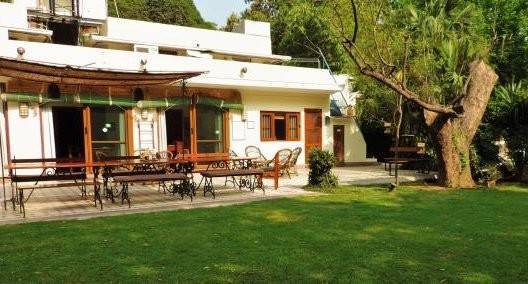
On the other side of the transaction stands the DLF family. Renuka Talwar’s acquisition of the Prithviraj Road property placed a landmark address under the ownership of the daughter of K.P. Singh, the man most closely associated with the transformation of Gurgaon into a corporate and residential hub. DLF’s public narrative is one of scale, ambition, and longevity. Its private and regulatory record is more complicated. In 2014 SEBI barred DLF and six top executives, including K.P. Singh, Rajiv Singh, Pia Singh, and G.S. Talwar, from accessing the securities markets for three years.
The regulator found that related-party transactions and share transfers involving certain associate companies had been inadequately disclosed in the 2007 IPO prospectus, amounting to fraudulent and unfair trade practices. A record monetary penalty was also imposed. The trading ban was later quashed by the Securities Appellate Tribunal on the ground of over-regulation, though the episode remains a documented chapter in the company’s regulatory history.
The Panama Papers added another layer to DLF. Documents from the Mossack Fonseca leak listed K.P. Singh, his wife, son, daughter, and other family members as shareholders in British Virgin Islands entities that together held capital of approximately $10 million. The family stated that the remittances were made under the Liberalised Remittance Scheme within prescribed limits and through authorised channels, and that no wrongdoing had occurred. The disclosures, however, placed the family’s offshore structures in the public domain at a time when questions about the opacity of elite capital movements were already acute.
Then there is the long-running Robert Vadra–DLF land-deal controversy. Allegations that DLF provided favourable terms or financing to entities linked to Robert Vadra in exchange for benefits during the Congress-led Hooda government in Haryana have been the subject of political campaigns, media investigations, FIRs, and Enforcement Directorate scrutiny for more than a decade.
DLF has consistently denied wrongdoing. The matters remain mired in prolonged investigation; definitive final criminal convictions against the company or its top leadership have not been recorded in the public domain as of the latest available reports. Yet the cloud has never fully lifted. Most recently, the Supreme Court-ordered CBI probe into deviations at DLF’s The Primus project in Gurugram, where a 24-metre-wide road shown in the original brochure was found to have been substantially converted into green patch and parking has kept the company under active judicial and investigative scrutiny.
None of these controversies has produced a final criminal conviction against the named individuals in the manner of a completed trial ending in imprisonment. That fact is important and must be stated clearly. The SEBI ban was overturned. The Panama structures were defended as compliant with LRS. The Vadra-related probes continue without a conclusive finding against DLF in the public record. The Primus matter is still before the Supreme Court and the CBI.
Legal process is slow, and the presumption of innocence is not optional. But the cumulative weight of the record, the market ban, the offshore disclosures, the political land-deal allegations, the ongoing brochure-deviation inquiry, creates a pattern of controversy that sits uneasily beside the polished image of a completed Lutyens bungalow.
The real satire lies in the contrast of outcomes. A completed mansion on Prithviraj Road can be bought and sold for ₹435 crore with relative smoothness. A promised flat in a Sonipat project can remain undelivered for nearly two decades while ₹4,619 crore of buyer money is the subject of money-laundering proceedings. Directors can face civil imprisonment orders for non-compliance with RERA, yet the larger architecture of delayed delivery and fund diversion continues across the industry. Homebuyers are subjected to a specialised form of harassment that is both bureaucratic and existential.
They pay EMIs on units they cannot occupy. They pay for tanker water and generator electricity after partial possession. They attend endless hearings. They watch promised amenities shrink or vanish. They are told that the brochure was only marketing. They are told that the road was redesigned for better landscaping. They are told that the delay is due to approvals, litigation, or force majeure. The cumulative effect is not mere inconvenience; it is the systematic erosion of the middle-class capacity to plan a future.
The schemes are many. Pre-launch collections without commensurate construction progress. Super-area escalations announced after booking. Club memberships and parking charges that appear after the fact. Conversion of open spaces into additional saleable units. Failure to execute conveyance deeds even after years of possession. Refusal of refunds even when RERA orders them. The use of related entities to absorb customer advances. The patient knowledge that most buyers cannot sustain multi-year litigation against a developer with deeper pockets and better access to the system. Across the country, from Greater Noida to Mumbai’s suburbs, the pattern is recognisable. The real-estate mafia does not need to break legs; it only needs to break timelines and then wait.
The Prithviraj Road bungalow is not the cause of any of this. It is a symbol. It is the physical embodiment of a completed asset in a sector that specialises in incomplete ones. It is the address that moved from a family facing active PMLA proceedings and civil imprisonment orders to a family whose regulatory and political controversies form a parallel archive of unfinished accountability. It is the quiet proof that in Indian real estate, the capacity to deliver a finished luxury home for oneself or one’s family coexists comfortably with the capacity to leave thousands of ordinary buyers waiting for theirs.
There is a bitter elegance to the arrangement. The same industry that markets “dream homes” with cinematic brochures also produces the conditions under which those dreams become multi-decade legal cases. The same capital that can acquire a ₹435-crore bungalow in Lutyens’ Delhi can, in other ledgers, be the subject of attachment orders worth hundreds of crores linked to alleged diversion of homebuyer funds. The same regulatory system that issues civil imprisonment orders against directors can take years to reach that point, by which time many original buyers have aged, relocated, or simply given up.

The homebuyers are not abstract. They are teachers who booked a flat in 2008 and still do not have a conveyance deed. They are government employees who paid 95 per cent of the price by 2012 and received a partial occupation certificate in 2016 without permanent water or electricity. They are families who planned school admissions around a possession date that never arrived. They are people who borrowed from relatives, liquidated savings, and committed future income to a promise that the system has repeatedly failed to enforce. Their torture is not theatrical. It is administrative, financial, and temporal. It is the slow violence of waiting while the powerful rearrange their addresses.
The transfer of the Prithviraj Road property from TDI to DLF does not prove criminal conspiracy between the two families. What it illustrates, with almost literary clarity, is the stratified nature of the real-estate order. At the top, completed assets circulate among those who can afford them and who possess the institutional resilience to weather regulatory storms. At the bottom, promised assets remain incomplete, disputed, and litigated for decades.
The mafia is not a single cartel with a fixed membership. It is a set of practices, incentives, and power asymmetries that allow large developers to treat brochure promises as provisional, buyer money as flexible capital, and regulatory orders as negotiable delays. When those practices produce both a record-breaking Lutyens transaction and a 14,000-buyer money-laundering case in the same decade, the irony requires no exaggeration.
India’s housing crisis is often framed as a shortage of supply or a problem of affordability. Those frames are real. But there is another crisis that sits alongside them: the crisis of delivery and accountability.
Until the system makes it more costly to delay and divert than to deliver, the bungalows on Prithviraj Road will continue to change hands at record prices while the flats in Sonipat and Sector 82A remain the subject of ED complaints, RERA warrants, and Supreme Court observations. The most expensive house in Delhi is finished. The dream homes of thousands of ordinary Indians are still under construction—some of them, it seems, indefinitely. That is not a market failure. It is a design feature of the real-estate order as it currently exists.