The RBI Just Raised Rates For The First Time In Nearly Four Years. What Does It Mean For Inflation, Growth And Your Money?
The RBI has raised interest rates for the first time in nearly four years. But this is not simply about a 25-basis-point hike. Inflation is rising, the rupee is under pressure and oil prices remain uncertain, even as India’s economy continues to grow strongly. So what happens next?

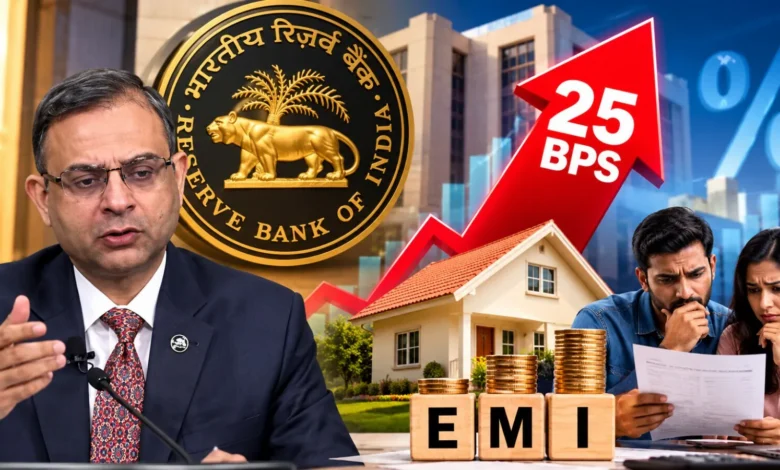
The Reserve Bank of India, RBI has raised the repo rate by 25 basis points to 5.50%, its first rate increase in nearly four years. On the surface, it is a relatively small move. But the more important signal is what came with it: the RBI has shifted its policy stance from “neutral” to “calibrated tightening”.
That changes the question from whether India needs more rate cuts to how much higher rates may have to go.
The timing is particularly significant because the RBI is not hiking rates into an obviously weak economy. Quite the opposite. The central bank has raised its FY27 GDP growth forecast to 7.1%, from its earlier estimate of 6.7%, after the economy grew 7.8% in the April-June quarter. Growth, therefore, is not currently the obvious reason for tightening.
The RBI has raised its FY27 inflation forecast to 5.2% from 5%, with the outlook increasingly clouded by higher crude oil prices, weather-related risks and pressure on the rupee. August retail inflation had already risen to 4.82%, moving further away from the RBI’s 4% medium-term target.
That creates an unusual combination for monetary policy. The economy is growing strongly enough for the RBI to withdraw some monetary support, while inflation risks are becoming serious enough for it to consider adding restraint.
And this is why the 25-basis-point number may be less important than the language surrounding it.
By moving to calibrated tightening, the RBI has effectively told markets that the era of assuming the next policy move could be a rate cut is over. The immediate choice is now more likely to be between holding rates and raising them further, depending on how inflation, oil prices, the rupee and growth evolve.
In other words, the RBI is no longer trying to make money cheaper. It is beginning to worry about making sure money does not become too cheap for an economy facing renewed inflationary pressure.
Why Is The RBI Hiking Rates When Growth Is Still Strong?
This is where the October policy gets interesting.
If India’s economy is expected to grow at 7.1% and the latest quarterly growth number is 7.8%, why does the RBI need to raise borrowing costs at all?
Because the central bank is not only looking at today’s growth number. It is looking at whether inflation could become persistent enough to eventually damage that growth.
The immediate problem is that several of the forces pushing prices higher are outside the RBI’s direct control. Oil prices are vulnerable to developments in West Asia. A weaker rupee makes imported commodities more expensive. Weather conditions can affect food prices. None of these problems can be solved simply by increasing the repo rate.
But monetary policy can influence what happens after the initial shock.
If higher fuel costs feed into transportation, manufacturing and services, businesses can begin passing those costs on to consumers. If inflation stays elevated for long enough, wage demands and pricing decisions can start adjusting around the higher inflation environment. What begins as an external shock can then become a domestic inflation problem.
That is the risk the RBI appears to be trying to get ahead of.
Its latest projections suggest that inflation could remain uncomfortably high through the coming quarters, rather than simply spiking and disappearing. That makes the central bank’s decision less about killing demand today and more about preventing an inflation shock from becoming embedded in the economy.
There is another reason the RBI has some room to act.
With growth already relatively strong, the cost of a modest increase in borrowing rates may be easier for the economy to absorb than it would be if demand were already collapsing. The RBI can therefore afford to prioritise price stability without necessarily abandoning its growth outlook.
But that does not mean higher rates come without consequences.
The real test will be whether the RBI can contain inflation without eventually slowing the very growth that currently gives it room to tighten.
And that is where the next problem enters the picture: the rupee.

The Inflation Problem Is Bigger Than Today’s Number
The temptation is to look at 4.82% inflation and conclude that the RBI is simply reacting to a number that has moved above its comfort zone. But the more important issue is where inflation is expected to go from here.
The RBI has raised its FY27 inflation forecast to 5.2%, and its projections suggest that price pressures could remain elevated over several quarters. That matters because monetary policy works with a lag. By the time inflation becomes an obvious problem in the data, the forces driving it may already have spread through the economy.
The immediate pressure points are familiar: crude oil, food prices, weather conditions and the rupee. But the concern is what happens if these pressures begin moving beyond the categories directly affected by them.
Oil is the obvious example. Higher crude raises the cost of fuel, transportation and logistics. Businesses facing higher input costs eventually have to choose between absorbing those costs and passing them on. If enough businesses do the latter, inflation begins to broaden.
This is also why core inflation matters. Food and fuel can be volatile, but persistent increases in the prices of goods and services excluding those components can provide a better indication of whether inflation is becoming entrenched.
The RBI therefore has to look beyond the latest CPI print. Its job is not merely to react to inflation after it arrives, but to prevent temporary shocks from turning into a much more persistent problem.
And there is a particularly awkward part to this inflation story: the RBI cannot produce more oil, control the weather or decide what happens to global commodity prices.
What it can do is influence demand and financial conditions.
That is why a rate hike can make sense even when the original source of inflation is largely outside the RBI’s control. The objective is not to make crude cheaper. It is to ensure that a crude shock does not become an economy-wide pricing problem.
Oil And The Rupee Are Making The RBI’s Job Harder
There is another problem sitting underneath India’s inflation outlook: the rupee.
The currency fell to around ₹96.85 against the dollar after the RBI’s policy announcement, remaining close to its record low. That is significant because a weaker rupee makes imported commodities more expensive in domestic currency terms.
For an oil-importing economy, this creates an uncomfortable feedback loop.
Higher oil prices increase India’s import bill. A weaker rupee makes those oil imports even more expensive. Higher import costs add to inflation. And persistent inflation puts more pressure on the RBI to keep monetary policy tight.
The RBI can intervene in the foreign-exchange market to smooth excessive volatility, but it cannot permanently dictate where the rupee trades. Nor can it control the global factors currently influencing currencies, including US interest rates, global capital flows and geopolitical risk.
This creates an unusual situation in which a rate hike may not immediately deliver the outcome markets might normally expect.
Higher Indian interest rates can make rupee assets more attractive, but if investors are simultaneously worried about oil, geopolitical tensions and currency depreciation, that attraction may not be enough to reverse pressure on the rupee.
And this is where the RBI’s policy becomes a balancing act.
Raise rates too little, and inflation expectations could become harder to control. Tighten too aggressively, and borrowing becomes more expensive for households and businesses, potentially weakening demand and investment.
The RBI therefore has to manage two risks at once: an inflation problem that it cannot directly control at its source, and an economy that it does not want to slow unnecessarily.
The question now is whether 25 basis points will be enough – or whether this is simply the beginning of a much longer period of tighter financial conditions.

What Happens To Borrowers, Savers, Banks And Businesses?
For ordinary Indians, the repo rate can sound like a number that belongs to economists and bond traders. It does not. If the RBI continues tightening, the effects will eventually show up in the cost of borrowing, the return on savings and the financial decisions households and businesses make.
The most immediate impact is likely to be felt by borrowers with loans linked to floating interest rates. Home loans, personal loans and some other forms of credit can become more expensive as banks and lenders adjust their lending rates. A single 25-basis-point increase may not dramatically change an EMI, but several such increases can.
For someone already carrying substantial debt, that distinction matters. The first hike may be manageable. A series of hikes can materially increase the cost of servicing a loan.
Businesses face a similar calculation. Companies that need to refinance existing debt or borrow for expansion will have to factor in higher financing costs. For highly leveraged companies, particularly in interest-sensitive sectors such as real estate and infrastructure, the impact can be more pronounced.
But higher rates are not necessarily bad news for everyone.
Savers and depositors can eventually benefit if banks raise deposit rates alongside lending rates. Higher returns on fixed deposits and other interest-bearing instruments can become more attractive, particularly for households that depend on interest income.
Banks themselves occupy an interesting middle ground. Higher lending rates can support interest income, but the benefit depends on how quickly deposit costs rise and whether higher borrowing costs begin affecting credit demand or loan quality.
There is also a broader economic effect. Higher rates generally encourage households and companies to postpone some borrowing and spending decisions. That is precisely how monetary tightening is supposed to work: it cools demand enough to prevent prices from rising too quickly.
The problem is that the same mechanism can eventually weigh on consumption and investment. So the real impact of this rate hike will not be determined by the additional 25 basis points alone. It will depend on whether this remains a one-off adjustment or becomes the first of several hikes.
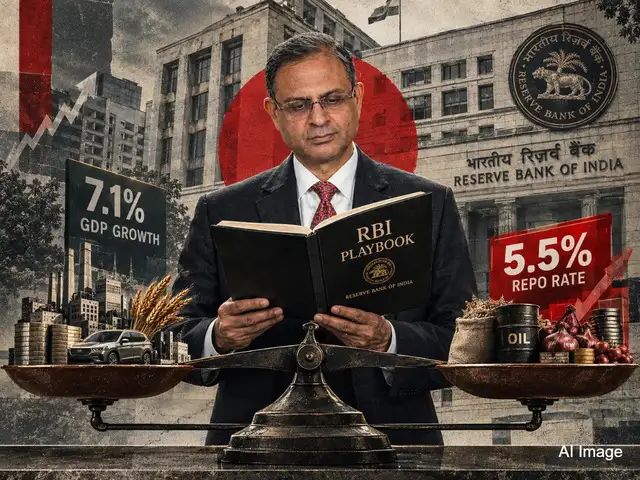
How Much Higher Could Rates Go?
This is the question markets are now trying to answer, and there is no single answer yet.
The RBI has not committed itself to a predetermined path of rate increases. Governor Sanjay Malhotra has indicated that future decisions will depend on incoming data, particularly inflation and growth. That gives the central bank room to pause if price pressures ease, but also leaves the door open to further hikes if inflation proves persistent.
Economists are divided over how far the cycle could go. Some expect another 50–75 basis points of tightening, while more hawkish forecasts have envisaged cumulative increases of around 100 basis points over the coming months.
That range is important because it shows just how different the implications could be.
If the RBI raises rates another 25–50 basis points and then pauses, October’s move could eventually look like an insurance policy against an inflation shock.
But if oil prices remain elevated, the rupee stays under pressure and inflation moves towards 6% or above, the RBI could face a much more difficult choice. More hikes would then become necessary to prevent inflation from becoming entrenched, even at the risk of slowing consumption and investment.
There is also another tool in the RBI’s arsenal: liquidity.
The central bank has signalled that it can manage liquidity through measures such as bond sales and foreign-exchange swaps rather than relying entirely on the repo rate. That means financial conditions could become tighter even without every adjustment coming through another large rate hike.
For now, however, one thing has changed clearly.
The RBI has moved from asking whether it should support the economy with cheaper money to asking how much restraint the economy can absorb without sacrificing growth.
And that is why this 25-basis-point hike may ultimately matter much more for India’s economy than the number itself suggests.
The Last Bit, So What Does This Mean For Your Money?
The simplest way to understand the RBI’s decision is this: money in India is beginning to become more expensive again.
For borrowers, that means the period of falling or relatively easy borrowing costs may be coming to an end. Anyone taking a new home loan, personal loan or business loan will need to pay closer attention to interest rates. Existing floating-rate borrowers should also watch how quickly their lenders pass on the RBI’s move.
For savers, however, the picture is less negative. A sustained tightening cycle could eventually mean better returns on deposits and other interest-bearing savings products.
For businesses, the message is more complicated. Companies with strong balance sheets may be able to absorb higher financing costs, while heavily indebted businesses could face greater pressure. Interest-sensitive sectors such as real estate, automobiles and construction could also feel the effects if borrowing costs remain elevated for an extended period.
And for the economy as a whole, the RBI is essentially making a calculated trade-off.
It is accepting somewhat tighter financial conditions today in the hope of preventing higher inflation from becoming a much bigger problem tomorrow.
That is why the October policy should not be read simply as “the RBI raised rates by 25 basis points.”
The bigger message is that the central bank has changed its direction.
After years in which cheaper money was used to support growth, the RBI is now preparing for a period in which controlling inflation may require higher borrowing costs – even while the economy itself continues to grow.
The question India now has to answer is whether this is merely a short pause in an otherwise strong growth story, or the beginning of a longer period in which inflation forces the RBI to choose price stability over cheaper money.