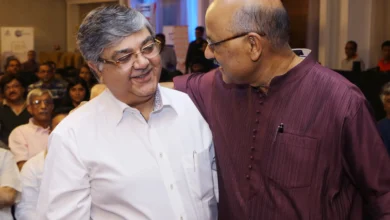
Ashok Kumar Khemka And Trilok Chand Gupta- Two Faces Of India’s Steel Frame, One Who Was A Nightmare For Builders Of Gurgaon; Another Who Bend Rules Which Helped Gurgaon Builders To Make A Fortune From Haryana Lands
Gurgaon’s extraordinary real-estate transformation offers a revealing window into the power and peril of India’s administrative machinery. At one end stands Ashok Kumar Khemka, whose scrutiny of the Vadra-DLF land transaction made him a symbol of bureaucratic resistance and earned him repeated transfers. At the other is Trilok Chand Gupta, named in a CBI FIR concerning alleged irregularities in the acquisition, release and licensing of land in Gurgaon. Their contrasting stories raise a larger question: does India’s “steel frame” protect the rule of law equally, or can political influence and private wealth determine how that frame bends? Gurgaon’s land story suggests the answer may depend on who holds the pen.


India’s civil services were once described as the steel frame that held the country together. That frame was supposed to be impartial, rule-bound and resistant to political and commercial pressure. In the dust and concrete of Gurgaon, the same frame produced two opposite specimens.
A Tale Of Two IAS- Ashok Kumar Khemka and Trilok Chand Gupta
One is Ashok Kumar Khemka, the IAS officer who had the temerity to cancel a land mutation involving Robert Vadra and DLF and who has been transferred more than 50 times for refusing to look the other way. The other is Trilok Chand Gupta, the senior Haryana IAS officer who, according to a CBI FIR, stood at the centre of a conspiracy that helped private builders convert notified land into lucrative licences and fortunes while landowners and the public exchequer lost out.
The contrast is not merely personal. It is structural. It reveals how the same service can produce both the rare officer who insists on the letter of the law and the far more common officer who learns to read the political weather and adjust the rules accordingly.
Between 2005 and 2012, during Bhupinder Singh Hooda’s tenure as Chief Minister, the Haryana government issued colony licences for approximately 21,366 acres. Ashok Khemka calculated that if the market premium on those licences averaged even the rate seen in the Vadra-DLF transaction, roughly 15.78 crore rupees per acre, the aggregate value of the licensing process approached 3.5 lakh crore rupees. Even on a conservative estimate of one crore rupees per acre, the figure stood at over 20,000 crore rupees. These are not abstract numbers. They represent the difference between what landowners received and what the licensed land became worth once it entered the hands of developers.
In the specific Vadra transaction that Khemka interrupted, Skylight Hospitality, a company linked to Robert Vadra, purchased 3.53 acres in Shikohpur for 7.5 crore rupees in February 2008. Within months a commercial licence was obtained. By June 2008 an agreement to sell the same land to DLF for 58 crore rupees was in place. The capital appreciation was approximately 700 percent in a matter of months. Khemka, then Director General of Consolidation of Holdings and Land Records-cum-Inspector General of Registration, examined the mutation and cancelled it in October 2012, citing procedural irregularities and the incompetence of the officer who had sanctioned it. He was transferred within hours of beginning his scrutiny.

Trilok Chand Gupta appears in a different set of numbers. The CBI FIR registered in January 2019 names him alongside former Chief Minister Hooda and fifteen private colonisers. The case concerns the acquisition and subsequent release of approximately 1,417 acres across sectors 58 to 63 and 65 to 67 in Gurugram. According to the agency, the land was notified under the Land Acquisition Act, creating pressure on owners to sell cheaply to private developers.
The bulk of the land, roughly 95 percent was later released from acquisition and licences were granted to the same developers. Only about 87 acres remained with HUDA, largely earmarked for public utilities that would service the private projects. The CBI alleges that Gupta, while holding successive posts as Chief Administrator of HUDA, Director of Urban Estate and Director of Town and Country Planning, processed and recommended these releases and licences in a manner that favoured the builders and caused loss to landowners and the state.
Ashok Kumar Khemka’s response to the Vadra-DLF transaction was to apply the rule book strictly. He found that the mutation had been carried out by an officer who lacked the authority to do so. He set it aside. He later submitted detailed replies arguing that the original sale and the licensing process involved sham elements designed to capture the premium that attaches to a commercial licence. He demanded a wider examination of licensing practices. The political and administrative system responded by transferring him, setting up committees that criticised his action, and ensuring that the cancellation was never effectively implemented. Subsequent governments of different political colours largely left the underlying licence and the commercial benefits undisturbed.
But, Trilok Chand Gupta’s alleged conduct, as set out in the CBI FIR, followed the opposite logic. Land was notified for public purpose. Owners, facing the threat of compulsory acquisition at government rates, sold to private parties at distressed prices. The same land was then released from acquisition and licensed for private development. The officer who had initiated or supervised the acquisition process later facilitated the release and licensing. The public purpose evaporated; the private gain remained. The CBI describes this sequence as a criminal conspiracy involving the then Chief Minister, the IAS officer and the builders.
Ashok Kumar Khemka’s career statistics are public knowledge. He has been transferred more than fifty times. He has been posted to obscure departments, denied sensitive assignments, and subjected to departmental inquiries. His insistence on examining high-value land transactions made him radioactive within the Haryana bureaucracy. He became a symbol — useful for opposition parties when convenient, inconvenient for every government that preferred quiet administration.
Trilok Chand Gupta continued to hold senior positions. At the time the CBI named him in the 2019 FIR he was serving as an Additional Chief Secretary. The case against him, Hooda and the builders remains part of the larger set of investigations into Haryana land dealings of that period. The builders named alongside him include some of the largest names that transformed the Gurgaon skyline. The land they received through the release-and-licence route became the foundation of residential and commercial projects whose market value today runs into multiples of the original acquisition and licence costs.

The steel frame was never uniformly rigid. In practice it has always contained two types of officers. One type treats the law as a constraint that applies equally to the politically connected and the ordinary citizen. That type is punished by transfers, isolation and the quiet withdrawal of meaningful work. The other type treats the law as a set of discretionary tools that can be aligned with the preferences of the political executive and the commercial interests that surround it. That type rises, accumulates postings of consequence, and becomes part of the informal machinery through which land is converted into wealth.
Gurgaon’s transformation from arid farmland into a landscape of glass towers was not an accident of market forces alone. It required the systematic conversion of agricultural land into developable real estate through notifications, releases, licences and mutations. Officers who facilitated that conversion at speed and with flexibility were rewarded with influence. Officers who interrupted specific high-profile transactions were removed.
Khemka’s intervention in the Vadra-DLF deal did not reverse the broader licensing spree of the Hooda years. It did, however, place a public marker that at least one senior officer was prepared to say that the process was irregular. Gupta’s alleged role in the 1,417-acre matter represents the opposite marker — the bureaucratic facilitation without which the conversion of notified land into private licensed colonies could not have proceeded so smoothly.
The comparison is not between two individuals of equal standing who made different choices. It is between an officer who accepted career destruction as the price of insisting on procedure and an officer who, according to the investigating agency, used successive powerful postings to advance a model of land management that transferred value from owners and the state to private developers. One paid for his rigidity. The other is accused of having been rewarded for his flexibility.
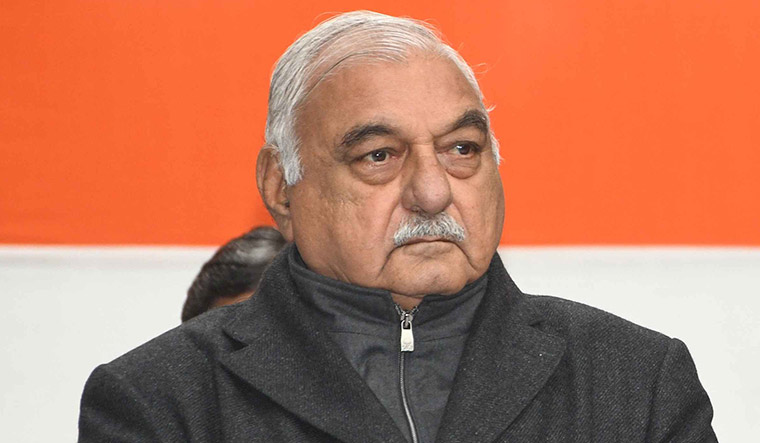
India’s steel frame is not collapsing. It has simply revealed its true metallurgy. In the heat of real-estate politics it softens for those who know how to apply the heat and hardens only against those who refuse to bend. Ashok Khemka remains the rare example of the latter. Trilok Chand Gupta, as portrayed in the CBI’s 2019 FIR, stands as an example of the former. Between them they illustrate why Gurgaon looks the way it does and why the public continues to suspect that the rules are not the same for everyone who deals in land.