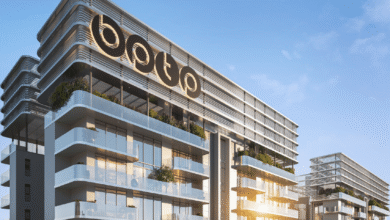
BPTP’s Kabul Chawla Is Personally Responsible For Failing Homebuyers For Years, Even As He Launches ₹750-Crore SkyNest Amid The Discovery Park Dispute. For How Long Will The Builder Raj Continue Before Anyone Is Held Accountable?
BPTP is reporting ₹750 crore in sales from its new luxury project, SkyNest, even as Discovery Park allottees allege that promised facilities remain incomplete and that land from their original 16.331-acre development has been registered separately for the new project. What exactly are the 150 buyers purchasing, and how does SkyNest fit into a development plan that existing homebuyers say remains unfinished? With the dispute before HRERA, what do the registered plans reveal, and what do Kabul Chawla and BPTP need to clarify?


BPTP, the real estate developer promoted by Kabul Chawla, is back in the market with another premium residential project, SkyNest Towers, in Sector 80, Greater Faridabad. The company has announced that it has sold 150 apartments worth approximately ₹750 crore, putting the average reported ticket size at ₹5 crore per apartment.
It is an impressive sales announcement. But a new launch and strong booking figures do not exist in isolation, particularly when a developer’s earlier projects remain the subject of homebuyer complaints and regulatory proceedings.
SkyNest is being promoted as a luxury development, with high-rise residences and premium amenities. Yet the project has also become part of a dispute involving existing allottees of BPTP’s Discovery Park development.
Their representation before the Haryana Real Estate Regulatory Authority (HRERA), Panchkula, raises questions about the original licensed land, subsequent changes to building plans and the status of facilities that buyers say were promised but remain incomplete.
These are serious questions, particularly when a new project is being marketed on land that complainants allege formed part of the original Discovery Park development.
The issue deserves scrutiny. When a developer announces hundreds of crores in sales from a new project, existing buyers should not have to keep chasing answers about the homes and facilities they say they were promised years earlier.
The question, therefore, is not simply whether BPTP can sell 150 apartments. It is whether the concerns raised by existing buyers have been adequately addressed, whether the regulatory process is delivering meaningful remedies and what prospective buyers should know about the project they are purchasing.
Discovery Park And The Original Promise To Homebuyers
The controversy surrounding SkyNest cannot be understood without examining the history of Discovery Park, another BPTP development in Sector 80, Faridabad.
According to the representation recorded by HRERA Panchkula, the original licence, granted on 6 March 2008, covered 16.331 acres for a group housing colony. The complainants state that the development plan included 12 main residential towers, two towers for economically weaker sections (EWS), a nursery school, a primary school, a shopping complex and a clubhouse. These facilities formed part of the development that existing allottees say they understood they were buying into.
Their complaint alleges that only nine of the 12 main towers and the two EWS towers had been developed, while the schools, shopping complex and clubhouse remained incomplete.
The distinction matters. For a homebuyer, a residential project is not merely an apartment within four walls. The approved layout, promised common facilities and supporting infrastructure are also part of what the buyer expects to receive. When these remain incomplete, buyers may be left with a development that does not match the plan on which they relied.
The representation also raises questions about the subsequent registration of Discovery Park, the revision of its building plans and the division of the original licensed land. The complainants contend that these changes affected the development they had originally been promised and raise concerns about whether the required consent of existing allottees was obtained.
These are allegations made by the complainants, not findings that HRERA has finally upheld. Establishing their merits requires examining the original licence, sanctioned plans, revised approvals, individual buyer agreements and the Authority’s subsequent orders.
But the central concern is clear. Existing allottees are asking what happened to the original development plan, what became of the promised facilities and how the later changes affect their rights.
Those questions become particularly relevant because SkyNest has now been registered as a separate project on land that the complainants say was part of the original licensed development.
For buyers who have already invested in Discovery Park, the issue is not an abstract planning dispute. It concerns the development they say they were promised, the facilities they expected and the remedies available to them when the project does not match those expectations.
How SkyNest Became Part Of The Discovery Park Controversy
The most consequential aspect of the Discovery Park dispute is the allegation that land originally forming part of the larger development was subsequently registered as a separate project under SkyNest Towers.
According to the representation submitted to HRERA Panchkula, the original licence covered 16.331 acres. The complainants state that Discovery Park was subsequently registered over 10.74 acres, while SkyNest was registered over another 5.931 acres. They argue that the division raises questions about the original development plan, the rights of existing allottees and the status of facilities promised under the earlier project.
The dates cited in the representation are significant. Discovery Park received its registration in October 2017, according to the document. A revised building plan was reportedly issued on 5 March 2026, followed by SkyNest’s separate registration on 9 April 2026 under registration number HRERA-PKL-FBD-881-2026.
The complainants contend that the changes were made without obtaining the requisite consent of existing allottees and that the separation of the land raises questions about the implementation of the original plan.
There is also a discrepancy in the figures recorded in the complaint. The stated areas of 10.74 acres and 5.931 acres add up to 16.671 acres, which is 0.34 acres more than the original licensed area of 16.331 acres.
This is precisely why the relationship between the two projects deserves scrutiny. A separate registration for SkyNest does not, by itself, establish that the rights of Discovery Park allottees have been affected. Equally, the existence of that registration does not resolve the questions raised by those buyers.
The crucial issue is whether the revised plans and separation of the developments were consistent with the applicable approvals and the rights of existing allottees. Until the underlying documents and the Authority’s findings are examined, the complainants’ allegations remain allegations. But they raise specific questions that BPTP should be asked to answer.
HRERA, The Complaint And The Question Of Accountability
The Discovery Park controversy has reached Haryana’s real estate regulator, but the distinction between a complaint being heard and allegations being proved is essential to understanding the case.
Yet the broader question of accountability remains relevant. Homebuyers who believe that a developer has failed to deliver promised facilities or has altered an approved development in a manner that affects their rights must be able to obtain timely answers and effective remedies. A regulatory process that records complaints but leaves buyers uncertain about the eventual outcome risks prolonging that uncertainty.
For BPTP, the immediate questions are concrete.
–What was the basis for the revised plans?
–What approvals and consents were obtained?
–How were the boundaries and obligations of Discovery Park and SkyNest determined?
–And what is the present status of the facilities that existing allottees say remain incomplete?
These questions should be answered through documents and the company’s response, not assumptions about the outcome of pending proceedings.
The point is not that HRERA has already ruled against BPTP. It is that the dispute raises issues that require a clear resolution, while the developer continues to promote a new project.

Years Of Complaints, Investigations And The Wider BPTP Record
The Discovery Park dispute is not the only reason BPTP’s record deserves scrutiny.
There are enough reports on the company and its promoter, Kabul Chawla, covering a range of homebuyer disputes, regulatory proceedings and investigations. Taken together, these cases raise a larger question about how effectively the system protects buyers when disputes with developers drag on.
In August 2026, reports about a consumer dispute involving pre-possession maintenance charges, an HRERA order concerning ₹1,16,545 in maintenance charges, along with 11% annual interest, ₹1 lakh in compensation and ₹50,000 in litigation costs. The case illustrates the practical issues that can arise when buyers challenge charges imposed before possession.
Furthermore, complaints about infrastructure and basic amenities in Greater Faridabad, including concerns about roads, water supply, sewage, streetlights and electricity. For residents, these are not peripheral matters. The value of a home depends partly on whether the surrounding development functions as promised. A buyer may receive possession of an apartment and still face disputes over the facilities and infrastructure needed to live there.
BPTP has also faced scrutiny in connection with Pedestal Floors in Gurugram. In May 2026 reports discussed a Central Bureau of Investigation FIR concerning allegations involving a home-loan subvention arrangement. Such proceedings are relevant to understanding the wider concerns raised about the developer.
Thus, the wider record is relevant to the question at the heart of this article. When a developer faces complaints across different projects and disputes take years to resolve, homebuyers are entitled to ask whether the available remedies are working quickly and effectively enough.
The issue is not whether every complaint is necessarily justified. It is whether the system can establish the facts, hold the responsible parties accountable where wrongdoing is proved, and ensure that buyers receive what they are legally entitled to.
That question becomes particularly pertinent when BPTP is announcing a new luxury development while existing allottees continue to seek answers about an earlier one.
Kabul Chawla And The Question Of Personal Accountability
At the centre of BPTP’s corporate story is Kabul Chawla, the developer’s promoter whose name has featured prominently in reports on the company’s projects, disputes and investigations.
The question of personal accountability cannot be answered merely by listing complaints against BPTP. A company’s legal obligations, the responsibilities of its directors and the personal liability of its promoter are related but distinct matters. But this distinction should not become an excuse for avoiding difficult questions.
Where a dispute concerns decisions taken by a developer’s management, buyers have a legitimate interest in knowing who made those decisions, who approved changes affecting their project and who is responsible for resolving outstanding obligations.
In the Discovery Park matter, the immediate questions concern the original licensed land, revised building plans, the separation of SkyNest and the status of promised facilities. BPTP should explain the basis for the decisions challenged by the allottees and identify the approvals and consents on which it relies.
The wider question is what accountability means in practice. If a regulator or court establishes that a developer has violated buyers’ rights, what remedies follow? Are those remedies implemented? Are compensation and possession obligations fulfilled? And do buyers receive a timely resolution, or must they continue pursuing the same issues through successive proceedings?
For BPTP, SkyNest presents an opportunity to answer specific questions while the project is being marketed. For Kabul Chawla, the issue is whether the company’s explanations and the available records adequately address the concerns raised by existing buyers.
The test of accountability is not how many projects a developer can announce or how much it reports selling. It is whether its obligations to existing customers are met and whether unresolved disputes receive meaningful, timely remedies.
₹750 Crore In Reported Sales, But What About The Homebuyers?
BPTP’s reported ₹750-crore sales from 150 SkyNest apartments makes for an impressive announcement. At an implied average price of ₹5 crore per apartment, the project is clearly being positioned in the premium housing market. But sales figures tell only one part of a real estate company’s story.
They do not establish whether every promised facility will be delivered, whether existing disputes have been resolved or whether the project will meet its contractual commitments.
There is also a distinction between apartments booked, agreements executed and money actually collected. For prospective buyers, the questions are more practical. What exactly do the registered project documents promise? What is the contractual possession date? Which amenities and common facilities are included? Are the sanctioned plans consistent with the marketing material? And what should buyers understand about the Discovery Park representation before committing several crores to a property?
These are ordinary questions that any prospective homebuyer should be able to answer before signing an agreement. They become especially relevant when a complaint raises questions about the relationship between a new development and an earlier project on the same licensed land.
Buyers should not have to rely exclusively on promotional claims when making one of the largest financial commitments of their lives. They need access to clear project documentation, enforceable commitments and a regulatory system capable of addressing disputes when promises are not met.
The ₹750-crore announcement therefore raises a question beyond the number of apartments sold. While BPTP celebrates the reported bookings, what concrete answers are available to the Discovery Park buyers who say that promised facilities remain incomplete?
And what assurances can prospective SkyNest buyers obtain from the registered plans, contractual terms and the company’s response to the allegations?
How Long Will The Builder Raj Continue Before Anyone Is Held Accountable?
India’s real estate sector depends on trust. Homebuyers often commit years of savings, take on substantial loans and plan their futures around the promise that a developer will deliver the home and facilities for which they have paid. When disputes arise, they turn to regulators, consumer forums and courts expecting those institutions to protect their rights.
The BPTP dispute raises uncomfortable questions about what happens when that process stretches on while the same developer continues to market new projects. That is what accountability should mean. Not simply recording complaints, scheduling hearings or issuing orders, but ensuring that lawful obligations are enforced and that buyers are not left pursuing the same unresolved issues indefinitely.
The Builder Raj is a question about power and accountability: whether developers can continue to announce new projects and report substantial sales while existing buyers struggle to obtain answers.
How many complaints and investigations must homebuyers endure before they receive clear answers, effective remedies and the accountability they were promised by the very system designed to protect them?