Good Lord, Is Covid-19 Making A Come Back? Andhra Pradesh Remains On High Alert
Covid-19 may no longer dominate headlines, but the virus hasn't disappeared. Two Covid-related deaths in Andhra Pradesh - the first since 2022 - have put health authorities on alert, even as officials insist the recent infections are isolated cases rather than the start of another outbreak.

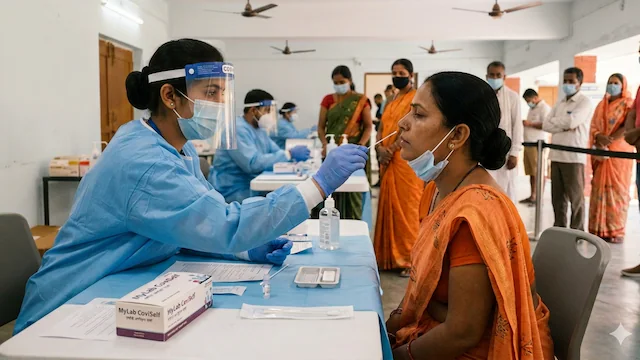
The Andhra Pradesh health department has stepped up surveillance after two Covid-19-related deaths were reported in quick succession, marking the state’s first fatalities linked to the virus since 2022.
Health officials have also confirmed eight additional Covid-19 cases, all of whom are currently under observation. While authorities acknowledge the sudden cluster of infections, they maintain that these are isolated incidents and not indicative of a fresh outbreak.
What Led To The Two Covid-19 Deaths?
The first fatality involved a 60-year-old man who was initially admitted to the Sri Venkateswara Institute of Medical Sciences in Tirupati before being transferred to Christian Medical College in Vellore, Tamil Nadu. The patient suffered from multiple underlying medical conditions, including diabetes and kidney disease, and passed away on June 28 while undergoing treatment. A postmortem RT-PCR test later confirmed that he had tested positive for Covid-19.
The second death occurred on July 7 and involved a 46-year-old man admitted to the Government General Hospital in Kadapa. He had been experiencing severe breathlessness and a persistent cough before succumbing to bilateral lung damage and pneumonia. A chest CT scan revealed extensive lung damage consistent with Covid-19 infection.

What Steps Has Andhra Pradesh Taken?
Following the emergence of the cluster, the state health department has intensified contact tracing, testing, and surveillance efforts to contain any possible spread.
According to Andhra Pradesh Health Secretary S. Suresh Kumar, five cases were detected in Kadapa, while the remaining three involved close contacts of those infected. Officials stressed that the situation is being closely monitored and there is currently no evidence of widespread community transmission.
The health department has reiterated that the current cases do not constitute an outbreak, with surveillance and contact tracing mechanisms already activated across the affected areas.
However, some medical experts remain cautious, questioning whether the sudden spike in severe respiratory illness could be linked to a more aggressive Omicron subvariant.
Doctors associated with the District Medical Office in Kadapa noted that the rapid progression of respiratory distress seen in some patients has raised concerns that a more virulent Omicron lineage could potentially be responsible, although no such conclusion has been established.
Should People Be Concerned?
The Omicron variant of SARS-CoV-2 is known for its high transmissibility and its ability to spread rapidly through communities. During earlier waves, healthcare systems across India faced significant pressure as infections surged, and unlike the Delta wave, Omicron also affected large numbers of children.
Despite its rapid spread, Omicron has generally resulted in milder illness than previous variants, largely due to widespread immunity built through vaccination and prior infections.
Medical experts caution that any highly transmissible variant carries the potential to spread quickly and strain healthcare infrastructure if left unchecked. However, state officials believe there is little indication that such a scenario is unfolding in Andhra Pradesh.
Health Secretary Kumar noted that no fresh Covid-19 cases have been reported over the past six days, reinforcing the government’s assessment that the recent infections represent an isolated cluster rather than the beginning of a larger wave.
To better understand the source of the infections, throat and nasal swab samples from both the deceased patients and other infected individuals have been sent to the National Institute of Virology (NIV) in Pune for genome sequencing. Authorities expect the sequencing results within the next few days.
Meanwhile, a committee comprising five medical specialists has reportedly ruled out the possibility of a completely new Covid-19 subvariant, although genome sequencing will provide definitive confirmation.
What Happens Next?
For now, Andhra Pradesh is adopting a cautious “wait and watch” approach while continuing surveillance across the affected districts.
Neighbouring Tamil Nadu, where the first Andhra Pradesh patient eventually died, has also sought to reassure the public. State health authorities there have stated that there is no evidence of a highly severe Covid-19 strain currently circulating and that infection numbers remain significantly lower than those recorded in previous years.
Tamil Nadu’s Directorate of Public Health and Preventive Medicine continues to monitor the situation closely. According to state officials, currently circulating Omicron strains are associated primarily with mild illness. Nevertheless, elderly individuals, pregnant women, people with chronic medical conditions, and those with weakened immune systems have been advised to continue following basic precautionary measures.
Covid-19 In India: Where Things Stand
As of July 2026, India has recorded roughly 44.7 million to 45 million confirmed Covid-19 cases since the pandemic began, according to data from the Ministry of Health and Family Welfare and global health trackers.
More than 44.1 million people have recovered from the infection, while the country’s Covid-19 death toll stands at approximately 531,000 to 534,000. Active infections remain relatively low nationwide, ranging from a few hundred cases to around 16,000 during localized spikes.
Although India continues to have one of the world’s highest cumulative Covid-19 case counts, the disease has largely transitioned into an endemic phase. Recent increases in infections have been limited to localized clusters, with hospitalizations remaining comparatively low. Most of these outbreaks have been associated with minor Omicron subvariants and are being managed through targeted testing, surveillance, genome sequencing, and rapid public health interventions.
Covid-19 Around The World
Globally, Covid-19 has infected more than 777 million people and claimed over 7 million reported lives since the pandemic began, according to the World Health Organization (WHO). The actual death toll is believed to be significantly higher when excess mortality estimates are taken into account.
Unlike the emergency years of 2020-2022, the virus has now entered an endemic phase in most parts of the world. While localized outbreaks continue to occur, they are largely driven by Omicron subvariants and generally result in fewer hospitalizations and deaths than earlier waves due to widespread immunity from vaccination and previous infections.
Health agencies, including the WHO, continue to monitor new variants through genomic surveillance and recommend that older adults, pregnant women, immunocompromised individuals and those with chronic medical conditions stay up to date with vaccinations and seek medical attention promptly if symptoms worsen.