Your Next Promotion Might Be Training The AI That Takes Your Job, But The AI Revolution Has A Human Problem
Across industries, professionals are being paid to teach AI how to think, analyse and make decisions. For many, it has become an unexpected new job. For others, it feels like training their own replacement. Yet, as companies rush to automate, replacing humans is proving far more complicated than expected.

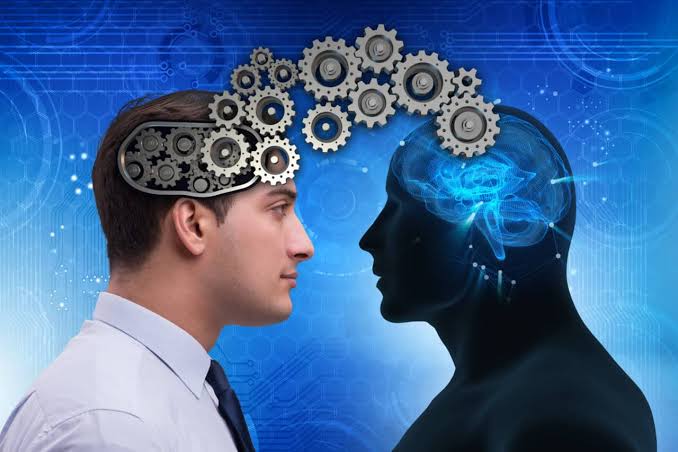
Imagine being called into your manager’s office and being told you’ve been selected for an important new project. Your task is to document every aspect of your work, explain how you make decisions, and create detailed workflows so the company can become “more efficient.” It sounds like a promotion, a chance to shape the future of your organisation. Months later, you discover that the real purpose wasn’t knowledge sharing at all – it was to train an AI system to do your job.
This is no longer a hypothetical scenario. Across industries, from journalism and marketing to law, healthcare and software development, thousands of professionals are being paid to teach AI systems how they think, write, analyse and solve problems.
Yet, even as companies race to automate, a growing body of evidence suggests that replacing human expertise is proving far more complicated than simply training an algorithm. A new workplace economy is emerging – one where humans are simultaneously AI’s greatest teachers and its fiercest competitors.
AI Doesn’t Learn On Its Own. It Learns From Humans.
Artificial intelligence is often portrayed as a technology that learns on its own, consuming vast amounts of data until it can write essays, draft legal contracts or solve complex mathematical problems. In reality, the internet is only the starting point. Before AI systems can perform specialised tasks with any degree of accuracy, they must be taught by people who already possess those skills.
This has given rise to a rapidly expanding AI training economy. Companies such as Mercor, Handshake, Scale AI and Surge AI are recruiting professionals with advanced expertise – doctors, lawyers, engineers, mathematicians, researchers, professors, writers and software developers – to refine the next generation of AI models.
Their role extends far beyond simply answering prompts. They design complex problems, evaluate competing responses, identify factual errors, correct flawed reasoning and teach models how experts approach real-world decisions.
The demand for such specialised knowledge reflects a significant shift in how AI is being developed. Earlier generations of AI relied heavily on large volumes of publicly available internet data. Today’s frontier models increasingly require high-quality, domain-specific expertise that cannot simply be scraped from websites. Whether it is a physician reviewing clinical responses, a mathematician validating proofs, or a lawyer assessing legal arguments, human judgment has become one of the industry’s most valuable raw materials.
The market has expanded accordingly. Some platforms now offer hundreds of dollars an hour for highly specialised professionals capable of transferring their expertise into AI systems. What was once a niche form of data labelling has evolved into a sophisticated knowledge-transfer industry, where the goal is no longer to teach machines what words mean, but to teach them how experts think.
Ironically, many of the people driving this transformation understand exactly what is at stake. Every correction they make, every workflow they document and every decision they explain helps produce a more capable AI system. In effect, they are not merely training software: they are transferring years of accumulated human experience into machines that may eventually perform parts of the very jobs they do today.

The Workers Who Realised They Were Training Their Own Replacement
For many workers, the process did not begin with a layoff notice or a restructuring announcement. It began with what appeared to be routine assignments – reviewing AI-generated content, documenting workflows, correcting mistakes or helping improve new “assistant” tools. Companies presented these projects as productivity initiatives, promising that AI would handle repetitive tasks while employees focused on higher-value work.
Only later did many realise that the systems they were helping refine were being trained to perform significant portions of their own jobs. An editor working for an academic publishing company recalled being asked to train what she believed were new junior editors brought in to ease a growing workload.
The “editors” repeatedly made baffling errors – changing country names, inserting random punctuation and making grammatical corrections that often made little sense. Assuming they were inexperienced recruits, she painstakingly corrected every mistake and provided detailed feedback. Months later, the company revealed that these were not junior employees at all but an AI editing system. Going forward, every document would first be processed by AI before reaching human editors, who would now be paid less to correct the machine’s mistakes.
A similar experience unfolded in the translation industry. Professional translators spent years refining AI-powered translation engines by reviewing every sentence they produced, correcting inaccuracies and teaching the systems to handle increasingly complex language. While the technology improved considerably, many translators argue that it still struggles with context, cultural nuances and subtle meaning.
Instead of replacing them, AI has transformed their role into one of constant supervision, where they often spend as much time correcting machine-generated translations as they would have translating the material themselves.
Perhaps one of the clearest examples comes from the marketing industry. An award-winning content manager was tasked with developing detailed AI workflows, documenting best practices and creating internal processes that would allow colleagues to use generative AI more effectively. He believed he was preparing to oversee the company’s AI operations. Just weeks after completing the documentation, he was laid off. Much of his previous workload was reportedly redistributed to junior employees who simply followed the AI processes he had spent months designing.
The same concerns have surfaced within the AI industry itself. Hundreds of contract workers responsible for evaluating and refining Google’s Gemini chatbot alleged that they were effectively training systems designed to automate much of their own work.
Many were highly qualified professionals with postgraduate degrees who spent their days rewriting AI responses, assessing quality and helping improve the models’ reasoning. Some later found themselves among successive rounds of layoffs, reinforcing fears that the expertise they had transferred to AI had made their own roles increasingly expendable.
While each story is different, they reveal a common pattern. Workers are no longer simply using AI as another software tool. Increasingly, they are being asked to transfer years of professional judgment into systems that can replicate parts of their expertise. For many, the unsettling question is no longer whether AI will become more capable – but whether they are helping accelerate the day it becomes capable enough to reduce the need for them altogether.

Human Expertise Has Become AI’s Most Valuable Commodity
For all the talk about artificial intelligence replacing human workers, there is one irony that is becoming increasingly difficult to ignore: the AI revolution still depends heavily on human expertise.
Behind every sophisticated AI model is an army of specialists whose job is to teach machines how experts think. Companies developing frontier AI systems are no longer searching for people to simply label images or transcribe audio. Instead, they are recruiting doctors to evaluate clinical responses, lawyers to assess legal reasoning, mathematicians to verify complex proofs, software engineers to review code, professors to grade essays and experienced writers to refine language models.
This demand has fuelled the rapid rise of a new industry built around what many now describe as “human data.”
Start-ups such as Mercor, Handshake, Scale AI and Surge AI have emerged as key intermediaries, connecting thousands of highly qualified professionals with leading AI developers, including companies behind some of the world’s most advanced language models. For many experts, these assignments have become a lucrative source of income, with specialised projects often commanding premium hourly rates.
The work itself is meticulous. Professionals are asked to solve problems exactly as they would in their day jobs, compare competing AI responses, explain why one answer is superior to another, identify factual inaccuracies, and provide the reasoning behind every decision. Rather than simply teaching AI what the correct answer is, they are teaching it how specialists analyse information, weigh evidence and reach conclusions.
Increasingly, AI companies are pushing beyond individual expertise to understand how entire organisations function. New training environments are being developed to simulate real workplaces, allowing AI models to observe how employees communicate, collaborate and make decisions across emails, messaging platforms, presentations and internal software. The objective is no longer just to automate isolated tasks but to replicate complete professional workflows.
Yet this business model carries an inherent contradiction. The more knowledge professionals transfer into AI systems, the more capable those systems become. At the same time, the companies collecting this expertise rely on a continuous supply of human specialists to improve the models further. The industry is therefore built on a delicate balance: AI must become smarter, but not so quickly that the demand for the very experts training it disappears altogether.
For now, that balance appears to be holding. But many workers entering this new profession understand its temporary nature. They are earning money by teaching AI how to perform their jobs, fully aware that each improvement could bring the technology one step closer to requiring less of their expertise in the future.
Why Replacing Humans Isn’t Going According To Plan
For all the excitement surrounding artificial intelligence, an increasing number of companies are discovering that automating work is very different from replacing workers.
The distinction lies in how jobs are actually performed. While AI has become remarkably efficient at completing clearly defined tasks – summarising reports, drafting emails, analysing large datasets or generating code – most professions involve far more than a series of isolated activities. They require judgment, context, ethical decision-making, collaboration and the ability to navigate situations that rarely follow a predictable pattern.
This gap between task automation and job replacement has become increasingly visible across industries.
In healthcare, for instance, a palliative care chatbot developed to assist cancer patients performed well when answering straightforward medical queries. However, it struggled with something as simple as regional accents, misspelled medication names and the many ways patients naturally describe symptoms. Developers also had to carefully redesign the system to respond safely to sensitive questions involving self-harm and end-of-life care.
The project demonstrated AI’s potential to support medical professionals, but also showed why human oversight remains indispensable.
Professional translators have reported a similar experience. After spending years improving AI-powered translation systems, many acknowledge that while the technology now produces far better results than before, it still falls short when dealing with cultural references, humour, idioms and contextual meaning. Instead of eliminating human translators, AI has largely shifted their role towards reviewing, correcting and validating machine-generated content.
The same pattern is beginning to emerge at the corporate level. Several organisations that aggressively embraced AI-driven automation are now reassessing those decisions.
Ford has reportedly brought back experienced engineers after recognising that automated systems struggled to identify complex quality issues. Commonwealth Bank of Australia reversed customer service job cuts after AI voice systems failed to manage the volume and complexity of customer interactions. IBM, despite successfully automating much of its routine HR operations, has simultaneously expanded hiring in other areas, acknowledging that human judgment, leadership and ethical decision-making remain difficult to automate.
Research appears to support this growing reassessment. According to workforce management platform Orgvue, nearly four in ten business leaders have already made employees redundant because of AI adoption. However, more than half later admitted those decisions had been wrong.
Separate hiring data from recruitment firm Robert Half also found that a significant proportion of employers who eliminated roles due to AI eventually rehired for the same or similar positions after discovering that automation alone could not deliver the expected results.
The lesson emerging from these experiences is that AI is exceptionally good at accelerating work, but considerably less effective at replacing the people responsible for it. A machine can draft a report, recommend a diagnosis or translate a document. Deciding whether that output is accurate, appropriate and reliable still depends, in many situations, on human expertise.
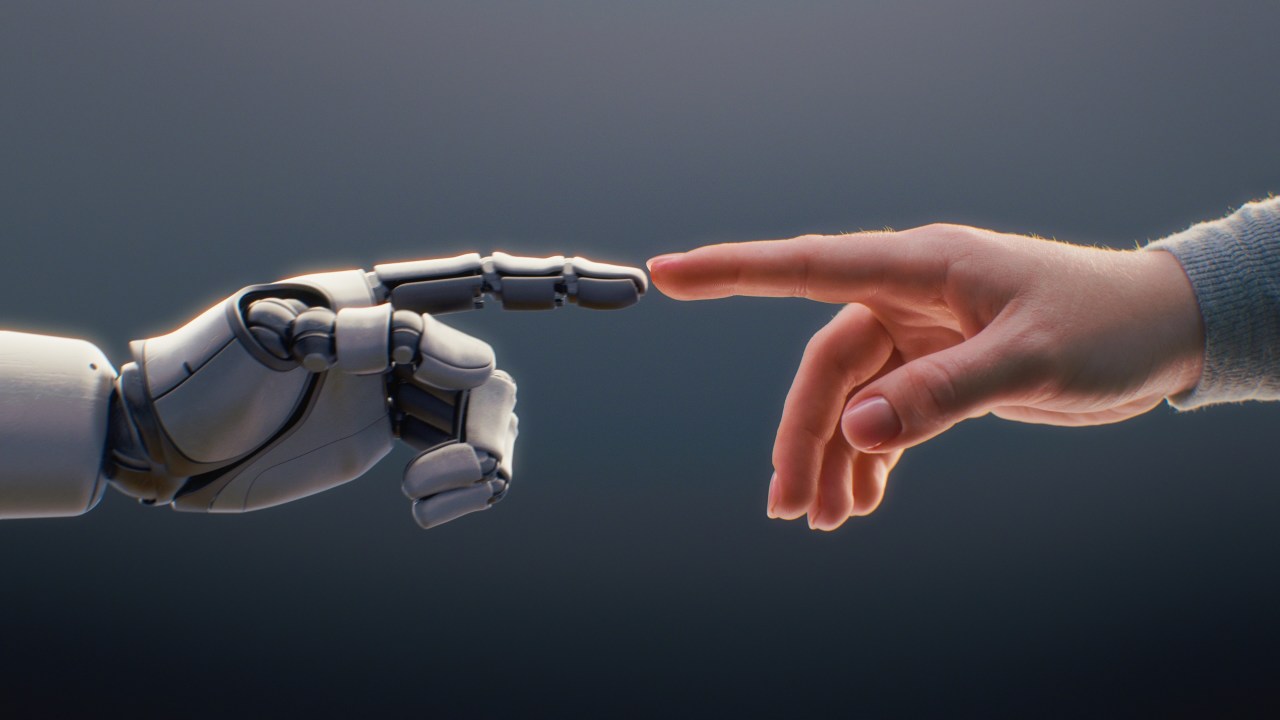
That is forcing companies to rethink what automation actually means. Rather than eliminating entire professions, AI is increasingly reshaping how work is divided – handling repetitive tasks while leaving humans to manage complexity, uncertainty and accountability. The future of work, it appears, may be defined less by human replacement than by an evolving partnership between people and machines.

Workers Are Beginning To Fight Back
Simultaneously, as artificial intelligence becomes increasingly capable of replicating human workflows, employees are beginning to respond in unexpected ways. Instead of simply accepting that AI will become another workplace tool, some are actively trying to control what the technology learns – and, more importantly, what it doesn’t.
Nowhere is this more evident than in China, where a growing trend known as “skill distillation” has sparked a new kind of workplace competition. The concept is straightforward: employees are encouraged to document their workflows, decision-making processes and daily responsibilities so that AI systems can learn how specific jobs are performed. While companies present this as a way to improve efficiency and preserve institutional knowledge, many workers believe the same information could eventually be used to automate their roles.
The anxiety has given rise to an unusual digital arms race.
A tool known as “colleague.skill” has attracted attention for its ability to analyse an employee’s digital footprint – including emails, documents and workplace communications and convert those patterns into AI agents capable of mimicking how that person works.
Reports suggest some employees are using the technology to document their colleagues’ workflows, effectively making those roles easier to automate while strengthening their own position within the organisation.
The response was swift. Developers soon introduced “anti-distillation.skill”, a countermeasure designed to protect human expertise from being easily absorbed by AI systems.
Rather than producing inaccurate documentation, the software subtly rewrites work manuals and process documents so they remain perfectly understandable to human colleagues while obscuring the critical details AI models rely upon to identify patterns and learn complex workflows. Employees can even decide how much of their expertise they wish to reveal and how much they prefer to keep hidden.
Whether these tools become mainstream or remain niche experiments, they point to a much larger shift taking place inside modern workplaces. For decades, organisations encouraged employees to share knowledge freely, document best practices and create standard operating procedures so information would survive staff turnover. Increasingly, however, workers are beginning to see specialised knowledge not simply as an organisational asset, but as a form of personal job security.
The Future Of Work May Be Less About Replacement And More About Reinvention
The debate over whether artificial intelligence will replace human workers often assumes there are only two possible outcomes: either machines take over, or humans continue doing the same jobs they always have. Increasingly, the evidence points to a far more complex reality.
AI is undoubtedly changing the workplace, but it is doing so unevenly. Routine and repetitive tasks are being automated at an unprecedented pace, allowing employees to produce more work in less time. At the same time, organisations are creating entirely new roles centred around AI – training models, evaluating outputs, identifying errors, ensuring compliance, improving safety and overseeing systems that still require human judgment.
Rather than eliminating the need for expertise, AI is shifting where that expertise is applied. The professionals who once spent their days writing, analysing or translating are increasingly finding themselves reviewing AI-generated work, refining models and making decisions that machines are still unable to make reliably.
This shift also raises important questions for businesses. Automating a task is relatively straightforward; automating accountability, ethical reasoning, creativity and nuanced decision-making is considerably more difficult. The companies that appear to be succeeding are not necessarily those replacing the most workers with AI, but those finding the right balance between technological efficiency and human expertise.
For employees, the challenge is equally significant. AI literacy is rapidly becoming a workplace skill rather than a technical speciality. Understanding how to use AI effectively, how to verify its outputs and where its limitations lie may soon matter as much as traditional professional qualifications.
The Last Bit,
Perhaps that is the greatest irony of the AI revolution. The technology that many fear will replace human workers continues to rely on human intelligence to improve, adapt and operate responsibly. Even the most advanced models still learn from people, depend on people to correct them and require people to decide when they can or cannot be trusted.
For now, the future of work is unlikely to be defined by humans versus machines. It will be shaped by how effectively humans learn to work alongside the very systems they are helping create.