Ola’s Second Act Begins, But So Do Old Questions; The Making Of The Bhavish Aggarwal Myth And Whether It Still Has Believers
Bhavish Aggarwal once sold India a revolution built on speed, disruption, and limitless ambition. Today, as Ola Electric attempts another comeback through motorcycles and AI dreams, the company remains trapped under collapsing trust, operational turmoil, investor skepticism, and one haunting question, was the Bhavish Aggarwal myth always bigger than reality itself?

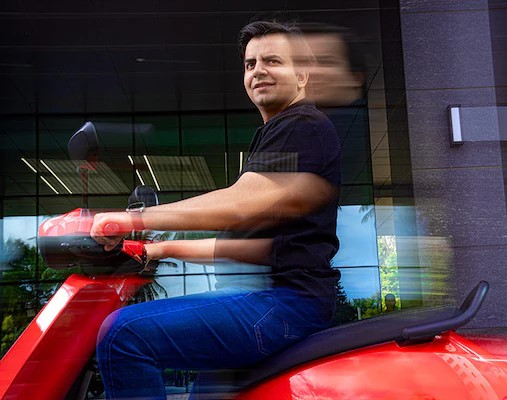
For a company that only months ago looked battered, cornered, and rapidly losing the sheen of its once unstoppable rise, Ola Electric is suddenly attempting something familiar again, selling India another disruption story.
The battleground, however, has now shifted from electric scooters to electric motorcycles. And at the center of this renewed push once again stands Bhavish Aggarwal, the founder who built his public image on audacity, relentless ambition, and the belief that scale alone could overwhelm legacy incumbents.
After months of brutal headlines around falling market share, service nightmares, consumer complaints, layoffs, executive exits, and collapsing investor confidence, Ola is now trying to reignite excitement through its Roadster motorcycle lineup, aggressive pricing strategy, and another sweeping promise of reshaping India’s mobility future.
The timing is hardly accidental.
Ola Electric’s decline over the last year has been too sharp, too public, and too damaging to ignore. The company that once commanded nearly 36 percent of India’s electric two-wheeler market saw its dominance erode dramatically as rivals such as TVS Motor, Bajaj Auto, Ather Energy, and Hero MotoCorp steadily clawed away market share.
What was once projected as India’s defining EV success story increasingly began looking like a rather grim example of what happens when companies scale too fast while the systems underneath remain dangerously fragile.
Yet Bhavish Aggarwal has never been a founder who retreats quietly.
Instead, Ola appears to be attempting the same formula that once helped it disrupt the electric scooter market in the first place, undercut rivals aggressively on price, create massive hype around “future-ready” technology, flood the market with ambition-heavy messaging, and force incumbents into reactive mode.
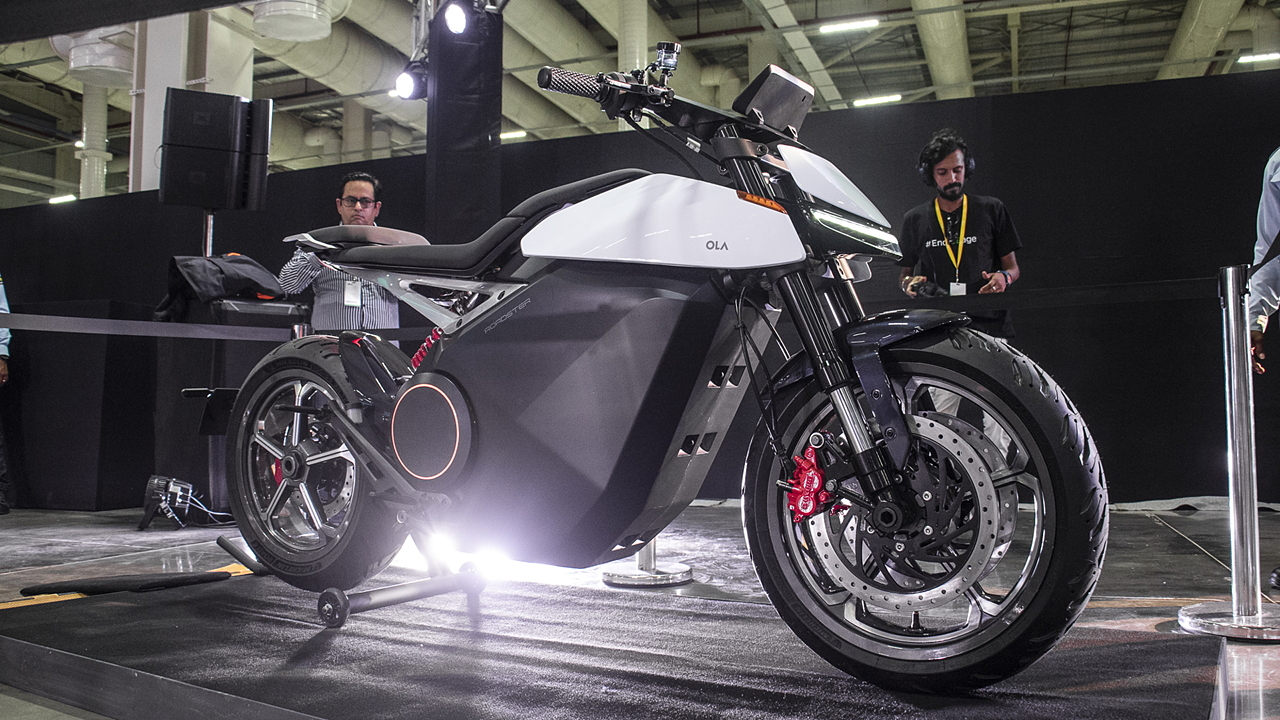
The Roadster X motorcycles are now being positioned as the beginning of Ola’s next big revival arc. Industry observers acknowledge that the pricing has grabbed attention. In some cases, Ola’s motorcycles are reportedly being sold at prices comparable to entry-level ICE bikes while promising specifications that theoretically rival more powerful vehicles.
On paper, the proposition sounds disruptive once again.
A motorcycle with long range, aggressive pricing, in-house battery technology, and heavy branding around indigenous innovation sounds exactly like the kind of direction Bhavish Aggarwal has repeatedly used to generate momentum.
The company’s 4680 Bharat Cells are being marketed as a major breakthrough. Ola has also outlined improving registrations and growing traction in northern Indian markets as signs that the turnaround may already be underway.
But beneath the renewed excitement lies an uncomfortable reality that neither investors nor consumers have forgotten. Because Ola’s biggest problem today is no longer technology alone. It is trust. And trust, once damaged at scale, is far harder to rebuild than market share.
Over the last year, the company’s image has suffered repeated blows from allegations of poor service infrastructure, delayed complaint resolution, software glitches, mechanical failures, battery fire incidents, product reliability concerns, and an after-sales ecosystem that many consumers described as chaotic and deeply frustrating.
Viral videos of stranded scooters, customer outrage outside service centers, social media backlash, and repeated public criticism steadily chipped away at the futuristic image Ola had worked so aggressively to construct.
What made the situation worse was that many of these issues did not emerge in isolation. They arrived simultaneously with mounting financial stress.
The company’s revenues weakened sharply. Losses remained stubborn. Ratings agencies raised concerns. Its stock price suffered heavy erosion after the IPO euphoria faded.
Layoffs and restructuring efforts followed. Questions around sustainability became louder as analysts increasingly began asking whether Ola’s business model was built for durable profitability or merely for headline-grabbing expansion.

And this is precisely where Bhavish Aggarwal’s latest push becomes both fascinating and deeply risky. Because what Ola is attempting today is not merely a product launch. It is an attempt to revive belief itself.
The problem, however, is that the Indian EV market of today is no longer the same playground Ola entered a few years ago. Back then, legacy players moved cautiously, consumer expectations were still forming, and Ola benefited enormously from being seen as the aggressive disruptor willing to move faster than everyone else.
Today, those same incumbents have strengthened their offerings, expanded dealer and service networks, improved customer trust, and become far more competitive. Ola, meanwhile, carries baggage. Heavy baggage.
The company now enters its so-called second act while carrying unresolved questions around execution, governance, operational maturity, product consistency, and leadership culture. Even the optimism around the Roadster motorcycles is accompanied by skepticism over whether the pricing strategy itself is financially sustainable or merely another attempt to buy relevance through short-term disruption.
That skepticism is not entirely misplaced. For years, Bhavish Aggarwal built his image around moving faster than the market, faster than competitors, and often faster than the systems required to support such expansion. That speed once looked visionary. Today, critics increasingly argue that it may also have been reckless.
And perhaps that is the central tension surrounding Ola Electric’s attempted revival.
Is India witnessing the comeback of a founder who disrupted an industry before anyone else fully understood its potential? Or is the company once again trying to accelerate into the future while unresolved fires continue to burn underneath the machine?
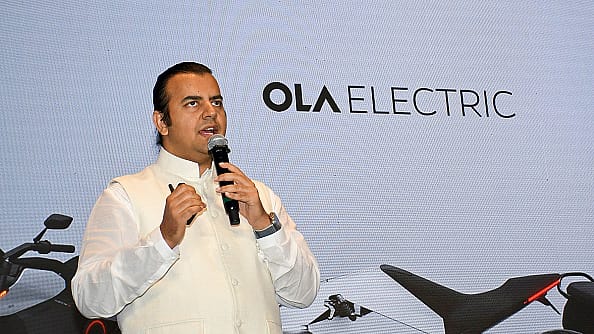
Selling India A Movement, Not Just A Scooter
Long before the market share erosion, the customer outrage, the viral accident videos, and the collapse in investor confidence, Bhavish Aggarwal had managed to achieve something few startup founders in India ever truly manage to pull off.
He turned a company into a national growth story.
Ola Electric was never marketed merely as another electric vehicle company trying to compete in a growing market. It was sold as a revolution waiting to happen.
Bhavish Aggarwal positioned the company as the face of India’s technological ambition, a symbol of manufacturing independence, and proof that India could build futuristic products at global scale rather than merely consuming technology built elsewhere. The messaging was dramatic, emotional, and carefully crafted for maximum effect.
India would no longer chase the future.
India would build it.
The language around Ola Electric often sounded less like corporate communication and more like political mobilization. There was constant talk of disruption, transformation, energy independence, indigenous innovation, and rewriting the future of mobility. Bhavish Aggarwal increasingly presented himself not just as a founder building scooters but as a man attempting to engineer a technological shift for the country itself.
And for a while, India bought the story completely.
Young consumers saw Ola scooters as aspirational products. Investors saw Bhavish Aggarwal as the aggressive startup icon capable of building India’s answer to global EV giants. Business media elevated him into the league of celebrity entrepreneurs. The comparisons with Elon Musk became frequent, flattering, and eventually central to Bhavish’s public image itself.
The comparison was not accidental.
Like Musk, Bhavish projected urgency, ambition, spectacle, and scale. Gigantic factories. Futuristic launch events. Massive production targets. Hyper-aggressive expansion. Grand declarations about the future. Everything surrounding Ola Electric was designed to feel historic, urgent, and larger than life. And in the early years, the strategy appeared unstoppable.
/entrackr/media/media_files/2025/02/28/mr2hVMF9WdtXX3Q9oHD5.jpg)
The Rise Of Ola Electric And The Cult Of Speed
The rise of Ola Electric was breathtakingly fast.
Bookings exploded almost immediately after launch. Consumers flooded the platform. Social media influencers promoted the scooters aggressively. The sleek design, app-heavy interface, keyless functionality, futuristic dashboard, and aggressive pricing helped Ola stand apart from traditional two-wheeler manufacturers who still looked slow, conservative, and outdated in comparison.
Within a short span, Ola emerged as the dominant player in India’s electric scooter market.
Its gigantic EV factory became a symbol of India’s manufacturing ambition. Venture capital money poured in enthusiastically. The IPO excitement further amplified the mythology around the company. Bhavish Aggarwal was increasingly portrayed as a fearless founder willing to move faster than everyone else in the market.
But speed soon became more than a strategy. It became the company’s identity. And perhaps its biggest vulnerability.
Because underneath the excitement and expansion sat a dangerous assumption, that scale could compensate for unfinished systems. That disruption could outrun operational weaknesses and that ambition itself could absorb the consequences of moving too fast.
For some time, the market rewarded that aggression, until reality slowly began catching up.

When The Cracks Started Showing
The problems did not arrive all at once. Initially, they appeared as scattered and isolated complaints that could easily be dismissed as early-stage growing pains, a software glitch here, a delayed repair there, an unexpected breakdown, or a customer frustrated with poor service response times. But over time, these seemingly isolated incidents steadily began forming a far more disturbing pattern that the company could no longer contain through branding and disruption rhetoric alone.
Reports of scooters catching fire started surfacing publicly. Videos circulated online showing burnt vehicles and stranded riders. Consumers alleged sudden shutdowns, braking issues, reverse acceleration incidents, suspension failures, and repeated technical malfunctions. Social media, which had once amplified Ola’s rise, slowly became filled with angry customers posting images, videos, and allegations against the company.
The after-sales experience became one of the company’s biggest pressure points.
Consumers repeatedly complained about poor servicing infrastructure, delayed complaint resolution, long waiting periods for repairs, and an inability to access timely customer support. The problem was no longer limited to product quality alone. It had evolved into something far more dangerous for an automobile company, a crisis of confidence.
And that crisis spread quickly.
The Collapse Of Consumer Trust
What made Ola Electric’s troubles especially damaging was the sheer scale of expectation the company itself had created.
—This was not positioned as an ordinary startup.
—This was supposed to be the future of Indian mobility.
And therefore every failure felt magnified. Every viral complaint damaged not just a product but an entire narrative. Every accident allegation, every service-center controversy, every public consumer grievance steadily chipped away at the mythology Bhavish Aggarwal had spent years constructing around the company.
At the same time, traditional rivals quietly recovered ground.
TVS Motor, Bajaj Auto, Hero MotoCorp, and Ather Energy increasingly began appearing more stable, more dependable, and operationally more mature. Their dealer networks, servicing infrastructure, and manufacturing experience suddenly looked far more valuable in a market where consumers were beginning to prioritize reliability over disruption slogans.
Ola, meanwhile, continued carrying the burden of its own overpromising.
The company that once looked unstoppable was now increasingly associated with volatility, controversy, operational chaos, and unresolved consumer anger.
And perhaps the most damaging part of all this was that the criticism no longer came only from competitors or skeptics. It increasingly came from former believers.

The Problem With Building Revolutions Too Fast
The irony surrounding Ola Electric is impossible to ignore.
The very aggression that helped the company rise may also have accelerated the distrust now threatening its future.
For years, Bhavish Aggarwal was celebrated precisely because he moved faster than everyone else. Faster than legacy players. Faster than the market. Faster than conventional manufacturing logic. In the startup ecosystem, this looked visionary. Investors celebrated it; media amplified it, and consumers admired it.
But speed without institutional depth eventually comes at a cost. And Ola Electric increasingly appears to be paying that price now.
The Making Of The Bhavish Aggarwal Myth And How India’s Startup Ecosystem Helped Create It
Long before the growing criticism around Bhavish Aggarwal became impossible to ignore, there was something undeniably magnetic about the way he presented himself to India’s startup ecosystem, investors, media houses, and young aspirational consumers who were desperately looking for founders capable of sounding larger than life in an economy increasingly obsessed with disruption, ambition, and the fantasy of building India’s own global technology champions.
Bhavish Aggarwal never behaved like a conventional corporate executive carefully trying to protect a balance sheet, preserve institutional continuity, or build a business slowly over decades in the manner traditional Indian industrialists historically preferred.
Instead, he entered the public imagination as the impatient founder who appeared permanently dissatisfied with the present, constantly talking about changing industries, rewriting systems, building revolutions, and moving at a pace that many around him either found exhilarating or deeply exhausting. That personality became central to the Ola story itself.
The rise of Ola Electric cannot be separated from the rise of the Bhavish Aggarwal myth because, over time, the company stopped being seen merely as a mobility startup and increasingly became an extension of its founder’s personality, his aggression, his ambition, his public messaging style, and his obsession with scale so large that it often bordered on drama.
And India’s startup ecosystem loved every minute of it.
This was, after all, the perfect founder archetype for an ecosystem fuelled heavily by venture capital optimism, media-driven hype cycles, and a growing national appetite for startup heroes who could be presented not just as entrepreneurs but as symbols of India’s arrival on the global technology stage.
Bhavish Aggarwal was young, articulate, combative, ambitious, media-friendly, IIT educated, and deeply comfortable speaking the language of disruption that investors and startup commentators desperately wanted to hear.
The timing also worked perfectly in his favour.
India’s startup ecosystem had reached a stage where founders were no longer being celebrated simply for building profitable companies. They were being celebrated for sounding transformational. Vision increasingly mattered more than stability. Speed mattered more than institutional depth. Scale mattered more than sustainability. Grand storytelling mattered more than operational caution. And in that environment, Bhavish Aggarwal emerged almost naturally as one of the ecosystem’s most marketable personalities.
He spoke constantly about changing India. Not just building scooters. Not just running a cab company.
Changing India
That distinction mattered because it elevated him from entrepreneur to movement-builder in the eyes of many investors, media commentators, and consumers who were emotionally invested in the idea that India needed its own globally recognizable technology icons capable of competing against Silicon Valley, China, and legacy manufacturing giants.

When Confidence Starts Looking Like Arrogance
The problem with founder mythology is that it often rewards personality traits that can become deeply destructive once a company begins facing operational pressure, because the same aggression, impatience, and obsession with speed that initially appear visionary during periods of rapid growth can eventually begin creating instability when execution problems emerge and institutional systems fail to keep pace with ambition.
And that transition increasingly became visible around Bhavish Aggarwal.
As Ola Electric’s troubles mounted publicly through customer complaints, service failures, operational stress, falling market share, executive exits, and financial pressure, a different image of Bhavish slowly began surfacing through employee accounts, media investigations, and growing commentary within the startup ecosystem itself.
The image was no longer that of merely a brilliant founder obsessed with speed and disruption. It was increasingly the image of a leader whose intensity had allegedly begun mutating into volatility.
Former employees and reports around the company started painting a picture of a workplace environment driven heavily by fear, pressure, unpredictability, extreme micromanagement, and an internal culture where impossible timelines and public outbursts were allegedly not uncommon.
Reports describing angry confrontations, humiliating dressing-downs, aggressive behaviour in meetings, and a leadership structure revolving excessively around Bhavish himself steadily began entering public conversation.
And while startup ecosystems often romanticize such behaviour during periods of rapid valuation growth by calling founders “demanding,” “hardcore,” or “visionary,” the same behaviour begins getting interpreted very differently once performance weakens and the company starts showing visible signs of instability.
That perception became even more damaging because Ola’s troubles were no longer isolated operational setbacks that could be quietly fixed behind closed doors. The problems had become public, viral, and reputational. Consumers were angry publicly. Videos circulated online relentlessly. Investors had started asking harder questions. Competitors were recovering ground rapidly. Market confidence had weakened. Ratings agencies had become cautious. Layoffs and restructuring efforts added further anxiety.
And through all this, Bhavish Aggarwal often continued projecting the same disruptive confidence that had once helped build his mythology in the first place.
But confidence, when repeated amid mounting chaos, can eventually begin resembling denial.
The Dangerous Thing About Startup Celebrity Culture
The deeper issue, however, may not simply be Bhavish Aggarwal himself.
It may be the ecosystem that helped manufacture and reward this style of founder behaviour for years.
India’s startup culture has increasingly developed an unhealthy tendency to glorify charisma before accountability, reward aggressive storytelling before institutional maturity, and celebrate founders as celebrity visionaries long before their businesses have actually demonstrated durable operational resilience.
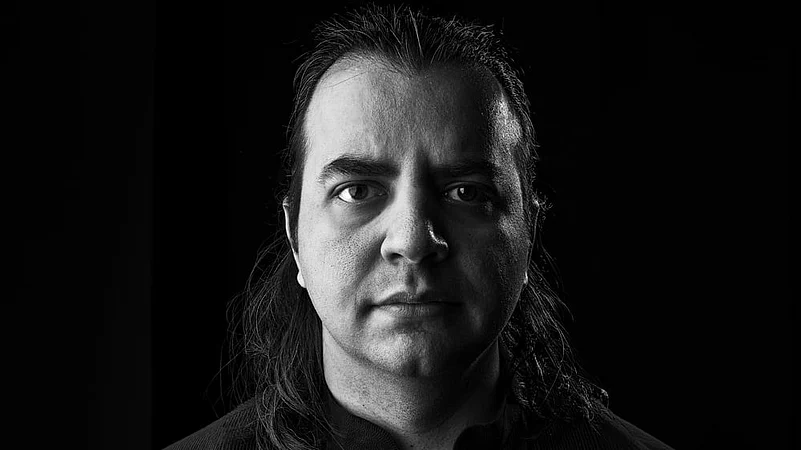
Inside Ola’s Culture Of Chaos, Fear. When A Founder Becomes The Entire System
One of the recurring criticisms surrounding Bhavish Aggarwal has been that Ola increasingly appeared less like an institution and more like an extension of a single founder’s personality, ambitions, moods, instincts, and obsessions, which may partly explain why the company often looked extraordinarily fast in moments of expansion but deeply fragile once operational stress began intensifying.
Institutions survive through distributed systems while founder-driven empires often survive through force of personality. And force of personality has limits.
Several former executives reportedly described Bhavish Aggarwal as a founder who wanted control over nearly everything, from strategic direction to operational details, from manufacturing urgency to expansion timelines, from product decisions to organizational priorities.
In periods of growth, this created the impression of a brilliant operator obsessively involved in every aspect of the business. But in periods of crisis, the same model allegedly produced confusion, instability, and constant internal pressure because the organization struggled to function independently of the founder’s direct intervention.
That problem becomes especially dangerous in manufacturing-heavy businesses where operational consistency matters more than visionary storytelling. Because unlike software startups, automobile companies cannot afford prolonged chaos inside the system.
Unlike software startups where glitches can often be patched quietly, automobile companies operate in the real world where failures become visible, defects raise safety concerns, and poor servicing destroys trust rapidly.
This is precisely where Ola Electric faced a far deeper crisis than an ordinary startup slowdown, because the company was increasingly perceived as scaling faster than its systems, servicing infrastructure, operational maturity, and governance capabilities were prepared to handle, a combination that can devastate consumer confidence once the cracks begin surfacing publicly.

Krutrim, Artificial Intelligence. Another Grand Vision Arrives Before The Previous One Is Fully Repaired
Even as Ola Electric battled falling market share, layoffs, service-related criticism, and weakening consumer trust, Bhavish Aggarwal had already begun shifting public attention toward another massive ambition, artificial intelligence through Krutrim.
To supporters, the pivot reflected relentless ambition. To critics, however, it reinforced a growing perception that Bhavish Aggarwal is constantly chasing larger projects before fully stabilizing the promises already sold to investors and consumers.
The pattern was difficult to ignore. First came ride-hailing disruption, then electric mobility, futuristic manufacturing, and now AI sovereignty and supercomputing ambitions. And while these grand visions initially helped build the Bhavish mythology, critics increasingly argue that unresolved operational problems have a way of following founders into their next ventures.
That concern feels sharper today because Ola Electric itself still appears deeply unstable beneath the surface despite its attempted comeback through electric motorcycles. Against that backdrop, the AI pivot feels symbolic. To supporters, it signals ambition. To skeptics, it increasingly resembles escape velocity.
The Krutrim Question Is Not About AI Alone
The deeper issue here is not whether Krutrim itself succeeds or fails. Nor is the question whether India should invest in artificial intelligence or indigenous technology infrastructure. Those ambitions are entirely legitimate in a rapidly changing technological world increasingly shaped by AI competition between nations and corporations.
The real question is what Bhavish Aggarwal’s repeated shifts toward bigger and more futuristic ambitions reveal about his leadership style itself, because critics increasingly argue that he appears most comfortable during phases of disruption, expansion, and future-building rhetoric, while the slower work of institutional stability, operational consistency, governance discipline, and trust rebuilding seems far less central to his persona.
And that matters enormously in industries like automobile manufacturing and AI infrastructure, where durability, reliability, engineering depth, and disciplined execution ultimately matter far more than headline-generating ambition.
This is precisely why Bhavish Aggarwal increasingly sits at the center of a larger debate around whether India’s startup ecosystem spent too long rewarding transformational storytelling before questioning whether founders possessed the organizational temperament needed to sustain it responsibly over time.
Can India Still Believe?
There was a time when almost every ambitious statement from Bhavish Aggarwal generated excitement. Today, many generate caution. Markets can forgive losses, consumers can tolerate experimentation, and investors can survive volatility. But once credibility weakens, every new promise begins getting judged against unfinished ones from the past.
That is the difficult position Ola Electric now finds itself in. The company is attempting a comeback through electric motorcycles while still carrying the baggage of damaged trust, operational concerns, leadership controversies, and investor skepticism. Which is why Ola’s second act no longer feels like a straightforward revival story. It feels like a test of whether the Bhavish Aggarwal myth still has enough believers left.
Startup Mythology
Bhavish Aggarwal did not build his image alone. India’s startup ecosystem helped create it by rewarding speed, expansion, disruption, and founder charisma, often long before operational systems had fully matured. In an environment obsessed with valuation growth and hyper-scaling, aggressive founders looked visionary while caution increasingly looked outdated.
The media amplified this further by turning founders into celebrity figures and symbols of India’s technological ambition. During Ola Electric’s rise, difficult questions around governance, servicing infrastructure, operational readiness, and stainability were often overshadowed by expansion announcements and disruption hype.
That changed once reality intervened publicly.
Ola Electric’s IPO was projected as proof that India’s EV future had arrived. But public markets demand far more than excitement. They demand consistency, execution, profitability pathways, and trust.
The Last Bit,
The larger significance of the Ola story extends far beyond electric scooters or one controversial founder. It reflects a deeper problem within India’s startup ecosystem, an obsession with founder mythology and disruption while institutional depth, governance discipline, and operational resilience often remain secondary.
The uncomfortable questions now are impossible to ignore. Did investors reward expansion faster than operational maturity? Did media glorify disruption without asking enough hard questions? Did startup culture confuse confidence with capability?
Ola Electric may still survive. Bhavish Aggarwal may still engineer another comeback. But the company’s journey has already become something larger, a warning about what happens when ambition scales faster than the systems required to sustain it.
And perhaps that is the real story behind Ola’s second act. Not merely the comeback of a company, but the public stress test of an entire startup culture that spent years mistaking relentless confidence for inevitability.