August 2003 To August 2026: From Incorporation To Investigation, How Long Will BPTP Keep Harassing Homebuyers?


After 23 years, what does BPTP’s record of projects, litigation, regulatory action and buyer protests actually reveal?
BPTP Limited was incorporated on 11 August 2003. By August 2026 the company has operated for roughly 23 years. In that time it has launched large residential and commercial developments across Faridabad, Gurugram and parts of the wider National Capital Region, collected substantial sums from homebuyers, and become a familiar name in the local property market. The central public-interest question is not whether every project succeeded or failed. It is whether the accumulated record of delivery timelines, consumer and RERA orders, higher-court interventions, buyer protests and continuing post-possession disputes demonstrates a systemic pattern in which ordinary homebuyers have repeatedly borne the cost of delay, incomplete handovers and contested charges.
This report examines that record. It draws on company incorporation details, publicly reported project timelines, Haryana RERA orders, consumer-commission and NCDRC decisions, Supreme Court proceedings, Enforcement Directorate and CBI actions, and resident-welfare-association statements. Our aim is not to declare a verdict of fraud or universal failure, but to test whether 23 years of activity have produced reliable delivery of homes on the terms buyers were sold, or a recurring need for buyers to litigate, protest and absorb financial pressure.
Opening: 23 years of BPTP
On 11 August 2003 the company that later became BPTP Limited was registered. Over the following two decades it acquired land, obtained licences, marketed townships and group-housing schemes, and took large advance payments from buyers who expected possession within defined periods. Many of those buyers were salaried professionals, defence personnel and families who treated the purchase as their principal long-term investment.
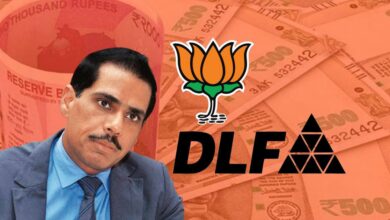
It was no one when it was formed. But haryana’s Ex-CM Bhupinder Hooda’s hands became a Midas Touch for BPTP. As far as taking important decisions and deciding the policy on real estate is concerned, Hooda allegedly depends on a dozen of people, in which Kabul Chawla (promoter of BPTP) was an important name. Call it a high-power committee, think-tank or a more informal kitchen cabinet, they are the ones who allegedly decide most actions concerning the real estate sector in the State. In other words, one may say that these are the people who are allegedly helping, rather driving, Hooda to ruin Haryana.
The biggest beneficiary of the Hooda rule is none other than Business Park Town Planners Limited, also known as BPTP, promoted by Kabul Chawla, Punam (mother of Kabul Chawla) and Anjali Chawla (wife of Kabul Chawla).
Incorporated under the Companies Act on August 11, 2003, BPTP has a number of companies, like Countrywide Promoters Pvt Ltd, Countrywide Home and Farms Pvt Ltd, Glitz Builders & Promoters Pvt Ltd, Foliage Construction Pvt Ltd, Five Star Promoters Pvt Ltd, Vital Construction Pvt Ltd, Native Buildcon Pvt Ltd, Green Valley Towers Pvt Ltd, Anupam Towers Pvt Ltd, Sunglow Overseas Pvt Ltd, Druzba Overseas Pvt Ltd, Business Park Promoters Pvt Ltd, Fragrance Construction Pvt Ltd, KA Promoters & Developers Pvt Ltd, Westland Developers Pvt Ltd, Poonam Promoters & Developers Pvt Ltd and Vasundra Promoters Pvt Ltd.
BPTP was an unknown and insignificant player till 2005. After Hooda became the Chief Minister, BPTP’s fortunes changed, almost overnight in 2005, and the company started aggressively staking claim over prime land in and around Faridabad. In just three years, it had acquired licenses to develop 283.88 acres land at unheard of rock bottom prices—Rs. 210 per sq ft—in Faridabad. The company starting selling the first of its plots in 2006 and by 2009 it had sold approximately 5,657 residential plots, 10,685 apartments, 463 commercial plots and other commercial space.
Till here, everything was going right. Everyone thought that this first generation entrepreneur, leading with vision, innovation, and integrity, will give new heights to northern India’s real estate, and will convert the barren lands of Gurgaon and Faridabad to beautiful, magnificent and splendid residential places for the homebuyers. Fast forward to 2026, after 23 years, the magnificent, splendid residential building stands tall, but now in Gurgaon or Faridabad, for homebuyers, but in New York, for Kabul Chawla.

This condo is built by excessive money, that has been taken from the homebuyers, in names of pre-possession charges, excessive maintenance charges, looting homebuyers under EMI Subvention scheme, and what not. After 23 years, what homebuyers are left with, is pure harassment from ‘the visionary builder’, who cannot deliver flats in time, but keep delivering lectures in seminars and keep adding accolades in his name, which are nothing but a testament to how ‘Kabul Chawla kept harassing homebuyers since 2 decades‘…
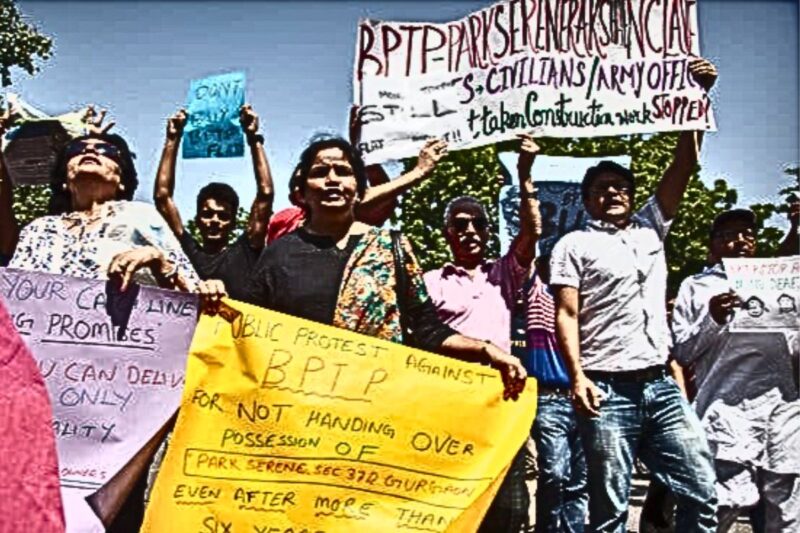
By 2026 the company continues to launch new projects and report collections. At the same time, residents of older projects such as Park Serene in Sector 37D, Gurugram, are still locked in disputes over maintenance handover, disputed charges estimated by the RWA at around ₹2 crore annually, and the formal transfer of common-area responsibilities. Earlier years saw protests by army officers and other buyers over unfinished towers and delayed possession. Courts and regulators have ordered refunds with interest, compensation for mental agony, and the return of pre-possession maintenance collections in individual cases. Criminal investigations by the ED (FEMA, 2025) and CBI (builder-bank nexus FIR, 2026) remain part of the public record.
We, therefore asks a precise question: after nearly 23 years, has BPTP’s record of project delivery and treatment of homebuyers justified the trust placed in the developer by the people who financed its growth?
A 23-year timeline (selected milestones)
11 August 2003: Incorporation (CIN U45201HR2003PLC082732; later records show registered office in Faridabad).
Mid-2000s onwards: Major land aggregation and licence activity in Faridabad (Parklands and related sectors) and Gurugram.
2005–2012 period: Launch of large plotted and group-housing schemes including Parklands phases, Discovery Park, Princess Park and early Gurugram projects. Buyer agreements commonly promised possession within 24–42 months plus grace periods.
2010–2014: Launches of Spacio, Terra, Park Serene and related Sector 37D projects; Amstoria and other Gurugram schemes. Contractual possession windows typically fell in 2014–2017.
2016–2017: Occupation certificates begin to appear for some towers; RERA regime introduced. Multiple consumer complaints already pending.
2017–2022: Partial possessions, continued RERA and consumer litigation, buyer demonstrations.
2024–2025: Supreme Court and NCDRC orders directing refunds with interest in Terra-related and other matters; higher interest rates ordered in some delay cases.
April 2026: CBI FIR (RC2192026E0001) arising from Supreme Court-monitored builder-bank probe, linked to a Gurugram project and loan disbursals.
2025–2026: New project launches and reported collections continue.
This is not an exhaustive list. Many intermediate events, individual RERA orders, settlements, and local protests, exist in the public domain.
Project-by-project delivery audit (major examples)
Precise unit-by-unit primary data for every phase requires full RERA filings, builder-buyer agreements and occupation-certificate records. The following draws on reported timelines, RERA orders and contemporaneous accounts. Delays are stated only where dates are available.
Parklands (Faridabad, multiple sectors/phases)
Large plotted and mixed development launched in phases from the mid-2000s. Many early agreements targeted possession around 2011–2014. Significant litigation and RERA cases followed. Some phases delivered after multi-year delays; others remained incomplete or disputed for longer. Courts and regulators have ordered refunds and delay interest in individual matters. Buyer forums documented repeated grievances from the mid-2000s onward.
Discovery Park (Faridabad)
Early 2010s launch. Buyers reported high percentage payments against 2012-era deadlines. Extended litigation followed; some towers remained incomplete years later according to buyer accounts and media reports of prolonged disputes.
Park Serene / Spacio / Terra / Generations (Sector 37D, Gurugram)
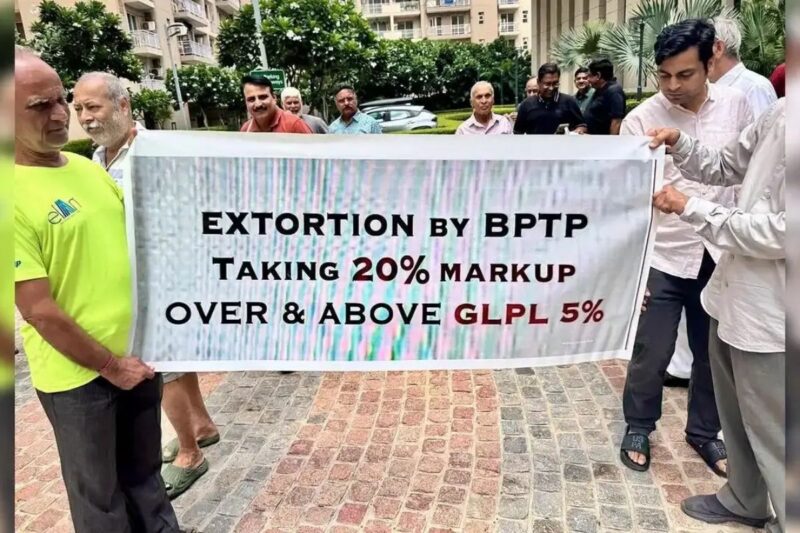
Launched roughly 2010–2012. Promised possession windows commonly fell in 2014–2017. Actual possession for many units occurred later (reports of 2017–2020+ for several towers). RERA has ordered refunds of pre-possession maintenance charges with interest and compensation (Spacio example, 2026). Terra cases produced refund orders and Supreme Court proceedings on interest rates. Post-possession, maintenance-handover and charge disputes continue into 2026, with RWA resolutions to withhold payments.
Amstoria and related (Sector 102 / Dwarka Expressway corridor)
Launched around 2011 onwards. Partial delivery reported after substantial delays relative to early promises. Newer phases (Verti Greens, Gaia etc.) carry later RERA completion dates into the 2030s.
The Resort and other mid-2010s projects
Reported delays of several years beyond original windows in secondary analyses of HRERA and buyer records.
Homebuyers: The Ultimate Victim
Documented cases illustrate the financial mechanics. A buyer who paid the bulk of the consideration early continued to service home-loan EMIs (or pre-EMIs under subvention arrangements) while paying rent elsewhere. When possession was delayed, the economic cost compounded. When cancellation was sought, earnest-money deductions and interest calculations became contested. RERA and consumer forums have repeatedly capped earnest-money retention at 10 % of sale consideration and ordered refunds with interest (rates ranging from 9 % to higher figures ordered by the Supreme Court in specific delay cases). Pre-possession maintenance collections have been ordered returned with interest and compensation for mental agony where the agreement did not authorise them as a precondition for possession.
Aggregate numbers across all buyers are not publicly available in audited form. Individual orders, however, show six- and seven-figure refunds plus interest, plus separate compensation awards. The cumulative effect for affected households is years of dual housing costs, litigation expense and uncertainty.
What courts and regulators have actually said about BPTP?
HRERA (Gurugram/Panchkula): Multiple orders directing refund of principal after limited earnest-money deduction, interest on delayed amounts, return of unauthorised pre-possession charges, and compensation. Limitation pleas have been rejected on continuing-liability grounds in some matters.
NCDRC and state commissions: Directions for refund with interest and compensation in delay cases; some settlements during appeal.
Supreme Court: Orders enhancing interest rates on refunds in prolonged-delay matters (citing unjust enrichment in at least one reported judgment); directions to honour contractual benefits and expedite possession where pending; oversight of broader CBI probes that later included a BPTP-related FIR.
Delhi High Court and other courts: Quashing or settlement of certain FIRs after compromise; earlier directions for investigation in plot-delivery disputes.
ED (2025): FEMA investigation into historical FDI structures; searches and seizures; probe ongoing at last report.
CBI (2026): FIR under Supreme Court-monitored process concerning alleged irregularities in subvention/loan arrangements linked to a specific project.
Buyer protests and post-possession disputes
Documented protests include demonstrations by army officers and other buyers in earlier years over unfinished construction, and more recent RWA actions at Sector 37D societies (Park Serene, Generations, Spacio) over maintenance fees, financial transparency, infrastructure shortfalls and formal handover. In 2026 the Park Serene RWA resolved to withhold CAM and allied payments until handover processes and disputed charges are addressed. BPTP/BPMS has stated that documentation has been shared, engagement has continued for years, and claims of unjustified charges are false. The dispute remains unresolved in the public record at the time of writing.
Testing “delay as a business model”
The evidence shows repeated multi-year delays relative to original agreements, continued EMI/rent burdens on buyers, retention of funds pending litigation or settlement, and the necessity for many buyers to approach RERA or courts for refunds or interest. Compensation ordered is often lower than the full economic cost of dual housing and lost time. This creates a structural imbalance: the developer retains capital flexibility while the individual buyer absorbs ongoing cost and uncertainty.
After 23 years the record show a repeated sequence in which substantial numbers of buyers who paid large percentages of the price early waited years beyond the dates written into their agreements, then in many cases had to litigate or protest to obtain refunds, interest, possession or post-possession accountability. Courts and regulators have repeatedly found in favour of allottees on specific contractual and statutory points.
A homebuyer’s capital is locked, EMIs continue, rent is paid, and legal costs accumulate. BPTP retains the ability to restructure, launch new projects and contest individual claims. When that pattern recurs across multiple projects and more than a decade, delayed possession ceases to be an isolated inconvenience and becomes a question of corporate and regulatory accountability.
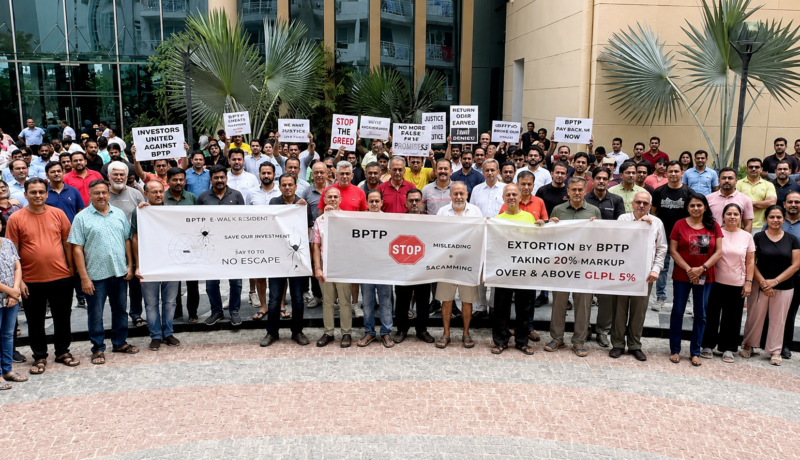
How many years should a homebuyer have to wait for a home that was promised years earlier? At what point does a pattern of delays, refund disputes and continuing post-possession friction stop being an unfortunate feature of a difficult industry and become a failure of the system that was supposed to protect the buyer? Those questions remain open in August 2026. The evidence assembled here indicates they are questions the public, regulators and courts have already been forced to confront repeatedly in the case of BPTP.