When a Child’s Head Injury Is Just the Latest Chapter: BPTP’s Long Pattern of Putting Profit Over People
A seven-year-old boy named Nikunj Chaudhary was playing near his home on a Sunday evening when a slab of plaster, dislodged from a second-floor balcony, came crashing down and struck him on the head. The setting was BPTP Amstoria in Sector 102, Gurugram, a society where, according to residents, families pay over Rs 60,000 annually in maintenance charges, amounting to Rs 15,000 every three months, yet still feel their everyday safety cannot be guaranteed. The child was rushed to hospital with head injuries and is reportedly stable. His parents are now preparing to file a police complaint.
It would be easy, and convenient for the builder, to file this away as an isolated accident, of bad luck, a freak structural failure, the kind of thing that happens in old buildings. Except this is not an old building. And it is not an isolated incident. It is the latest, most viscerally upsetting data point in a years-long pattern that should make every prospective homebuyer in Gurugram pause before signing a BPTP cheque.
A Society That Saw It Coming
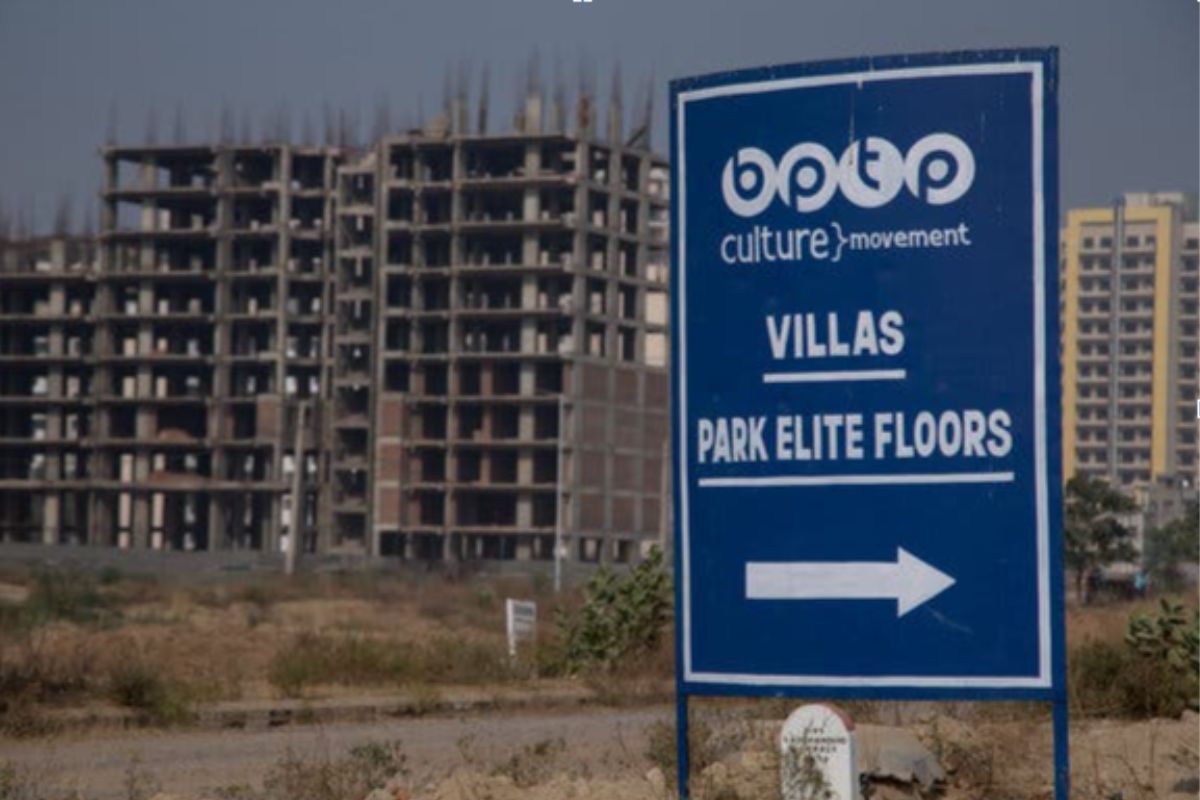
What makes the Amstoria incident so infuriating is not merely that it happened, but that residents say it was foreseeable. Despite previous complaints about crumbling plaster on balconies and walls, residents feel the builder and maintenance agency had ignored their safety concerns, effectively waiting for a disaster to occur. Even more damning: a former Deputy Commissioner had previously mandated structural audits for housing societies in the region specifically to prevent such collapses, but these safety audits appear to have been shelved, leaving residents in complexes like BPTP Amstoria vulnerable to the very construction defects the audits were meant to catch.
When pressed, BPTP’s response followed a familiar script, where they shifted the blame to the residents. The company’s management has stated that the affected area falls under the resident’s own maintenance responsibility, and that people had been advised not to place flower pots, washing machines, or AC outlets in spots prone to seepage. Perhaps.
But no homeowner places a flower pot expecting a chunk of their balcony to fall two storeys onto a child’s skull. When a builder’s first instinct after a child is hospitalised is to talk about cost estimates for repair work, it tells you everything about where the company’s priorities sit, and it is not with the people who trusted it with the biggest investment of their lives.
The Paper Trail That Should Have Warned Everyone
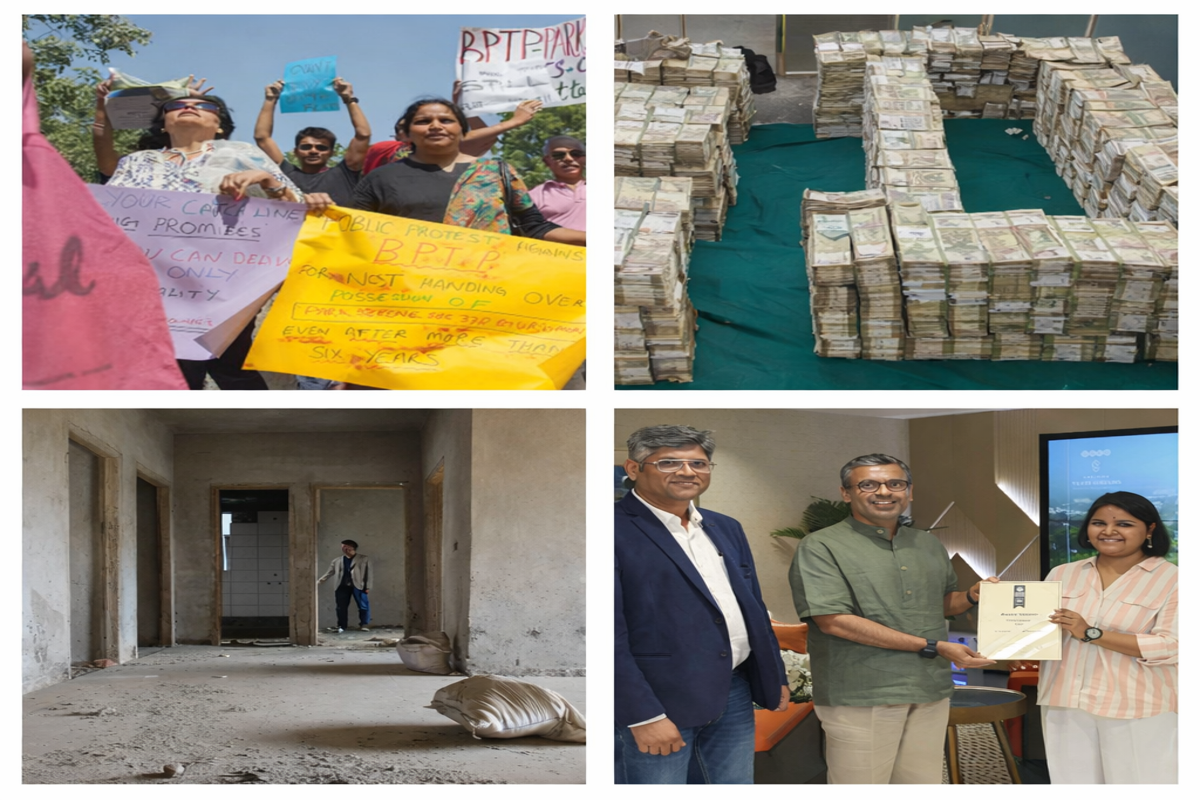
If the Amstoria incident feels like deja vu, that’s because it is. Just months earlier, in April, a joint raid by the Chief Minister’s Flying Squad and the Department of Town and Country Planning tore the lid off what can only be described as an institutionalised scam, one that implicated BPTP properties directly. A surprise inspection in Sector 70A covered 22 residential sites within BPTP’s Astaire Gardens, Imperial, and Green Oaks colonies. The results were startling: 14 of the 22 buildings inspected were found to be completely under construction despite having officially issued Occupation Certificates, with some structures amounting to nothing more than bare brick skeletons, lacking plaster, flooring, functional kitchens, or bathrooms.
Buildings without plaster. Without floors. Without working kitchens or bathrooms. And yet, on paper, they were certified “fit for occupancy”; fit, supposedly, for families to move in, raise children, and pay six-figure maintenance bills for the privilege.
This was not a one-off clerical slip either. Officials found that over 100 similar cases had surfaced across the city, with roughly 1,500 Occupation Certificates issued under the self-certification system since mid-2025 now under fresh scrutiny. The self-certification policy itself was meant to cut red tape by letting empanelled architects vouch for a building’s completion without a mandatory government site visit for every case. But with the department only auditing about 10 per cent of certificates at random, that trust was exploited as a loophole, and BPTP properties sat squarely at the centre of the exposure.
So when residents at Amstoria say they suspected something was structurally off long before plaster started falling on children, they are not being paranoid. They are simply pattern-matching against a city-wide scandal that, just two months before the boy’s injury, proved that BPTP buildings were among the worst offenders for being certified complete while standing as unfinished shells.
This Isn’t New — It’s a Habit
Go back further, to roughly a year before the Amstoria incident, and you find homebuyers at another BPTP project locked in open revolt against the company over revised building plans. Residents accused the builder of fraud, alleging that proposed changes would dilute green and open spaces, compromise fire safety, create environmental hazards, and strip away the privacy that had been part of the original sales pitch. In other words, the same residents who paid premium prices for “open, green, safe” living were being told, years later, that the builder reserved the right to quietly redraw the promise.
Three different incidents. Three different years. One unmistakable thread, where a company, BPTP, treats regulatory approval, structural safety, and contractual promises as negotiable line items rather than non-negotiable obligations to the people who live in its buildings.
Why This Should Make You Angry, Not Just Concerned
Strip away the corporate-speak and what you are left with is this: families spent their life savings, took on decades of home loans, and trusted a brand name to deliver a structurally sound home. In return, some got bare brick where there should have been finished walls. Others got certificates of completion for buildings that were not, in fact, complete. And now, a child is recovering from a head injury because a balcony literally fell apart.
This is not abstract corporate malfeasance. It is the difference between a family believing their child is safe playing outside their own home, and that same family standing in a hospital corridor wondering how a multi-thousand-crore real estate company could not be bothered to ensure basic plaster work was done properly — or that it stayed up once done.
Maintenance fees were paid. Complaints were filed. Audits were ordered by the administration. None of it, apparently, was enough to make BPTP move before someone got hurt. That sequence, complaint, inaction, injury, blame-shifting, is not bad luck. It is a business model that bets on regulatory fatigue and buyer powerlessness, and loses that bet only when the consequences become too visible to spin away, as they did this week in Sector 102.
What Accountability Should Actually Look Like
Haryana’s administration deserves credit for the Flying Squad raids and the OC fraud probe, but credit is not the same as closure. A scandal that uncovered bare-brick buildings passed off as livable homes cannot end with a list of “erring architects” facing license review while the developer who benefited from those certifications faces no equivalent reckoning. Structural audits that were promised after earlier scares cannot simply be allowed to lapse, only to be rediscovered as a missing safeguard after a child is hospitalised.
For prospective buyers, the lesson is blunt, where a glossy brochure and a famous name are not substitutes for due diligence. Ask for the actual Occupation Certificate audit trail. Ask who certified the building and whether that certification has ever been challenged. Talk to existing residents before signing anything, not the show-flat sales team.
For regulators, the lesson is more urgent. A self-certification system that lets 90 per cent of approvals go unchecked is not oversight; it is an honour system extended to entities that have already shown they don’t deserve the honour. Random 10 per cent audits did not stop bare-brick buildings from getting Occupation Certificates. They will not stop the next balcony from collapsing, either.
And for BPTP, the lesson should be the simplest of all, even if the company’s public statements suggest it hasn’t learned it yet: a child’s safety is not a maintenance dispute to be deflected with a repair-cost estimate. It is the absolute minimum a builder owes the families who made its business possible in the first place. Until that minimum is consistently met, not promised, not audited on paper, but actually delivered in brick, plaster, and structural integrity, the people of Gurugram have every right to keep asking the same uncomfortable question this newspaper is asking today: how many more warnings does it take before something changes?