ED’s 10,000 Crore GMADA Land Scam Probe Leads Straight To TDI’s PR-6 Fraud Trail
In September 2026 the Enforcement Directorate’s money-laundering investigation into Greater Mohali Area Development Authority land-bank transactions, publicly framed as a ₹10,000-crore scale probe, moved from multi-day searches inside GMADA offices straight to the Sector 119 headquarters of TDI Infratech Ltd. The search focused on alleged irregularities in compensation for land acquired for the 200-foot PR-6 Master Plan road: the transfer of 6.557 acres to persons connected with the developer after the Section 11 notification of 14 October 2020, Change of Land Use clearances, and an approximate ₹6-crore additional burden on the public exchequer. The road, first notified in 2013 and still incomplete thirteen years later, remains blocked by High Court litigation while surrounding residents endure chronic congestion, waterlogging and restricted emergency access.


GMADA Affidavit, Relative Transfers, CLU Clearances and a Federal Raid: The Unbroken Chain of Alleged Irregularities Around PR-6
The Enforcement Directorate’s money-laundering investigation into the Greater Mohali Area Development Authority’s (GMADA) land-bank operations has placed one of Punjab’s most important public land agencies under sustained federal scrutiny. In the final days of September 2026, ED teams spent consecutive days inside GMADA examining land records, Change of Land Use permissions, project approvals, financial documents and related files.
Reportings described the probe as encompassing alleged irregularities on a scale of ₹10,000 crore within the authority’s land bank. The investigation did not stop at the government offices. Within days of those searches a 15-member ED team entered the Sector 119 office of TDI Infratech Ltd in Mohali and remained until late night, examining documents, computers, electronic devices, CCTV recordings and the mobile phones of company personnel. The specific subject of the TDI search was alleged irregularities in the compensation process for land acquired for the planned 200-foot-wide PR-6 Master Plan road.
PR-6 is not a recently invented corridor or a peripheral access road. It is a 200-foot-wide arterial Master Plan road designed to divide Sectors 118/119, 117/74, 116/92 and 114/115 and to provide a major connection between the Sector 117/Airport Road side and the Banur-Landran road. The Punjab Government’s original Section 4 notification dated 24 December 2013 expressly stated that the land was likely to be required for construction of this 200-foot Master Plan road. The affected villages are recorded as Balo Majra, Balyali, Chappar Chiri Khurd and Tole Majra.
A 2019 Social Impact Assessment prepared for the government described the proposed acquisition as approximately 73 acres for completion of the corridor. Separate official GMADA records identify additional acquisition notifications, including a Section 11 notification dated 1 March 2017 relating to PR-7 and part of PR-6. The specific notification that sits at the centre of the current compensation dispute is the Section 11 notification of 14 October 2020 issued under the Right to Fair Compensation and Transparency in Land Acquisition, Rehabilitation and Resettlement Act, 2013.
According to GMADA’s position reported in 2026, the acquisition awards were cleared in 2015 and the overall acquisition process was substantially completed by 2022. Yet by September 2026 the road remained unfinished and closed to public use.
The first and most visible controversy is the extraordinary length of the delay. A road formally embedded in the Master Plan more than a decade earlier, subjected to a formal government acquisition process, and for which substantial public funds had already been spent, still could not be constructed. Residents of the surrounding sectors have repeatedly stated that residential and commercial developments were promoted on the understanding that the planned arterial road would provide future connectivity.
In March 2026 residents’ associations announced a protest outside TDI’s Sector 119 office, citing traffic congestion, waterlogging, poor emergency access and transport difficulties caused by the missing corridor. GMADA officials themselves have linked parts of the waterlogging problem in the relevant stretch to the pending PR-6 project and its allied drainage works. A court stay obtained in the compensation litigation halted work connecting the storm drain, leaving a service lane without a functional outlet for rainwater. The public-interest question is unavoidable and sharp: how could a corridor of this strategic importance remain incomplete for years after the land-acquisition process had substantially progressed?
The answer that emerges from the documented record is that the delay is principally the product of a land-compensation dispute and the resulting High Court stay rather than an ordinary construction lag. TDI Infratech approached the Punjab and Haryana High Court seeking compensation for its land at par with the compensation payable to farmers. The litigation began in 2022. The court granted a stay that has prevented or delayed civil works on the road.
GMADA has reported that it has spent approximately ₹200 crore on land procurement for the project. The road remains stalled. TDI’s stated position is that the matter is sub judice, that an application filed by residents has already been dismissed, and that the dispute must be decided by the High Court rather than through resident pressure on the development authority. The company has indicated it may initiate contempt proceedings against resident representatives if necessary. The stay continues. The infrastructure remains closed to construction.
The most serious allegation that has now drawn the Enforcement Directorate into the matter concerns the transfer of land after the acquisition process had advanced. In an affidavit filed before the Punjab and Haryana High Court in April 2026, GMADA stated that TDI Infratech transferred approximately 6.557 acres of land to persons connected with it after the government’s Section 11 notification dated 14 October 2020. Section 11(4) of the 2013 land-acquisition statute places restrictions on transactions in land after the relevant preliminary notification.
GMADA’s position is that post-notification transfers could not create a lawful entitlement to the enhanced compensation that would otherwise have been available to subsequent transferees. This is the core of the alleged compensation irregularity: land already within an acquisition process was subsequently transferred to persons connected to the developer, potentially altering the compensation category or amount payable when the government acquired the land.
The financial difference is what has made the allegation particularly consequential for the public exchequer. Reporting based on GMADA’s affidavit has given two sets of gross figures. One places the compensation that would otherwise have been payable at around ₹4.8 crore, rising to approximately ₹11 crore after the transfers, producing an alleged additional burden of about ₹6 crore. Another places the restricted figure at approximately ₹14 crore, rising to approximately ₹21 crore, again producing an alleged additional burden of nearly ₹6 crore.
The ₹6-crore differential is consistent across the recent coverage even while the underlying gross compensation numbers differ. What can be stated with precision from the public record is that GMADA alleges the transfers involving 6.557 acres could have resulted in roughly ₹6 crore of additional compensation liability for the public exchequer. Whether that sum was ultimately paid, partially paid, or remains a contingent claim is a question that requires the acquisition award, payment orders and treasury records—documents now under examination by the Enforcement Directorate.
The most serious version of the allegation is that the land was transferred to relatives or persons connected with TDI after the acquisition process had advanced, with the objective of obtaining compensation at rates applicable to farmers. Sources cited in September 2026 reporting state that after land earmarked under the Master Plan received Change of Land Use clearance, company officials transferred the land titles to relatives so that the land could attract the higher compensation category. Independent reporting carried the same sequence: after land received CLU clearance, titles were transferred to relatives in order to obtain higher compensation.

There is a fundamental distinction between a developer arguing that the government’s compensation policy undervalues its land and a series of post-notification transfers structured so that another person could qualify for a more advantageous compensation category. The first is a conventional valuation dispute. The second, if established, raises direct questions about the legality and purpose of the transactions themselves.
The CLU issue adds a further and independent layer. GMADA has reportedly alleged that land which had received Change of Land Use approval was subsequently represented or transacted as agricultural land for compensation purposes. CLU matters because the economic and legal character of land changes substantially once permission has been granted for non-agricultural development.
If land that has acquired development potential is later treated as ordinary agricultural land for a particular compensation calculation, the valuation consequences can be large. The questions that must be answered from the actual records are what the legal status of the land was at the time of each transfer and what compensation category was legally applicable when the government acquired it. Those answers lie in the CLU orders, mutation records, sale deeds, the Section 11 notification, the acquisition award and the compensation calculation sheets.
The public-exchequer dimension is the strongest public-interest component of the controversy. If the disputed transfers increased the government’s compensation liability by approximately ₹6 crore, the conduct is no longer merely a private dispute between a developer and the authority. The question becomes whether transactions involving private parties altered the amount that a public authority was required to pay for land being acquired for a public road.
Resident groups have therefore sought investigation and, in some representations, registration of an FIR. As of the August 2026 reporting, the available record shows that residents demanded an FIR; it does not establish that an FIR had already been registered against TDI in the PR-6 compensation matter.
The controversy escalated sharply on 28 September 2026 when the Enforcement Directorate searched TDI’s Sector 119 office. Approximately 15 ED officials examined documents, computers and electronic devices throughout the day and into the night. CCTV recordings and mobile phones were taken for examination; some phones were later returned after preliminary scrutiny. The search was reported as examining a complaint concerning alleged irregularities in compensation for land acquired for PR-6.
As of the immediate post-search reporting there was no public ED statement setting out a final finding of wrongdoing. The search itself, however, converts the matter from a civil compensation and planning dispute into a federal financial investigation. Until that point the controversy had involved land acquisition, compensation, TDI, GMADA, residents and the High Court. The ED’s entry introduces the possibility that the alleged land transfers and compensation arrangements involved financial irregularities connected to the approximately ₹6-crore differential.
The physical consequence of the compensation dispute remains the incomplete road. GMADA has spent approximately ₹200 crore on land procurement. Residents argue that public money has already gone into acquisition while the public infrastructure remains unfinished. The question they pose is straightforward and urgent: if the government has already acquired the land and spent substantial public funds, why should the road remain unusable because the developer and the government are litigating over the compensation formula? The answer is that the High Court stay itself forms part of the explanation for the continued non-construction. The practical answer is that residents continue to bear the daily costs of congestion, waterlogging and restricted access.
Residents have also alleged that the proposed PR-6 road was used as a selling point for properties in the surrounding TDI developments. In March 2026 reporting recorded that residents claimed the builder had availed benefits under the 2015 compensation policy and extensively marketed the project by showcasing PR-6 as the main connectivity backbone, thereby deriving commercial benefit while the road remained incomplete.
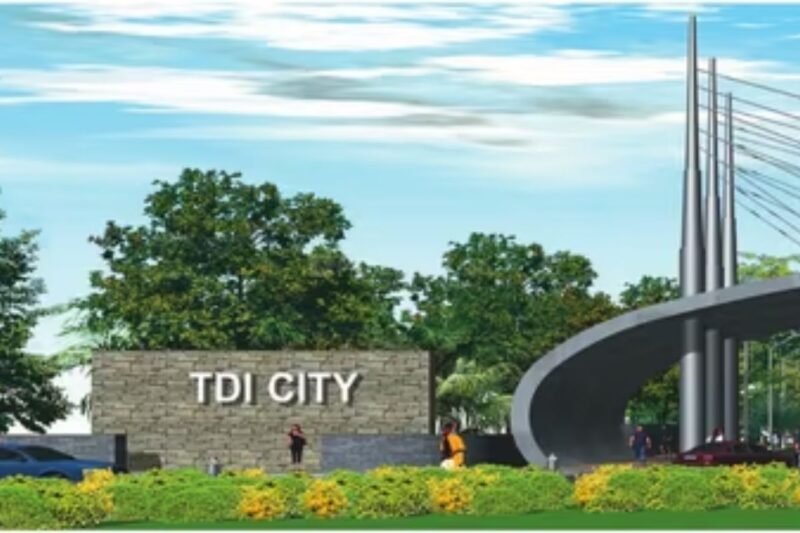
Current independent property material continues to describe TDI City Mohali in relation to the PR-6 corridor. The distinction that matters for any purchaser is the difference between a representation that a 200-foot road forms part of the approved Master Plan and a representation that the road will be completed by a specified date. Establishing which representation was actually made requires examination of the original brochures, advertisements, booking forms, allotment letters, agreements and promotional material.
The absence of the road has also become linked to drainage failure. Officials have attributed waterlogging in the relevant stretch partly to the pending PR-6 project and the halted drainage works. The controversy therefore expands beyond the question of when the road will be built. It becomes a question of whether the delay in constructing the road and its allied drainage infrastructure has contributed to recurring flooding in surrounding residential and commercial areas.
Residents report congestion, waterlogging, inadequate emergency access, transport problems and difficulties moving between sectors. The public-interest question is who bears the cost of a prolonged dispute over land compensation when the disputed land is supposed to become a public arterial road. Residents bear the immediate consequences; the government bears the acquisition and administrative costs; the developer maintains its legal claim concerning compensation.
By August 2026 the dispute had become a public agitation. More than 100 residents and RWA representatives gathered at GMADA’s office and demanded investigation into the alleged land-acquisition irregularities. They also demanded that GMADA grant TDI no further approvals, concessions, extensions or benefits while the PR-6 dispute remained unresolved, and they objected to extensions of the implementation periods of TDI’s Mega Housing Project-I and II.
GMADA’s Chief Administrator acknowledged that the matter was sub judice and expressed the expectation that the stay might eventually be lifted, allowing work to proceed. TDI maintained that the matter belonged before the court and disputed the residents’ characterization. The road remained unbuilt.
The original Section 4 notification dates to 24 December 2013. The 2019 Social Impact Assessment concerns approximately 73 acres. A separate official record identifies a Section 11 notification for PR-7 and part of PR-6 dated 1 March 2017. The current controversy centres on the 14 October 2020 Section 11 notification cited in GMADA’s 2026 affidavit. These are different stages and different statutory proceedings. Any accurate account must match land parcels and notifications khasra by khasra rather than collapsing them into a single event.
The 6.557-acre figure is specific and concrete. It is the quantity GMADA alleges was transferred after the 14 October 2020 notification. Verification therefore requires the original ownership records for those acres, the CLU approvals, the exact dates of each sale or transfer, the names of transferors and transferees, the relationship between the parties, the consideration paid, the mutation dates, the stamp-duty calculations, the acquisition award, the compensation calculation, the compensation actually paid, and any subsequent cancellation of registrations. Without those documents it is impossible to determine whether the transactions were merely technical or were structured to obtain higher compensation.
An additional detail reported after the ED search is that TDI itself later approached GMADA seeking cancellation of some of the registrations. If confirmed by the registration records, the request raises further questions: why the company sought cancellation, whether the transactions had become legally problematic, whether GMADA had objected, whether the transfers interfered with acquisition, or whether another commercial reason existed. The available reporting does not answer these questions; they remain open investigative points.
The economic heart of the matter is the difference in value and category of land before and after development-related approvals. A developer holding land that has acquired development potential has a strong commercial interest in how that land is valued for acquisition. The government’s concern, according to the 2026 allegations, is that land with CLU status was transferred and then treated in a manner that could increase the compensation payable.
The questions that follow are what the land was worth under the applicable statutory formula, who legally owned it on the relevant notification date, when each transfer occurred, what the legal status of each transferee was, whether any transaction occurred after the statutory cut-off, and whether the transferee was entitled to the claimed category of compensation. Those questions can be answered only from the official land records.
The ₹200-crore public expenditure figure must be treated with precision. Reports state that GMADA or PUDA had spent nearly ₹200 crore on land procurement by the time litigation stalled construction. The accurate formulation is that the authority has spent nearly ₹200 crore on acquiring land for PR-6 while the road remains stalled amid litigation. Describing the entire amount as wasted would be an evaluative conclusion not established by the available evidence; the land remains a public asset even while construction is delayed.
The controversy effectively pits three interests against one another. The state authorities want to acquire the land and construct the planned public road under the applicable compensation framework. TDI Infratech disputes the compensation treatment and has pursued litigation seeking compensation at par with farmers. Residents want the road constructed and argue that the continuing litigation and the alleged land transactions have delayed essential infrastructure.
The Enforcement Directorate has entered because the allegations concerning the underlying transfers and compensation have been referred for financial investigation. The matter is therefore no longer an ordinary builder-government dispute; it is a governance question involving public money, public infrastructure and private land transactions.
One of the most important unresolved questions is whether the alleged ₹6 crore was actually paid. Media reports refer to a potential additional burden. An investigation must distinguish between a sum potentially payable and a sum actually paid out. The necessary documents are the acquisition award, the compensation calculation sheets, the payment orders, the treasury or bank records, the mutation records, any revised compensation calculations, any objections by GMADA, any recovery proceedings, and any cancellation or reversal of compensation. Until those records are obtained, the description remains an alleged additional compensation burden of approximately ₹6 crore.
The current public evidence establishes that an ED search took place, that the search concerned alleged PR-6 compensation irregularities, that GMADA has made specific allegations concerning 6.557 acres, that the alleged additional burden is around ₹6 crore, that residents have demanded investigation, and that the matter is connected to litigation before the Punjab and Haryana High Court.
It does not yet establish a final judicial finding that TDI committed fraud, that directors personally committed fraud, that relatives knowingly participated in an illegal scheme, that ₹6 crore was misappropriated, that the government has suffered a finally determined loss of that amount, or that money laundering has been proved. Those conclusions require further investigation and adjudication.
The PR-6 allegations gain additional weight from the wider history of TDI-related disputes in Mohali, though those disputes must not be conflated with the compensation case. Consumer proceedings concerning TDI City Sectors 117–119 have involved claims that promised road widths and green areas were not delivered, that layouts were altered after allotment, and that plots fell into acquisition-related critical gap areas, leaving purchasers without possession despite having paid the large majority of the consideration. These cases demonstrate that land-acquisition and layout issues have affected TDI’s Mohali projects for years; they do not themselves prove the PR-6 compensation allegations.
The documented record of the PR-6 controversy therefore divides into six distinct issues. First, GMADA alleges that approximately 6.557 acres were transferred to persons connected with TDI after the 14 October 2020 Section 11 notification, potentially contrary to statutory restrictions. Second, the alleged purpose was to enable the transferred land to receive compensation on a basis applicable to farmers. Third, the transactions are said to have created an approximate ₹6-crore additional burden on the public exchequer.
Fourth, the road remains stalled amid the compensation litigation despite substantial public expenditure on land acquisition. Fifth, residents allege that the road was used as a major connectivity proposition in marketing surrounding developments. Sixth, the Enforcement Directorate searched TDI’s Mohali office on 28 September 2026 and is examining the alleged compensation irregularities and related records.
The strongest investigative questions are therefore documentary rather than rhetorical. Who owned each parcel of the 6.557 acres immediately before the 14 October 2020 notification? Who acquired each parcel afterwards? Were the transferees relatives of TDI directors, shareholders or employees? What was the exact date of each sale deed? When was the CLU granted? What was the land-use classification on the date of each transfer?
Did TDI receive consideration for the transfers and where did that consideration go? Did the transferees actually receive compensation and how much did GMADA ultimately pay? Was any compensation subsequently recovered? Did TDI itself request cancellation of the registrations and why? What exactly did TDI tell the High Court about the disputed transfers? What did GMADA state in its April 2026 affidavit? What documents has the ED now seized? Does the investigation concern only PR-6 or additional land transactions involving TDI?
The critical documentary trail includes the 24 December 2013 Section 4 notification, the 2019 Social Impact Assessment, the 14 October 2020 Section 11 notification, every sale deed covering the 6.557 acres, the CLU approvals, TDI’s High Court petition and the interim stay order, GMADA’s April 2026 affidavit, the acquisition award and compensation calculations, proof of actual compensation payments, and the ED search and seizure documentation once it becomes available through subsequent proceedings. Until those documents are compared, the public record establishes the existence and seriousness of the controversy but cannot finally determine the transaction sequence.

The PR-6 case therefore contains three layers. The first is a consequential land-acquisition and compensation dispute between TDI Infratech and the government in which the developer seeks compensation on a different basis and has obtained a stay. The second is GMADA’s specific allegation that 6.557 acres were transferred after the statutory process had reached a stage at which such transfers could not lawfully create the claimed compensation entitlement, producing an approximate ₹6-crore additional public liability. The third is the public-infrastructure consequence: the resulting litigation has left the 200-foot corridor incomplete while residents experience congestion, drainage failure and restricted access.
The September 2026 ED search, coming immediately after the agency’s multi-day examination of GMADA’s land-bank records, places the entire sequence inside a federal money-laundering investigation. As of 29 September 2026 the public evidence supports describing the matter as an active investigation and litigation over alleged land-compensation irregularities of significant public consequence. The road remains closed. The public money has already been spent. The residents continue to live with the daily results of an unfinished Master Plan corridor whose completion has been deferred by a compensation dispute whose financial implications are now under federal examination.