From Overpriced X-Rays To Missing Files: The Saga Of ₹700-Crore Medical Scam In Delhi
In the shadows of Delhi’s government hospitals, an alleged procurement network involving senior officials and a private trader raises profound questions about how public money meant for medicines, X-ray machines, bedsheets and life-saving supplies could be funnelled through restrictive tenders, missing files and hundreds of bank accounts. As the Anti-Corruption Branch’s 12,000-page chargesheet, Enforcement Directorate scrutiny and court criticisms collide with denials of overpricing and personal gain, the case forces an uncomfortable interrogation of institutional accountability, the integrity of the Government e-Marketplace process, and whether the very architecture of healthcare procurement has been compromised at the expense of patients who depend on it.


The ₹700-Crore Medical Scam In Delhi: Can Citizens Trust a Health System Where Records Disappear and Competition Appears Manufactured?
The controversy surrounding the procurement of medicines, surgical consumables and medical equipment for Delhi government hospitals through the Directorate General of Health Services and its Central Procurement Agency is not a simple tale of inflated invoices. It is an alleged systematic subversion of the public procurement process itself, one that investigators claim began at the tender-design stage and extended through payment release and the subsequent movement of funds.
According to the Anti-Corruption Branch case, a network of public officials and a private pharmaceutical trader allegedly manipulated technical specifications, imposed restrictive eligibility conditions, deployed selected or fictitious firms, influenced the Government e-Marketplace process, accelerated payments and channelled money through numerous bank accounts. The same investigation later told a Delhi court that vital procurement files appeared to have been intentionally destroyed. These are investigative allegations contained in the FIR, subsequent disclosures and the chargesheet; they remain subject to judicial adjudication.
What exactly is alleged? The principal individuals associated with the criminal case are Dr Vatsala Aggarwal, former Director General of Health Services, arrested and chargesheeted; Dr Vinod Kumar Ranga, former Head of Office of the Central Procurement Agency, the first major arrest and also chargesheeted; Neeraj Chopra, former Deputy Controller of Accounts at the CPA, likewise arrested and chargesheeted; and Rajiv (or Rajeev) Kumar Rangila, the pharmaceutical trader portrayed by investigators as the private-sector coordinator and alleged mastermind, who absconded, left the country, returned and was arrested.
The September 2026 chargesheet named two private entities, F-Med Devices and M Sahib and Sons Private Limited. Other firms allegedly linked to Rangila in investigative material include Technocrats, Raj Shree, and Ashi Surgical and Pharmaceuticals. The ₹600-crore to ₹750-crore figures that have circulated are investigative and complaint estimates that evolved as the probe developed; they represent different descriptions of procurement value, suspected loss or proceeds rather than a single judicially quantified figure.
How did this case begin? Complaints reached the Delhi government’s Directorate of Vigilance concerning Central Procurement Agency purchases. In May 2026, Vigilance officials conducted searches at the CPA office, examining documents related to X-ray machines, MRI machines, anaesthesia equipment, surgical equipment, medicines and other items. The matter was referred to the Anti-Corruption Branch, which registered FIR No. 7 on 2 June 2026 at the ACB police station. The FIR invoked provisions of the Prevention of Corruption Act, including Sections 7A, 13(1) and 13(2), along with provisions of the Bharatiya Nyaya Sanhita such as Sections 61(2), 316(5), 318(4) and 238.

Early media descriptions spoke of a roughly ₹350-crore irregularity; subsequent reporting and prosecution submissions referred to figures in the range of ₹600 crore, ₹640 crore, ₹700 crore and, in some accounts before the court, more than ₹750 crore. This variation itself demands scrutiny: does it reflect expanding discovery of the alleged exposure, differing methodologies of calculation, or the inherent difficulty of quantifying loss when records are incomplete?
The alleged mechanism is the most disturbing element. Investigators claim the process worked backwards. Instead of an open competitive process determining the supplier, the preferred manufacturer or supplier was allegedly identified first, after which technical specifications were tailored, eligibility conditions made restrictive, and the tender routed through officials to produce the desired outcome.
The sequence described by the ACB runs roughly as follows: manufacturer or supplier identification, preparation of tailor-made specifications, routing to procurement officials including Ranga, placement before the tender committee, imposition of high experience, turnover and performance thresholds designed to exclude genuine competitors, selection of preferred or proxy firms, award of contract, submission of allegedly inflated invoices, rapid government payment, and subsequent diversion or kickbacks.
Rangila is alleged to have worked with manufacturers to determine supply rates and arrange kickbacks, after which specifications were prepared and sent to Ranga. If these allegations are ultimately established, the competition that appeared on paper may have been artificial from the outset. That possibility alone raises fundamental questions about the integrity of every safeguard built into public procurement.
The alleged network of private firms intensifies those questions. Investigators have identified F-Med Devices, Technocrats, Raj Shree, Ashi Surgical and Pharmaceuticals, and M Sahib and Sons as entities shown on paper as owned by others while Rangila is alleged to have been the actual operator. Some nominal owners have been described in reporting as people within Rangila’s circle, including employees, servants and even tea vendors.
If proved, this structure would mean that multiple bidders appearing on a tender record could have been controlled by the same underlying person, rendering the appearance of competition a facade. Bank accounts, GST records, incorporation documents, beneficial ownership trails, communications and invoice patterns will be central to testing this claim. Until then, the public is left to ask how such a structure, if it existed, could operate inside a system that is supposed to be transparent and competitive.
Rajiv Rangila occupies a central place in the investigative narrative. Described as a pharmaceutical distributor and medical-supply contractor with more than two decades of experience, he is alleged to have understood the procurement system’s vulnerabilities and served as the liaison between manufacturers and government officials. The allegations against him include creating or controlling proxy companies, arranging their participation in tenders, collaborating on specifications, fixing rates, arranging cash kickbacks, influencing officials, and benefiting from payments made to supplier firms.
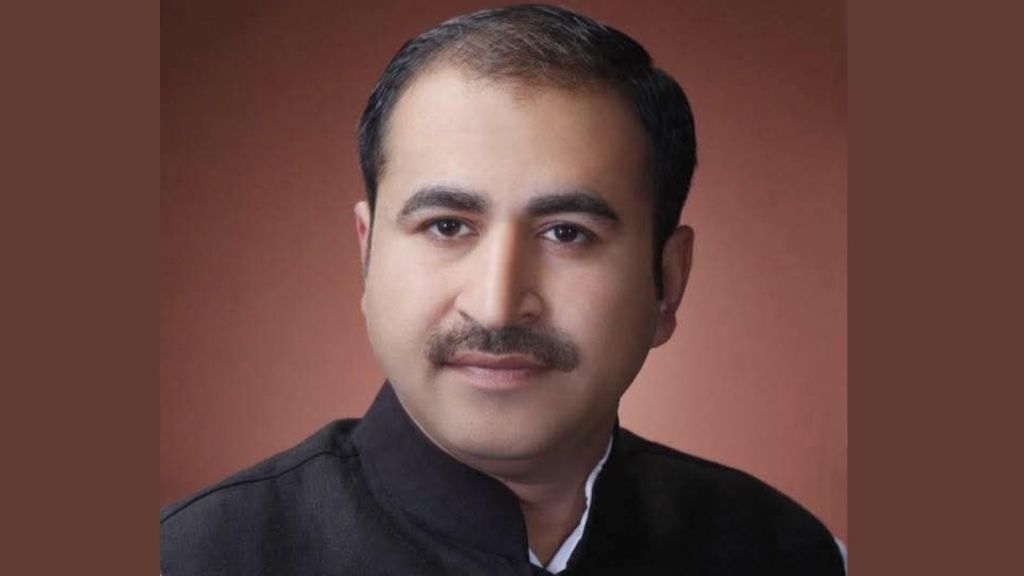
He obtained anticipatory bail in a separate Laxmi Nagar case involving allegations of hurt, wrongful restraint, theft and intimidation before leaving India for the United States. A court later rejected anticipatory bail in the procurement case, citing the need for custodial interrogation regarding the money trail, missing documents and alleged conspiracy. He was declared a proclaimed offender; a lookout circular was issued. He eventually returned and surrendered in late September 2026. These are sequential facts of investigation and court process; they do not equate to conviction.
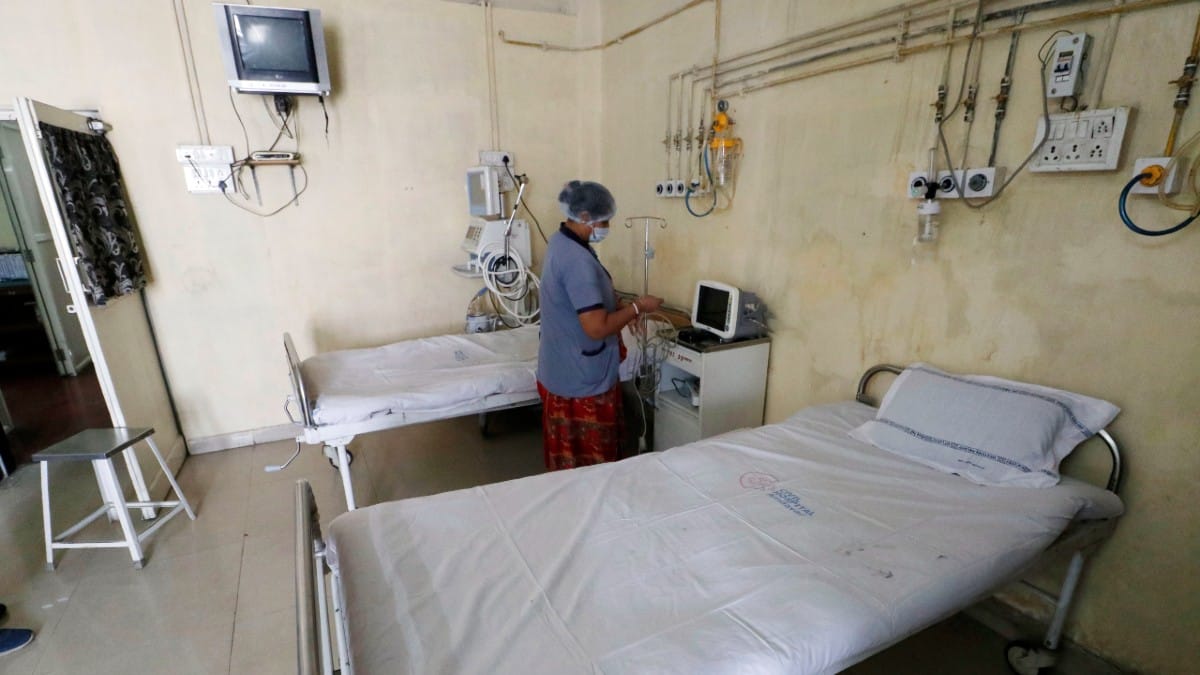
Price inflation forms another core allegation. Indian Express reporting has cited examples such as a portable X-ray machine procured at approximately ₹33 lakh against an estimated market cost of about ₹10 lakh; linen bedsheets at roughly ₹450 against an alleged original price around ₹150; and ORS sachets at about ₹15 against a market rate near ₹2.50. Other reporting from the FIR has referred to inflation ranges of approximately 230 per cent for portable X-ray machines, 200 per cent for bedsheets, 340 per cent for C-arm radiological equipment, and up to 500 per cent for ORS.
These figures, if accurate reflections of actual transactions, would represent a direct transfer of public resources away from patient care. Yet a counterpoint exists that any serious examination must confront: a report submitted by the Delhi Health Department to the Directorate of Vigilance in August 2026 reportedly concluded that it found no evidence of overpricing in several procurements when compared with government rates available through the GeM system and other institutions.
The same report is said to have acknowledged that price comparisons alone cannot determine legality; specifications, vendor selection, quality, delivery and procedural compliance remain separate questions. This contradiction sits at the heart of the case. Which data set is more reliable? Why do official government comparisons diverge so sharply from investigative claims of inflation? Until the court resolves these tensions, the public is entitled to demand transparency about both the methodology of the Health Department’s review and the ACB’s quantification of loss.
GeM manipulation constitutes a further alleged layer. Investigators have claimed that some contracts continued to appear on the procurement portal as “active” or “under process” even after orders had been awarded and payments released. Manual work orders were allegedly issued while the corresponding GeM process remained incomplete.
One example raised before the court involved Red Mamba Force Private Limited, engaged to provide mobile digital chest X-ray screening under the TB Mukt Bharat Abhiyan despite the bid allegedly still appearing pending on GeM. Dr Ranga is said to have sent emails to hospitals and chest clinics asking them to permit the company’s radiographers to join.
The associated bid files were allegedly missing from the CPA. If established, such practices would undermine the very purpose of an electronic marketplace designed to enhance transparency. Why were status indicators not updated? Who controlled the portal entries? What institutional failure allowed awards and payments to proceed while the public record remained misleading?
The missing-file allegation is among the most alarming. The ACB told the court that vital procurement files had been “intentionally destroyed.” These documents allegedly contained information about who prepared tender documents, technical specifications, eligibility conditions, tender terms, technical and financial evaluation, decision-making and procurement approvals. Dr Ranga is alleged to have retained important files in his personal custody; this was cited as one ground for opposing his bail.
The disappearance of such records makes reconstruction of the decision chain substantially harder and raises the possibility of deliberate evidence destruction. At the same time, the court itself later criticised aspects of the ACB’s own investigation: one case diary appeared to contain material copied from the previous day’s entry, and two disclosure statements attributed to Rangila lacked dates. Special Judge Vidya Prakash directed remedial measures and observed that earlier detailed observations had not produced sufficient improvement.
This creates a striking paradox. An agency investigating alleged destruction of procurement records has itself been questioned by the court about the integrity of its own documentation. How can public confidence be maintained when both the original files and the investigative record face credibility challenges?
The alleged money trail moves the case beyond procedural irregularity into potential large-scale diversion. The ACB told the court that payments moved through hundreds of bank accounts, including those of people apparently unrelated to the goods supplied. Crores were subsequently withdrawn in cash or transferred onwards. The chargesheet reportedly includes bank records and efforts to identify ultimate beneficiaries.
Aggarwal’s defence has mounted a major challenge precisely here: her bail plea asserts that the chargesheet traces payments to supplier firms but does not identify a single rupee reaching her or any account connected with her; that no illicit cash was recovered from her residence; that seized documents related to personal investments not alleged to be disproportionate; and that the chargesheet contains no call, message, chat or meeting between her and Rangila. On 7 October 2026 her counsel characterised her role as that of an approver of CPA decisions.
The Special Judge questioned how she could simply approve everything, including single-bidder cases, without applying her mind. The matter was listed for 17 October 2026. The absence of a traced personal trail does not automatically exonerate; nor does the existence of an investigative theory prove personal enrichment. The gap between allegation and established financial linkage remains one of the case’s central unresolved tensions.
Aggarwal’s earlier tenure at the Delhi State Cancer Institute between 2023 and 2025 adds another layer of institutional concern. A 2024 Vigilance inquiry examined allegations concerning the appointment of Dr Minakshi Mann as Assistant Professor, including claims that recruitment rules were altered or structured to favour a particular candidate. The complaint was associated with political figures. No criminal case was registered against Aggarwal arising from that matter at the time. In July 2026 Vigilance again sought an action-taken report.
She was nevertheless appointed DGHS in August 2025. Political opponents later questioned why she was elevated despite the pending Vigilance matter. They prompt a legitimate question: what due-diligence process allowed an official under Vigilance scrutiny to assume charge of the very directorate under which the Central Procurement Agency operated?
Ranga’s position as Head of Office of the CPA placed him at the operational centre of procurement. He was arrested on 18 June 2026. The prosecution has alleged that he received or handled tailor-made specifications, placed them before tender committees, exercised substantial influence, retained files, and acted as the governmental link to the private network. His defence has disputed the allegations, arguing that he followed established procedures and that decisions carried Aggarwal’s approval.
Regular bail was rejected on 17 August 2026. Neeraj Chopra’s role is focused on the financial-processing side; he is alleged to have processed and approved payments despite objections from Accounts officials. The Delhi government granted sanction to prosecute all three public servants on 30 September 2026, a legally necessary step under the Prevention of Corruption Act. The chargesheet invokes the same statutory provisions noted in the FIR.
The Enforcement Directorate registered a PMLA money-laundering case arising from the underlying allegations and sought extensive records from the Delhi Health Department: tender documents, technical and financial evaluations, contract awards, supply and inspection records, payment releases, and details of manufacturers, distributors and vendors.
As of early October 2026 there is no reliable public reporting establishing ED arrests of the principal accused or an ED chargesheet in this matter. The major physical searches in the early phase were conducted by Vigilance and the ACB. No CBI investigation or chargesheet in this specific procurement case has been substantiated from reliable sources. The investigative architecture therefore comprises the ACB’s criminal case and a parallel ED PMLA inquiry.
Administrative consequences followed. In August 2026 the Delhi government cancelled pending and incomplete CPA tenders and temporarily allowed government hospitals to procure medicines and supplies directly. The CPA’s functions were placed largely in abeyance except for essential drugs, while existing rate contracts continued subject to review. Early in the probe, officials were examining the role of more than 100 doctors and officials associated with the process. The three chargesheeted public servants therefore do not exhaust the universe of persons under scrutiny.
What remains unanswered is extensive. Who actually controlled the alleged supplier firms? Who selected the manufacturers and supplied the technical specifications? Who drafted the tender documents? Who approved them at each stage? Where did the alleged cash ultimately go after government payments reached supplier accounts? Why were files missing—negligence, unauthorised removal, or deliberate destruction?
Who were the nominal owners and what was their financial capacity? Why does the Health Department’s comparative price analysis diverge from investigative claims of inflation? Why did the court find it necessary to criticise the ACB’s own case-diary practices? These questions are not rhetorical. They go to the heart of whether public procurement in Delhi’s health system can be trusted to deliver value for money and uninterrupted patient care.
The strongest investigative angles are not simply the quantum of alleged loss. They concern the architecture of the system: whether competition was genuine or manufactured; whether multiple bidders were controlled by one operator; whether specifications were written after the preferred supplier was chosen; why eligibility criteria were allegedly so restrictive; why GeM status indicators remained misleading; why records vanished; and whether senior officials merely approved documents or actively shaped outcomes.
The Health Department’s dispute of overpricing and Aggarwal’s assertion that no money trail reaches her must be weighed against the ACB’s narrative of tailor-made tenders, proxy firms, rapid payments and missing files. The court’s criticism of investigative documentation adds a further layer of caution.
As of 8 October 2026 the following is established: a Vigilance complaint existed; FIR No. 7 was registered; three public servants and later Rangila were arrested; a roughly 12,000-page chargesheet naming three officials and two private entities was filed; prosecution sanction was granted; the ED opened a PMLA investigation and requisitioned records; the court flagged serious lapses in ACB documentation; Aggarwal faced an earlier Vigilance matter at DSCI; and Rangila faced separate reported criminal proceedings.
What is not yet judicially established is that the full ₹700–₹750 crore figure represents proven loss, that every named individual committed the alleged offences, that Rangila was the beneficial owner of every proxy company, that every price differential constitutes actual government loss, that Aggarwal personally received proceeds, that every missing file was deliberately destroyed, or that money-laundering has been judicially proved against any accused.
The case therefore stands as a severe test of institutional integrity. Public money intended for the diagnosis and treatment of Delhi’s residents is alleged to have been diverted through a process that, if the investigative claims hold, compromised competition at its foundation and then obscured the evidence trail. The denials, the conflicting official analyses of pricing, and the court’s own criticism of the investigating agency ensure that the factual picture remains unsettled.
Until the courts determine what has been proved, citizens are left with a series of unanswered and deeply concerning questions about how their health system’s procurement machinery was allowed to operate, who benefited, and whether the safeguards designed to protect public resources failed so comprehensively that only a thorough, transparent and rigorously fair judicial process can restore any measure of confidence.