Trump’s Iran War And The Men Around Him, Are Ideology And The Quest For History Driving His Circle?
The growing confrontation between Washington, Israel and Tehran has triggered fears of a wider Middle East war. Yet conflicts are rarely determined solely by strategy or military power. How much influence do the personalities, ideas and ambitions inside Donald Trump’s inner circle have over the course of this crisis?

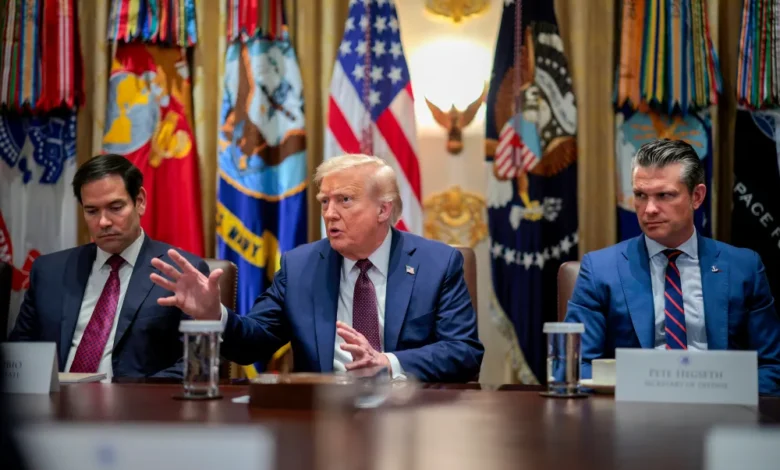
The rapidly escalating confrontation between the United States, Israel and Iran has focused global attention on missiles, alliances and regional power struggles. Yet wars are rarely shaped by strategy alone. History shows that the path to war is often shaped as much by the advisers around presidents as by the adversaries they confront.
A Presidency Shaped By A Tight Inner Circle
In moments of war, the focus often rests on military movements, battlefield calculations and diplomatic manoeuvres. Yet history repeatedly shows that the course of a conflict is also shaped by the personalities closest to the president. The war involving the United States, Israel and Iran is no exception. Behind the public statements and military briefings lies a small circle of advisers whose views, instincts and ideological leanings are helping shape the direction of Washington’s strategy.
At the centre of this circle is, of course, Donald Trump. Trump’s approach to governing has long differed from the more institutional style adopted by many of his predecessors. Rather than relying primarily on the slower deliberations of bureaucratic structures within the State Department or the Pentagon, Trump has often preferred a tighter group of trusted aides and political allies. In moments of crisis, this tendency can amplify the influence of the individuals who have the president’s ear.
The Hawkish Voices
Among the most visible figures in the administration’s response to the Iran conflict is Pete Hegseth. Now overseeing the Pentagon, Hegseth has become a prominent public voice of the administration’s military posture. His rhetoric has frequently emphasised decisive force and overwhelming military dominance, reflecting a worldview that prioritises strength and deterrence when confronting adversaries such as Iran.
Alongside him stands Marco Rubio, a long-time advocate of a hard line against regimes viewed as hostile to American interests. Rubio represents a more traditional strand of Republican foreign policy thinking-one that regards Iran as a central destabilising force in the Middle East and argues that confronting Tehran is essential to maintaining regional stability and protecting American allies.
The Cautious Camp
Yet the circle around Trump is not entirely unified. Within the administration sits JD Vance, whose political instincts have often leaned toward skepticism about prolonged foreign conflicts. Vance, like several figures within the broader “America First” movement, has frequently argued that the United States should be wary of becoming entangled in open-ended military commitments abroad.
His presence reflects a strand of thinking within Trump’s coalition that remains cautious about repeating the long and costly wars that followed the invasions of Iraq and Afghanistan.
When Personalities Shape Policy
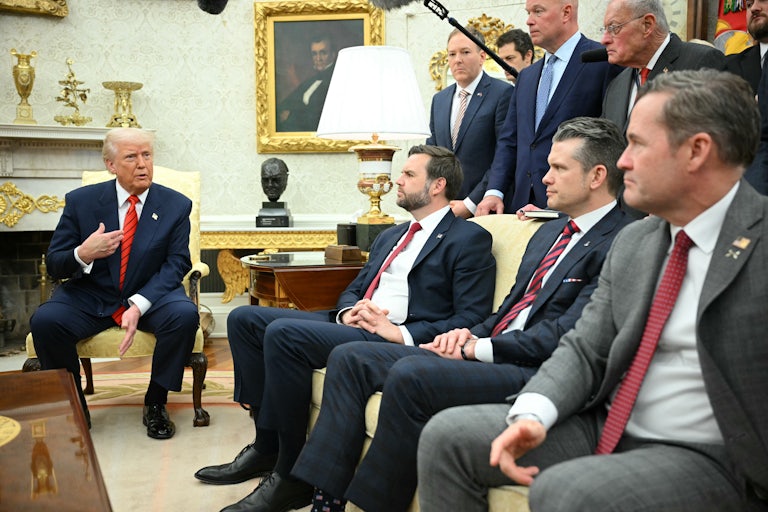
These differing viewpoints show an important reality about the current moment: the administration’s approach to Iran is not shaped by a single ideological consensus but by competing instincts within Trump’s own orbit. Some advisers emphasise confrontation and military strength. Others remain wary of escalation and long-term entanglement in the Middle East.
Trump himself often sits at the intersection of these currents. Known for valuing loyalty and personal trust, he has tended to rely on advisers who communicate directly with him rather than through traditional bureaucratic channels. In fast-moving geopolitical crises, this style of leadership can make the president’s inner circle unusually influential.
In such circumstances, the individuals surrounding the president do more than simply implement policy. They help shape the options that reach the Oval Office, frame the threats confronting the United States and influence how military and diplomatic tools are deployed. In the unfolding confrontation with Iran, the composition of this circle (and the ideas circulating within it) may prove as consequential as developments on the battlefield itself.
The Hegseth Factor
Few figures illustrate the unusual composition of Donald Trump’s national security circle more vividly than Pete Hegseth. A former National Guard officer who rose to prominence as a television host on Fox News, Hegseth represents an unconventional path to one of the most powerful positions in the American government.
His ascent to the Pentagon reflects a broader shift within parts of American politics where media influence, ideological conviction and political loyalty increasingly intersect with national security policy.
Since taking office, Hegseth has frequently framed international conflict in blunt and unapologetic language. Public briefings on the Iran war have emphasised overwhelming force, American military superiority and the need to demonstrate decisive strength against adversaries.
Supporters argue that such stance sends a clear message to rivals and reassures allies that the United States remains willing to use its military power when necessary. Critics, however, worry that this style of communication risks reducing complex geopolitical conflicts to demonstrations of strength and dominance.
The contrast with the traditionally cautious tone adopted by defence secretaries during wartime has not gone unnoticed.
Ideology And Identity
Critics have also pointed to elements of Hegseth’s worldview that appear rooted in a broader ideological narrative about Western civilisation and cultural struggle. In speeches and writings prior to joining the administration, he frequently framed global politics through the lens of defending Western values against perceived ideological adversaries.
Supporters see this as a reflection of patriotic conviction and cultural confidence. Critics argue that such framing risks turning geopolitical rivalries into identity-driven conflicts that become harder to resolve diplomatically.
War As Political Card
Hegseth’s background in television has also shaped how he communicates about military affairs. His public appearances often blend the tone of political commentary with the authority of a defence official.
For some observers, this represents a modern reality in which political leaders must operate within a media-saturated environment where messaging and perception are inseparable from policy. For others, it raises concerns that the performance of strength may sometimes overshadow the quieter, more complex work of strategic decision-making.
In the unfolding confrontation with Iran, Hegseth has become not only a policymaker but also a symbol of the broader ideological and political forces shaping the administration’s approach to conflict.
Competing Instincts Inside Trump’s War Council
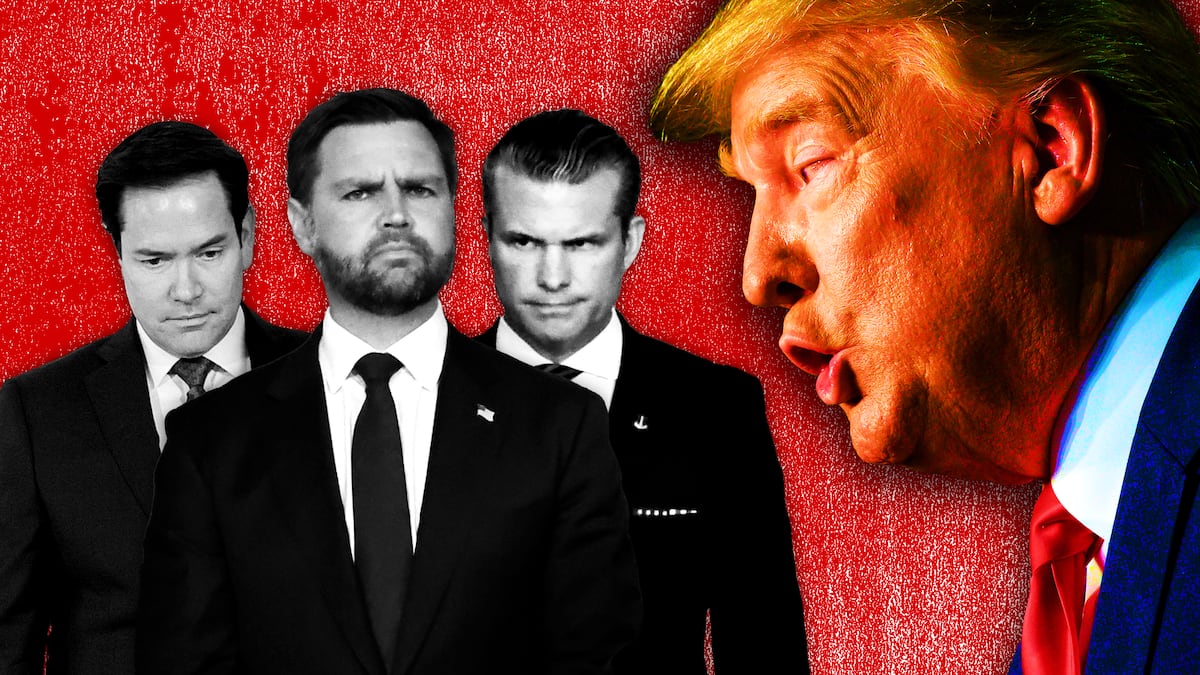
If the war with Iran appears at times to be accompanied by shifting messages from Washington, it may be because the administration itself contains several competing instincts about how the United States should approach the conflict. The circle around Donald Trump is not guided by a single coherent doctrine on Iran. Instead, it reflects a broader debate within American conservative foreign policy about how aggressively the United States should wield its military and diplomatic power in the Middle East.
Within this debate, three broad schools of thought have emerged – each shaped by different historical lessons, strategic priorities and political instincts.
The Interventionists
One camp believes that Iran represents one of the most serious long-term threats to American interests in the Middle East. For figures in this group, Tehran’s influence across the region – from Lebanon and Syria to Iraq and Yemen – has steadily expanded over the past two decades. Allowing that influence to continue unchecked, they argue, risks undermining U.S. allies and weakening American credibility.
Among those broadly aligned with this approach is Marco Rubio, who has long advocated a tougher posture toward the Iranian regime. This perspective draws from a more traditional strand of Republican foreign policy thinking that emphasises deterrence, sanctions and, if necessary, military pressure to counter adversaries.
To interventionists, the current confrontation is not simply a reaction to immediate events but part of a longer strategic struggle to limit Iran’s regional reach.
The Force-First Nationalists
A second camp places less emphasis on long-term diplomatic containment and more on the decisive use of military power when conflict erupts. For this group, once hostilities begin, the objective should be to overwhelm the adversary quickly and demonstrate American military superiority in unmistakable terms.
The rhetoric emerging from the Pentagon in recent days reflects elements of this approach. Under the leadership of Pete Hegseth, the administration has frequently emphasised overwhelming force and the need to maintain absolute dominance on the battlefield.
Supporters of this strategy argue that ambiguity or restraint can embolden adversaries. In their view, swift and decisive military action sends a message not only to Iran but also to other rivals watching closely, including Russia and China.
The Restrainers
Yet another strand of thinking inside Trump’s political coalition remains wary of deepening American involvement in Middle Eastern conflicts. The United States spent two decades entangled in wars in Iraq and Afghanistan, conflicts that cost trillions of dollars and thousands of lives while delivering ambiguous strategic outcomes.
For politicians aligned with the “America First” movement, the lesson from those wars is clear: the United States should avoid open-ended military engagements abroad unless its core national interests are directly threatened.
JD Vance has often voiced concerns consistent with this perspective. While supportive of defending American interests and allies, he has also warned about the dangers of prolonged foreign conflicts that divert resources and attention away from domestic priorities.
A President Between Camps
These competing viewpoints leave Donald Trump in a familiar position – balancing the impulses of different factions within his own political orbit. Trump himself has alternated between strong nationalist rhetoric and occasional skepticism toward long wars abroad.
This balancing act helps explain why the administration’s strategy toward Iran can appear fluid. Some statements emphasise overwhelming military retaliation, while others suggest a desire to avoid a broader regional war.
Such tensions are not unusual in Washington. But in moments of geopolitical crisis, when decisions must be taken quickly and under immense pressure, the presence of competing strategic instincts inside a president’s inner circle can shape not only the language of policy but the direction of the conflict itself.
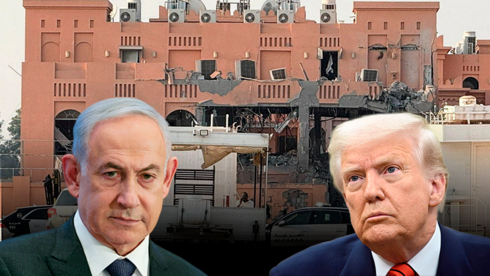
Ideology, Identity And The Language Of War. When Strategy Meets Belief
Wars are rarely framed purely in the language of military strategy. They are also shaped by ideas – about identity, civilisation, religion and national purpose. Throughout history, the rhetoric surrounding conflicts has often expanded beyond immediate geopolitical disputes to invoke broader struggles between values, cultures or belief systems.
In the unfolding confrontation with Iran, elements of that dynamic have begun to surface in the language used by some political figures in Washington. While the official justification for military action centres on security concerns and regional stability, the tone of certain public statements suggests that deeper ideological narratives may also be influencing how the conflict is being interpreted.
Modern Politics
In recent years, parts of the American conservative movement have increasingly framed global politics through the lens of a broader struggle to defend what they describe as Western civilisation. This perspective portrays international conflicts not merely as contests between states but as clashes between competing cultural and political systems.
Within this framework, adversaries such as Iran are sometimes described not only as geopolitical rivals but also as ideological challengers to Western values and influence. Such narratives can resonate strongly with domestic political audiences, particularly during periods of heightened international tension.
Critics argue that this framing risks transforming strategic disputes into something more emotionally charged and less easily contained. When conflicts are described in civilisational or cultural terms, compromise can appear weaker and confrontation more inevitable.
Hence, for adversaries like Iran – hints at cultural or ideological struggle can also serve as powerful propaganda. It reinforces beliefs already promoted by Tehran – that the United States seeks not merely to counter Iranian policies but to challenge the broader political and cultural identity of the Islamic Republic.
The Washington War Ecosystem, How Policy Circles Shape Conflict
Wars in Washington rarely begin with a single decision taken behind closed doors. Long before the first missile is launched or the first strike authorised, an entire ecosystem of policy debates, media discussions and strategic arguments is already in motion. This network (often described informally as Washington’s national security establishment) plays a quiet but significant role in shaping the environment in which presidents make decisions.
Within this ecosystem, think tanks, policy institutes, television commentators, former military officials and political advisers constantly debate emerging threats and potential responses. Reports are written, panels convened and interviews broadcast, creating a steady flow of analysis about adversaries, risks and the possible use of American power.
Over time, these discussions can influence how policymakers interpret global events. By the time a crisis reaches the Oval Office, the intellectual groundwork for action may already have been laid.
The Think Tank Pipeline
Washington’s think tanks occupy a central place in this ecosystem. Institutions such as the Heritage Foundation, the American Enterprise Institute and the Brookings Institution frequently publish policy papers analysing global threats, including Iran’s nuclear ambitions, regional influence and military capabilities.
Their scholars and analysts appear regularly on television and testify before Congress, helping shape the broader policy conversation. Some advocate stronger military deterrence, while others argue for diplomatic engagement or restraint. Yet regardless of their differences, these institutions collectively help define the intellectual parameters within which foreign policy debates unfold.
For presidents and their advisers, these arguments can provide both justification and momentum for particular courses of action.

When Domestic Politics And Foreign Policy Intersect
The pressures of domestic politics can further intensify these dynamics. Political scientists have long observed what is known as the “rally-around-the-flag” effect: during moments of international confrontation, public support for political leaders often increases, at least temporarily.
This does not mean that conflicts are launched simply to boost approval ratings. Yet periods of political pressure at home can create an environment in which assertive foreign policy decisions become more attractive or easier to justify.
When a president’s standing in domestic politics becomes uncertain, advisers and commentators who already favour a tougher approach toward adversaries may find their arguments gaining greater attention.
Momentum Before The First Strike
The result is that wars can sometimes appear almost inevitable by the time the final decision is made. A broader story has been constructed, threats emphasised and policy options debated repeatedly in public forums.
For the president – whether it is Donald Trump or any other leader – the decision to act does not occur in a vacuum. It is shaped by the ideas circulating in think tanks, the debates dominating television studios and the advice offered by political allies and national security advisers.
The Temptation Of History, When Wars Become Legacy Moments
For political leaders and the advisers around them, moments of geopolitical crisis often carry a powerful sense of historical weight. Wars and major confrontations have a way of defining presidencies in ways that few domestic policies ever do. Economic reforms may shape societies for decades, but it is conflicts, alliances and global crises that frequently dominate the pages of history books.
For a president like Donald Trump, the confrontation with Iran represents not only a strategic challenge but also a moment that could shape how his presidency is remembered. Whether the conflict remains limited or evolves into a broader regional struggle may ultimately influence the narrative historians construct about this period in American foreign policy.
Yet the pull of history does not affect presidents alone. The advisers surrounding them – cabinet officials, strategists and national security experts – are also aware that moments of war often elevate individuals into the ranks of historical actors.
The Psychology Of Power And Conflict
Throughout modern history, major geopolitical crises have created opportunities for policymakers to leave their mark on global affairs. From Cold War strategists to architects of military campaigns in the Middle East, the individuals advising presidents have often believed they were participating in events that would reshape the international order.
This sense of historical significance can have a powerful psychological effect. Decisions that might otherwise appear cautious or incremental can begin to feel insufficient when viewed through the lens of legacy. In moments of crisis, advisers may come to believe that decisive action—rather than restraint—will define their place in history.
Such dynamics do not necessarily lead to conflict on their own. But they can subtly shape how leaders interpret risks, weigh alternatives and define success.
History’s Long Shadow
American foreign policy offers numerous examples of this phenomenon. Strategic confrontations with rival powers, military interventions and grand diplomatic initiatives have all been shaped by leaders who believed they were responding to defining moments in global history.
For some, the goal has been to preserve American influence and security in an uncertain world. For others, it has been to demonstrate resolve and deter adversaries. But beneath these calculations often lies a deeper awareness that moments of crisis offer the chance to shape history itself.
In the context of the current Iran conflict, that awareness may also be present among those advising the president. Confronting Tehran, reshaping the balance of power in the Middle East or redefining America’s role in the region are ambitions that carry enormous geopolitical implications.
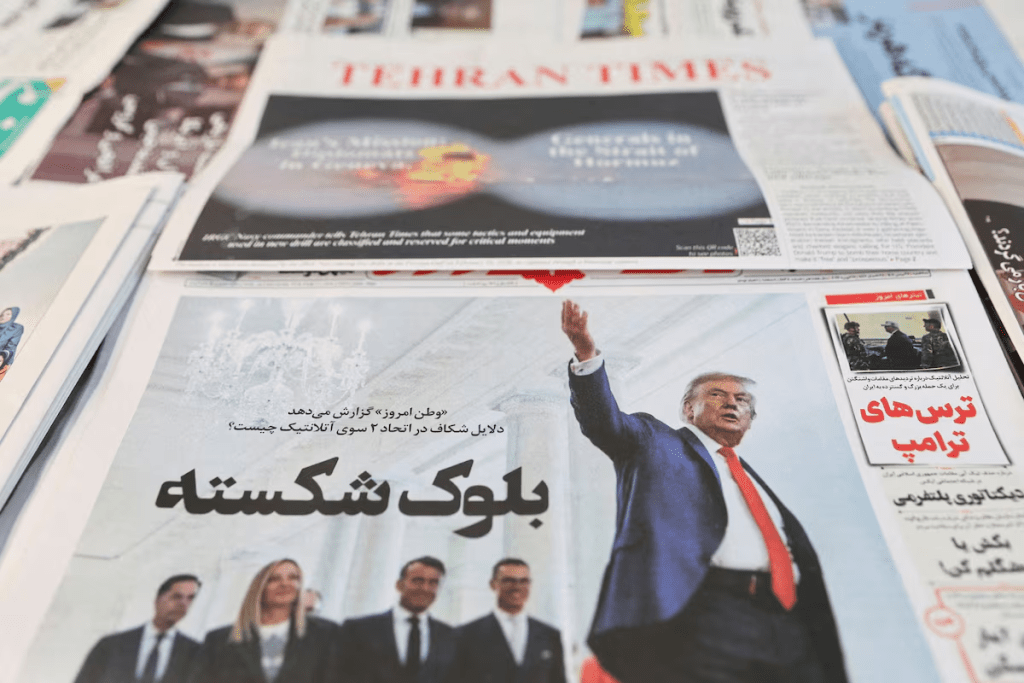
The Fine Line Between Strategy And Ambition
This is where the tension between strategic necessity and historical ambition can become difficult to separate. Leaders must respond to real threats and protect national interests. At the same time, the desire to leave a lasting mark on history can influence how those threats are interpreted and how boldly they are confronted.
For critics of the current strategy, the concern is not simply about the military campaign itself but about the motivations that may surround it. Are decisions being driven purely by security considerations, or are broader ideological and historical ambitions also shaping the course of events?
The answer may remain unclear for years. But as history has often shown, the ambitions and beliefs of those closest to power can sometimes play as large a role in shaping wars as the strategic realities that appear to justify them.
Wars Are Shaped Long Before They Begin
Wars are often explained through maps, military strategies and geopolitical rivalries. Analysts dissect troop movements, missile capabilities and alliances in an effort to understand why conflicts erupt and how they might unfold. Yet beneath these visible factors lies another, less tangible force: the people, ideas and ambitions that surround political power.
The unfolding confrontation with Iran illustrates how decisions about war rarely emerge from a single moment or a single individual. Around Donald Trump exists a circle of advisers, policymakers and commentators whose views reflect competing instincts about the role of American power in the world. Some emphasise deterrence and confrontation. Others warn against another prolonged conflict in the Middle East. Still others frame global politics through ideological or civilisational lenses that make confrontation appear almost inevitable.
Figures such as Pete Hegseth illustrate how personality, ideology and political messaging can intersect with national security policy. At the same time, the broader ecosystem of think tanks, media commentators and policy circles in Washington continuously shapes the intellectual climate in which foreign policy decisions are made.
None of these forces alone determines the course of events. Presidents still make the final choices, and geopolitical realities ultimately constrain what even the most powerful leaders can achieve. But history shows that the beliefs, ambitions and assumptions circulating within a leader’s inner circle can profoundly influence how crises are interpreted and how risks are taken.
The Last Bit,
In that sense, the war with Iran is not only a story about military operations in the Middle East. It is also a story about the ideas circulating in Washington’s corridors of power – about how advisers interpret threats, how rhetoric frames conflict and how moments of geopolitical tension can carry the powerful allure of historical significance.
Whether the current confrontation remains limited or evolves into something far larger may depend not only on the balance of power in the region, but also on the calculations and convictions of those closest to the Oval Office. As history has often shown, the forces that shape wars frequently begin their work long before the first strike is launched.