Energy Shock From Gulf War Forces India To Invoke Essential Commodities Act, LPG Supply Put On Priority
As disruptions to global energy supplies deepen amid the escalating US-Israel-Iran conflict in the Middle East, the Indian government has invoked the Essential Commodities Act to safeguard domestic cooking gas availability. Refineries have been ordered to boost LPG production while gas allocations across industries are being reshuffled to prioritise household supply.

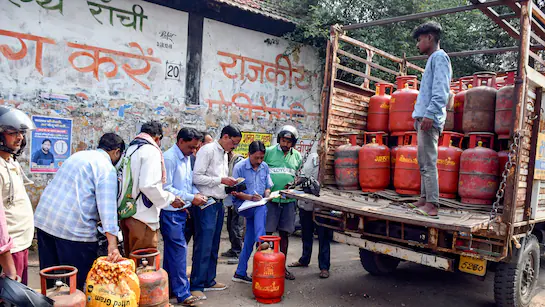
The central government on Tuesday invoked the Essential Commodities Act, 1955, to ensure uninterrupted supply of domestic cooking gas as the escalating US–Israel–Iran conflict in the Middle East begins to disrupt global energy flows. The move comes amid growing uncertainty over liquefied natural gas (LNG) shipments passing through the Strait of Hormuz, one of the world’s most critical energy transit routes.
Under the order, the government has directed oil refineries and petrochemical units to maximise the production of liquefied petroleum gas (LPG) and divert key hydrocarbon streams toward the domestic LPG pool. The decision is aimed at safeguarding cooking gas supplies for households as geopolitical disruptions threaten to tighten global energy availability.
Officials said the government has assessed that the ongoing conflict in the Middle East has already affected LNG shipments, with some suppliers invoking force majeure clauses, potentially leading to diversion of gas supplies. In response, authorities have moved to prioritise domestic energy needs and ensure stable LPG availability across the country.
Government Prioritises Gas Supply To Essential Sectors
As part of the emergency measures, the government has directed that natural gas supply to key sectors be treated as priority allocation and maintained at 100 per cent of their past six-month average consumption, subject to operational availability.
According to the official order, the sectors that will receive priority supply include domestic piped natural gas (PNG) connections, compressed natural gas (CNG) used for transport, and LPG production, including the gas required for LPG shrinkage during processing. Gas required for pipeline compressor fuel and other critical operational requirements of gas pipelines has also been placed in the priority category.

Supply To Fertiliser Plants And Industries To Be Reduced
While prioritising household and transport energy needs, the government has also outlined supply reductions for several industrial sectors in order to balance the limited availability of natural gas.
Under the order, fertiliser plants will receive 70 per cent of their past six-month average gas consumption, subject to operational availability. Fertiliser production remains strategically important for agriculture, but the reduction reflects the government’s attempt to redirect a greater share of gas toward household fuel and transport needs.
Industrial consumers connected to the national gas grid, including sectors such as tea manufacturing and other industries, have been asked to operate with around 80 per cent of their past six-month average gas consumption.
City Gas Distribution (CGD) entities have also been instructed to ensure that industrial and commercial consumers supplied through their networks receive about 80 per cent of their average consumption, depending on gas availability.
In addition, oil refining companies have been directed to absorb part of the LNG supply disruption by reducing their own gas consumption to approximately 65 per cent of their past six-month average usage, subject to operational feasibility.
Curtailment Order For Petrochemical And Power Sectors
To ensure that priority sectors continue receiving adequate supply, the government has also established a curtailment sequence for large gas consumers.
Petrochemical facilities, including units such as ONGC Petro additions Limited, GAIL’s Pata Petrochemical Complex, Reliance’s oil-to-chemicals (O2C) operations, and other high-pressure high-temperature gas consumers, may face full or partial curtailment of gas supply if shortages intensify.
Power plants may also see reductions in gas allocation if required, placing the electricity sector lower in the allocation hierarchy compared to household cooking fuel and transport fuel.
The curtailment framework reflects the government’s effort to preserve supplies for essential consumption while distributing the burden of supply disruption across energy-intensive industries.
What The Essential Commodities Act Allows The Government To Do
The Essential Commodities Act, 1955 empowers the central government to regulate the production, supply and distribution of certain goods considered vital for everyday life in order to prevent shortages, hoarding or price manipulation.
Under the law, commodities recognised as essential include food items, fertilisers, drugs, seeds, petroleum and petroleum products, including natural gas and liquefied natural gas (LNG), among others. When invoked, the Act allows the government to issue directives to producers, refiners, importers and distributors to ensure that supplies are allocated in a manner considered necessary for public interest.
As part of the latest order, the government has directed every producer, importer, transporter, marketer or distributor of natural gas – including LNG and regasified LNG – to provide detailed information relating to production, imports, stocks, allocation, supply and consumption to the Central Government or to authorised officials.
Such reporting requirements allow authorities to monitor the availability of gas across the supply chain and intervene where necessary to maintain equitable distribution during periods of disruption.
Companies Across India’s Gas Ecosystem Asked To Comply
The government’s order applies broadly across India’s natural gas value chain, covering companies involved in production, import, transportation, marketing and distribution of natural gas.
Domestic upstream producers such as ONGC, Reliance Industries, Oil India Limited (OIL) and Vedanta, along with other natural gas producers, have been directed to comply with revised allocation schedules and supply adjustments issued by the government.
Major gas marketing and transmission entities, including GAIL and other gas marketing companies, will play a key role in implementing the revised sector-wise allocation of natural gas as directed by the Centre.
The directive also extends to LNG terminal operators, natural gas pipeline operators, and City Gas Distribution (CGD) companies, which supply gas to households, vehicles, industries and commercial establishments across urban networks.
Under the order, all these entities may be required to revise supply schedules, divert gas to priority sectors, and comply with government-directed allocation mechanisms in coordination with the relevant authorities to ensure that essential sectors continue to receive adequate fuel supplies.
Government Orders Refineries To Boost LPG Production
In parallel with invoking the Essential Commodities Act, the Ministry of Petroleum and Natural Gas has also directed oil refineries to increase the production of liquefied petroleum gas and channel the additional output toward domestic consumption.
The move comes as authorities attempt to safeguard household cooking gas supplies amid disruptions in global fuel flows caused by the ongoing conflict in West Asia. According to the ministry, refineries have been asked to maximise LPG recovery and ensure that the additional production is directed specifically toward domestic LPG distribution.
“In light of current geopolitical disruptions to fuel supply and constraints on LPG availability, the ministry has issued orders to oil refineries for higher LPG production and the use of such additional output for domestic LPG consumption,” the Ministry of Petroleum and Natural Gas said in a statement.
The government has emphasised that household LPG supply will remain the top priority as it seeks to maintain energy security for citizens during the current period of uncertainty in global energy markets.
Booking Restrictions Introduced To Prevent Hoarding
To manage supply constraints and prevent panic buying, the government has also increased the inter-booking period for LPG cylinders from 21 days to 25 days.
Officials said the measure was introduced after reports emerged that some consumers had begun placing refill requests more frequently amid concerns about supply disruptions. By extending the booking interval, authorities aim to prevent hoarding and ensure a more balanced distribution of cylinders across households.
Government sources indicated that while domestic consumers will continue to receive priority access to LPG, imported supplies may be reserved for critical non-domestic users such as hospitals and educational institutions.
For other commercial consumers, including restaurants, hotels and certain industries, the government has constituted a review committee comprising senior executives of oil marketing companies to examine requests for LPG supply and determine allocations based on availability.

Commercial LPG Disruptions Begin To Affect Businesses
Early signs of stress in LPG availability are already emerging in parts of the country. In Bengaluru, hotel owners have warned that many establishments may be forced to suspend operations after the supply of commercial LPG cylinders was abruptly halted.
According to the Bangalore Hotels Association, the disruption in commercial cooking gas supply could affect thousands of people who rely on local hotels and eateries for daily meals, including students, senior citizens and workers.
In a notice issued to members, the association said the stoppage of gas cylinder supplies had come without prior warning, creating operational difficulties for restaurants and small food businesses that depend heavily on LPG for cooking.
“The supply of gas cylinders for commercial use has been stopped from today. Since the hotel industry is classified as an essential service, the common people, senior citizens, students and others who depend on it will face difficulties in their daily meals,” the association said.
Industry representatives also noted that oil companies had earlier indicated that LPG supply would remain stable for several weeks, making the sudden disruption particularly concerning for businesses.
The association has urged the Union government to intervene and restore supplies quickly, warning that if the situation continues, hotels across the city may shut down operations until gas availability improves.
Global Energy Disruptions Add Pressure On India’s LPG Supply
The supply concerns come against the backdrop of escalating tensions in West Asia, where the ongoing conflict involving the United States, Israel and Iran has begun disrupting major energy supply routes.
The Strait of Hormuz, through which a significant share of the world’s oil and liquefied natural gas shipments pass, has seen disruptions that have pushed global crude prices above $100 per barrel and triggered uncertainty in fuel supply chains.
India is heavily dependent on imports for LPG, with a large portion of its shipments sourced from Gulf countries and transported through the Hormuz corridor. Any disruption in this route can quickly affect both availability and pricing in the domestic market.
With global energy markets turning volatile, the government’s decision to invoke the Essential Commodities Act and prioritise household LPG supply reflects a broader effort to shield domestic consumers from the ripple effects of geopolitical tensions and supply disruptions.