Not A Leave. But A Clean Toilet. That Is All She Needs- On The Supreme Court’s Menstrual Leave Ruling, And The Sanitation Crisis That India Refuses To See!

There is a woman driving a freight train through rural Madhya Pradesh at 2 a.m. The locomotive has no toilet. She has not drunk water since her shift began eight hours ago. She is menstruating. She cannot stop the train. She cannot step off. She cannot ask her male co-driver to leave. She wears a sanitary pad and hopes for the best.
There is another woman, younger, bent double in the sugarcane fields of Beed district in Maharashtra. She earns ₹500 a day. Her contractor has told her that if she misses a single day — one day — the deduction will begin. She has been bleeding heavily for two years. She has gone to a doctor. The doctor has told her that her uterus is “damaged” and may become cancerous if not removed. She is 24 years old. She consents to the surgery. She will never menstruate again. She will never conceive again. She goes back to the fields within weeks.
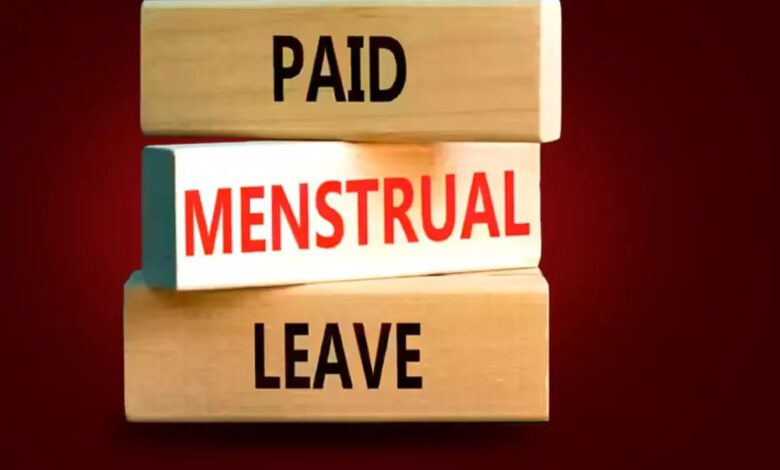
And now, in a courtroom in New Delhi, a judge considers a PIL asking for paid menstrual leave for women across the country. The Chief Justice of India, Justice Surya Kant, turns it down. His reasoning: employers will stop hiring women if they are compelled to give them paid leave for periods. “The moment you say it is compulsory in law, nobody will give them jobs,” he says. The observation is made to protect women, not to dismiss them.
He is not wrong. But he is answering the wrong question (perhaps).
What the Supreme Court Got Right
On March 13, 2026, the Supreme Court of India disposed of a public interest litigation filed by advocate Shailendra Mani Tripathi — the third such petition on the same issue — seeking a nationwide policy mandating paid menstrual leave for all women students and employees. This was not the first time the court had turned down this particular demand. Earlier benches in February 2023 and July 2024 had done the same, sending the petitioner to the government with directions to frame a policy through stakeholder consultation.
The bench of Chief Justice Surya Kant and Justice Joymalya Bagchi were blunt about why they found the petition troubling. A mandatory menstrual leave law, the CJI cautioned, would unintentionally reinforce the very stereotypes it sought to dismantle — the stereotype that women are biologically unreliable employees, that their bodies are a liability, that their careers must be structured around their cycles. “These pleas are made to create fear, to call women inferior,” CJI Kant observed. Voluntary implementation by willing employers, the bench suggested, was excellent. Judicial mandation was a different matter.
Former Union Minister Smriti Irani had made a similar argument years earlier, when she said that menstruation is not a handicap. Menstruation is not a disease. It is a normal biological function that approximately half the human race experiences for a significant portion of their lives. To codify it as a formal ground for paid leave, however well-intentioned, risks institutionalising the premise that women are different from men in ways that affect their working capacity. And as the court correctly observed, that institutionalisation has a cost. Employers who think in profit margins, not in principles, will simply choose not to hire the person who comes with a mandatory additional leave burden attached.
But here is the thing about the court’s reasoning, and about every similar argument made over the past decade in this debate: it is addressing a demand that was born out of desperation.
Women are not asking for menstrual leave because they want time off. They are asking for it because they have no toilets. Because they have no place to change their sanitary pads. Because they are driving trains for twelve hours, bending over fields for sixteen hours, standing at street food stalls for nine hours, and there is nowhere for them to go.
The demand for menstrual leave is a symptom. The disease is the absence of basic sanitation.
The Loco Pilots Who Chose Their Desks Over Their Dreams
India has approximately 2,000 women loco pilots serving in the Indian Railways — a number that represents hard-won progress against decades of gender exclusion from one of the country’s most physically demanding professional roles. What those 2,000 women have found, however, is that cracking India’s most male-dominated transport sector was only half the battle. The other half — the half nobody planned for — was finding somewhere to use the bathroom.
Of the more than 14,000 diesel-electric locomotives in the Indian Railways fleet, only a fraction have toilets fitted in the loco pilot’s cabin. A 2022 PTI investigation reported that toilet facilities existed in only 97 electric locomotives built by the Chittaranjan Locomotive Works, which had been directed to install water closets following a Railway Budget announcement in 2013.
More recent reporting suggests that waterless urinal facilities were provided in approximately 883 locomotives, but the railway’s own loco pilots and their unions have consistently argued that these are inadequate and largely non-functional. As late as April 2025, the Railway Board rejected demands from the All-India Loco Running Staff Association (AILRSA) for meal and toilet breaks on the grounds that it was “operationally unfeasible.”
What this means in practice is documented in testimonies that are painful to read. A woman loco pilot says that she holds her urine for hours during her shift. A senior assistant loco pilot described going inside the engine to change sanitary napkins in emergencies during her period. An assistant loco pilot, speaking anonymously, asked the most human of questions: “How can a girl from a conservative family ask a male colleague to vacate the engine for her to change the pad?”
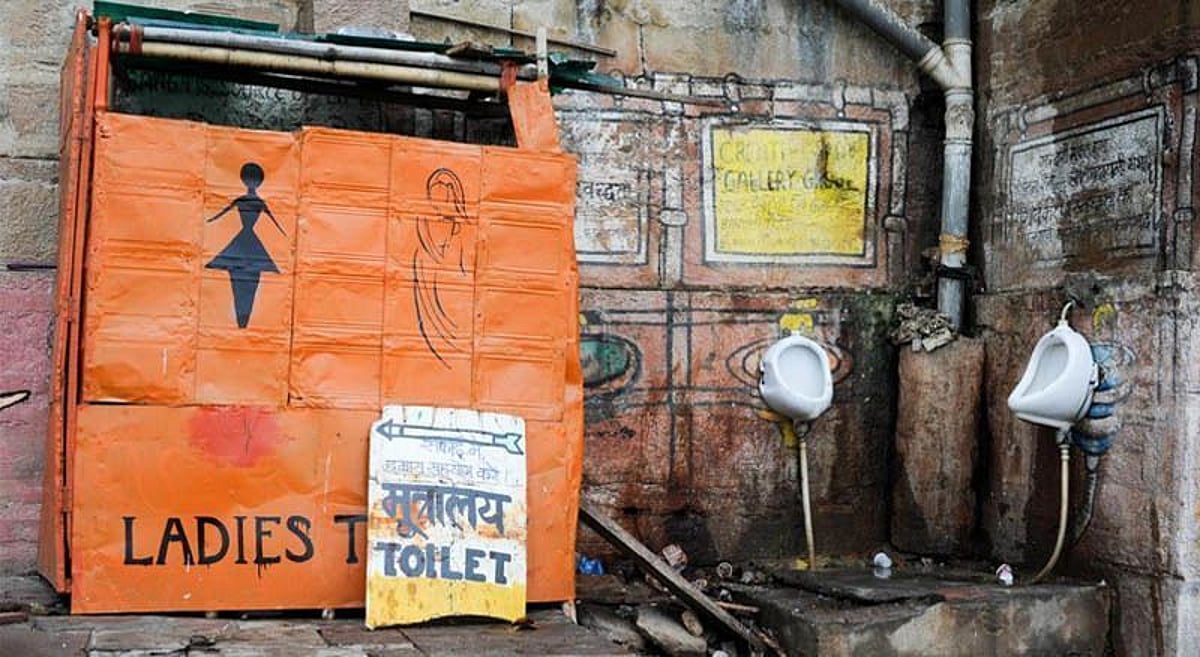
A goods train driver, reportedly avoided drinking water for ten to fourteen hours during her duties after joining the railways in Lucknow in 2010. “I have no option but to relieve along the tracks and away from the view of the male co-driver during night shifts. Getting off in rural areas at night is very unsafe,” she was quoted as saying.
These are not edge cases. A document accessed by Scroll from a collective of women loco pilots summarised the medical conditions of 33 such pilots across the country. The conditions documented included urinary tract infections, uterine fibroids, high blood pressure, kidney abscesses, and miscarriages — all linked directly to the absence of sanitation facilities and the impossibility of taking toilet breaks during shifts. One loco pilot developed a kidney abscess in 2021 from a urinary tract infection — a pocket of pus that, left untreated, could have damaged her organs. It had been caused, her doctor explained, by repeatedly holding urine during long shifts.
The response of the women to these conditions is the most telling data point of all. Many stopped taking loco pilot field duties altogether and shifted to desk positions. Others applied for “cadre changes” — requesting to be reassigned from driving roles to administrative ones. As many as 1,500 of the approximately 2,000 women loco pilots signed a collective letter to the railways seeking such a change. They were not asking for menstrual leave. They were not asking for special treatment. They were asking for a toilet. When they did not get it, they asked to stop doing the job they had fought to do — because the alternative was destroying their health.
Alok Verma, former president of the Indian Railway Loco Running Men’s Organisation (IRLRO), had approached the National Human Rights Commission on this issue years earlier. The NHRC issued directions to the railways to install toilets in all locomotives. The order, Verma subsequently told journalists, was not implemented. “A loco pilot spends a minimum of 10-12 hours driving and has no chance of being relieved if a journey is underway. They don’t eat or go to the washroom. It is inhuman,” he said.
If you asked these women whether they wanted menstrual leave or a functional toilet in their engine, the answer would be instant and unanimous. It would not be the leave.
Beed: Where Women Traded Their Wombs for a Day’s Wage
If the story of the loco pilots represents the suffering of women who managed to enter the formal workforce, the story of Beed district in Maharashtra represents something far darker — what happens to women who were never allowed inside the formal economy at all, and who therefore had no framework of labour law, no NHRC to appeal to, and no collective bargaining to fall back on.
Beed is one of Maharashtra’s primary hubs for seasonal migrant sugarcane workers. Approximately 1.75 lakh workers leave Beed district annually — often in couples, sometimes with their children — to work in the sugarcane-producing regions of Maharashtra, Karnataka, Telangana, and Andhra Pradesh. The women among them sign informal contracts with labour contractors called mukadams for periods of six months to a year.
A couple typically receives an advance payment of approximately ₹1.5 lakh, which they must repay through continuous labour. The daily wage is roughly ₹500 per person. Missing a day means a financial penalty. Missing multiple days can mean termination of the contract, loss of the advance, and no income for the season.
For a woman who menstruates, this contract is a trap. Sugarcane harvesting demands twelve to sixteen hours of strenuous physical labour — cutting, gathering, tying, and loading heavy bundles. During menstruation, this work can be excruciating. But the financial penalty structure makes it impossible to rest. And because the fields and makeshift labour camps have no toilets, no running water, no changing facilities, and no privacy, managing menstruation in the fields is a humiliation compounded by physical agony.
A government-commissioned report by Dr. Neelam Gorhe in 2019 — commissioned by the Maharashtra government after media attention began to grow — investigated the scale of what was happening. The findings were extraordinary in their horror. Among 80,000 female sugarcane workers surveyed in Beed, approximately one in five had undergone a hysterectomy.
A local government health department report subsequently found that 843 women’s uteri had been surgically removed before the Diwali 2024 migration — meaning before they departed for the harvest season. More than 13,000 women in Beed district alone had undergone the procedure over the preceding decade, and many of them were below the age of 25 at the time of surgery. In Beed, the hysterectomy rate among sugarcane workers was 36% higher than the national average of 3%.
How does a district end up with hysterectomy rates 36% above the national average? The answer is a convergence of greed, desperation, and the complete absence of sanitation.
Women with menstrual complications — heavy bleeding, cramps, uterine fibroids — would present themselves to local private doctors or clinics. In a pattern documented across multiple investigations, these doctors would advise hysterectomy as a solution, sometimes falsely suggesting that the woman’s condition could become cancerous if untreated.
The surgery costs between ₹25,000 and ₹30,000 at a private doctor — often more than a season’s wages. The mukadam would offer the woman a loan to pay for it, which she would then repay through further labour, trapping her more deeply in the debt cycle. After the surgery, the woman would no longer menstruate, would no longer need rest during her cycle, would no longer risk pregnancy disrupting her work, and would therefore be, in the contractor’s calculus, a more productive asset.
The women in the sugarcane fields of Maharashtra were not asking for menstrual leave either. What they needed was simple and cheap: a toilet. Running water. A private space. The Gorhe committee’s 2019 recommendations included ensuring that sugarcane harvesting workers be provided with suitable toilets and clean running water for better menstrual hygiene. Activists say progress on implementing these recommendations has been “painfully slow.”
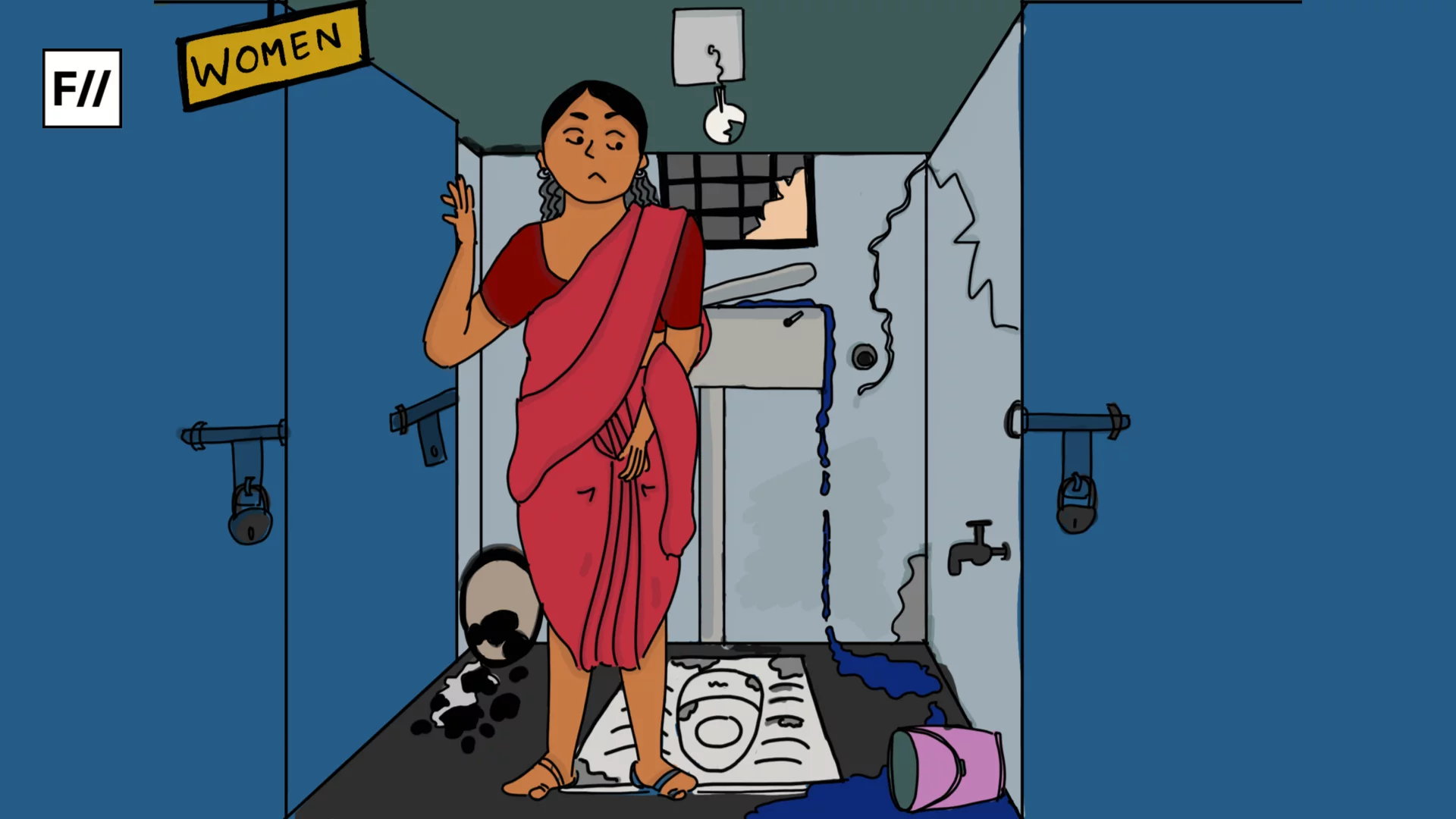
As Gangabai Prakash Shingare, a sugar industry worker, described her experience across multiple harvests in Maharashtra and Karnataka: she had never once seen a toilet or bathroom for women. The only privacy available was the darkness of the fields before dawn. That darkness is what India offered these women. In return, thousands of them gave up their uteruses.
The Toilet That Is Never There
The Beed and loco pilot crises are extreme cases, but they are not exceptional ones. They are amplified versions of a sanitation failure that affects women across virtually every layer of Indian public life.
An ActionAid India survey of 229 public toilets in Delhi — covering facilities maintained by the Municipal Corporation of Delhi, the New Delhi Municipal Council, and private agencies — found that 35% of the surveyed toilets had no separate section for women at all.
Of the 149 that did have some provision for women, the conditions documented were damning: over 71% were not cleaned regularly; 28% did not have doors; 45% did not have a mechanism to lock from the inside; over half had no lighting either inside the facility or in the surrounding area; 46% were unguarded; 53% had no running water; 66% had non-functional flush systems; and soap was absent in approximately 61%.
These are not statistics from the margins of urban India. These are statistics from the capital of the country; a city that has hosted G20 summits and global investment forums, a city that ranks itself among Asia’s most significant metros. If this is Delhi, the imagination staggers at what Beed district’s fields look like.
Research documented in Pune and Mumbai found a higher incidence of violence against women who used public toilets alone at night. An exploratory study across Bhopal and New Delhi documented women facing insulting remarks, brick throwing, and in extreme cases, stabbing and sexual assault, in or around public toilet facilities. A study in Bihar found that nearly half of reported rape cases in the state were “sanitation-related” — meaning they occurred because women had to access isolated spaces to use the toilet.
This is what “no toilet” means for a woman in India. It does not merely mean discomfort. It does not merely mean inconvenience during her period. It means the risk of violence every time she needs to answer nature’s call in a public space. It means UTIs from holding urine through a twelve-hour shift. It means kidney abscesses. It means fibroids. It means, in the extreme logic of Beed, it means the surgical removal of her reproductive organs.
Anita Juneja, a 42-year-old street food vendor in Delhi’s Lajpat Nagar area, described walking to a nearby shopping mall whenever she needed to use a toilet during her nine-hour workday — a trip that cuts into the already slender margin between her earnings and her costs. “Trips to the toilet and water delivery cut into my already meagre earnings so I try to avoid these as far as possible,” she said. This is the life of a working woman in urban India: managing biology on the margins, trading health for productivity, one missed toilet break at a time.
The Conversation We Should Be Having
India’s debate on menstrual leave has, for years, unfolded in a kind of rhetorical vacuum, disconnected from the material reality described in the preceding pages. The advocates of menstrual leave are moved by genuine compassion. Many women — particularly those suffering from dysmenorrhoea, endometriosis, uterine fibroids, or polycystic ovarian syndrome — experience periods that are genuinely debilitating, and a policy that allows for medical leave without stigma or disclosure would be a meaningful thing.
But the Supreme Court is right that a blanket mandatory law is the wrong instrument. Menstruation is not a disability. Women are not inherently less capable of working during their cycles than men are of doing so during any comparable physiological event. Most women, in fact, continue to work through their periods without difficulty — they simply need what any human being needs: access to a clean, safe, private bathroom.
The argument, then, is not about leave. It is about infrastructure. It is about the fact that India has built a ₹100-lakh-crore economy on the backs of a workforce that includes over 200 million working women, and has not built enough toilets for them to use.
The Supreme Court itself, in a separate bench judgment in January 2026, observed that menstrual hygiene forms an essential part of a girl child’s rights to life, dignity, health, and education under the Constitution, and directed governments to ensure access to sanitary products, proper sanitation facilities, and greater awareness around menstrual health. This is the correct framing. Menstrual health is a constitutional right. A toilet is the infrastructure of that right.
The National Commission for Women, successive state governments, the Gorhe committee, the NHRC, and multiple civil society organisations have, over the past two decades, documented the same failures and made the same recommendations. More women’s toilets. Cleaner women’s toilets. Safer women’s toilets. Locked doors. Running water. Lighting. Sanitary napkin vending machines. Privacy. Security.
These are not luxury demands. They are the minimum requirements of human dignity. They cost far less than the hysterectomies that are being performed in Beed to compensate for their absence.
What India Actually Owes Its Women
When a lady went without water for fourteen hours to drive a freight train in the dark, she was not asking for a law that would allow her to stay home. She was asking for a toilet in her engine cab.
When a woman from Madhya Pradesh developed a kidney abscess from a urinary tract infection, she was not asking for a menstrual leave policy. She was asking for a functional sanitation facility on the route she was assigned to drive. When a girl from Beed, who was running a fever, went to a doctor and came away permanently unable to conceive, the intervention she needed was not a leave policy. It was a toilet in the field where she worked.
The Supreme Court, in dismissing this PIL, performed a necessary act of clarity. Menstruation is not a handicap. Women do not need to be protected from their own biology through legislation that confirms, in law, the employer’s worst prejudices about female employees. What women need is what the Indian state has failed to provide at every level — from the loco pilot’s cab to the street vendor’s market to the migrant worker’s makeshift shelter in a sugarcane field: a clean, safe, private, functional toilet.
Give women that, and they will not need a single day of menstrual leave. Give them that, and they will not need to resign from jobs they fought for. Give them that, and they will not need to surrender their uteruses to keep working.
That is all they are asking for. And after seventy-five years of the republic, it remains, for millions of them, too much to ask.