A Mystery AI Model, A Brewing Tech Rivalry And Why DeepSeek Is Back In Focus
Amid a world already on edge - from escalating conflict in the Middle East to rising economic uncertainty - an anonymous AI model has quietly appeared online, but its impact is anything but subtle. Hunter Alpha is fuelling speculation around DeepSeek’s next move, drawing attention to a fast-intensifying AI race no longer confined to Silicon Valley. And a bigger question - is this just another release, or a signal that the global AI race is entering a far more unpredictable phase?


It began, as many things in the AI world now do, quietly. A powerful artificial intelligence model calling itself Hunter Alpha surfaced on the developer platform OpenRouter on March 11 – without a company name, without a research paper, and without any formal announcement. The platform itself labelled it a “stealth model,” offering little clarity on who built it or why it had suddenly appeared.
Yet, despite the anonymity, developers quickly realised this was no ordinary release.
Hunter Alpha was described as a 1-trillion-parameter model, placing it in the league of the most advanced large language systems currently in existence. In simple terms, parameters are the adjustable values that determine how an AI model understands language and generates responses and at this scale, they signal immense computational depth and capability.
Equally striking was its context window of up to one million tokens, a technical measure of how much information the model can process and retain in a single interaction. For comparison, most widely used models operate at a fraction of that capacity. This allows the system to handle significantly longer conversations, more complex instructions, and richer reasoning tasks without losing track of context.
Then came the detail that truly stood out – it was free to access.
“The combination that stood out was Hunter Alpha’s one million token context paired with reasoning capability and free access,” said Nabil Haouam, an engineer who builds AI agent systems. “Most frontier models with that kind of capacity come at a real cost.”
During independent testing, the chatbot described itself as “a Chinese AI model primarily trained in Chinese,” with a knowledge cutoff extending to May 2025. But when asked about its origins, it offered little.
“I only know my name, my parameter scale and my context window length,” it responded.
Neither DeepSeek nor OpenRouter has claimed ownership of the model, and both have declined to comment – leaving behind a system that is powerful, widely accessible, and, for now, entirely without a confirmed creator.
And that is precisely what has made it impossible to ignore.

Why All Roads Seem to Lead to DeepSeek
It did not take long for speculation to begin and almost all of it pointed in one direction: DeepSeek.
The first clue was subtle but telling. During testing, Hunter Alpha stated that its training data extended to May 2025 – the same knowledge cutoff associated with DeepSeek’s existing models. On its own, that detail proves little. But alongside the model’s scale, performance, and architecture, it began to look less like coincidence and more like a pattern.
Then came the timing.
Chinese media reports have suggested that DeepSeek is preparing to launch its next-generation V4 model as early as April. The specifications expected from that release – particularly around large context windows and enhanced reasoning capabilities – appear to closely mirror what Hunter Alpha is already demonstrating.
For many developers, that overlap was enough to raise eyebrows.
“The chain-of-thought pattern is probably the strongest signal,” said Daniel Dewhurst, an AI engineer who analysed the model after its release, referring to the way the system structures its reasoning. “Reasoning style is hard to disguise and tends to reflect how a model was trained.”
Others pointed to the broader alignment in design philosophy. Hunter Alpha’s ability to handle long context, combined with advanced reasoning and open accessibility, fits neatly into DeepSeek’s reputation for building high-performance yet cost-efficient models.
But not everyone is convinced.
“My analysis suggests Hunter Alpha is likely not DeepSeek V4,” said Umur Ozkul, who runs independent AI benchmark tests. He cited differences in token behaviour and architectural patterns when compared with DeepSeek’s earlier systems, cautioning against drawing quick conclusions.
That divide – between those convinced and those sceptical – has only added to the intrigue.
Because while there is no direct evidence linking Hunter Alpha to DeepSeek, the similarities are difficult to ignore. And in an industry where companies often test systems quietly before formal releases, the idea of a “stealth launch” no longer feels far-fetched. If anything, it feels familiar.
The Rise of Stealth Models and Silent Testing
If Hunter Alpha feels unusual, it is only because the process behind it is largely invisible not because it is rare.
Platforms like OpenRouter have increasingly become testing grounds for AI developers, allowing them to deploy models quietly, observe real-world usage, and refine performance without the pressure of a formal launch. By giving users access through a single interface that connects multiple models, these platforms create an environment where experimentation can happen at scale and often, anonymously.
There is precedent.
In February, another anonymous system called Pony Alpha appeared on OpenRouter with little explanation. Days later, Chinese firm Zhipu AI confirmed it as part of its GLM-5 model rollout. What initially looked like a mystery turned out to be a calculated test.
Hunter Alpha appears to follow a similar playbook.
A notice on its profile page states that all prompts and responses are logged and may be used to improve the model – a standard but telling disclosure. It reflects a broader industry practice: releasing systems quietly to gather unfiltered, real-world feedback, far more valuable than controlled internal testing.
And the response, in this case, has been immediate.
Within days of its appearance, Hunter Alpha processed more than 160 billion tokens, according to platform data. Much of that activity came from software development tools and AI agent frameworks such as OpenClaw, where models are pushed beyond simple chat and into autonomous task execution.
In other words, this was not just curiosity – it was stress testing at scale.
Seen through that lens, the mystery surrounding Hunter Alpha begins to look less like an anomaly and more like a strategy. A way to test capability, measure limits, and refine performance – all before stepping into the spotlight.
And if that is the case, the real question is no longer just who built it but what comes next.
DeepSeek: The Company That Disrupted the AI Equation
To understand why Hunter Alpha has triggered this level of speculation, one has to look at the company at the centre of it – DeepSeek.
Based in Hangzhou, DeepSeek is not a conventional AI company. Unlike most of its global peers, it is backed by a quantitative hedge fund, High-Flyer, rather than a large technology conglomerate. That distinction has shaped how it approaches artificial intelligence – with a sharper focus on efficiency, optimisation, and unconventional problem-solving.
The company entered the global spotlight in early 2025 with the release of its R1 reasoning model, a system designed to tackle complex problems by breaking them down into structured steps. What made R1 stand out was not just its performance, but its cost.
DeepSeek claimed it had built a model comparable to leading Western systems using only a fraction of the computing power and expense typically required. In an industry where progress has largely been driven by scaling up hardware and spending billions on training, that claim landed like a shock.
For some, it was a breakthrough. For others, a warning.
The announcement sent ripples through global markets, with investors beginning to question whether the dominance of expensive, hardware-intensive AI development could be challenged. Some analysts even described it as a “Sputnik moment” for artificial intelligence – a signal that the balance of technological power might not be as firmly established as previously thought.
Since then, DeepSeek has continued to release incremental updates, but it has not launched a full-scale successor to R1. That gap has only heightened anticipation around its next model – widely expected to be V4, a multimodal system capable of handling text, images, and video.
Which is precisely why the sudden appearance of a highly capable, anonymous model like Hunter Alpha has drawn such intense scrutiny. Because if there is one company that has already proven it can disrupt expectations, it is DeepSeek.
What Actually Sets DeepSeek Apart
At first glance, DeepSeek may not seem radically different from its Western counterparts. It follows the same broad approach – large datasets, powerful computing, and transformer-based architectures.
But the difference lies in how it uses those ingredients.
While much of the AI industry has focused on scaling (read) bigger models, more chips, higher costs – DeepSeek has taken a more surgical approach: doing more with less.
Its most significant breakthrough has been in cost optimisation without a proportional drop in performance. Instead of relying purely on brute-force computing, the company has focused on redesigning how models are trained and deployed.
One of its key techniques is the Mixture of Experts (MoE) approach – essentially activating only the parts of the model needed for a specific task, rather than running the entire system every time. Think of it as consulting specialists instead of assembling the entire team for every problem. The result is faster processing and lower computational load.
Alongside this, DeepSeek has worked on improving how models handle memory and attention. Its use of Multi-head Latent Attention (MLA) reduces the burden on temporary memory systems, allowing for more efficient processing without sacrificing depth or accuracy.
There are also gains in how the model predicts and processes language. Techniques like multi-token prediction allow the system to anticipate multiple pieces of text at once, rather than moving word by word – increasing speed and throughput.
On the hardware side, the company has leaned into lower-precision computing, such as FP8 training, which reduces memory usage and accelerates calculations while maintaining acceptable accuracy levels. Combined with model distillation, where smaller models learn from larger ones, this further compresses cost without collapsing capability.
Individually, none of these ideas are entirely new. But taken together, they represent something more important – a shift in philosophy. DeepSeek is not trying to outspend the competition. It is trying to out-engineer it.
And that approach, if it continues to hold, has the potential to reshape not just how AI models are built but who can afford to build them in the first place.

Innovation, Imitation Or Something In Between?
The rise of DeepSeek has also revived a familiar and often uncomfortable debate: is China innovating, or simply refining what already exists?
Even within China, that question is not new.
Liang Wenfeng, DeepSeek’s founder, has been unusually candid about the country’s technological trajectory. In earlier remarks, he openly acknowledged that much of China’s progress in technology has historically involved building on ideas developed elsewhere, rather than originating them.
It is a criticism often echoed globally – that Chinese firms excel at execution, scale, and cost efficiency, but lag in foundational breakthroughs. And yet, DeepSeek complicates that perception.
Because while its approach does not fundamentally rewrite the rules of artificial intelligence, it does something arguably just as important – it redefines the economics of it.
Its models are not built on entirely new paradigms. They rely on the same deep learning frameworks, the same transformer architectures, and the same scaling principles used by companies in the United States. But through aggressive optimisation, DeepSeek has managed to deliver comparable performance at significantly lower cost.
That raises an uncomfortable question for the rest of the industry: If innovation makes something possible, but optimisation makes it accessible – which one matters more?
For developers and businesses, the answer is increasingly clear. Lower costs mean wider adoption. Wider adoption means faster iteration. And faster iteration, in turn, accelerates progress.
In that sense, DeepSeek’s contribution may not lie in inventing a new path, but in making the existing path far more efficient. And in a field where access to computing power has long been the biggest barrier, that alone could prove to be a decisive shift.
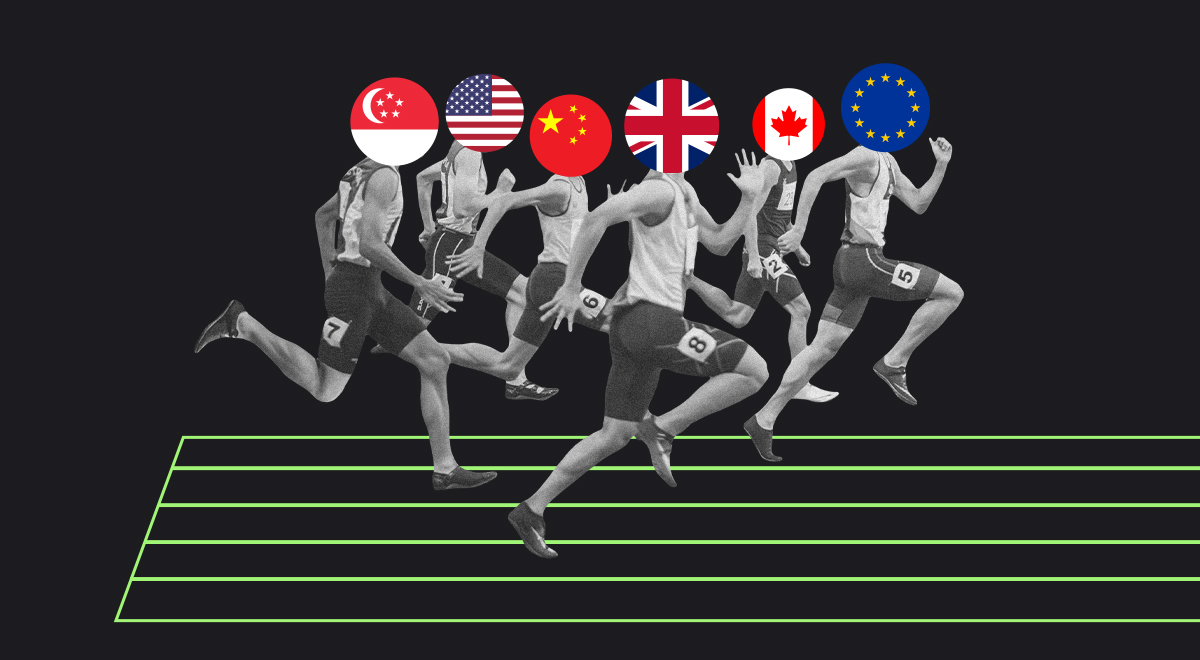
This Isn’t Just One Model – It’s A Global Race
What makes the Hunter Alpha episode significant is not just the mystery surrounding it but what it represents.
Because this is no longer about a single company or a single model. It is about a rapidly intensifying global contest over artificial intelligence, where the stakes extend far beyond technology.
At the centre of that contest are two countries: the United States and China. But to frame this as a simple head-to-head race would be misleading. In reality, there are multiple races unfolding at the same time.
There is a race to build the most powerful closed-source models, dominated largely by American companies that tightly guard their systems and monetise access. At the same time, there is a parallel push – led increasingly by Chinese firms – toward open and low-cost models that can spread quickly and be adopted at scale.
There is also a divergence in priorities.
Many leading US labs are pushing toward artificial general intelligence (AGI) – systems that can match or exceed human cognitive ability across a wide range of tasks. China, while also pursuing that goal, has placed equal emphasis on deployment at scale – embedding AI across industries, consumer applications, and public infrastructure.
These approaches are not mutually exclusive, but they shape how progress unfolds.
The United States continues to hold an edge in key areas – particularly in advanced semiconductor design, frontier model development, and access to global capital. Companies like Nvidia remain central to the global AI ecosystem, supplying the high-performance chips required to train cutting-edge models.
China, on the other hand, brings different strengths to the table — scale, speed of deployment, and a growing domestic ecosystem that is increasingly capable of operating despite external constraints.
And those constraints matter.
Export controls and restrictions on advanced chips have forced Chinese companies to rethink how they build AI systems – often pushing them toward the kind of efficiency-driven innovations that firms like DeepSeek are now demonstrating.
Which brings the story full circle.
Because the appearance of a model like Hunter Alpha is not just a technical curiosity. It is a glimpse into how this competition is evolving – faster, quieter, and far less predictable than before.
Why This Competition Matters More Than It Seems
It is tempting to view developments like Hunter Alpha as part of a fast-moving tech cycle – another model, another release, another round of speculation.
But the reality runs deeper.
Artificial intelligence is no longer just a sector. It is becoming a foundational layer of economic and strategic power.
At the most immediate level, AI is already reshaping productivity. From software development and finance to healthcare and logistics, companies that deploy AI effectively are seeing gains in efficiency, cost reduction, and decision-making speed. Over time, those gains compound – not just for businesses, but for entire economies.
Which is why leadership in AI increasingly translates into economic leverage.
But the implications do not stop there.
AI is also beginning to alter the nature of security and warfare. From cyber operations to autonomous systems, many of the technologies being developed today have dual-use potential – commercial on the surface, strategic underneath. Systems that can analyse, predict, and act faster than human operators introduce a new dimension to how power is exercised.
Then there is the question of influence.
The countries and companies that lead in AI will also play a disproportionate role in shaping how it is used – setting standards, defining boundaries, and influencing how other nations adopt the technology. In parts of the world where regulatory frameworks are still evolving, that influence could be significant.
And this is where the divergence between the United States and China becomes more consequential. It is not just about who builds the most advanced systems. It is about who builds the systems that others end up using.
Because in the long run, adoption – not just invention – is what determines impact.
And that is precisely why moments like this, however small they may appear on the surface, tend to matter far more than they initially seem.
A Global Ecosystem, Not a Two-Player Game
For all the focus on the United States and China, the reality is far more interconnected. Artificial intelligence is built on global supply chains, and no single country controls the entire stack.
Take semiconductors – the backbone of modern AI. While companies like Nvidia design some of the world’s most advanced AI chips, manufacturing is dominated by firms such as TSMC in Taiwan. The machines required to produce those chips rely on highly specialised equipment from companies like ASML, supported by components sourced across Europe and Asia.
In other words, even the most advanced AI systems are the result of deeply interdependent global networks.
Beyond hardware, new players are also shaping the trajectory of AI.
Energy-rich regions such as the Middle East are positioning themselves as future hubs for data centres and compute infrastructure. Countries like Saudi Arabia and the UAE are investing heavily in AI capabilities, leveraging their access to power and capital to attract global partnerships.
Meanwhile, countries like India are emerging as critical contributors – not necessarily by leading in frontier models, but by providing talent, scale, and real-world deployment environments. With a vast digital user base and a rapidly evolving tech ecosystem, India’s role in how AI is applied and integrated could be just as important as where it is developed.
Even smaller, technologically advanced nations – from Japan to Israel – continue to influence specific segments of the AI stack, from robotics to cybersecurity.
All of which reinforces a simple point: This is not a race that can be won in isolation.
Even as geopolitical tensions rise and countries attempt to reduce dependencies, the underlying reality remains – AI is a global system, built on shared infrastructure, shared knowledge, and shared risk. And that makes the competition both more complex and far harder to control.
What Comes Next
If the signals are anything to go by, the next phase of artificial intelligence will not be defined by single, headline-grabbing launches but by faster, quieter, and more continuous iteration.
DeepSeek is widely expected to unveil its V4 model soon, with capabilities that extend beyond text into images and video. But whether Hunter Alpha turns out to be an early version of that system or something entirely different may ultimately matter less than what it represents.
The direction is becoming clearer.
Models are getting larger in context, sharper in reasoning, and more integrated into real-world tasks. At the same time, AI systems are evolving from passive tools into active agents – capable of planning, executing, and interacting with software with minimal human input.
This shift is already visible in how models are being tested and deployed. Platforms that once hosted simple chat interfaces are now becoming environments where AI can write code, run workflows, and make decisions across systems.
And as these capabilities expand, so do the constraints.
Access to computing power, energy infrastructure, and specialised hardware is emerging as the next bottleneck. At the same time, efforts to reduce reliance on dominant suppliers – particularly in semiconductors – are accelerating, adding another layer of complexity to an already competitive ecosystem.
In short, the next stage of AI will not just be about building better models. It will be about who can scale them, deploy them, and sustain them.

The Last Bit, The Signal Behind the Mystery
In the end, Hunter Alpha may or may not belong to DeepSeek. But that uncertainty is, in many ways, the point.
Because what this episode reveals is how the rules of the game are changing. Breakthroughs are no longer always announced; they are tested quietly, observed collectively, and understood in hindsight.
A model appears without a name. Developers begin experimenting. Patterns are spotted. Theories emerge. And somewhere along the way, the industry moves forward – often before the full story is even known.
That is what makes moments like this significant.
They are not just about technology, but about momentum – the steady, often invisible acceleration of a field that is reshaping economies, power structures, and global competition in real time.
And if there is one thing the sudden appearance of Hunter Alpha makes clear, it is this: The next big shift in artificial intelligence may not arrive with an announcement.
It may simply… appear.