The US-Iran Conflict: Controlled Escalation – Neither War Nor Peace, And That’s What Makes It Dangerous
Diplomacy is being spoken of, but escalation is what’s unfolding. As Washington claims talks and Tehran denies them, thousands of troops move into position. This is not war, not peace but a controlled escalation that may prove far more dangerous than either.

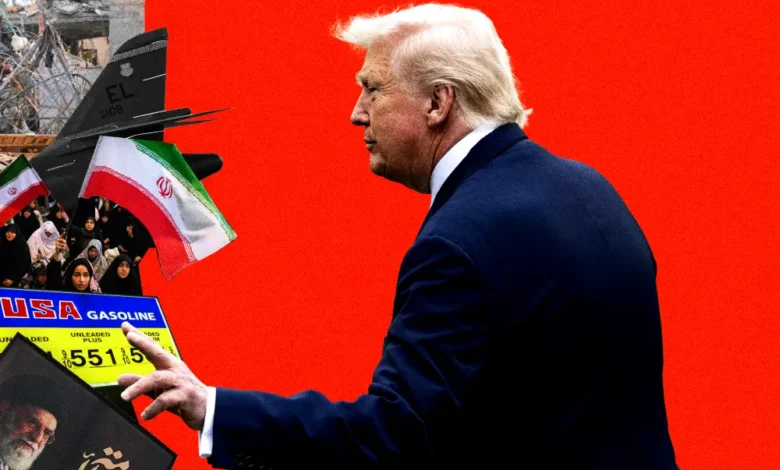
Nearly four weeks into war and what has now been termed Operation Epic Fury, the United States is projecting the language of negotiation even as it deepens its military footprint across the Middle East. President Donald Trump has repeatedly claimed that talks with Tehran are underway, describing them as “productive” and “very strong”.
Tehran, however, has categorically denied that any such direct negotiations are taking place. Iranian officials have instead indicated that messages are being relayed indirectly through intermediary states – a far cry from the structured diplomacy Washington suggests.
This contradiction is not incidental – it is central to how this conflict is unfolding.
Diplomacy, in this context, is not functioning as a pathway to de-escalation. It is being deployed as a strategic instrument, a way to buy time, manage perception, and retain leverage while realities on the ground shift rapidly. Even as statements hint at dialogue, troop movements, air strikes and naval deployments continue to expand in both scale and intensity.
The result is a carefully constructed duality – where the optics of engagement coexist with the mechanics of escalation.
This is not diplomacy failing but diplomacy being used.
The Escalation Nobody Is Calling a War
What began on February 28 as a coordinated US-Israeli air campaign targeting Iran’s military infrastructure has, in a matter of weeks, evolved into something far more consequential – though still deliberately unnamed.
According to US Central Command, more than 9,000 targets across Iran have been struck, ranging from Islamic Revolutionary Guard Corps installations and missile facilities to drone production centres and naval assets. Iranian vessels have been damaged or destroyed in significant numbers, while retaliatory strikes from Tehran have become near-daily occurrences, targeting Israel, Gulf states and US military bases in the region.
At the centre of this confrontation lies the Strait of Hormuz – a narrow maritime corridor through which roughly a fifth of the world’s traded oil flows. Its effective closure to most commercial shipping has transformed what might have remained a regional military exchange into a development with immediate global economic consequences.
Yet, despite the scale of these developments, this conflict continues to exist in a semantic grey zone.
There has been no formal declaration, no singular moment that marks its beginning in conventional terms. And yet, the elements of conflict are unmistakably present – sustained air campaigns, strategic targeting of infrastructure, economic disruption, and the steady expansion of military presence.
This is escalation without announcement, conflict without formal recognition. War, as it is traditionally understood, may not have been declared but something very close to it is already underway.
The Military Build-Up – Precision, Not Preparation for Invasion
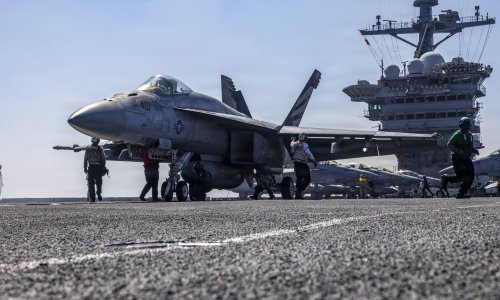
Beneath the rhetoric of diplomacy and the visible escalation in air strikes lies a quieter, more calculated development – the steady positioning of US ground and amphibious forces across the region.
At first glance, the numbers appear significant. Nearly 7,000 additional troops, including two Marine Expeditionary Units and elements of the 82nd Airborne Division, are being deployed towards the Gulf. Amphibious assault ships such as the USS Tripoli and USS Boxer, capable of launching F-35B fighter jets while carrying thousands of Marines, are converging from opposite ends of the globe.
But scale, in this case, is deceptive.
This is not a force designed for invasion. There are no heavy armoured divisions, no extended logistics chains, no evidence of the infrastructure required to sustain a prolonged ground war inside a country the size of Iran. For context, the 2003 invasion of Iraq required over 160,000 troops – a vastly larger commitment for a country significantly smaller than Iran.
What is being assembled instead is something far more precise.
Marine Expeditionary Units and airborne brigades are built for speed, flexibility and limited-duration missions. They are designed to enter hostile environments quickly, execute specific objectives, and withdraw before becoming entangled in sustained conflict. Their strength lies not in holding territory, but in seizing it temporarily or denying it to the adversary.
This distinction matters.
Because it signals that the United States is not preparing for a conventional war of occupation, but for a set of controlled, high-impact operations – actions that can be scaled up or down depending on how the situation evolves.
In other words, this is not preparation for war as we have traditionally understood it. It is preparation for something far more modular and far less predictable.
What These Forces Are Really Meant To Do
Once the composition of the deployed forces is understood, the question becomes clearer; what exactly are they being positioned to do?
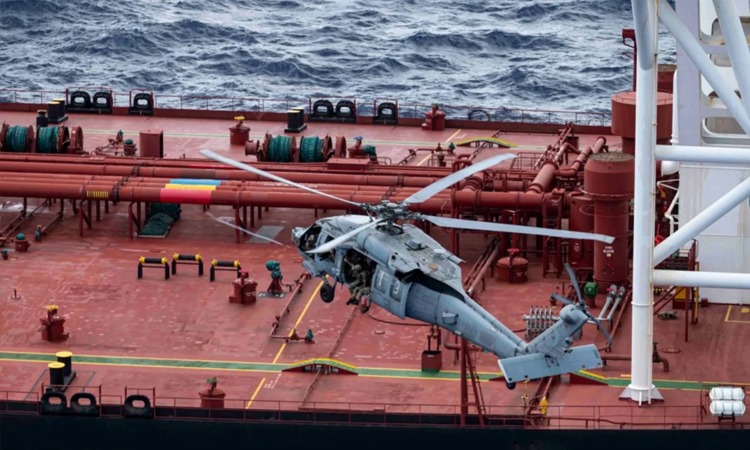
The most immediate and plausible objective is the securing of the Strait of Hormuz. With commercial shipping disrupted and global energy flows under pressure, reopening this critical chokepoint would serve both economic and strategic goals. Amphibious and airborne units are particularly suited for such missions – capable of securing key maritime terrain, neutralising coastal threats, and ensuring safe passage for shipping.
A second possibility lies in targeted, high-speed operations along Iran’s coastline. This could involve helicopter-borne raids against missile batteries, naval assets, or mine-laying capabilities that threaten movement through the strait. These would be limited in duration but precise in execution, aimed at degrading Iran’s ability to sustain pressure without triggering a full-scale confrontation.
Then comes the more escalatory spectrum.
Seizing or blockading Kharg Island – the hub of Iran’s oil exports – remains technically feasible. But such a move would strike at the heart of Iran’s economic lifeline, almost certainly provoking a broader and more aggressive response.
Even further up the escalation ladder is the possibility, however remote, of attempts to secure or neutralise Iran’s nuclear material. While discussed in policy circles, such an operation would require a far larger and more sustained ground presence than what is currently being deployed.
What ties these scenarios together is their limited scope and their disproportionate impact.
Each is designed to achieve a specific objective without crossing into full-scale war. Yet, each also carries the potential to trigger reactions that extend far beyond its initial intent.
Control, in this context, is not the same as stability. Because in a conflict structured around precision and restraint, it often takes only one miscalculation for the balance to break.
Why This Is Not (Yet) a War
For all the visible escalation – the air strikes, the naval deployments, the movement of troops – this still stops short of what would traditionally be recognised as war.
The contrast becomes clear when placed against historical precedent.
The 2003 invasion of Iraq involved more than 160,000 troops, supported by heavy armour, deep logistical networks and a clearly defined objective: regime change through sustained ground operations. Nothing in the current US posture suggests a comparable intent. The forces being deployed today are lighter, faster and far more limited in scope.
There is no large-scale build-up of armoured divisions, no extended supply chains being established, no political signalling that prepares domestic or global audiences for a prolonged land conflict.
And yet, to conclude from this that the situation is stable – or contained – would be a misreading. Because conflict today does not necessarily follow the templates of the past.
What is emerging instead is a form of modular confrontation – one that operates below the threshold of full-scale war, but above the threshold of peace. It is designed to apply pressure in calibrated bursts, to achieve strategic outcomes without triggering the costs, commitments and global backlash associated with conventional warfare.
In this model, escalation is not avoided – it is managed. But that management comes with its own risks. Because the absence of a declared war does not eliminate the dynamics of one. It merely compresses them into shorter timelines, narrower theatres, and more ambiguous signals.
This is not war in the traditional sense. But it is not peace either and that is precisely what makes it unstable.
The Real Risk – Miscalculation, Not Strategy
If strategy defines the intent behind this build-up, miscalculation defines its greatest danger.
As more forces enter the region, the margin for error narrows. Amphibious groups, airborne units, naval assets and air power are now operating in close proximity to one another, often within contested and highly volatile environments. In such conditions, even limited engagements carry the risk of unintended escalation.
Iran’s response capabilities further complicate this equation.
Unlike conventional military powers, Tehran relies heavily on asymmetric tactics — swarms of drones, fast-attack boats, coastal missile systems and the strategic use of chokepoints like the Strait of Hormuz. These methods are not designed to win a conventional war, but to impose costs, create disruption and force escalation on uneven terms.
This means that even a limited US operation – whether to secure shipping lanes or neutralise specific threats – could trigger responses that are difficult to contain.
A strike intended as a signal could be interpreted as a shift in posture.
A defensive move could be read as the beginning of a broader campaign.
And once that cycle begins, control becomes increasingly difficult to maintain.
The risks extend beyond the immediate response.
As US attention and resources concentrate in the Middle East, other regions may perceive opportunity – whether in Eastern Europe, the Indo-Pacific or elsewhere. Escalation, in this sense, is not confined geographically; it has the potential to ripple outward, reshaping global strategic balances.
History offers a consistent lesson here – conflicts rarely spiral because they are planned to do so. They spiral because the space between intention and perception collapses. And in a confrontation defined by ambiguity, that space is already dangerously narrow.

Diplomacy as Leverage, Not Resolution
Even as military pressure builds, the language of diplomacy continues to run in parallel but not necessarily toward resolution.
President Donald Trump’s assertions of ongoing negotiations stand in sharp contrast to Tehran’s consistent denials. What appears, at first glance, to be a breakdown in communication is, in reality, something more deliberate. Messages are being exchanged, intermediaries are stepping in, and proposals are being floated but none of it amounts to structured, direct engagement.
This is not diplomacy in the traditional sense. It is diplomacy as leverage.
By signalling openness to talks while simultaneously expanding its military posture, Washington retains strategic flexibility. It can escalate without appearing to abandon dialogue, and de-escalate without appearing to concede. The ambiguity is not a flaw – it is a feature.
Iran, too, is playing within this framework.
By denying direct negotiations while keeping indirect channels open, it avoids the appearance of yielding under pressure, even as it engages just enough to keep escalation from tipping over.
The result is a delicate, carefully managed tension; where both sides are communicating, but neither is committing.
Even the emergence of potential intermediaries, including Pakistan’s offer to facilitate talks, fits into this pattern. It introduces the possibility of dialogue without fundamentally altering the underlying dynamics of pressure and positioning.
In this environment, diplomacy does not replace escalation. It exists alongside it – shaping it, slowing it, but never quite stopping it.
The Last Bit, Most Dangerous Phase Is In-Between
What makes this moment particularly volatile is not just the scale of military activity or the breakdown of clear diplomatic pathways — it is the space in which both now coexist.
This is not a conflict waiting to happen. It is not a war that has fully arrived. It is something in between – a state of controlled escalation where actions are calibrated, signals are mixed, and outcomes remain uncertain.
But this in-between phase is often the most dangerous. Because it creates the illusion of control.
Each side believes it can manage the pace, contain the consequences, and step back if necessary. Yet, as history has repeatedly shown, escalation rarely follows a script. It responds to reactions, misreads intentions, and accelerates in moments where restraint was assumed.
In a declared war, the boundaries (however brutal) are at least understood. In peace, the risks are contained by definition.
But in a state that is neither, the lines are blurred. And it is within those blurred lines that the greatest dangers often emerge.
This is not war.
This is not peace.
This is controlled escalation and it may prove to be far more dangerous than either.