Mukesh Ambani’s Biggest Gamble Yet? From AI And Jio IPO To Cola Wars, Reliance Is Quietly Building An “Everything Ecosystem” — But Can It Still Reshape Entire Industries?
Mukesh Ambani is no longer merely expanding Reliance Industries; he appears to be redesigning the architecture of India’s digital and consumer economy itself. From a reworked Jio IPO and billion-dollar AI ambitions to an aggressive cola war, Reliance is once again attempting to disrupt multiple industries simultaneously, though this time the risks are far greater.

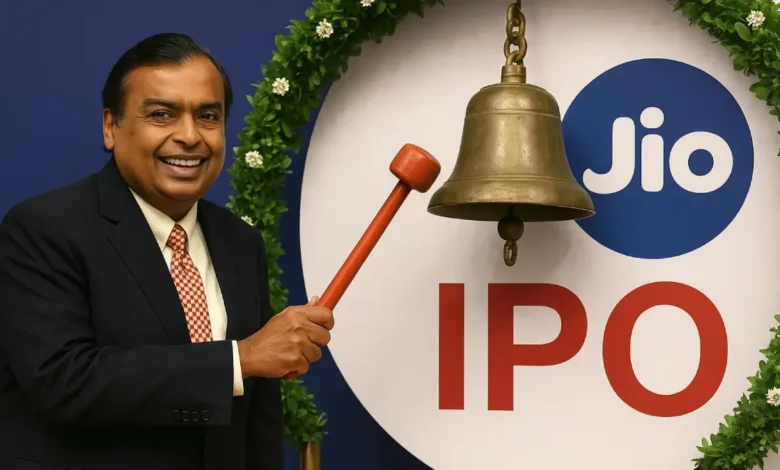
After a series of blockbuster IPOs that generated enormous excitement but left many retail investors disappointed post-listing, Reliance Industries appears to be preparing a very different public market strategy for Jio Platforms. The shift may look technical on paper, but its implications could stretch far beyond a single IPO.
According to multiple reports, Reliance is now reworking Jio Platforms’ proposed listing structure from an Offer for Sale (OFS) to a largely fresh issue. That distinction matters enormously. In a traditional OFS-heavy IPO, existing shareholders sell their stake to public investors, often using the listing as a partial exit route. In a fresh issue, however, the money raised goes directly into the company itself.
That immediately changes the optics of the offering.

India’s recent mega IPO cycle has seen repeated criticism around aggressive valuations and excessive monetisation by early investors. The listings of Hyundai Motor India and LG Electronics India attracted institutional demand and generated significant headlines, yet post-listing enthusiasm cooled considerably as questions emerged over pricing discipline and upside potential for ordinary investors.
Reliance appears keenly aware of that sentiment.
Reports suggest that the company has been engaged in extensive discussions with existing Jio investors, including sovereign wealth funds, private equity firms, and global technology giants such as Google and Meta. Some investors were reportedly seeking higher valuations in order to maximise returns. Reliance, on the other hand, appears focused on avoiding a weak market debut that could damage both sentiment and credibility.
That raises a larger question: is Reliance trying to ensure Jio becomes a long-term market compounder rather than merely India’s largest IPO headline?
The answer may lie in how carefully the company appears to be positioning the offering. Instead of treating the IPO as a liquidity event for early backers, Reliance seems to be framing Jio as a long-duration infrastructure and technology story that still requires enormous amounts of capital to grow.
That is a crucial distinction.
A fresh issue sends a different message to the market entirely. It signals that the company itself still needs capital to expand, invest, and build. In Jio’s case, that future expansion is not limited to telecom towers and subscriber additions anymore. It now stretches into artificial intelligence infrastructure, cloud ecosystems, enterprise digital services, data centres, and next-generation connectivity.
In many ways, the IPO itself is becoming part of a much larger Reliance transition story.
There is another important layer here as well. Reliance currently owns roughly two-thirds of Jio Platforms. A fresh issue would dilute all shareholders proportionately instead of allowing only select investors to sell stock. That means Reliance itself would also marginally dilute its stake while simultaneously giving public markets a clearer standalone valuation of its telecom and digital business, something investors have sought for years.
Could this eventually unlock a completely different valuation framework for Reliance Industries itself?
For years, analysts have argued that Reliance’s conglomerate structure often obscures the true value of its digital and consumer businesses beneath its traditional oil-to-chemicals operations. A successful Jio listing could begin separating those layers more transparently, potentially changing how both domestic and global investors value the group altogether.
And perhaps that is precisely why this IPO matters far beyond Dalal Street.
Ambani Wants Public Markets To Fund India’s Digital Backbone
If the restructuring of the Jio IPO reveals anything, it is this: Reliance is no longer thinking merely in terms of telecom expansion. The company appears to be preparing for a much larger and far more capital-intensive phase of growth, one that could redefine its role within India’s economy altogether.
According to reports, nearly ₹25,000 crore from the proposed IPO proceeds could be used toward reducing debt, while the remaining capital may be channelled into network expansion, AI infrastructure, cloud services, enterprise technology, and digital platforms. That allocation itself offers a revealing glimpse into Reliance’s priorities.
This is not the language of a conventional telecom operator anymore.
Over the past decade, Jio fundamentally transformed how Indians consume the internet. Cheap data, aggressive pricing, and rapid scale helped Reliance pull millions of users into the digital economy. Yet telecom penetration alone no longer guarantees future dominance.
The next battle is likely to be fought across cloud computing, artificial intelligence, enterprise infrastructure, digital commerce, and data ecosystems. Reliance appears determined to ensure that Jio sits at the centre of that transition.
What makes this particularly significant is the scale at which Reliance tends to operate once it identifies a strategic opportunity. Jio’s telecom rollout was not incremental; it was designed to overwhelm the market through pricing power, infrastructure investment, and relentless expansion. The company now seems intent on applying a similar philosophy to India’s broader digital infrastructure ecosystem.
That ambition carries enormous implications.
India’s digital economy is expected to expand dramatically over the next decade, driven by rising internet penetration, AI adoption, digital payments, e-commerce growth, and enterprise digitisation. Whoever controls the underlying infrastructure powering that economy could wield extraordinary influence across sectors.
Reliance appears to understand this better than most.
The company already controls one of India’s largest telecom networks, possesses a massive retail footprint, owns media assets, operates digital payment ecosystems, and continues expanding into cloud and enterprise services. Through Jio, Reliance is no longer simply selling connectivity; it is gradually positioning itself as an integrated digital platform company.
That raises an uncomfortable but important question: is Reliance building India’s version of a full-spectrum technology ecosystem?
Globally, some of the world’s most powerful corporations achieved dominance not merely by offering individual products, but by building interconnected ecosystems that locked consumers, businesses, and services into a single network. Amazon combined commerce with cloud. Apple integrated hardware, software, and services. Tencent merged payments, media, gaming, and communication.
Reliance may be attempting an Indian adaptation of that model.
The importance of the IPO, therefore, extends far beyond fundraising. Public markets are effectively being asked to finance the next stage of Reliance’s technological transformation. Investors are not merely buying into a telecom company with hundreds of millions of users; they are potentially funding an infrastructure platform that could sit beneath large parts of India’s future digital economy.
And that is precisely where the opportunity and the risk begin to intensify simultaneously.

The Real Gamble Is Artificial Intelligence
If telecom transformed Reliance into India’s dominant digital gateway, artificial intelligence could determine whether Mukesh Ambani succeeds in building something even larger: a technology infrastructure empire embedded deeply into India’s economic future.
This is where the conversation around Reliance begins to shift from business expansion to strategic ambition.
The Economist recently described Ambani’s AI push as perhaps his “biggest gamble yet,” and the reasoning is difficult to ignore. Reliance is reportedly planning investments approaching ₹10 lakh crore over the coming years across AI infrastructure, data centres, cloud ecosystems, energy systems, and digital services.
That number alone signals the scale of what the group may be attempting.
Unlike telecom, however, AI is not a market where scale alone guarantees success.
When Jio disrupted India’s telecom sector in 2016, the opportunity was relatively visible. Data costs were high, internet penetration was low, smartphone adoption was accelerating, and the market remained fragmented. Reliance identified a mass-market gap and used its financial muscle to exploit it aggressively.
AI is a fundamentally different battlefield.
The competition is global, technological cycles are evolving rapidly, and even the world’s biggest companies are still struggling to determine sustainable monetisation models. Microsoft, Google, Amazon, Meta, OpenAI, and Chinese technology giants are collectively spending hundreds of billions of dollars on AI infrastructure and applications, often with uncertain timelines for meaningful returns.
Reliance is now stepping into that arena.
At the heart of Ambani’s strategy is the idea of building what he has called “sovereign AI infrastructure” for India. The concept is strategically significant. Instead of merely depending on foreign AI ecosystems, Reliance appears to be positioning itself as the domestic infrastructure layer powering Indian AI applications, enterprise adoption, regional language models, and cloud ecosystems.
That ambition explains the importance of Reliance’s partnership with Nvidia, one of the world’s most critical AI chip and computing companies. The collaboration is expected to focus on building AI models tailored to Indian languages and local use cases, areas where India could eventually develop advantages distinct from Western AI ecosystems.
The question, however, is whether localisation alone is enough to build a profitable AI empire.
Building AI ecosystems requires far more than software applications. It demands enormous computational power, access to advanced semiconductor supply chains, highly specialised talent, stable energy infrastructure, sophisticated cloud systems, and constant capital deployment. Even minor delays or technological shifts can dramatically alter competitive positions.
And this is where Reliance’s traditional strengths may simultaneously become advantages and vulnerabilities. On one hand, few Indian companies possess Reliance’s balance sheet strength, political access, infrastructure capabilities, and ability to execute at scale. On the other hand, AI is not oil refining, telecom distribution, or retail expansion. It is a sector driven by relentless innovation cycles where even dominant global players remain uncertain about long-term winners.
Can Reliance replicate the Jio playbook in a world where technological leadership changes every few months? That may ultimately become the defining business question surrounding Mukesh Ambani’s next chapter.
Yet Reliance does possess one strategic advantage that few competitors can easily replicate: distribution. Through telecom, retail, media, payments, and consumer platforms, the company already touches hundreds of millions of Indian consumers and businesses. If AI eventually becomes embedded into commerce, entertainment, enterprise services, governance systems, and daily digital activity, Reliance could potentially integrate those capabilities across an already vast ecosystem.
In other words, Ambani may not merely be trying to participate in India’s AI future. He may be trying to build the infrastructure layer beneath it.
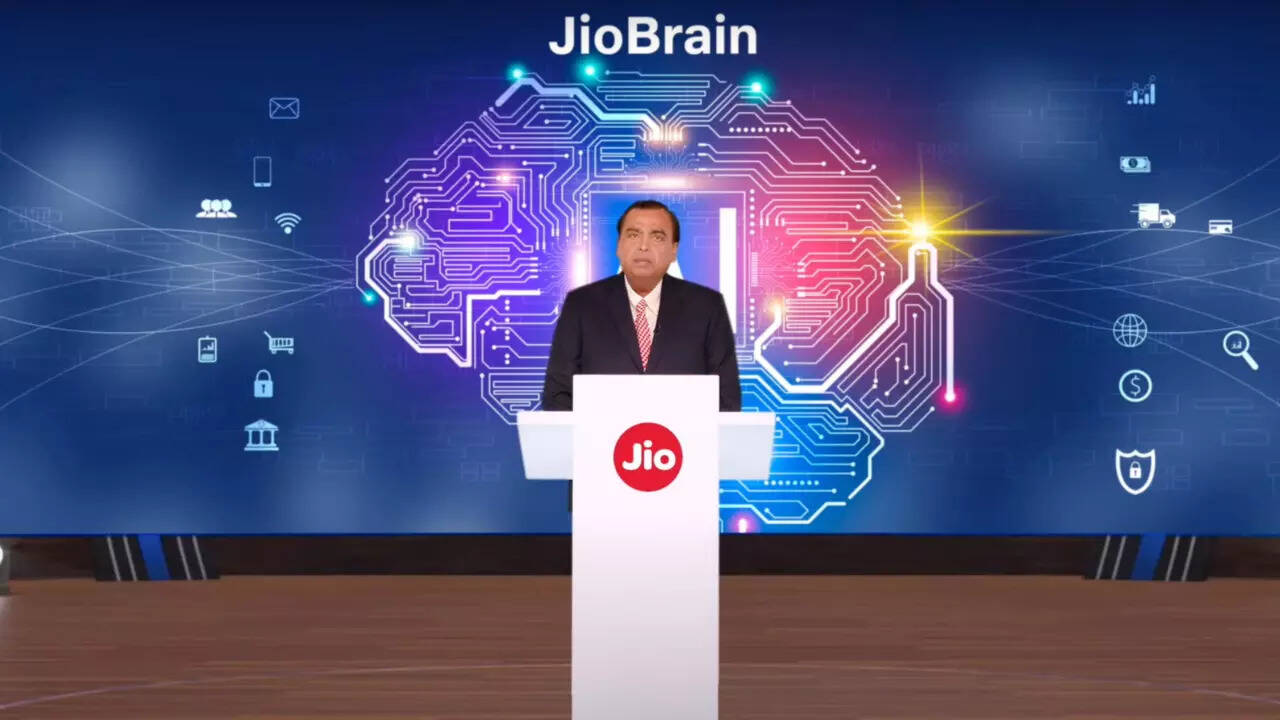
Why AI Is Far More Dangerous Than Telecom
There is a temptation in markets to view every major Reliance expansion through the lens of Jio’s extraordinary success. After all, Mukesh Ambani has already demonstrated an ability to enter a mature sector, disrupt incumbents through scale and pricing, and emerge dominant within a remarkably short period of time.
But artificial intelligence may not allow for the same playbook so easily.
Telecom disruption, despite its complexity, ultimately revolved around a relatively straightforward proposition: cheaper data, larger infrastructure deployment, and faster subscriber acquisition. Demand already existed. Consumers wanted internet access, smartphone adoption was rising rapidly, and India’s digital economy was waiting to explode.
AI presents a far murkier equation.
Unlike telecom, artificial intelligence does not yet possess a universally proven mass-market monetisation structure. Companies across the world are spending aggressively on AI infrastructure while still searching for sustainable long-term revenue models. Even the largest technology firms are burning through enormous amounts of capital to secure computing power, data centres, and semiconductor access.
That creates a very different risk environment for Reliance. Building large-scale AI infrastructure is staggeringly expensive. Data centres consume enormous quantities of electricity. Advanced AI chips remain heavily concentrated within a few global supply chains. Geopolitical tensions involving semiconductors, China, Taiwan, and American export restrictions continue adding layers of uncertainty to the global AI race.
Reliance is entering this ecosystem at a time when technological dependence itself has become geopolitical. There is also the question of timing.
In telecom, Reliance arrived just as India’s internet consumption boom was beginning. In AI, the market remains highly fluid. Consumer adoption is growing rapidly, yet enterprise monetisation models are still evolving. Governments are still debating regulations. Businesses are experimenting with applications but remain uncertain about long-term returns on AI investments.
Could India’s AI boom take far longer to commercialise than investors currently expect?
That possibility cannot be dismissed. The danger with capital-intensive technological revolutions is that infrastructure spending often arrives years before predictable profitability.
Global technology giants can absorb prolonged uncertainty due to diversified international operations and deep cash reserves. Reliance, despite its immense financial strength, would still need to balance aggressive AI spending alongside telecom investments, retail expansion, renewable energy ambitions, and its legacy energy business.
The scale of simultaneous capital deployment is enormous even by Reliance standards.
There is another important distinction between telecom and AI as well: competitive barriers. Jio’s telecom disruption primarily targeted domestic competitors operating within India’s regulatory and infrastructure environment. AI competition, however, is global from day one. Reliance is not merely competing against Indian firms. It is stepping into an ecosystem shaped by Microsoft, Google, Amazon, OpenAI, Nvidia, Tencent, Alibaba, and rapidly evolving startup ecosystems worldwide.
That dramatically raises the execution bar.
Technology leadership in AI can shift within months rather than years. Models become outdated quickly. Computing requirements evolve constantly. New breakthroughs can disrupt entire business strategies overnight. Scale helps, but technological agility matters just as much.
And yet, Reliance may believe that India itself offers a unique opportunity large enough to justify the gamble.
India remains one of the world’s largest underpenetrated digital markets, with hundreds of millions of consumers and businesses still early in their technological adoption journey. If Reliance can successfully localise AI for Indian languages, commerce, education, governance, healthcare, and enterprise applications, it could potentially create an ecosystem tailored specifically for domestic demand.
The challenge, however, lies in ensuring that massive infrastructure investments eventually translate into equally massive and sustainable returns. That is the part nobody can confidently predict yet.

Reliance Is Quietly Building An “Everything Ecosystem”
The deeper one looks at Reliance Industries today, the harder it becomes to classify the company using traditional business labels. It is no longer merely an energy conglomerate, a telecom giant, or a retail heavyweight. Increasingly, Reliance appears to be positioning itself as an interconnected ecosystem designed to touch nearly every layer of India’s consumer and digital economy.
That distinction matters.
Globally, the most powerful modern corporations are no longer simply product companies. They are ecosystem companies. Their strength comes not only from individual businesses, but from how those businesses reinforce one another through data, distribution, infrastructure, payments, logistics, advertising, cloud systems, and consumer engagement.
Reliance seems to be moving steadily in that direction.
Consider the architecture already taking shape. Jio controls telecom connectivity and digital access for hundreds of millions of users. Reliance Retail gives the group one of the country’s largest consumer distribution networks. Its media operations provide content reach and advertising influence. Digital payment systems deepen user integration, while renewable energy investments aim to support future infrastructure demands.
Artificial intelligence could eventually become the glue connecting all of these pieces together.
If AI becomes deeply integrated into commerce, entertainment, customer service, logistics, enterprise software, and financial systems, Reliance would possess a rare advantage: an already massive captive ecosystem through which those capabilities can be deployed rapidly at scale.
That may explain why the company’s ambitions increasingly appear less sector-specific and more structural.
Reliance is not entering one industry at a time anymore. It is gradually embedding itself into the infrastructure underlying multiple industries simultaneously. Telecom supports digital commerce. Retail feeds consumer data. Media strengthens engagement. Payments increase transaction visibility. AI enhances integration and efficiency across the ecosystem.
The strategy resembles a flywheel.
Each vertical strengthens another, creating a network effect that becomes progressively harder for competitors to challenge. Consumers using Jio connectivity may shop through Reliance platforms, consume Reliance-owned media, transact through Reliance-backed systems, and eventually interact with AI-driven services operating across the same network.
That raises an important strategic question: is Reliance trying to become India’s most indispensable corporate platform?
If so, the implications are enormous.
India’s next phase of economic growth is expected to be driven heavily by digitisation, consumption expansion, AI adoption, financial inclusion, and enterprise transformation. Companies that control the infrastructure enabling those shifts could accumulate extraordinary economic influence over time.
Reliance clearly understands the value of infrastructure dominance. It used connectivity infrastructure to disrupt telecom. It leveraged distribution infrastructure to expand retail. It is now attempting to build digital and AI infrastructure capable of supporting future growth layers altogether.
Interestingly, even the seemingly unrelated cola wars reveal elements of this philosophy.
Reliance’s aggressive push with Campa Cola is not merely about beverages. It is about distribution reach, retail penetration, pricing disruption, and market capture. The company appears willing to enter highly competitive sectors, compress margins aggressively, expand distribution faster than rivals, and scale operations relentlessly until incumbents are forced into defensive positions.
The refrigerator expansion triggered by the Campa-Cola battle illustrates precisely how Reliance tends to think: dominate the infrastructure around the product, not just the product itself.
That pattern has repeated itself across sectors.
And perhaps that is what makes Reliance simultaneously admired and feared within corporate India. The company rarely enters industries casually. When it commits capital, it usually aims to reshape the economics of the sector altogether.

Is Ambani Building The Post-Oil Reliance Empire?
For decades, Reliance Industries was fundamentally identified with oil, refining, petrochemicals, and energy. Its Jamnagar refinery symbolised industrial scale on a level few Indian companies could match, while the group’s energy operations generated the financial muscle that eventually funded its expansion into telecom, retail, and digital services.
Today, however, Reliance appears to be undergoing perhaps the most important identity transformation in its history. The company that once dominated India’s hydrocarbons economy now increasingly wants to dominate parts of its digital economy instead.
That shift is not accidental.
Global energy markets are evolving rapidly under the pressure of climate transitions, renewable energy adoption, electrification, and changing geopolitical alignments. Traditional oil and petrochemical businesses continue generating enormous cash flows, but long-term growth opportunities increasingly appear concentrated in technology, infrastructure, digital commerce, AI, and consumer ecosystems.
Mukesh Ambani seems determined to ensure Reliance is positioned for that future before the old model begins slowing structurally.
This is where the company’s simultaneous investments across telecom, AI, renewable energy, retail, cloud infrastructure, and consumer brands begin to connect into a larger strategic picture. Each new vertical reduces Reliance’s long-term dependence on legacy energy operations while building alternative engines of growth capable of sustaining the conglomerate for decades.
The timing of this transition is equally significant because it overlaps with another critical phase: succession.
For years, markets speculated about how leadership responsibilities within the Reliance empire would eventually evolve. That process is no longer theoretical. Ambani’s children already occupy important positions across various Reliance businesses, including telecom, retail, and digital operations. The group’s future structure is visibly being shaped in real time.
That raises a broader question few investors openly discuss: is Mukesh Ambani now building the architecture of Reliance after Mukesh Ambani?
The answer may well determine how historians eventually judge this phase of the company’s evolution.
Reliance’s transformation today is not merely about entering fashionable sectors. It is about redesigning the conglomerate for an entirely different economic era. Oil and refining built the empire. Telecom expanded it. AI, digital infrastructure, retail ecosystems, and consumer brands may ultimately define its next generation.
And unlike previous transitions, this one is unfolding under intense global competition and technological uncertainty.
There is also a symbolic layer to this shift. For much of post-liberalisation India, Reliance represented industrial capitalism at its most aggressive and ambitious. Its rise mirrored India’s infrastructure and energy expansion story. The next chapter, however, appears far more intertwined with data, algorithms, cloud infrastructure, digital consumption, and AI ecosystems.
In many ways, Reliance is attempting to evolve alongside India itself.
Whether it is Jio reshaping internet access, Campa Cola challenging multinational beverage giants, or AI infrastructure ambitions positioning the company within the next technological revolution, the broader objective appears remarkably consistent: remain central to India’s next growth story regardless of where the economy moves.
That ambition is massive. But so are the risks attached to it.
The Last Bit, Can Reliance Keep Reinventing Entire Markets?
Few companies in modern India have repeatedly altered the trajectory of entire industries the way Reliance Industries has. From petrochemicals and refining to telecom and retail, Mukesh Ambani has built a reputation around scale, disruption, and an extraordinary willingness to deploy capital where others hesitate.
The question now is whether that playbook can still work in a world that is becoming far more technologically complex, globally competitive, and capital intensive.
The restructuring of Jio’s IPO, the aggressive AI push, the expansion into consumer brands like Campa Cola, and the broader attempt to build an interconnected digital ecosystem all point toward one unmistakable reality: Reliance is preparing for another defining transformation.
This time, however, the challenge is fundamentally different.
Telecom disruption relied on infrastructure scale and pricing aggression. Artificial intelligence demands constant technological evolution. Consumer wars can be fought through distribution, but AI ecosystems require innovation cycles that move at extraordinary speed. The competition is no longer restricted to domestic incumbents struggling with legacy systems; it now includes some of the world’s most powerful technology companies.
And yet, Reliance continues to possess advantages few others can match.
Its access to capital remains enormous. Its distribution reach spans hundreds of millions of consumers. Its integration across telecom, retail, media, payments, and infrastructure gives it strategic leverage that most standalone companies simply cannot replicate. If AI eventually becomes deeply embedded into daily economic activity, Reliance may already possess the ecosystem through which those services can scale rapidly across India.
That possibility alone explains why investors continue watching Ambani’s moves so closely.
There is also a larger national dimension to this story. As India attempts to position itself as a major digital and technological economy, companies capable of building large-scale domestic infrastructure will inevitably occupy a critical role. Reliance appears intent on ensuring it remains at the centre of that transition rather than becoming merely a participant within it.
The gamble, however, remains enormous.
Billions of dollars are being committed toward sectors where monetisation models remain uncertain, technological leadership changes rapidly, and global competition is relentless. Even Reliance cannot guarantee that scale alone will deliver dominance in artificial intelligence the way it once did in telecom.
But perhaps Ambani is betting on something larger than individual sectors altogether. Perhaps the real ambition is to ensure that no matter where India’s economic future moves — digital infrastructure, AI, commerce, consumer brands, cloud systems, or data ecosystems — Reliance remains deeply embedded within it.
If that strategy succeeds, Reliance may once again redefine multiple industries simultaneously. If it fails, this could become the most expensive and complex gamble the conglomerate has ever attempted.