How The Anil Ambani Group Looted 17 Public Banks And Kept LIC In The Dark?
THE PYRAMID OF IMPUNITY: Is RCom's ₹19,694 Crore Fraud Was Built to Keep the Man at the Top Untouchable?

A Crime Scene in Slow Motion in Anil Ambani’s Empire!
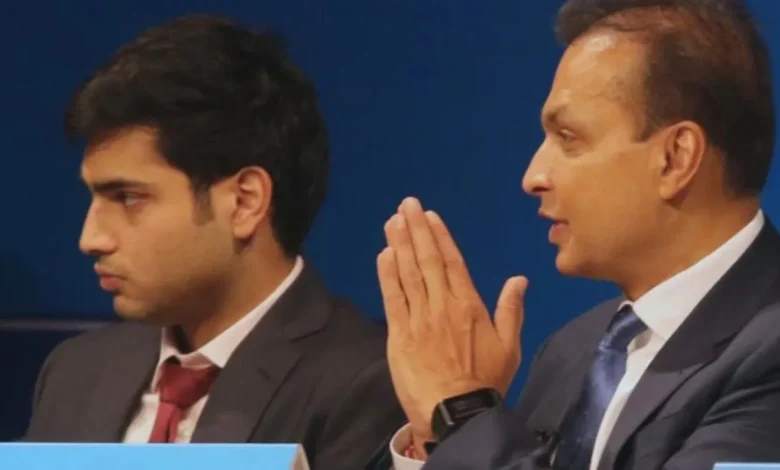
On April 20, 2026, the Central Bureau of Investigation arrested D. Vishwanath, Joint President of Reliance Communications, and Anil Kalya, its Vice President of Accounts and Finance. The CBI press release described their role with clinical precision: Vishwanath was “overall in charge of banking operations” and directed the misutilisation of funds; Kalya “actively supported” him. Two men in handcuffs. Two families shattered. Cameras rolling outside the CBI’s Mumbai offices. The story made national headlines and then, as with so many white-collar crime arrests in India, receded.
What did not recede is the scale of what they are accused of being part of. The State Bank of India, India’s largest public sector lender and the self-styled ‘banker to every Indian,’ filed a complaint alleging that a consortium of 17 public sector banks and financial institutions suffered a combined wrongful loss of ₹19,694.33 crore. The money lost in this single alleged fraud could have funded the construction of 25,000 government primary schools across rural India, or built 98,000 kilometres of pucca village roads under the Pradhan Mantri Gram Sadak Yojana. It was not a sum of money that moved without someone directing it.
“There is no such thing as an accidental ₹19,694 crore. Shell companies do not form themselves. Letters of Credit do not get discounted for fictitious transactions by oversight.”
The complaint is based on a forensic audit that found “large-scale diversion and misutilisation of loan funds through interlinked and circuitous transactions among group entities during the period 2013-17.” That window of four years is crucial. For four years, the machinery of fraud allegedly ran without a single regulator, auditor, or credit rating agency raising an alarm loud enough to stop it. And at the centre of that machinery stood a company — Reliance Communications Limited — controlled by one of the most recognisable names in Indian business: Anil D. Ambani.
But the RCom fraud is not the beginning of this story. It is not even the biggest chapter. It is merely the one that has, as of April 2026, produced two arrests. The full story of the Anil Dhirubhai Ambani Group’s entanglement with India’s financial system runs to at least ₹73,006 crore, across seven CBI cases, eight ED investigations, a special investigation team, and a Supreme Court-ordered time-bound probe.
The Anatomy of the Fraud: Shell Entities, Circular Transactions, and Discounted Fiction
To understand what the CBI alleges, one must first understand the plumbing. The architecture of the RCom fraud, as described in reports, public records, rests on three instruments: shell entities, circuitous transactions, and discounted Letters of Credit.
Shell Entities: A shell company is, in essence, a corporate ghost. It has a registered office, a director on paper, and a company identification number, but no employees, no operations, and no independent economic purpose. Its sole function is to receive and transmit money. The CBI alleges that RCom’s officials controlled a network of such entities, routed funds through them, and created the appearance of legitimate inter-company transactions.
Circular Transactions: RCom borrows from Bank A. RCom pays Shell Company B for ‘services rendered.’ Shell Company B pays Shell Company C, which pays it back to a group entity or promoter-linked account. The original loan on paper has been ‘utilised.’ In reality, the money has simply completed a circle, ending up in private hands while the public bank holds the loan as a live asset. When the loan eventually defaults, the bank suffers a loss. The money is gone.
Discounted Letters of Credit: An LC is a standard trade finance instrument. A bank issues an LC guaranteeing payment to a beneficiary upon fulfilment of certain conditions. When a bank ‘discounts’ an LC, it pays the beneficiary immediately, accepting the company’s promise to reimburse later. The CBI alleges that RCom obtained LCs for ‘bogus service-related transactions’ with its own group entities — that is, the underlying trade was fictitious. The bank paid out real money against a phantom transaction. When RCom defaulted, the bank bore the full loss.
The ED added another layer of detail through its raid of 35 premises across India in July 2025. Investigators found that shell firms like Biswal Tradelink Private Limited were used to arrange fake bank guarantees — in Reliance Power’s case, guarantees worth ₹68.2 crore were allegedly fabricated to fulfill a Solar Energy Corporation of India (SECI) tender. The managing director of Biswal Tradelink, Partha Sarathi Biswal, was arrested in August 2025. This was not a communication company’s internal finance team going rogue. This was a group-wide, multi-entity machinery of financial engineering that stretched from a telecom company to a power company, from public banks to a sovereign insurer.
A forensic audit by BDO India LLP, commissioned in October 2020, found that RCom and its management had engaged in “misutilisation of funds raised from banks and financial institutions, routing of funds through subsidiaries, misuse of sale invoice financing, discounting of fictitious bills, systematic siphoning of funds through inter-company deposits and shell related entities, creating and writing-off of fictitious debtors and receivables, and gross overstatement of security.” This is not an allegation of reckless management. It is an allegation of a deliberately constructed system.
The Reliance ADA Group: A Constellation of Frauds
The RCom case is the most recent arrest but by no means the most expansive fraud alleged against the Anil Dhirubhai Ambani Group. In its status report to the Supreme Court in February 2026, the CBI informed the bench that it is probing bank loan frauds cumulatively worth ₹73,006 crore across seven cases against the Reliance Anil Ambani Group. The ED simultaneously informed the court that it has constituted a Special Investigation Team to probe eight related cases. These are not seven unrelated incidents of corporate misfortune. They form a pattern.
Reliance Home Finance (RHFL): SEBI Calls It a Scheme
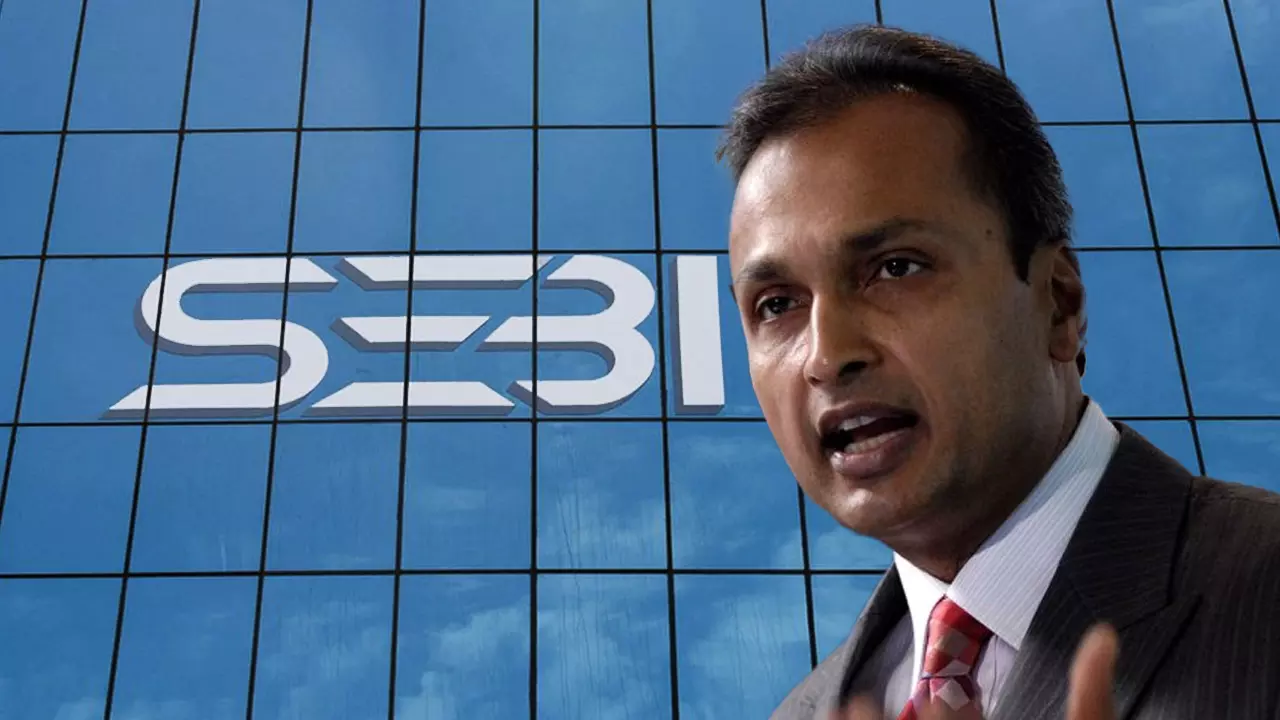
In August 2024, in a landmark 222-page order, the Securities and Exchange Board of India (SEBI) delivered one of the most damning regulatory verdicts in Indian financial history. SEBI barred Anil Ambani from the securities market for five years, fined him ₹25 crore, and banned him from holding any directorial or key managerial position in any listed company. The regulator found that RHFL had disbursed ₹14,577.68 crore as General Purpose Corporate Loans (GPCL) during the investigation period, and 88.76 percent of these loans went to what SEBI identified as “Promoter-Indirectly Linked Entities” (PILE).
These were not creditworthy borrowers. They were, as SEBI’s whole-time member wrote, “non-descript and financially weak privately held companies connected with the Reliance ADA group.” Deviations from credit policy were routine: loans were disbursed on the day of application, with backdated sanction memos, incomplete documentation, and no security creation. Loans were routed to repay earlier loans — a classic evergreening loop that artificially maintained the appearance of a healthy loan book. The forensic audit by Grant Thornton found that in many cases, the funds ended up back with group companies including Reliance Capital, Reliance Infrastructure, and Reliance Big Entertainment.
“By a preponderance of probability, the mastermind behind the fraudulent scheme is the chairman of ADAG — Anil Ambani.”
SEBI’s order stated that the Board of Directors of RHFL had itself “issued strong directives to stop such lending practices and reviewed corporate loans regularly but the company’s management ignored these orders.” The regulator explicitly named Anil Ambani as the “mastermind” behind the scheme. PwC, RHFL’s own statutory auditor, withdrew from its role, citing non-cooperation and concerns over the company’s financial integrity — a remarkably extraordinary step for one of the world’s largest audit firms. Total penalties across 27 entities amounted to ₹624.06 crore.
The LIC Case: Defrauding the Nation’s Insurer
On April 1, 2026, the CBI registered yet another FIR, this time on behalf of the Life Insurance Corporation of India — the institution that manages the retirement savings and life insurance policies of hundreds of millions of ordinary Indians. The allegation: RCom and Anil Ambani allegedly induced LIC to subscribe to Non-Convertible Debentures worth ₹4,500 crore on the basis of “false representations” about the company’s financial health and the quality of the security offered. ₹3,750 crore remains unpaid.
The BDO forensic audit found something deeply troubling. RCom had claimed its total liabilities to lenders stood at a certain level, but the actual figure was ₹49,111 crore in liabilities against a combined asset base of just ₹26,163 crore. The company was, in forensic terms, insolvent years before it admitted it. The security that LIC was offered was already largely pledged or non-existent. LIC, whose policyholders are predominantly middle-class and working-class Indians who entrust their savings to it for protection was left holding worthless paper.
The Banking Cascade: SBI, PNB, Bank of Baroda, and the Consortium of Losses
The CBI’s original FIR in August 2025 named SBI as the complainant, with RCom having allegedly caused ₹2,929.05 crore in wrongful losses to the bank alone, out of a total consortium exposure of ₹19,694.33 crore involving 17 public sector banks. But subsequent months brought successive waves of fresh cases. On February 25, 2026, a case was registered based on Bank of Baroda’s complaint, covering the exposure of former Dena Bank and Vijaya Bank (both merged into Bank of Baroda).
On March 5, 2026, Punjab National Bank lodged its complaint, with an exposure that also included e-United Bank of India. Canara Bank had declared RCom’s ₹1,050 crore loan account fraudulent in November 2024. Central Bank of India and Bank of Baroda followed with fraud classifications in September 2025.
These are not separate stories. They are the same story told by seventeen different institutional victims. The forensic audit period of 2013 to 2017 was the same. The shell entities were the same. The modus operandi was the same. The only variable was which public bank’s balance sheet bore the loss.
Reliance Home Finance, Reliance Commercial Finance, and the Arrest of the Inner Circle
In April 2026, the ED arrested Amitabh Jhunjhunwala, former Vice-Chairman of Reliance Capital, and Amit Bapna, former CFO of Reliance Capital and a director at RHFL, under the Prevention of Money Laundering Act. A PMLA court in New Delhi granted the ED five days of custodial remand after finding that an email trail implicated both men in the diversion of ₹11,500 crore. The ED has provisionally attached group properties worth ₹17,000 crore and is probing money laundering claims that may total over ₹40,000 crore across RAAG entities.
The pattern of response from the Reliance Group’s spokespersons has been consistent: the arrested executives “are no longer associated with the group,” having left in late 2019. This is legally accurate. It is also, investigatively, entirely beside the point. The alleged acts occurred between 2013 and 2017, when these individuals were very much part of the group. The departure, investigators allege, came after the loans had already been disbursed and the diversions had already occurred.
The Pyramid of Accountability: How the Top Stays Safe
The most consequential legal argument in the Anil Ambani Group investigations is one that will be familiar to anyone who has watched India’s white-collar criminal justice system at work. It is the Non-Executive Director Defence: the claim that because the promoter held a “non-executive” role on a company’s board, he cannot be held responsible for the operational decisions of its management. In the RCom case, the Reliance Group spokesperson stated clearly: “Anil D. Ambani served as a non-executive director on the board of RCom and stepped down from this position in 2019.” In the RHFL case, Ambani’s own submissions to SEBI said his “involvement with RHFL was limited to a non-executive capacity, with no direct engagement in daily management.”

The challenge is that this defence was explicitly and comprehensively rejected by SEBI in its 2024 order. The regulator found that “the facts and circumstances of this case clearly indicate that the defaults are the culmination of an elaborate and coordinated design,” and that Ambani was “the mastermind” regardless of his nominal designation. SEBI also noted that Ambani’s own board had repeatedly directed management to stop the GPCL lending and management had repeatedly ignored those directives. The question SEBI implicitly asked — and answered — was: who had sufficient authority to overrule the board? The answer, the regulator concluded, was Ambani himself.
Corporate law recognises the concept of the “directing mind” of a corporation: the individual whose will and intention constitutes the will and intention of the company. In India, the Companies Act, 2013 holds “officers in default” liable for company actions even if they did not personally execute the transactions, provided they were in a position to prevent them and failed to do so. The question the CBI must now answer in court is whether a promoter who controlled the group’s strategic direction, whose designated subordinates carried out the financial engineering, and whose group entities received the diverted funds, qualifies as an “officer in default.”
The Ambanis have also invoked the Insolvency and Bankruptcy Code as a shield. Since RCom entered CIRP in 2019, the Reliance Group has argued that a statutory moratorium under IBC precludes legal actions against the promoter. Legal experts dispute this interpretation: the IBC moratorium protects the company from proceedings, not individual promoters from criminal prosecution for pre-insolvency acts. The Supreme Court, which is directly monitoring these investigations, directed on April 6, 2026, that the CBI and ED conduct a “fair, dispassionate, transparent, and time-bound” probe.
In seven CBI cases worth ₹73,006 crore, the investigative machinery has so far arrested mid-level executives. The top management, as of this writing, remain free.
There is, however, a troubling dimension to the post-CIRP period. D. Vishwanath and Anil Kalya, the two executives now arrested did not serve RCom before the insolvency process. They were appointed after it, under the supervision of the Resolution Professional Anish Nanavaty, appointed by the Committee of Creditors led by SBI itself. If the CBI’s allegations include conduct during the CIRP period, this raises a question of acute discomfort: was fraud continuing inside a company that was being overseen by a court-appointed professional, with Deloitte as the professional advisor, and with SBI — the same bank now complaining of fraud — leading the creditor committee? If so, where was the oversight?
The Public Sector Bank as Perpetual Victim
The RCom fraud did not happen in a vacuum. It happened inside a banking system where large corporate borrowers have historically received a quality of deference — in credit sanctioning, in monitoring, and in recovery — that is never extended to the small borrower. India’s gross NPA ratio for scheduled commercial banks peaked at 11.6 percent in March 2018, representing over ₹10 lakh crore in bad loans. The Reserve Bank of India’s own reports have consistently noted that the bulk of large NPAs in public sector banks is concentrated in the accounts of large corporate borrowers.
The standard deviations that enabled the RCom fraud, where loans disbursed on the day of application, security not created, documentation incomplete, evergreening undetected, are not anomalies in India’s public lending system. They are documented features. The Comptroller and Auditor General of India has flagged such lapses repeatedly across different banks in successive audit reports. The RBI’s own Asset Quality Review of 2015, which triggered a wave of NPA recognitions, revealed that banks had been systematically under-reporting bad loans — often, it was found, with the implicit knowledge of senior management.
Public sector banks are particularly vulnerable to this dynamic because their lending decisions are, in practice, susceptible to political and commercial pressure that private banks can more easily resist. A promoter of the stature that Anil Ambani once commanded, with political connections across party lines, infrastructure ambitions that aligned with government priorities, and a public profile that made banks eager for the association was uniquely positioned to extract credit facilities that would never have been extended to a less connected borrower. The forensic audit of RHFL noted that loans were disbursed with “no security creation.” A bank that lends thousands of crores without creating security is not making a credit decision. It is making a favour.
There is a stark asymmetry in how recovery operates at opposite ends of the loan market. A farmer who defaults on a ₹50,000 kisan credit card loan faces swift action by bank recovery agents, SARFAESI notices, and potential auction of his land. A large industrial borrower who defaults on thousands of crores triggers a multi-year IBC process, legal battles in multiple forums, and — as the Sandesara case demonstrated — occasionally a Supreme Court-supervised settlement at a fraction of the outstanding amount. The law, as written, treats both borrowers equally. The law, as administered, does not.
Who Knew What, and When: The Complicity of Oversight
The question of how ₹19,694 crore left 17 public banks over four years without triggering a systemic alarm is one that investigators have not yet fully answered — and one that the mainstream coverage of these arrests has largely failed to ask. There are at least four layers of oversight that should have caught this fraud, and manifestly did not.
First, the statutory auditors. Every listed company in India is required to have a statutory auditor whose job is, among other things, to flag related-party transactions, circular fund flows, and the creation of fictitious debtors. The BDO forensic audit found exactly these features in RCom’s books. RCom’s statutory auditor at the relevant time was B S R & Associates, a KPMG affiliate.
No public report indicates that the statutory auditor flagged these transactions in a manner that triggered regulatory action. In the RHFL case, PwC did eventually resign — but only after the diversion had already occurred and the loans had already collapsed. The question of whether earlier, more vigorous statutory audit would have prevented or detected the fraud sooner remains open.
Second, SEBI. RCom was a listed company on the BSE and NSE. SEBI’s Listing Obligations and Disclosure Requirements (LODR) Regulations mandated the disclosure of material related-party transactions. The shell entities through which funds were allegedly routed were related parties. If those transactions were not disclosed, then SEBI’s surveillance mechanism failed to detect non-disclosure for a period of four years. SEBI did eventually act, but in 2024, years after the alleged fraud occurred and long after the company had collapsed into insolvency.
Third, credit rating agencies. Between 2013 and 2017, RCom maintained investment-grade credit ratings that allowed it to continue raising funds from banks and institutional investors including LIC. The BDO audit found that RCom’s actual liabilities were ₹49,111 crore against assets of just ₹26,163 crore — a deeply insolvent balance sheet. Rating agencies are supposed to independently verify such fundamentals. If the balance sheet was fraudulently overstated, as investigators allege, did rating agencies conduct the verification that their mandates require? And if they could not detect the overstatement — which ultimately induced LIC to invest ₹4,500 crore — what is the actual value of those ratings to the investor?
Fourth, the banks themselves. The complaint to the CBI is based on SBI’s own forensic audit. That audit was conducted in 2025 — covering transactions from 2013 to 2017. The question that needs to be asked in a parliamentary committee room, not merely a courtroom, is this: SBI was the lead bank in the consortium. It had credit monitoring responsibilities.
It received quarterly financial statements and utilisation certificates from RCom. For four years, did none of those documents raise a flag that was acted upon? And if they did raise flags that were suppressed or ignored, then the CBI’s investigation of “unknown public servants” — mentioned in every FIR as co-accused — must proceed with the same vigour as the investigation of the corporate accused.
The Test of the Investigation
The arrests of D. Vishwanath and Anil Kalya represent a meaningful escalation in a case that, until August 2025, had produced only FIRs and interrogations. But arrests of mid-level executives, by themselves, are not accountability. They are, at best, the beginning of accountability. In the history of India’s large corporate fraud cases, be it from the Satyam scandal to the ABG Shipyard case to the Punjab National Bank – Nirav Modi fraud, the pattern has been consistent: executives are arrested, cases drag through courts for years or decades, and the promoter-level actors, who designed the system, remain largely insulated.
The Anil Ambani investigations have, by the admission of the Supreme Court itself, faced “reluctance” and lack of structure. The apex court’s March 23, 2026 order directed that the probe be “fair, dispassionate, transparent, and time-bound.” That the Supreme Court of India felt compelled to use those words is itself a commentary on what it found in the agencies’ status reports. Anil Ambani has himself told the Supreme Court that he “wishes to settle with the banks” — an admission, not of guilt, but of the kind of bargaining posture that the Sandesara precedent has now made possible: pay a fraction, invoke extraordinary jurisdiction, walk away.
What is required now, if accountability is to be meaningful, is not merely more arrests but a forensic mapping of the full decision-making chain. Who signed the board resolutions that authorised the borrowings? Who countersigned the utilisation certificates that told banks the money was being used as intended? Who directed the creation of the shell entities, and whose accounts ultimately received the diverted funds? These are questions that documentary evidence, like bank records, email trails, board minutes, and company registrar filings can answer. The ED’s recovery of digital evidence in July 2025’s raids is a start.
There is also the question of what India owes the taxpayer in terms of transparency. The total alleged fraud across RAAG entities, ₹73,006 crore in CBI cases alone, with the ED tracking an even larger footprint is money that flowed from public banks and public institutions. The banks that lent it are owned by the government. The government owns them on behalf of the Indian citizen. Every rupee of unrecovered fraud from a public bank is a rupee that the government must eventually recapitalise from the public exchequer. Between 2017 and 2021 alone, the Government of India pumped over ₹3 lakh crore into public sector bank recapitalisation. A meaningful share of that was necessitated by large corporate defaults.
The Indian taxpayer, in other words, has already paid for this system once — through bank recapitalisation. The question is whether the Indian taxpayer will also be asked, through the normalisation of settlement-based exits and selective accountability, to absorb the lesson that fraud at scale is survivable, manageable, and ultimately negotiable. The answer to that question is not being written in a courtroom. It is being written in the choices that investigative agencies, regulatory bodies, and the judiciary make in the months ahead.