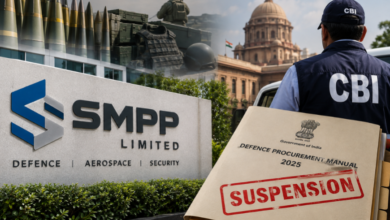
Why NGSL Should Be Investigated For Chhattisgarh Vedanta Blast?
How a specialist joint venture of NTPC and GE ran the boiler that killed 24 workers, why its institutional insulation is more dangerous than any one billionaire’s FIR, and what India’s pattern of industrial accountability tells us about who really pays when a furnace explodes.

2:30 PM, April 14, 2026: A Boiler Tells the Truth
At approximately 2:30 in the afternoon of April 14, 2026, in Singhitarai village in Chhattisgarh’s Sakti district, the 600 MW Unit-1 boiler at Vedanta Limited’s Chhattisgarh Thermal Power Plant erupted. The explosion was not the instantaneous detonation of an unstable substance. It was something more preventable, and therefore more damning: a catastrophic pressure excursion caused by the build-up of unburnt fuel inside the boiler furnace. A pipe carrying high-pressure superheated steam ruptured. The steam, at temperatures that can exceed 500 degrees Celsius in a supercritical system, vented into the working area. Workers nearby had nowhere to go. Severe burn injuries swept the floor. A stampede-like situation developed as hundreds of workers fled.
By the time the fire tenders arrived and rescue operations extended into the night, four workers were dead at the scene. In the days that followed, as the critically burned were transported to hospitals in Raipur and Raigarh, the toll climbed. By April 19, it had reached 24 confirmed dead. Twelve workers remained under intensive care.
The victims’ families, many of whom had travelled from the labour-sending states of Uttar Pradesh and Bihar to work at this plant in the hope of steady wages, crowded outside Raigarh Medical College, where post-mortems were conducted. They asked for justice. What they received, in the first instance, was an FIR naming a man who had never touched the boiler, never read its pressure gauges, and by his own account and Vedanta’s confirmed operational structure, never held responsibility for its maintenance.
The FIR filed at Dabhra police station on April 17 named Anil Agarwal, global chairman of Vedanta Resources Limited, along with company manager Devendra Patel and eight to ten others. It invoked Sections 106 (causing death by negligence), 289 (negligent conduct with respect to machinery), and 3(5) (common intention) of the Bharatiya Nyaya Sanhita. Legally, the FIR is a preliminary document — an instruction to begin an investigation, not a charge sheet. But in India’s information ecosystem, particularly in an era of 240-character news summaries and outrage-optimised social media, the FIR – is the story. The investigation, the evidence, the chain of operational custody: these come later, if at all.
A boiler blast of this magnitude is a catastrophic failure of technical maintenance. It is a failure that happens on the shop floor, inside the control room, and NGSL was running the ship.
This piece seeks to place on public record the operational facts that the FIR’s headline-generating architecture has largely obscured: that the daily operations, the boiler monitoring, the pressure management, the safety protocols on the floor — all of it was the contractual and technical responsibility not of Vedanta’s global chairman, but of NGSL, NTPC GE Power Services Limited, a specialised operations and maintenance joint venture between two of India’s most powerful industrial institutions.
What NGSL Is, and What It Was Contracted to Do
To understand why NGSL sits at the centre of any honest investigation into this disaster, one must first understand what NGSL is — and what it is not. NGSL, or NTPC GE Power Services Limited, is not a small contractor hired because it submitted the cheapest bid. It is not a fly-by-night maintenance vendor that Vedanta picked up from a local directory. It is a specialised joint venture formed between two industrial titans whose credentials in power sector operations are, as Anil Agarwal himself stated publicly, among the most impeccable in India and globally.
NTPC Limited, one of the fifty-percent parents of NGSL, is India’s largest state-owned power generation company, a Maharatna Public Sector Undertaking under the Ministry of Power, and the backbone of the country’s baseload electricity supply. Its plants collectively account for a significant portion of India’s total installed thermal capacity. GE, aka General Electric, is among the most recognised engineering and power infrastructure companies in the world, with decades of expertise in boiler technology, turbine systems, and power plant operations across six continents. NGSL, as their joint venture, was created precisely to offer specialised operations and maintenance services to power plants that require technical depth beyond what a plant owner’s in-house team can provide.
At the Singhitarai plant, NGSL’s mandate was unambiguous. According to official police statements, Vedanta’s own plant representatives, and Anil Agarwal’s public statement, the company handed over the full O&M contract to NGSL. The daily firing of the boiler unit was NGSL’s responsibility. The monitoring of critical steam pressure and heat levels was NGSL’s responsibility. The enforcement of safety protocols for floor workers was NGSL’s responsibility. The execution of routine repairs and maintenance was NGSL’s responsibility. This was not a peripheral or consultative role. NGSL was, in the language of the power sector, the Technical Custodian of the plant — the entity that ran the machines every hour of every operating day.
Reports indicate that Vedanta had handed over the O&M contract to NGSL last year.” Project Head Rajesh Saxena and the maintenance team were placed under the scanner. Investigators began examining whether the periodic monitoring and technical fault detection protocols — which were NGSL’s primary responsibility — were strictly followed in the hours leading up to the April 14 explosion.
The question this section poses is the one that any investigative body must formally answer: if the Technical Custodian of a boiler fails to detect a fatal pressure build-up — a build-up that preliminary forensic evidence suggests was caused by fuel accumulation in the furnace, a classic and well-documented boiler hazard — then who bears primary accountability for that failure? The answer in law, in operational safety standards, and in basic common sense is: the entity that was contracted, paid, and institutionally positioned to do exactly that monitoring.
What the Technical Evidence Says
The preliminary technical investigation into the Singhitarai blast, conducted by the Chief Boiler Inspector of Chhattisgarh and confirmed by the Forensic Science Laboratory in Sakti, was unambiguous in its findings on physical cause. The police statement read: “According to an initial report submitted by the Chief Boiler Inspector, the excessive fuel inside the furnace generated high pressure, causing a blast in the boiler. The pressure forced a lower pipe of the boiler out of its designated position, resulting in the severe accident.” The FSL confirmed that fuel accumulation and the resulting excessive pressure were the primary causes.
Another preliminary report offered further technical specificity: impaired air flow, a build-up of unburnt fuel on furnace surfaces, and an aggressive load ramp-up created a furnace pressure excursion that exceeded the design margin of the lower piping. The explosion ruptured header pipes and vented high-enthalpy steam and combustion products into adjacent work areas. The police statement that condensed all of this into a legal finding was equally direct: “During the investigation, it emerged that Vedanta company and its contractor NGSL (NTPC GE Power Services Limited) failed to properly adhere to maintenance and operational standards for machinery and equipment. Lapses in upkeep and negligent operation led to sudden fluctuations in boiler pressure, ultimately causing the accident.”
Fuel accumulation. Pressure build-up. A pipe forced out of position. These are not ownership failures. They are operational failures — failures of the entity that monitors fuel levels and pressure gauges every hour of every operating day.
Let the technical logic of this be examined plainly. Fuel accumulation inside a boiler furnace does not happen instantaneously. It is a gradual process: coal or another fuel, insufficiently combusted, begins to accumulate on the furnace surfaces and in the lower section of the boiler. If air flow is impaired — meaning combustion is incomplete — this accumulation accelerates.
A properly functioning boiler monitoring system, operated by trained personnel, should detect the warning signs of this process: rising temperatures in abnormal zones, pressure fluctuations, reduced combustion efficiency. Standard operating procedures for thermal power plants require operators to detect and act on these signs before they become catastrophic. The decision to increase load aggressively when these warning signs are present is, by any operational safety standard, a grave error.
None of these decisions — fuel monitoring, airflow management, load ramping — were Vedanta’s global chairman’s to make. They were the daily operational decisions of the entity contracted specifically to make them: NGSL. A seven-member expert team from the Central Boiler Board, comprising engineers from BHEL and NTPC itself, arrived at the site to conduct a comprehensive technical inspection. Their full report is expected within 30 days of the explosion. That report, when released, must be made public in its entirety — not summarised, not redacted, and not converted into an anodyne statement about “safety being our highest priority.”
The Unchahar Precedent: Same Cause, Same Silence, Same Pattern
The Singhitarai disaster does not exist in isolation. To understand it fully, one must travel back nine years to November 1, 2017, and to Raebareli district in Uttar Pradesh. At 3:30 in the afternoon of that day, the 500 MW Unit-6 boiler at the Feroze Gandhi Unchahar Thermal Power Station exploded. The cause? Ash accumulation inside the furnace that had been detected but not acted upon.
Three senior department heads — the Head of Operations, the Head of Ash Handling Maintenance, and the Head of Boiler Maintenance, each with approximately 28 years of experience — made a collective decision not to shut down the unit despite detected issues. The ash level increased, thermal stress fractured the boiler tubes, pressure built, and the unit ruptured catastrophically.
The death toll, as revealed not by NTPC’s public statements but by an RTI response obtained by The Indian Express, was 45 workers. The officially announced figure had been 32. The discrepancy — 13 additional deaths that the company had not disclosed in its public statements — is itself a damning commentary on institutional transparency. Of the 45 dead, 42 were contract workers: people painting the boiler, clearing ash, doing the maintenance work that the plant depended on but did not wish to employ directly.
They were linked to contractors including Siemens Limited, Indwell, AR Singh Construction, Power Mech Projects, and several smaller firms. They were the most economically vulnerable people in the power plant’s ecosystem. They died because three experienced engineers decided not to shut down a boiler when they should have.
The internal NTPC investigation, eventually released as a summary (the full report was never made public) concluded that the blast was the result of an “error in judgment” by plant operators. The UP government’s magisterial inquiry found sheer negligence. Three plant officials were arrested and charged with criminal negligence causing death. They were granted bail by the Allahabad High Court. A 2024 written reply in Parliament indicated that NTPC’s disciplinary process ultimately imposed compulsory retirement on the then operations and maintenance head. That was the full extent of accountability: one retirement, years after 45 people died.
The parallel to Singhitarai in 2026 is mechanistically exact. Fuel accumulation in the furnace. Pressure build-up. Tube failure. Superheated steam venting into work areas. Workers dead. The cause in Unchahar was ash accumulation not cleared because operators decided not to shut the unit down. The preliminary cause in Singhitarai, as stated by the Chief Boiler Inspector, was excessive fuel inside the furnace generating high pressure. Different fuel, same failure mode: detected hazard, inadequate response, catastrophic outcome.
And here is the accountability comparison that must be made explicit. In the Unchahar blast of 2017, at a plant operated directly by NTPC, India’s own Maharatna PSU, the FIR was directed at the men operating the plant. Not at NTPC’s Chairman and Managing Director. Not at NTPC’s board. The logic was: identify who had direct technical control, who had the authority to act, and who failed to do so. In Singhitarai in 2026, where the plant was being operated not by Vedanta’s chairman but by a specialised O&M contractor, the FIR names the asset owner’s global chairman. The asymmetry is not merely procedurally curious. It is institutionally revealing.
In 2017, when NTPC’s own operators killed 45 workers through negligence, the FIR went to the plant floor. In 2026, when NGSL’s operators allegedly killed 24, the headline goes to a billionaire. The difference is not logic. It is optics.
The FIR Against Anil Agarwal: Law, Logic, and Political Pressure
The FIR against Anil Agarwal is not, as some have implied, legally frivolous on its face. The Bharatiya Nyaya Sanhita, under which it was filed, does permit the inclusion of senior management in negligence cases where systemic safety lapses can be traced to policy or resource decisions at the organisational level. The “common intention” clause in particular is designed to ensure that accountability is not conveniently bottled at the lowest level of the organisational chart. These are legitimate legal instruments, and it would be wrong to argue that a plant owner can never, under any circumstances, bear legal accountability for safety failures at their facility.
But the evidentiary standard for invoking “common intention” against a global chairman requires the investigation to establish a specific, causal link between his decisions or omissions and the technical failure on April 14. To establish that the global chairman of a conglomerate shared “common intention” with a pressure gauge that was allowed to malfunction in Chhattisgarh requires the prosecution to demonstrate that he knew of the safety lapse, had the authority to prevent it, and chose not to act. That is a high evidentiary bar, and it is a bar that an honest investigation must attempt to meet on the evidence — not on the basis of the name recognition value of the accused.
Naveen Jindal, the steel industry leader and former parliamentarian, was among the few public voices to raise this concern directly. He stated that naming Vedanta’s Anil Agarwal in the FIR raises “serious concerns,” and called for an investigate-first-then-act approach. The question is not whether corporate titans look out for one another, an entirely legitimate concern. The question is whether the investigation is following the evidence chain to its actual source, or whether it is following the path of maximum political visibility.
There are at least three structural pressures that may explain why the accountability narrative in the Vedanta blast has been constructed around Agarwal rather than NGSL. The first is the gravitational pull of a famous name. In a media ecosystem that rewards clicks and outrage, the arrest or FIR against a known billionaire generates coverage that the arrest of a joint venture’s project head does not. The second is the political dimension: NGSL’s fifty-percent parent is NTPC, a government-owned Maharatna company under the Ministry of Power.
Aggressively pursuing NGSL’s institutional accountability means, inescapably, asking hard questions about NTPC’s role — a politically uncomfortable exercise for any government at any time, but particularly uncomfortable in a political climate where public sector institutions are treated as sacrosanct. The third dimension — raised by multiple commentators though impossible to verify without discovery — is the reputational interest of GE, whose majority institutional shareholders include global financial giants with deep interests in GE’s global standing.

The Contract Worker Question: Who Really Pays When Boilers Explode?
Across both the Unchahar blast of 2017 and the Singhitarai disaster of 2026, one fact is consistent and shattering: the people who die are almost never permanent employees of the plant or its operators. They are contract workers, people hired through a chain of sub-contractors, each link of which diffuses accountability a little further from the entity that actually holds power over their working conditions.
At Unchahar in 2017, 42 of the 45 dead were contract workers linked to firms including Siemens, Indwell, Power Mech Projects, and smaller local contractors. They were painting the boiler — a routine maintenance task — when the explosion occurred. At Singhitarai in 2026, the early reports indicated that the blast primarily affected personnel from a sub-contractor involved in operations and maintenance.
The families who crowded outside Raigarh Medical College — many from UP and Bihar, migrant labour families who sent their sons to Chhattisgarh’s industrial belt in search of stable wages — were not families of NGSL’s permanent engineers or GE’s technical staff. They were the families of the people at the bottom of the contractual pyramid, who had the least power, the least safety training, and the least legal protection.
India’s labour law framework, at least on paper, holds the principal employer responsible for the safety of all workers at a site, including those employed through contractors. The Factories Act and the Contract Labour (Regulation and Abolition) Act together create a duty-of-care framework that should make the technical custodian — NGSL — accountable for the conditions that contract workers faced on April 14. But the practical enforcement of these provisions at large industrial sites has historically been uneven, particularly when the entities involved are powerful public-private joint ventures with institutional connections to the regulatory apparatus.
The Chief Minister of Chhattisgarh, Vishnu Deo Sai, announced Rs 5 lakh compensation for the families of the deceased. Compensation is not accountability. It is a transaction that converts grief into a number, and allows institutions to reset without reforming. The same pattern played out after Unchahar: Rs 60 million was raised by NTPC employees contributing one day’s salary; state and central government compensation packages were announced; the media cycle moved on. Nine years later, 24 more workers are dead in a blast with a mechanistically identical cause.
The Audit Imperative: Every NGSL Plant Must Be Examined
NGSL does not operate only at Singhitarai. NTPC GE Power Services Limited handles operations and maintenance for power facilities across India, including plants operated by BHEL, GSECL, and crucially NTPC itself. This is the dimension of the Singhitarai disaster that the FIR against Anil Agarwal has completely eclipsed in public discourse, and it is the dimension that carries the most serious implications for India’s power sector safety.
If an entity that describes itself as a specialist in power plant operations and maintenance — an entity whose entire value proposition is that it brings the technical pedigree of NTPC and GE together for exactly this purpose — can miss a fuel accumulation event serious enough to cause a catastrophic pressure rupture in a 600 MW supercritical boiler, then the safety practices at every plant under its operational management must be examined immediately.
The preliminary findings at Singhitarai suggest not a one-off equipment failure but a systemic breakdown: impaired air flow not corrected, fuel accumulation not detected, aggressive load ramping despite developing abnormalities. These are not random equipment failures. They are process failures — and process failures at one site of an organisation are, by definition, potential indicators of process vulnerabilities at other sites of the same organisation.
The 2021 Tapovan disaster, the 2025 Sipat structural collapse, the 2020 Neyveli boiler blast that killed 15 workers in two incidents within the same station within two months — India’s thermal power sector has accumulated a pattern of catastrophic incidents that collectively argue for a systemic regulatory response. The specific response required after Singhitarai is an immediate, independent audit of every plant where NGSL holds operational responsibilities, conducted not by NTPC’s own engineers (who are structurally compromised by NTPC’s 50% stake in NGSL) but by an independent technical body with the authority to inspect, to demand records, and to recommend shutdowns where hazards are found.
The Boilers Act of 2025 and the Draft Indian Boiler Regulations of 2026 represent India’s most ambitious legislative update to industrial boiler safety in seven decades. The Boiler Accident Inquiry Rules, 2025, establish a clear process: an appointed committee must examine the damaged boiler, assess causation, and submit a report with recommendations within 45 days. These frameworks exist. The question is whether they will be used with genuine rigour in this case, or whether — as has happened after every major industrial blast in the last decade — the report will be delayed, its full findings will remain unreleased, and the institutional momentum for reform will dissipate as the media cycle moves on.
The Government’s Conflict of Interest
There is a profound structural problem that this investigation cannot avoid naming: the Government of India is simultaneously the majority shareholder of NTPC (holding approximately 51.1% of its equity), the regulator of the power sector through the Ministry of Power and the Central Electricity Authority, and the political authority that must respond to public outrage over industrial deaths. These three roles are in direct conflict when the investigation concerns a company in which NTPC is a 50% joint venture partner.
When NTPC’s own plant killed 45 workers in 2017, the Power Minister’s immediate public response categorically dismissed “human error” as a cause before any investigation was complete — an instinct to protect the institution rather than demand accountability from it. The internal investigation report, when it eventually concluded that there had indeed been an error in judgment by senior operators, was never released in full. The disciplinary outcome — one compulsory retirement, years later — was revealed not through proactive government disclosure but through a written Parliamentary reply in 2024.
India’s designation of NTPC as a Maharatna company is a recognition of its scale, strategic importance, and profitability. But Maharatna status cannot be a shield against accountability when the institution’s joint venture partner is the technical operator at the scene of India’s worst industrial disaster of 2026. The question the Government of India must answer publicly is not whether NGSL’s investigation will proceed, but whether it will proceed without the interference that NTPC’s institutional interest in protecting its subsidiary almost inevitably creates.
The seven-member expert team sent to Singhitarai by the Central Boiler Board includes engineers from NTPC itself. This is like asking a company’s senior management to investigate their own subsidiary. The institutional conflict of interest is structural and undeniable. For the investigation to be credible, it must be conducted by a body that has no institutional stake in NGSL’s liability — which means, at minimum, that NTPC engineers should not be among the primary investigators of a blast at a plant where NTPC’s joint venture was the technical custodian.
What Accountability Must Actually Look Like
This investigation does not argue that Vedanta Limited, as the asset owner, bears zero accountability for what happened at Singhitarai on April 14, 2026. The principal employer doctrine exists precisely to ensure that plant owners cannot contract away their safety obligations and then disclaim all responsibility when workers die.
If the investigation establishes that Vedanta’s plant management was aware of safety protocol violations by NGSL and failed to act, or that Vedanta’s budget constraints compelled NGSL to cut maintenance corners, then accountability must reach Vedanta’s plant-level management through the evidence. Devendra Patel’s inclusion in the FIR, as the on-site company manager, is more defensible than the naming of a global chairman who was not at the plant and was not in the O&M chain of command.
But a structurally honest investigation must simultaneously pursue at least five questions that have received virtually no public attention in the two weeks since the blast.
First: when was the last independent safety audit conducted at Singhitarai’s Unit-1 boiler, and who conducted it?
Second: what were NGSL’s internal monitoring logs showing in the hours before 2:30 PM on April 14, and who on NGSL’s team was responsible for reviewing them?
Third: was the load ramp-up that preceded the pressure excursion authorised by NGSL’s control room operators, and on what basis?
Fourth: does NGSL’s contractual framework with Vedanta include safety performance obligations and, if so, were they being met?
Fifth: when was NTPC as the 50-percent parent of NGSL last audited for the safety performance of its subsidiary’s operations across all facilities?
Rajesh Saxena, the project head placed under the scanner by investigators, is the right starting point. The trail must then go upward through NGSL’s organisational structure. Who approved the operational parameters for Unit-1? Who was responsible for the maintenance schedule that allowed fuel accumulation to develop to catastrophic levels? Who, at NGSL’s leadership level, was responsible for safety oversight at Singhitarai? These questions are not being asked loudly in public discourse because their answers lead into institutional territory that is far more uncomfortable than a billionaire’s name on an FIR.

Twenty-four families in Uttar Pradesh and Bihar are without fathers, sons, and husbands today. They have been promised Rs 5 lakh by the Chhattisgarh government. Some will receive it; some will fight for years to get it. None of them will receive what they actually need: the truth, in full, about who ran the boiler that killed the people they loved, what warning signs were missed, what decisions were made, and what will be done to ensure that the workers at every other NGSL-operated plant in India do not face the same fate.