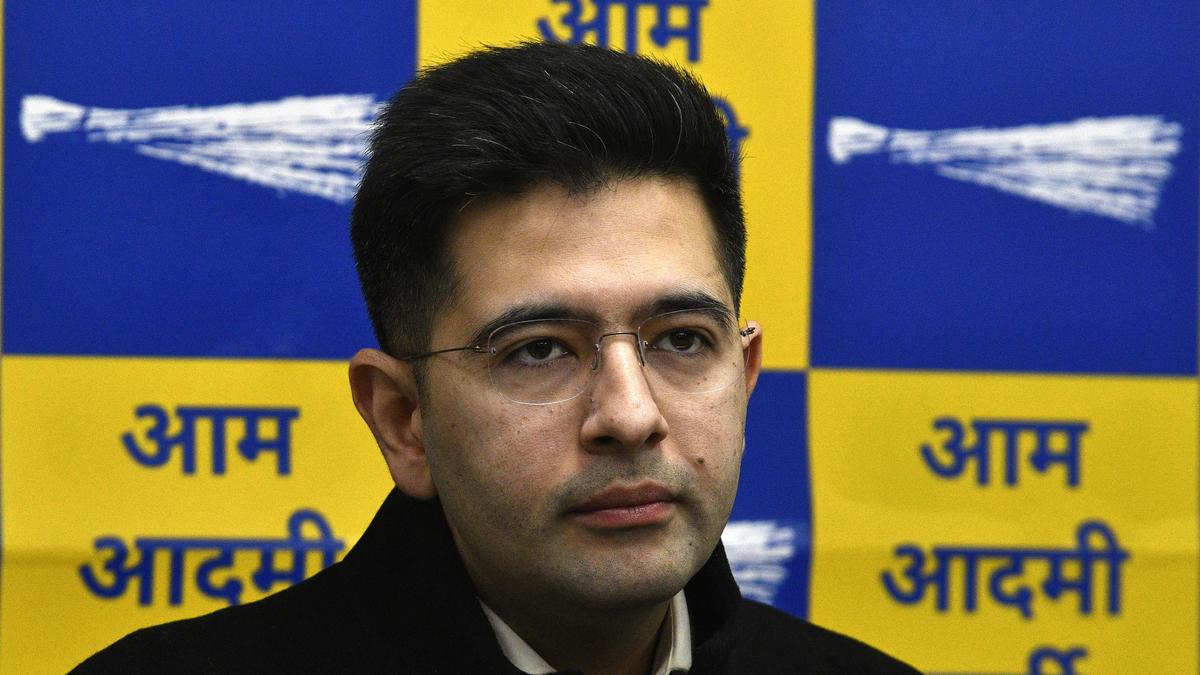
Raghav Chadha At The Centre Of AAP’s Explosive Rift: Money, Power, And Allegations Of Violence Signal A Dirty Turn
What is unfolding inside the Aam Aadmi Party is no ordinary political rift. With Raghav Chadha at the centre, allegations of money, power struggles, and even claims of violence have pushed the party into its most uncomfortable spotlight yet.

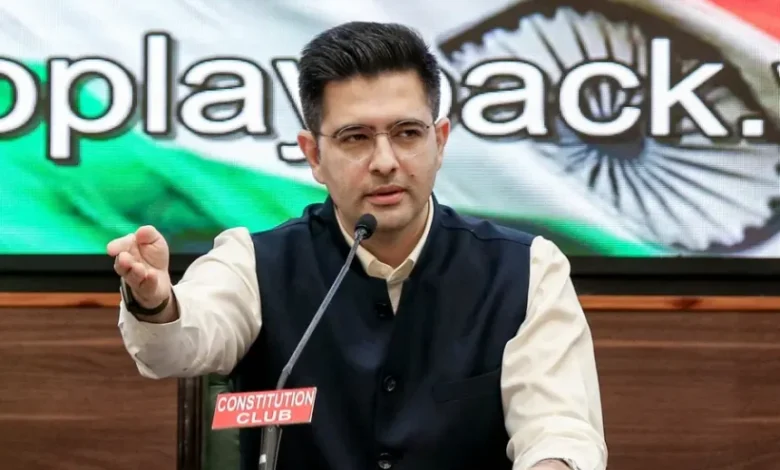
The immediate flashpoint came when Raghav Chadha was removed as the deputy leader of the Aam Aadmi Party in the Rajya Sabha – a move that, at first glance, appeared procedural but quickly revealed deeper fault lines. The party formally wrote to the Rajya Sabha Secretariat seeking his removal from the post and limiting his speaking role, signalling a clear shift in its internal stance.
Chadha did not hold back. In a public response, he described the developments as an attempt to “silence” him, alleging that a coordinated campaign was being run to sideline his voice. His remarks turned what could have remained an internal adjustment into a visible political confrontation.
What followed was swift and unusually sharp. Senior party leaders closed ranks and pushed back, accusing Chadha of straying from the party line, raising inconsequential issues, and failing to align with key Opposition positions in Parliament. The language was blunt, the messaging coordinated, and the divide unmistakable.
Within days, the episode had escalated from a leadership reshuffle to an open war of words – played out not behind closed doors, but in full public view – exposing a level of internal discord that the party had, until now, largely managed to keep under wraps.
The Scandal Layer – Money, Power, And Allegations Turn Ugly
If the public fallout signalled a rupture, what followed pushed the controversy into far darker territory. Former AAP leader Naveen Jaihind levelled a series of explosive allegations, claiming that the dispute was not merely ideological but centred around money allegedly collected from Delhi and Punjab.
According to Jaihind, these funds were meant to be routed abroad, with claims that what was initially intended for Singapore was instead taken to London by Raghav Chadha. He further alleged that the situation escalated to the point of physical intimidation – claiming Chadha was assaulted, first in Delhi and later at a “secret mansion” in Chandigarh.
These claims, if true, point to a power struggle that goes well beyond political disagreement. However, it is important to note that these are allegations made by a former party leader, and there has been no independent verification of these assertions.
Raghav Chadha, for his part, has rejected the broader accusations against him, describing the developments as part of a “coordinated attack” and maintaining that a scripted campaign is being run to discredit him.
Regardless of their veracity, the nature of these allegations has dramatically altered the tone of the crisis. What began as an internal disagreement has now morphed into a deeply contentious and public battle – one that raises serious questions about the forces at play within a party that once claimed a different standard of politics.

A Rift That Was Building – Not A Sudden Explosion
To view this episode as a sudden fallout would be to miss the signals that had been building for weeks. The friction around Raghav Chadha did not begin with his removal; it merely became impossible to ignore after it.
Within the Aam Aadmi Party, questions had already begun to surface over Chadha’s role and positioning. He was increasingly accused by sections of the leadership of being “soft,” of raising issues that did not align with the party’s sharper political messaging, and of not fully participating in coordinated Opposition actions inside Parliament. His removal from a key parliamentary role was, in that sense, less a trigger and more a culmination.
What followed reinforced that impression. The speed and uniformity with which senior leaders responded – using similar language, echoing identical criticisms – suggested that the party was not reacting in real time, but executing a line that had already been drawn. This was not a disagreement spilling out; it was a fracture that had already formed.
At the same time, the episode points to a deeper structural question within the party – how much internal dissent is tolerated, and how quickly divergence is interpreted as disloyalty. For a political outfit that once positioned itself as an alternative to traditional high-command culture, the current conflict hints at a tightening core, where control and messaging are increasingly centralised.
Seen in this light, the current crisis is not an isolated rupture. It is the visible surface of a deeper unease, one that had been building quietly, long before it erupted into public view.

The Bigger Question – What Happened To The “Clean Politics” Promise?
The crisis surrounding Raghav Chadha is not just about one leader or one internal battle; it cuts far deeper, striking at the very foundation on which the Aam Aadmi Party built its identity.
AAP did not rise like a conventional political outfit. It emerged from a movement, positioning itself as a corrective to a system weighed down by corruption, opacity, and entrenched power structures. Its appeal was rooted in a simple but powerful idea – that politics could be cleaner, more accountable, and fundamentally different from what voters had come to expect. That promise is now being tested.
The current episode (marked by public infighting, coordinated attacks within the party, and the surfacing of serious allegations) presents a sharp contrast to that founding story. Even if many of the claims remain unverified, the very nature of the discourse signals a shift. The moral high ground that once defined the party now appears contested from within.
More importantly, this moment forces a broader question: was the promise of fundamentally different politics sustainable once power, expansion, and electoral stakes grew? Or was it always vulnerable to the same pressures that have shaped political behaviour across parties?
Because if a party that rose on the plank of clean governance begins to reflect the very patterns it once opposed, then the issue is no longer about a single controversy – it becomes about whether the system itself leaves room for anything truly different.

Delhi vs Punjab – Governance, Power, And Expansion
To understand the weight of the current crisis, it is important to step beyond the immediate controversy and examine how the Aam Aadmi Party has governed where it has held power, and how that governance has evolved as the party expanded.
In Delhi, the party consistently projected its work in education, healthcare, and public services as proof of an alternative model. Investments in government schools, mohalla clinics, and subsidised utilities became central to its political messaging, helping it build a strong and loyal voter base.
However, that phase has now seen a significant shift. After nearly a decade in power, AAP lost Delhi in 2025, a development that not only marked a political setback but also raised questions about the durability of its governance model in the face of evolving voter expectations and sustained political contest.
Even during its time in power, questions had persisted. Critics pointed to the long-term fiscal sustainability of heavily subsidised services and whether short-term relief came at the cost of deeper structural reform. Others flagged recurring confrontations with administrative institutions and the central government, often blurring the line between governance and constant political contest.
Punjab, however, presents a different and more demanding test. Unlike Delhi’s unique administrative structure, Punjab handed AAP full state power – and with it, full accountability. The expectations were higher, the challenges deeper, and the margin for error far smaller.
Since its sweeping victory in 2022, the party has had to face not just governance delivery but also political consolidation in a state with entrenched power networks. The current instability, including internal tensions now spilling into public view, raises questions about how smoothly that transition from movement to full-scale governance has been managed.
Taken together, Delhi and Punjab reflect two distinct phases of AAP’s journey—one where its model was showcased and politically rewarded, and another where the pressures of expansion, control, and sustained governance are testing it far more visibly. It is within this contrast that the present crisis begins to take on larger meaning.
The Freebie Model – Relief Or Political Shortcut?
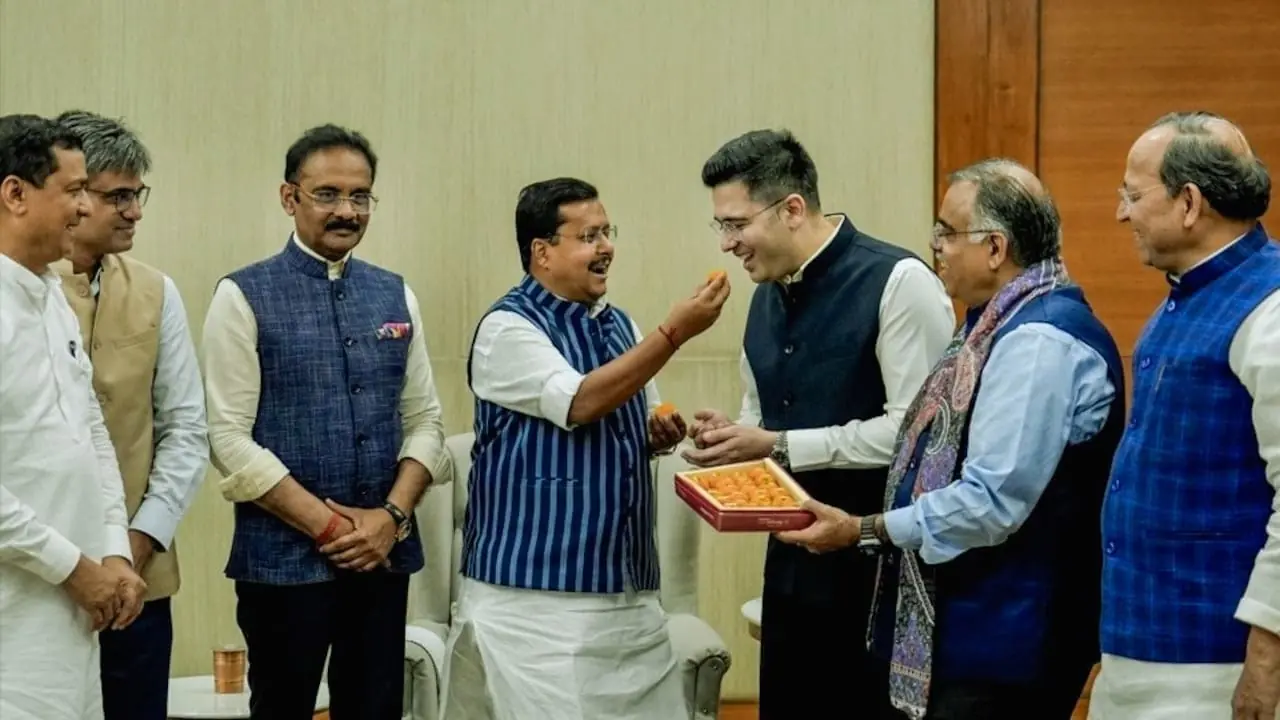
A significant part of the Aam Aadmi Party’s political success has been built around a governance model that prioritises direct, visible benefits – subsidised electricity, water, and expanded public services. But this model sits at the centre of a growing debate.
Supporters argue that these are not “freebies” but welfare measures – redistribution aimed at correcting inequality and improving quality of life. Critics, however, see a different pattern emerging: one where electoral incentives increasingly shape policy choices, and where short-term gains risk overshadowing long-term fiscal discipline and institutional reform.
The concern is not just about affordability, but about direction. When political competition begins to revolve around who can offer more immediate benefits, governance can gradually shift from building systems to managing expectations. Over time, this raises difficult questions – about sustainability, priorities, and whether deeper structural issues are being deferred rather than addressed.
In that sense, the current crisis within AAP intersects with a broader trend in Indian politics. It is not only about internal discord or allegations; it is also about the kind of political model that is being normalised – and whether it can endure without consequence.
The Voter Question – Choice, Memory, And Accountability
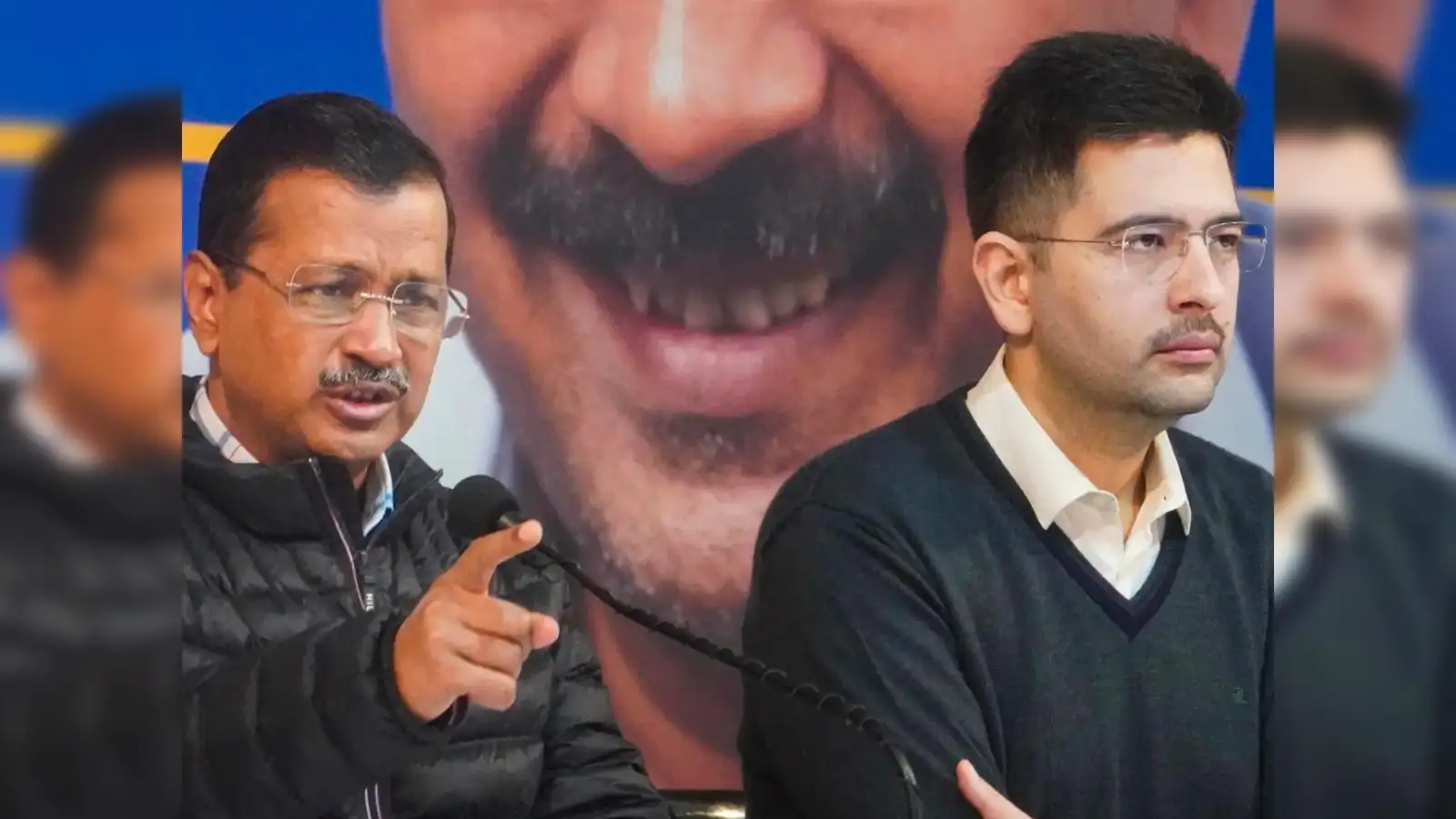
The unfolding crisis within the Aam Aadmi Party ultimately circles back to a question that extends far beyond one party or one controversy – it touches the voter.
Political success, after all, is not built in isolation. It is shaped by what voters reward, what they overlook, and what they choose to prioritise. In recent years, there has been a visible shift in electoral behaviour, where immediate, tangible benefits often carry greater weight than longer-term governance outcomes. For many, that choice is rational – driven by real economic pressures and the need for relief in the present.
But it also creates a trade-off.
When political stories and short-term gains begin to dominate decision-making, accountability can become more diffuse. Controversies, internal conflicts, and even serious allegations risk being absorbed into the noise of everyday politics, rather than becoming decisive factors in shaping electoral outcomes. The memory of voters, often stretched across competing concerns, can be short – and political systems tend to adapt quickly to that reality.
This is not about dismissing voters, but about understanding the environment in which choices are made. If parties are incentivised to prioritise immediate appeal over structural reform, and if those choices are repeatedly rewarded, a cycle begins to form – one that is difficult to break, regardless of which party is in power.
In that sense, the current moment is as much a reflection of political strategy as it is of public response. And until that equation shifts, the pattern is unlikely to change.
The Last Bit, Not Just AAP, But A Pattern
What is unfolding around Raghav Chadha and the Aam Aadmi Party is, on the surface, a story of a party in conflict – of ambition, control, and allegations colliding in full public view. But to treat it as an isolated episode would be to miss the larger pattern it reflects.
AAP was not meant to be just another political party. It rose by challenging the very foundations of how politics was practised, promising something cleaner, more accountable, and fundamentally different. That promise is now under visible strain. Whether the current allegations hold or not, the nature of the crisis suggests that the pressures of power, expansion, and political survival may be reshaping the party in ways that echo the system it once opposed.
And that is where the real concern lies.
Because if a political force built on the idea of change begins to mirror familiar patterns, then the question is no longer about one party’s credibility. It becomes about whether the system itself rewards anything else.
Hence, if we were to put the whole story together – it is not just about AAP, or Raghav Chadha, or the allegations that dominate headlines today. It is about a cycle – of promise, power, pressure, and eventual convergence – that continues to define Indian politics. And unless that cycle is broken, different faces may emerge, but the outcomes may remain strikingly similar.