Detailed Analysis Of Debt Ridden Laxyo Limited IPO. Issues & Red Flags In DRHP
Almost 47% Of The IPO Proceeds Will Be Used For Clearing Previous Debts

Laxyo Limited (formerly Laxyo Energy Limited) has filed a Draft Red Herring Prospectus with the Securities and Exchange Board of India for an Initial Public Offering of up to ₹1,500 million (₹150 crore). The DRHP is currently under SEBI review and is available in the public domain on the websites of SEBI, the BSE, the NSE, the Book Running Lead Manager (Indorient Financial Services Limited), and the company itself.
This advisory is a structured, factual reading of that document. It does not recommend buying or not buying the issue. It does not predict the outcome of any pending matter. It is intended to help retail and other investors understand what the DRHP discloses, what the disclosed risks mean in practical terms, and what questions remain unanswered. Every material claim below is anchored to a specific section or page reference in the DRHP. Where the DRHP is silent or ambiguous, this advisory says so.
Investors are urged to read the DRHP themselves before making any investment decision, and to consult a SEBI-registered investment adviser. This document is not investment advice.
Section 1: The Company at a Glance
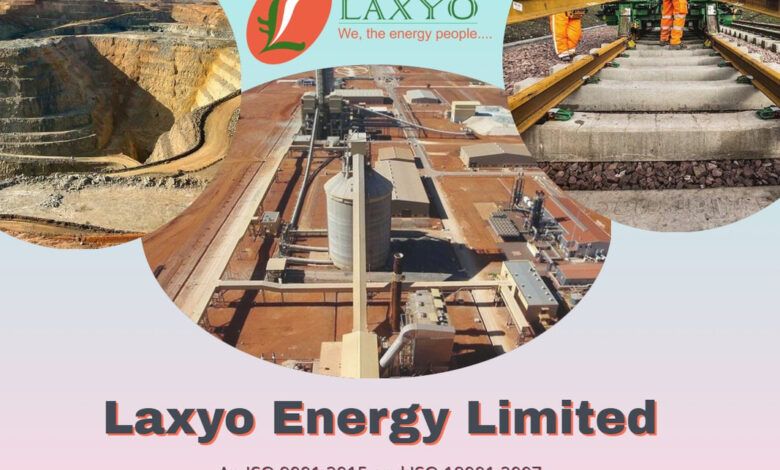
Laxyo Limited is a Madhya Pradesh-based Engineering, Procurement and Construction contractor operating across four verticals: railway infrastructure (the dominant business), mining services and raise boring operations, dredging and reclamation, and operation and maintenance of industrial and thermal plants. The company was incorporated in April 2007 as Laxyo Energy Private Limited, became a public limited company in April 2013, and dropped “Energy” from its name in September 2025, six months before this DRHP was filed.
The registered office is in Indore and the corporate office in Ratlam, Madhya Pradesh. The company’s flagship technical capability is the ownership and operation of Plasser Quick Relaying System machines used for Complete Track Renewal projects on Indian Railways — one of approximately five players in India with this equipment, per the Ken Research industry report commissioned for the DRHP. The company also positions itself as the second-largest raise boring operator in India, with a stated 22% domestic market share behind Master Drilling India.
The promoters are the Sharma family: Dev Prakash Sharma, Jai Prakash Sharma, Yogesh Sharma (each holding 28% of pre-issue equity), Rajeshwary Sharma (1.5%), and Shreyansh Sharma (3.5%). Including promoter group members, the family owns 100% of the company before the IPO.
Section 2: The Issue Structure
The IPO is a fresh issue of equity shares aggregating up to ₹1,500 million. There is no Offer for Sale component — meaning no existing shareholder is selling. A Pre-IPO Placement of up to ₹300 million may be undertaken at the company’s discretion. The shares will be listed on the BSE and NSE.
A critical structural feature: the issue is being made under Regulation 6(2) of the SEBI ICDR Regulations, not Regulation 6(1). The DRHP explains this on its cover page and in Risk Factor 17. The reason, in the DRHP’s own words, is that the company “is unable to comply with the eligibility requirements of Regulation 6(1)…in relation to the average operating profits of at least ₹150 million during the preceding three years.”
The practical consequence is set out in the same risk factor: 75% of the issue must be allotted to Qualified Institutional Buyers, or the issue fails and all subscription monies are refunded. Retail allocation is capped at 10%. This is the standard SEBI mechanism for companies that do not meet the normal profitability eligibility test — it shifts the underwriting risk to institutional investors.
For a retail investor, this means two things. First, the issue is structurally dependent on institutional demand to succeed. Second, retail allocation will be on a proportionate basis from a small (10%) pool.
The Book Running Lead Manager is Indorient Financial Services Limited (SEBI Registration INM000012661). This is not a Tier-1 merchant banker; it is a smaller mid-market firm.
Section 3: Financial Snapshot
The restated consolidated financials show a small-but-growing infrastructure contractor:
| Metric | H1 FY26 | FY25 | FY24 | FY23 |
|---|---|---|---|---|
| Revenue from Operations (₹ million) | 1,107.82 | 2,111.05 | 1,743.09 | 1,338.07 |
| EBITDA (₹ million) | 139 | 299 | 194 | 163 |
| EBITDA Margin | 12.50% | 14.16% | 11.11% | 12.21% |
| Profit After Tax (₹ million) | 62.33 | 116.53 | 63.26 | 49.26 |
| PAT Margin | 5.64% | 5.52% | 3.63% | 3.68% |
| Return on Equity | 9.47% (half) | 19.36% | 13.04% | 11.67% |
| Debt-to-Equity | 1.30 | 0.88 | 0.94 | 1.00 |
| Earnings Per Share (₹) | 1.43 | 2.67 | 1.45 | 1.13 |
Revenue grew at a 26% CAGR between FY23 and FY25 and PAT grew at a 54% CAGR over the same period. Both EBITDA margin and PAT margin expanded materially in FY25.
However, three financial trends in the DRHP warrant attention.
First, gross debt has nearly tripled in two years, rising from ₹423.27 million in March 2023 to ₹1,217.30 million as of 15 March 2026 (total borrowings, per the Financial Indebtedness section). Debt-to-equity rose from 0.88 in March 2025 to 1.30 in September 2025 — a sharp increase in just six months.
Second, net cash flow from operating activities has declined steadily: ₹168.97 million in FY23, ₹136.09 million in FY24, ₹35.32 million in FY25, and ₹48.39 million in H1 FY26. The company’s operating cash flow generation has weakened by approximately 80% over three years even as revenue and profit grew. The H1 FY26 cash position was supported by ₹304.42 million in net financing inflows — i.e. fresh debt — rather than by operations.
Third, credit ratings are at the low end of the investment grade band: CRISIL has assigned BBB/Stable for total bank loan facilities of approximately ₹554 million (rating dated 29 September 2025); CARE has assigned CARE BBB; Stable / CARE A3+ for facilities of approximately ₹600 million (rating dated 14 November 2025). BBB is the lowest investment grade rung. A downgrade would shift the company to non-investment grade.
Section 4: How the IPO Proceeds Will Be Used
The Objects of the Issue section discloses the following intended use of the ₹1,500 million:
| Purpose | Amount (₹ million) | Share |
|---|---|---|
| Repayment/prepayment of borrowings | 700.00 | ~47% |
| Capital expenditure (track relaying equipment) | 97.50 | ~7% |
| Working capital | 230.00 | ~15% |
| General corporate purposes | Balance (capped at 25% of gross) | ~25% maximum |
The DRHP candidly explains that the ₹700 million debt repayment represents 60.03% of the company’s fund-based borrowings as of 15 March 2026. Investors should understand that this is the largest single use of IPO proceeds, and it is not growth capital — it is balance-sheet repair.
A few specific observations on use-of-funds:
The ₹97.5 million capex is based on a single quotation from Adsar Hydraulics dated 17 March 2026 — just six days before the DRHP. No purchase order has been placed. The quotation is valid for 180 days. Final cost may vary.
The ₹230 million working capital portion is based on management estimates that have not been appraised by any bank, financial institution, or independent agency. Net working capital requirements are projected to rise from ₹382.97 million in September 2025 to ₹870.88 million in FY28 — a 128% increase.
The general corporate purposes head will absorb up to 25% of gross proceeds, the maximum permitted by SEBI ICDR Regulations.
A Monitoring Agency will be appointed before the Red Herring Prospectus filing to oversee fund utilisation (as required since the issue exceeds ₹1,000 million). Quarterly disclosures of fund deployment will be made to the Audit Committee and the Stock Exchanges.
Section 5: The Business — Strengths
A fair reading of the DRHP should acknowledge what the company has going for it.
The Indian railway infrastructure capex story is genuinely strong. Per the Ken Research Report cited in the DRHP, Indian Railways’ capital expenditure has grown from ₹1.4 lakh crore in FY20 to a budgeted ₹2.7 lakh crore in FY25 and is projected to reach ₹4.4 lakh crore by FY31 (CAGR of 9.5%). The railway infrastructure EPC market is projected to grow from ₹1.4 lakh crore to ₹2.4 lakh crore over the same period.
Laxyo’s PQRS machine ownership for Complete Track Renewal is a real differentiator. The DRHP cites Ken Research’s identification of approximately 5 such operators in India, and Laxyo claims a 22% share of the domestic raise boring market — second only to Master Drilling India.
The company has demonstrated execution credentials over 15+ years across both joint-venture (with companies such as Montecarlo, VNR, and Mavani) and standalone contracts. It has completed projects of meaningful contract value (₹300–₹4,500 million range) across Western Railway, Central Railway, and other zones.
The company has diversified geographically (operations across MP, Rajasthan, Gujarat, Maharashtra, Delhi, West Bengal, Kerala, Zambia, South Africa) and across verticals (railway, mining, dredging, O&M). The recent overseas expansion into Zambia through the Laxyo Evapeta Zambia Limited subsidiary, with a Mopani Mines raise boring contract worth approximately ₹605 million over five years, represents the first international footprint.
Order book stood at ₹6,327.61 million as of 31 January 2026 — equivalent to approximately 3x FY25 revenue, providing reasonable forward visibility.
These are genuine strengths, and any balanced reading of the DRHP must hold them in view alongside the concerns that follow.
Section 6: Risk Areas Disclosed in the DRHP — Plain Language
What follows is a fair-language summary of the main risk areas the DRHP itself discloses, grouped for clarity. Investors should read the full Risk Factors section (pages 24 to 60 of the DRHP) before making any decision.
6.1 Concentration Risks
The DRHP discloses extensive concentration:
- Customer concentration: One customer contributed 58.05% of H1 FY26 revenue, 60.04% of FY25, and 44.34% of FY24. The top 10 customers together account for over 97% of revenue. The identity of the dominant customer is not separately disclosed in the DRHP, though one of the smaller customers in FY24 (Customer 7) is named as Birla Corporation Limited.
- Sector concentration: 67.89% of the order book as of 31 January 2026 is from the railway sector.
- Government concentration: 81.72% of the order book is from government or government-owned customers, exposing the company to budgetary cycles, election-driven delays, payment delays, and contract terms that typically favour the government counterparty.
- Geographic concentration: 44.20% of H1 FY26 revenue, 47.99% of FY25, and 51.72% of FY24 came from a single state (Madhya Pradesh). Three states — MP, Rajasthan, and Gujarat — accounted for approximately 80% of revenue across these periods.
Any combination of these concentration risks crystallising would materially affect the business.
6.2 Order Book Movement Investors Should Examine
The DRHP discloses order book values at two dates. As of 30 September 2025, the order book was ₹12,553.86 million (see Key Financial and Operational Metrics in “Our Business,” and the Basis for Issue Price section). As of 31 January 2026, the order book was ₹6,327.61 million (see “Our Business — Strengths,” “Objects of the Issue — Working Capital,” and Risk Factor 15).
Between these two dates, the disclosed order book figure declined by approximately 49.6%. The DRHP does not contain a specific explanation for this difference. Possible explanations include execution-driven order book consumption during the period, methodology differences in how the two figures were computed, recategorisation of certain contracts, or contract cancellations. Investors are encouraged to seek clarification on this difference, since order book is among the most material forward indicators for an EPC contractor.
6.3 Pending Promoter-Level Matters
The DRHP discloses several material proceedings involving the promoters that investors should examine carefully.
Section 164(2) writ petitions: Risk Factor 25 and the Litigation section disclose that three of the company’s five promoters — Dev Prakash Sharma, Jai Prakash Sharma, and Yogesh Sharma, who together hold 84% of pre-issue equity — face potential disqualification as directors under Section 164(2) of the Companies Act, 2013. The trigger was the striking off of Green Earth Power Generation Private Limited (a company in which they were directors) by the RoC on 29 September 2025 for non-filing of annual returns for three continuous years. The disqualification window, if it crystallises, is 1 October 2024 to 30 September 2029. The three writ petitions (WP 44739/2025, 46408/2025, 46441/2025) are pending before the MP High Court, Indore Bench. Interim orders dated 21 November 2025 and 28 November 2025 direct that any disqualification “shall not be implemented unless otherwise ordered by the said Hon’ble High Court.” The DRHP records that the next hearing was scheduled for six weeks after the interim orders, but “till date no further hearing has taken place in this matter.” Investors should monitor any updates to this status.
Income tax demand on Dev Prakash Sharma: The DRHP discloses a tax demand of ₹71.27 million for Assessment Year 2020-21, comprising additions under Sections 40A(3), 69C, 69, and 68 of the Income Tax Act. An appeal is pending before the Commissioner of Income Tax (Appeals). A stay application has been filed.
Reassessment proceedings against Yogesh Sharma: For AY 2018-19 and AY 2019-20, reassessment proceedings are pending based on information from a search and seizure action conducted on the JRG/Dhakad Group on 12 January 2021. The Income Tax Department alleges unexplained investment of ₹21.05 million (AY 2018-19) and ₹6.09 million (AY 2019-20) relating to commercial property purchases. The DRHP records that for AY 2018-19, “despite multiple opportunities, the Assessee had not furnished the required information or documentary evidence,” leading to a Section 144 show-cause notice for best-judgment assessment. The proceedings are pending.
These matters are disclosed as risk factors and as pending litigation. None has resulted in a finding adverse to the promoters as of the DRHP date. Investors should form their own view on the probability and materiality of adverse outcomes.
6.4 Pending Company-Level Litigation
The Terratec dispute: The DRHP discloses a multi-forum commercial dispute with Terratec Limited over a Raise Boring Machine. The principal proceedings are an ICC arbitration in Paris (Case 28647/XZG) where Terratec claims USD 1,821,113.25 (approximately ₹163.76 million) plus 18% interest per annum; a writ petition before the MP High Court (WP 40971/2025) seeking receivership of the machine; and a contempt petition before the Bombay High Court (No. 39238 of 2025). The contempt petition alleges willful disobedience of the Bombay High Court’s orders dated 6 February 2024 and 5 March 2024 concerning the custody of the machine. Laxyo has filed FIR No. 413/2025 against two Terratec directors. The matter has multiple cross-petitions and remains live across all four forums. An adverse ICC award could create a contingent liability in the range of ₹165–200 million.
The PKS Technobuild IBC petition: A Section 9 application under the Insolvency and Bankruptcy Code was filed by PKS Technobuild against Laxyo at NCLT Indore in January 2024, alleging operational debt of ₹180.74 million. The application was dismissed in default on 28 April 2025 (PKS did not appear). A restoration application has been filed and NCLT on 16 March 2026 directed the company to file Vakalatnama and reply. The dispute relates to a 2014 Karnataka sub-contracting arrangement.
PWD blacklisting and tender cancellation: On 11 September 2024, Laxyo’s PWD-Madhya Pradesh registration was blacklisted. On 16 October 2024, two L-1 (lowest-bidder) tenders for railway bridge construction were cancelled. The blacklisting was lifted on 21 October 2024, and the company has filed a writ petition before the MP High Court challenging the tender cancellations, which remains pending. The DRHP does not explain the underlying reason for the original blacklisting.
6.5 Corporate Records and Internal Controls
Risk Factor 23 discloses that there are “factual inaccuracies in certain of our corporate records and corporate filings” and that “duly stamped share transfer forms relating to transfers of our Promoters and Promoter Group are not traceable.” Capital structure disclosures rely on secondary documents including a Secretarial Due Diligence Report by DVD and Associates. The company filed Form GNL-1 with the RoC on 25 February 2026 informing of these inaccuracies. The DRHP states no regulatory proceedings have been initiated to date but does not rule them out.
Risk Factor 42 discloses a security incident on 29 December 2025 in which a locker in a director’s cabin was stolen containing approximately ₹0.70 million in cash and “certain original documents considered critical to the Company’s legal, regulatory and operational matters.” The intrusion was, in the company’s words, “premeditated and targeted.” FIR No. 1636 was filed on 30 December 2025. The DRHP states that “there can be no assurance that the stolen cash or documents will be recovered, or that the documents will not be misused.”
Risk Factor 34 discloses delays in statutory payments (Provident Fund, ESIC, TDS, GST) during H1 FY26, with delay ranges of 132 to 238 days. The amounts involved are very small (in the order of thousands of rupees), but the delays themselves are repeated.
The P&L includes “Cyber Fraud” exceptional items of ₹2.68 million in FY23 and ₹0.23 million in FY24 (negative, i.e., recovery).
6.6 Related-Party Transactions
The summary of related-party transactions discloses, among other items, a payment of ₹322.24 million in FY24 to Yolax Infranergy Private Limited (a promoter group entity) for “Procurement of Services,” equivalent to 18.49% of FY24 revenue. The DRHP also discloses that on 7 August 2025, the company assigned its “YOLAX (DEVICE)” trademarks together with associated goodwill to Yolax Infranergy for a lump-sum consideration of ₹10,000 (Risk Factor 48). Yolax Infranergy is separately a defendant in a Section 9 IBC application filed by PKS Technobuild, which was dismissed in default and is pending restoration.
The Registered Office and Corporate Office of the company are both leased from promoter Jai Prakash Sharma. The DRHP discloses that the lease agreements are not duly stamped or registered, which may affect their admissibility as evidence (Risk Factor 35).
In FY24 alone, the related-party transactions to revenue ratio was 19.49%; in FY23 it was 1.96%, in FY25 it was 1.03%, and in H1 FY26 it was 2.79%. The FY24 figure is materially out of line with the other periods and largely attributable to the Yolax services transaction.
6.7 Pre-IPO Capital Structure Changes
The DRHP’s Capital Structure section discloses the following share-capital actions in the run-up to the IPO:
- 15 January 2026: Sub-division of equity shares from face value ₹100 to face value ₹10, taking share count from 150,370 to 1,503,700.
- 25 February 2026: Bonus issue in the ratio of 28:1, expanding share count to 43,607,300.
- 18 March 2026: Pati Ram Sharma and Laxmi Sharma transferred 45,78,230 shares as gifts (zero consideration) to Shreyansh, Parth, and Lakshya Sharma.
- 23 March 2026: DRHP filed.
These actions are disclosed in the Capital Structure section. They are legally permissible. Their combined effect is that the promoters’ weighted average cost of acquisition is, per the DRHP itself, Nil. Risk Factor 53 explicitly cautions that “Our Promoters’ average cost of acquisition of Equity Shares in our Company may be lower than the Floor Price.”
6.8 Governance
Risk Factor 58 discloses that the company’s directors, “other than certain independent directors,” do not have prior experience as directors of companies listed on recognised stock exchanges. The promoters and executive directors will therefore be operating under listed-company governance, compliance, and disclosure requirements for the first time.
Risk Factor 30 discloses that bank borrowings are secured not only by hypothecation of company assets but also by personal guarantees of promoters, directors, key managerial personnel, and senior management, as well as mortgages on multiple personal properties of the Sharma family in Ratlam, Indore, and Nagda. The bank facilities also contain restrictive covenants including restrictions on changes in management or shareholding.
6.9 Other Disclosed Matters
The DRHP discloses 13 pending trademark cancellation applications filed by the company itself for marks standing in its own name, and the pending recordal of the YOLAX trademark assignment. Several licences and registrations are still pending update to reflect the new name “Laxyo Limited.”
Auditor’s reports for all four reporting periods (H1 FY26 and FY25, FY24, FY23) contain an Emphasis of Matter clause. The text is procedural (relating to the DRHP-specific purpose of the restated financial information) and the auditor’s opinion is not modified. The DRHP discloses this in Risk Factor 54.
The bid participation and win-rate data in Risk Factor 3 shows percentages above 100% in some years due to timing differences between bid submission and Letter of Acceptance receipt. As a result, the win-rate metric as presented is not directly comparable across years.
Section 7: Valuation Context
Pricing has not yet been determined. The DRHP includes a peer-comparison table in the Basis for Issue Price section. Industry P/E ratios from the peer set range from approximately 8.80 (GR Infraprojects) to 57.20 (Thermax), with an average of 14.01.
Laxyo’s FY25 EPS was ₹2.67. NAV per equity share was ₹13.80 as of March 2025 and ₹15.09 as of September 2025.
Once the price band is announced, retail investors can compute the implied P/E and price-to-book multiples and compare them to the peer set. The DRHP itself notes that “the Company’s business may be different in terms of differing scale, business models, product verticals serviced or focus areas or geographical presence” — meaning that direct P/E comparison with much larger peers (L&T, Afcons, IRCON) is of limited utility.
Section 8: Questions an Investor Should Consider
A prudent retail investor reading this DRHP might wish to seek clarification or independent advice on the following:
What explains the difference between the order book of ₹12,553.86 million as of 30 September 2025 and ₹6,327.61 million as of 31 January 2026? Is it execution-driven, methodology-driven, or due to contract cancellations?
What was the underlying reason for the PWD-Madhya Pradesh blacklisting on 11 September 2024?
What is the latest status of the three writ petitions before the MP High Court regarding promoter disqualification under Section 164(2)?
What is the basis for the ₹10,000 lump-sum consideration for the assignment of the YOLAX trademarks (with associated goodwill) to Yolax Infranergy?
What was the basis for the ₹322.24 million in services procured from Yolax Infranergy in FY24? Was the pricing arm’s length?
Why was so much of the company’s recent borrowing taken in the six months immediately preceding the IPO filing?
What is the current status of the PKS Technobuild restoration application before NCLT Indore?
What is the expected timeline for the ICC arbitration award in the Terratec matter?
These are not accusatory questions; they are questions an investor should reasonably want answered before committing capital. The company, the BRLM, or SEBI’s observations process may address some of them in the RHP and Prospectus stages.
Section 9: A Note on the Regulatory Process Ahead
The DRHP is a draft document. SEBI will review it and issue observations. The company will be required to address those observations and file an updated Red Herring Prospectus before the issue opens. The price band will be announced two working days before the bid opening. SEBI may require additional disclosures, risk factors, or amendments. Investors should read the final RHP and Prospectus — not just the DRHP — before subscribing.
Members of the public are entitled to send observations on the DRHP to SEBI during the review window. SEBI’s website provides the mechanism for this.
Section 10: How to Approach an Investment Decision
Some general principles that apply to any IPO, particularly those issued under Regulation 6(2):
Read the final RHP and the Prospectus in full, especially the Risk Factors, Objects of the Issue, Financial Information, and Outstanding Litigation sections. The DRHP is a draft; the RHP and Prospectus will reflect SEBI’s observations.
Compare the eventual price band to the peer P/E range and to the company’s historical and projected financials. Do not anchor on listing-day premium expectations.
Consider whether the use of proceeds is growth-oriented or balance-sheet-cleanup-oriented. Both are legitimate, but they justify different valuation multiples.
Consider concentration risks — customer, sector, geographic, and counterparty — relative to your portfolio’s existing exposures.
Track material developments between the DRHP date and the issue date, particularly the Section 164(2) writ petitions, the NCLT proceedings, the ICC arbitration, and the order book trajectory.
Allocate to IPOs only what you can afford to hold for a meaningful period without distress. Listing-day liquidity may be limited, and Regulation 6(2) issues can be subject to additional surveillance measures (the DRHP itself flags this in Risk Factor 79 regarding ASM and GSM frameworks).
Consult a SEBI-registered investment adviser before subscribing, particularly if this would be a meaningful proportion of your investable assets.
Summary
Laxyo Limited is a Madhya Pradesh-based EPC contractor with genuine technical capabilities in a structurally growing railway infrastructure market. The company has demonstrated revenue and profit growth, holds a meaningful order book, and has invested in specialised equipment that few Indian competitors possess.
At the same time, the DRHP discloses a substantial set of risks — concentration, leverage, pending litigation involving the company and promoters, a material decline in disclosed order book between September 2025 and January 2026, related-party transactions that are large in some periods, corporate-records inaccuracies, a recent security incident, and pre-IPO capital actions that significantly altered share count. The issue is being made under Regulation 6(2) of SEBI ICDR Regulations because the company does not meet the standard profitability eligibility test.
None of the disclosed matters is, by itself, a finding of wrongdoing against the company or its promoters. Several involve pending court or regulatory proceedings whose outcomes are unknown. Every one of them is disclosed somewhere in the DRHP, often candidly. The question for each prospective investor is whether, after weighing the strengths against the risks and the eventual issue price against the company’s financial and operational reality, this is a fit for their own investment objectives and risk tolerance.
This advisory does not answer that question. It is intended to help readers ask it properly.
This advisory is based exclusively on the Draft Red Herring Prospectus of Laxyo Limited dated 23 March 2026, which is a public document. The author has no financial interest in the issue, no relationship with the company or the Book Running Lead Manager, and is not a SEBI-registered investment adviser. Nothing in this advisory constitutes investment advice or a recommendation to buy, hold, or sell any security. Investors should consult a SEBI-registered investment adviser before making any investment decision. The author is not responsible for any losses or gains arising from any investment decision based on this advisory.