When Will Adani Buy Vedanta Group Of Companies?
In the ruthless arena of Indian big business, a disturbing pattern has emerged over the past few years — one that critics describe as almost algorithmic in its predictability. Whenever the Adani Group sets its sights on a strategically important asset or company, a familiar sequence of events appears to unfold with remarkable consistency: central investigative agencies swing into action against the target company, its promoters, or its rivals; enforcement actions intensify; market confidence erodes; asset values plummet; and the Adani empire ultimately acquires the prize — often at what many observers call “distressed” or “dirt cheap” prices.
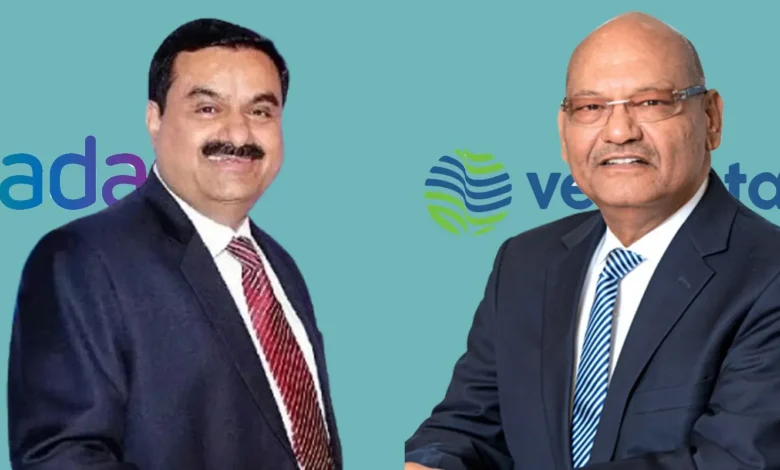
This is not presented as coincidence by those tracking these developments. It is portrayed as a systematic arrangement — a well-oiled mechanism where regulatory and investigative pressure clears the path for acquisitions that might otherwise face stiff competition or higher valuations. The latest and most striking chapter in this alleged saga involves Vedanta Group and its bruising battle with Adani Enterprises over the assets of the bankrupt Jaiprakash Associates Ltd (JAL) — better known as the Jaypee Group flagship. The chronology is so tight, and the stakes so high, that a larger question now hangs in the air: When will Adani buy Vedanta Group of Companies?
The Alleged Playbook: Raids, Pressure, Distress, and Acquisition
Critics — including opposition politicians, independent analysts, and sections of the business media — outline a consistent three-step pattern:
- Regulatory Heat When Interest Emerges: The moment Adani shows serious interest in a company or asset (through bids, negotiations, or market moves), ED, CBI, Income Tax, or SEBI actions intensify against the target promoters, the company itself, or its key competitors.
- Arrests, Attachments, and Value Destruction: Promoters face questioning, arrests in some cases, or attachment of assets. Even without arrests, the mere spectacle of raids, searches, and prolonged investigations freezes decision-making, scares investors, tanks stock prices, and forces distressed sales.
- Fire Sale to Adani: With the company weakened and rivals eliminated or exhausted, Adani entities step in and acquire prime assets — ports, airports, cement plants, real estate, media companies — at valuations that reflect the distress created by the preceding enforcement storm.
This pattern, they argue, has repeated across multiple high-value deals. It raises profound questions about the independence of investigative agencies, the fairness of India’s insolvency process under the Insolvency and Bankruptcy Code (IBC), and whether India is witnessing the rise of a new form of crony capitalism where state power and corporate ambition move in lockstep.
Documented Examples of the Pattern
Several cases have been cited repeatedly to illustrate this alleged mechanism:
- NDTV (2022): Founders Prannoy Roy and Radhika Roy faced years of CBI, Income Tax, and SEBI scrutiny. SEBI imposed an insider trading ban. CBI questioning intensified precisely as Adani moved to acquire indirect control through convertible warrants and an open offer. The founders eventually sold a large stake. Years later, CBI filed a closure report stating no wrongdoing was found.
- Mumbai International Airport (GVK, 2020): Just weeks before Adani Airport Holdings acquired controlling interest in Mumbai International Airport from GVK, CBI registered an FIR alleging siphoning of funds and cheating. ED followed with money laundering probes and raids. Talks with Adani began almost immediately after the raids. GVK publicly denied pressure, but the timing was extraordinary. Later, key corruption charges were dropped.
- Sanghi Industries (2023): When Shree Cement (a strong rival bidder) was in advanced talks to acquire Sanghi Industries, the Income Tax Department launched raids on Shree Cement across multiple locations. Within weeks, Shree Cement exited the race. Ambuja Cements (Adani Group) promptly announced the acquisition at an enterprise value of around ₹5,000–5,185 crore. Congress leaders publicly highlighted the “chronology” as evidence of agency misuse.
- Port Acquisitions (Krishnapatnam 2020, Gangavaram 2021): Prior owners faced regulatory and political scrutiny in Andhra Pradesh amid a change of government. Adani Ports moved in swiftly. While direct causation is debated, critics argue the environment of enforcement pressure facilitated smoother, cheaper acquisitions.
In each case, the narrative is the same: Adani interest → agency action → distress → Adani acquisition at favorable terms.
The Jaypee–Vedanta–Adani Battle: The Most Direct Example Yet
The ongoing saga involving Jaiprakash Associates Ltd (JAL) stands out because it involves a direct head-to-head contest between Vedanta and Adani, followed by swift enforcement action against the loser.
Background: JAL, once a major infrastructure and real estate player, collapsed under massive debt (claims exceeding ₹57,000 crore). It entered Corporate Insolvency Resolution Process (CIRP) in June 2024. Among its prized assets were thousands of acres of prime land in Noida, cement plants, a stake in Jaiprakash Power, luxury hotels, and — most symbolically — the Buddh International Circuit, India’s only Formula 1 track.
Two major bidders emerged:
- Vedanta Group (led by Anil Agarwal) submitted a higher nominal bid — reports indicate offers in the range of ₹17,000+ crore with a longer payment timeline (5–6 years) and lower upfront cash component.
- Adani Enterprises bid lower at ₹14,535 crore but offered significantly higher upfront cash (around ₹6,000 crore) and a much faster repayment timeline (1.5–2 years).
The Committee of Creditors (CoC), exercising its “commercial wisdom” under IBC, overwhelmingly approved Adani’s resolution plan (reportedly 89%+ votes) in November 2025. Lenders prioritized certainty and speed of recovery over a higher headline number spread over many years.
Vedanta’s Challenge: Vedanta did not accept defeat quietly. It challenged the process vigorously, arguing its bid was superior in Net Present Value terms and that the selection was unfair. It approached the National Company Law Tribunal (NCLT), then the National Company Law Appellate Tribunal (NCLAT), and finally the Supreme Court of India, seeking a stay on implementation of Adani’s plan. Vedanta claimed it had even received indications of being the winning bidder at one stage.
The courts largely upheld the CoC’s decision. The Supreme Court refused interim stay. On 4 May 2026, NCLAT dismissed Vedanta’s appeal, clearing the path for Adani to proceed with the ₹14,535 crore acquisition of JAL’s assets.
Then Came the ED Raids: Just weeks after these adverse judicial developments — and while the larger battle was still fresh — on 2 June 2026, the Enforcement Directorate conducted searches at multiple Vedanta Group premises across Delhi, Mumbai, Rajasthan, and other locations.
The stated reason: An investigation into alleged violations of the Foreign Exchange Management Act (FEMA), specifically concerning royalty payments and foreign fund transfers to Vedanta’s overseas parent company. Officials noted that elements of the probe had been ongoing since 2023. No arrests were reported, and Vedanta stated it was fully cooperating.
To critics, the timing was impossible to ignore. A company that had just aggressively challenged Adani in court and lost saw central agencies at its doorstep within days/weeks. Social media, opposition voices, and business commentators erupted with the same refrain: “Challenge Adani → ED arrives.”
This sequence fits the alleged pattern with almost textbook precision:
- Vedanta bids aggressively against Adani.
- Loses on “commercial wisdom” grounds despite higher headline offer.
- Fights all the way to the Supreme Court.
- Days/weeks later: ED raids.
What’s Next? The Shadow Over Vedanta
Vedanta Group is no stranger to regulatory and financial pressure. It carries significant group-level debt (estimates have run into billions of dollars), has been navigating a complex demerger process with delays and government objections, and has faced past scrutiny on various fronts.
Now, with the fresh ED action following its high-profile legal challenge to Adani, the company finds itself in a familiar position — exactly where other entities were before high-value assets moved toward the Adani Group.
Critics are already drawing the line:
- If the pattern holds, intensified scrutiny will continue.
- Market sentiment will suffer.
- Vedanta’s ability to raise capital or execute its demerger/strategic plans will be hampered.
- At some point, distressed or strategic assets within the Vedanta empire (or the group itself in parts) could become available at favorable terms.
The question is no longer abstract. After the Jaypee episode, many serious observers are asking openly: Is Vedanta the next target in this systematic arrangement? When will Adani buy Vedanta Group of Companies?
The Larger Implications
If this pattern is real — or even if it is widely perceived as real — the consequences for Indian capitalism are profound. It chills genuine competition. It discourages companies from bidding aggressively against powerful players. It raises doubts about whether India’s insolvency framework truly maximizes value for creditors or merely facilitates transfers to favored entities. Most dangerously, it erodes public trust in institutions meant to be impartial.
Defenders of the process argue that these are legitimate investigations into pre-existing irregularities, that IBC decisions are driven by commercial wisdom of lenders (mostly public sector banks), and that Adani simply bids smarter and executes faster in distressed situations. They point out that not every Adani deal involved raids, and that many probes began before Adani’s interest was public.
Yet the chronology in case after case — especially the Jaypee–Vedanta episode — continues to fuel suspicion. When enforcement agencies act with such convenient timing, and when the same corporate house repeatedly benefits, questions about institutional capture become impossible to dismiss.
The Adani Group has transformed itself into one of India’s most powerful conglomerates through aggressive expansion across ports, airports, cement, energy, media, and now infrastructure assets from bankrupt entities. Whether this expansion reflects superior business acumen, favorable policy environment, or something more coordinated remains one of the most contentious debates in contemporary Indian political economy.
After the events of 2025–2026, the question has become sharper and more urgent than ever:
When will Adani buy Vedanta Group of Companies?
The pattern, according to its critics, suggests the answer may not be far away. Only time — and the next set of raids, court orders, or acquisition announcements — will tell.