Can GIFT City Challenge Dubai? Why 100 Global Companies Are Exploring India’s New Financial Hub
For decades, cities like Dubai and Singapore have been the preferred destinations for multinational companies managing their global treasury operations. But that equation may be beginning to change. With more than 100 global firms exploring India's GIFT City, a new contender is quietly emerging in the race to become Asia's next financial powerhouse.

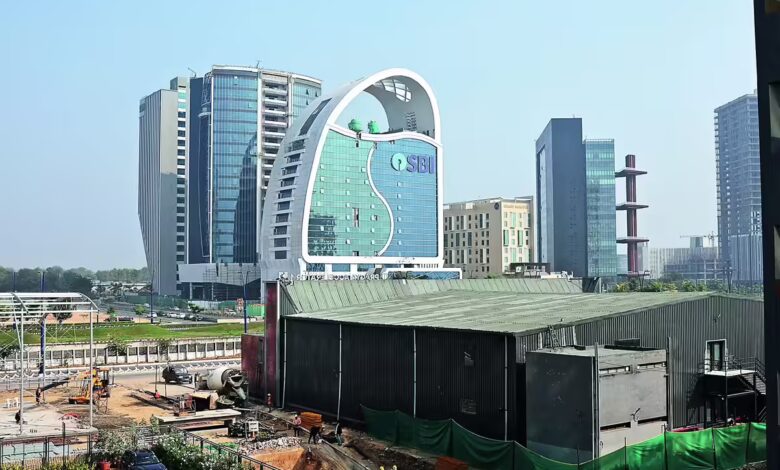
India’s GIFT City has often been described as the country’s answer to Dubai and Singapore. But until recently, that ambition remained largely a long-term vision. Now, fresh insights from JPMorgan suggest the financial hub may finally be reaching a turning point.
According to the Wall Street banking giant, more than 100 multinational companies have approached it over the past year to explore banking and payment solutions for setting up treasury operations in GIFT City over the next 12 to 18 months. The growing interest spans companies across sectors, including insurance firms and fintech businesses, signalling that global corporations are beginning to view the International Financial Services Centre (IFSC) as more than just another financial district.
At the heart of this interest are corporate treasury centres – the command hubs that allow multinational companies to manage cash flows, foreign currency accounts, borrowing, investments and liquidity across multiple countries from a single location.
As businesses expand globally, deciding where these treasury operations are based has become a strategic decision influenced as much by regulation and taxation as by geopolitical stability.
JPMorgan executives believe treasury centres represent the next major phase of growth for GIFT City. As companies look to optimise borrowing costs, deploy surplus cash more efficiently and simplify cross-border financial operations, India’s financial hub is increasingly finding itself on the shortlist alongside some of the world’s most established international financial centres.

What Makes GIFT City Different?
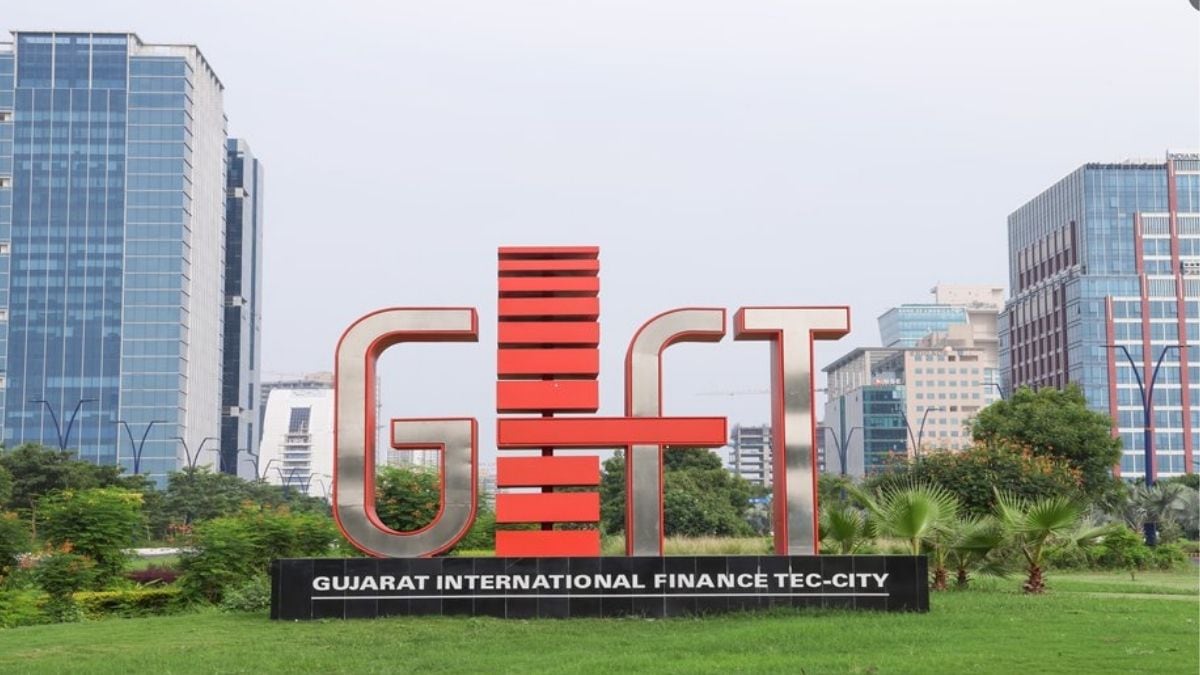
When Prime Minister Narendra Modi launched Gujarat International Finance Tec-City, or GIFT City, in 2015, the ambition was straightforward but ambitious: create an international financial hub that could compete with established centres like Dubai, Singapore and Hong Kong. More than a decade later, that vision appears to be gaining momentum.
Unlike the rest of India’s financial system, GIFT City’s International Financial Services Centre (IFSC) allows companies to conduct business in foreign currencies while operating under a single regulator – the International Financial Services Centres Authority (IFSCA). Instead of going through separate regulators for banking, insurance and capital markets, businesses work through a unified framework designed specifically for international financial services.
The advantages extend beyond regulatory simplicity. Companies operating from GIFT City can maintain foreign currency accounts alongside rupee accounts, access international capital markets more easily and benefit from tax incentives aimed at encouraging global financial activity.
For multinational corporations running complex cross-border operations, these features can significantly reduce administrative hurdles while improving the efficiency of managing global cash flows.
A key attraction lies in the treasury services that banks such as JPMorgan now offer within GIFT City. These include physical pooling, where funds from multiple subsidiaries are consolidated into a central account, and notional pooling, which enables companies to offset balances across accounts without physically moving the money. Both tools help multinational corporations optimise liquidity, lower borrowing costs and make better use of surplus cash spread across different markets.
The numbers suggest that global interest is translating into tangible growth. Banking assets in GIFT City’s IFSC have crossed the $100 billion mark, more than doubling over the past two years, while the financial hub already hosts several operational corporate treasury centres. With multinational companies increasingly evaluating India as a regional base for treasury operations, industry executives believe the next phase of expansion is likely to be driven by new global entrants rather than domestic institutions alone.
Why Are Companies Looking Beyond Traditional Financial Hubs?
The growing interest in GIFT City is not happening in a vacuum. It reflects a broader shift in how multinational corporations are thinking about where they base their treasury operations. For years, companies gravitated towards established financial centres such as Dubai, Singapore and Hong Kong because they offered regulatory certainty, access to global markets and sophisticated banking infrastructure. Today, however, geopolitical risk has become just as important as tax incentives and financial efficiency.
From trade wars and supply chain disruptions to regional conflicts and volatile commodity markets, boardrooms are increasingly factoring geopolitical resilience into decisions that were once driven almost entirely by economics.
Treasury centres, which manage billions of dollars in corporate cash and cross-border transactions, have become too critical to be concentrated in a single jurisdiction if that location faces prolonged uncertainty.
That changing calculus is prompting companies to diversify rather than rely on one financial hub. Instead of replacing established centres overnight, multinational corporations are exploring additional locations that can provide operational continuity, regulatory flexibility and access to growing markets. India’s expanding economy, improving financial infrastructure and internationally oriented regulatory framework have made GIFT City one of the beneficiaries of this trend.
Perhaps nowhere is this shift more visible than in Dubai. For decades, the emirate has served as the Middle East’s undisputed financial gateway, attracting multinational corporations, investment funds and regional headquarters with its business-friendly environment and strategic location. But recent geopolitical developments have forced investors and companies to reassess the risks associated with concentrating operations in a region increasingly exposed to geopolitical tensions.
Dubai’s Biggest Strength Is Suddenly Its Biggest Risk
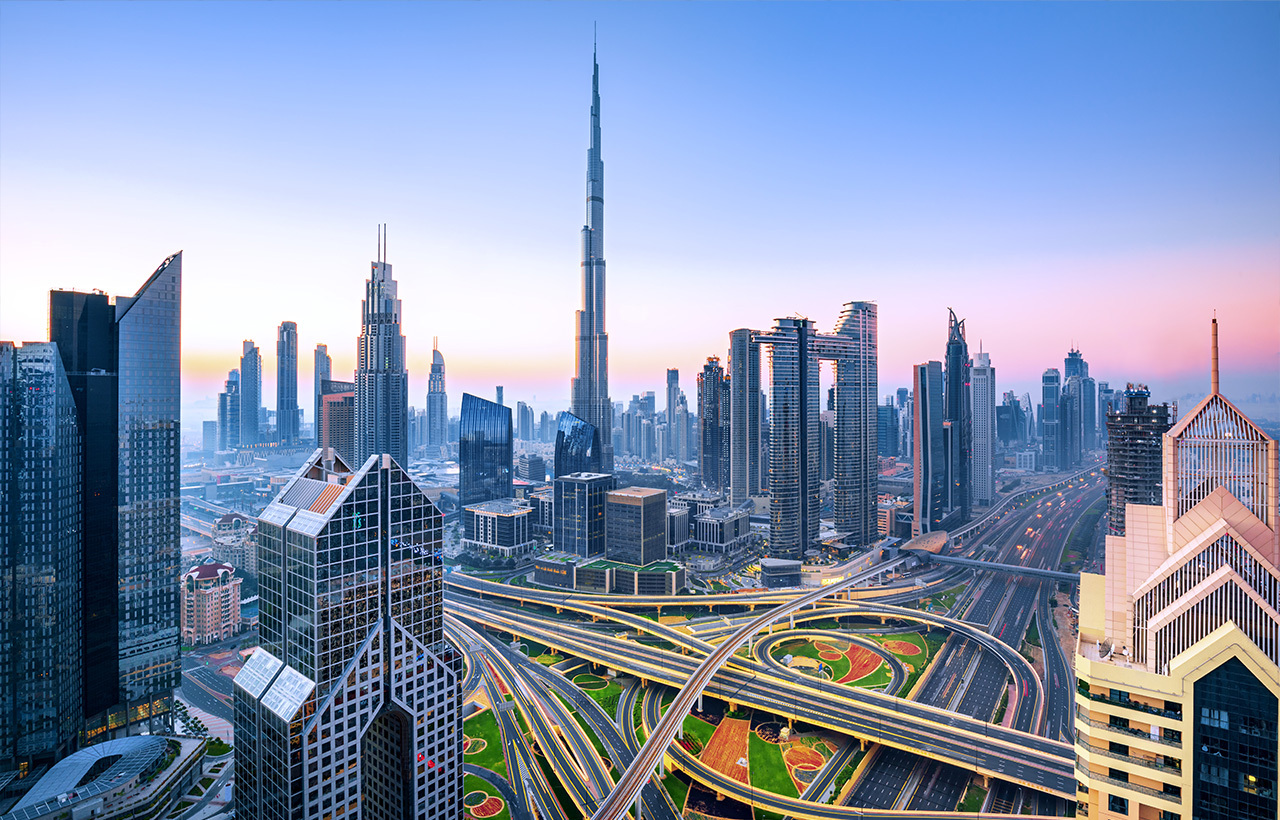
For much of the past two decades, Dubai has been synonymous with global commerce. Its skyline, free zones and world-class infrastructure transformed the emirate into the preferred gateway for businesses operating across the Middle East, Africa and South Asia. The city’s appeal rested on a simple promise: political stability, easy access to international markets and a constant flow of capital, companies and expatriate talent.
That promise, however, has come under fresh scrutiny following heightened geopolitical tensions in West Asia. The conflict involving Iran and the uncertainty surrounding the Strait of Hormuz – a critical artery through which nearly a fifth of the world’s oil supply passes – have exposed vulnerabilities that many corporations had previously overlooked. For multinational companies responsible for managing global liquidity and supply chains, prolonged regional instability has become a boardroom concern rather than merely a geopolitical headline.
Analysts argue that the risks extend well beyond government finances. Dubai’s economic model relies heavily on four interconnected pillars – real estate, international trade, tourism and business events – all of which depend on the uninterrupted movement of people, goods and capital. If geopolitical uncertainty persists, each of these sectors could face mounting pressure.
The property market, often viewed as the emirate’s biggest success story, illustrates these concerns. A significant share of Dubai’s residential real estate is owned by overseas investors who depend on a steady stream of expatriate tenants and buyers. Should companies slow hiring or relocate regional operations, landlords could find themselves struggling with rising vacancies, falling rental income and mounting maintenance costs.
At the same time, businesses operating through Jebel Ali Free Zone (JAFZA) are reassessing supply-chain exposure, while hotels, conferences and retail tourism face the prospect of softer demand if uncertainty discourages international travel.
Even the banking sector, despite remaining well-capitalised, has shown signs of caution. Banks have reportedly increased provisions for potentially stressed loans, lending activity has moderated, and access to additional liquidity has become a greater priority amid an uncertain regional outlook. None of these developments suggest an immediate crisis, but together they indicate why multinational corporations are increasingly evaluating alternative locations as part of a broader risk-diversification strategy rather than relying on a single regional financial hub.

Dubai Isn’t Declining. But Companies Are Diversifying.
None of this suggests that Dubai’s position as a global financial hub is collapsing. In fact, recent data points to a market that has slowed but continues to display considerable resilience.
According to real estate consultancy Anarock, Dubai’s residential property market recorded a 16 per cent year-on-year decline in housing sales during the first half of 2026 as geopolitical tensions temporarily weighed on investor sentiment. Property prices also corrected by around 4-7 per cent between February and April, reflecting the uncertainty created by the regional conflict.
Yet the broader picture remains far from bleak. Residential sales during the six-month period were still significantly higher than pre-2025 levels, while average property prices remained above where they stood a year earlier. As ceasefire efforts gathered pace, buyer confidence gradually returned, with industry executives attributing the earlier slowdown more to sentiment than to any deterioration in the emirate’s underlying economic fundamentals.
The longer-term numbers reinforce that view. Dubai enjoyed a record-breaking 2025, with residential property transactions touching AED 547 billion across more than 206,000 deals. The emirate attracted buyers from over 150 countries, while Indian investors continued to account for the largest share of overseas property purchases, underlining Dubai’s enduring appeal as an international investment destination.
That is precisely why GIFT City’s emergence is significant. The story is not about one financial hub replacing another. Rather, it reflects how multinational corporations are adapting to an increasingly uncertain world by spreading treasury operations across multiple jurisdictions. For decades, Dubai may have been the default choice. Today, companies appear to be asking whether they should have another option—and India is positioning GIFT City to become one of those alternatives.

Can GIFT City Become Asia’s Next Global Treasury Hub?
Whether GIFT City eventually rivals Dubai or Singapore remains an open question. Building a global financial centre is a marathon rather than a sprint, requiring decades of regulatory consistency, deep capital markets, world-class infrastructure and, above all, the confidence of multinational corporations. Yet the latest interest reported by JPMorgan suggests that India’s flagship financial hub has moved beyond aspiration and is beginning to attract serious global attention.
The timing could prove significant. As companies rethink supply chains, diversify manufacturing bases and spread financial operations across multiple jurisdictions, treasury management is undergoing a similar transformation. Instead of concentrating cash management and funding operations in a single location, multinational corporations are increasingly looking for a network of trusted financial centres that can offer resilience alongside efficiency.
That shift plays directly to GIFT City’s strengths. India combines one of the world’s fastest-growing major economies with an expanding financial ecosystem, a unified regulatory framework within the IFSC, access to foreign currency banking and policy incentives aimed at attracting international capital. For multinational firms already expanding manufacturing and business operations in India, locating treasury functions closer to those operations is becoming an increasingly logical proposition rather than merely a regulatory experiment.
The coming years will determine whether this early momentum translates into lasting success. More than 100 multinational companies exploring treasury operations does not guarantee they will all establish a presence in GIFT City. But it does indicate that India’s international financial centre is now firmly on the radar of global boardrooms. In a world where geopolitical uncertainty is reshaping the movement of capital as much as the movement of goods, that may prove to be GIFT City’s biggest breakthrough yet.
The Last Bit, Global Financial Map Is Being Redrawn
For decades, cities such as Dubai, Singapore and Hong Kong dominated the conversation around international treasury operations. Their combination of regulatory certainty, sophisticated banking infrastructure and global connectivity made them the natural choice for multinational corporations managing billions of dollars in cross-border capital.
That picture, however, is beginning to evolve. Geopolitical tensions, supply chain realignments and the growing importance of risk diversification are prompting companies to rethink not just where they manufacture goods, but also where they manage money. Rather than relying on a single financial hub, corporations are increasingly exploring a network of centres that can provide stability, operational flexibility and access to high-growth markets.
It is against this backdrop that GIFT City’s growing appeal becomes significant. JPMorgan’s revelation that more than 100 multinational companies are evaluating treasury operations in India’s flagship financial hub is not merely a vote of confidence in one city – it reflects a broader shift in how global businesses are positioning themselves for an increasingly uncertain world.
Dubai is unlikely to lose its status as a leading international financial centre anytime soon. But for the first time, India appears to have built a credible alternative that is attracting serious attention from global boardrooms. If that momentum continues, GIFT City may not simply become India’s answer to Dubai – it could emerge as one of the defining financial centres of the next decade.