Adani’s Empire Is Expanding Again. Adani May Have Rebuilt Investor Confidence But Not The Questions Around His Empire
Adani is back where investors once thought the empire might never return. The flagship is rallying, institutions are buying, and legal pressure is easing. But beneath the comeback sits a bigger question: how did Adani build an empire this large, this fast, and across so many of India’s critical sectors?

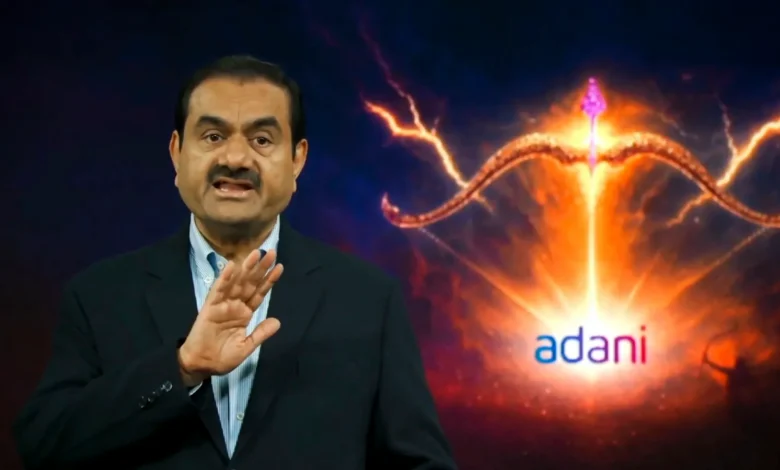
Adani Enterprises Ltd., the flagship of Gautam Adani’s conglomerate, has returned to where it stood before the group’s crisis began more than three years ago – as the best-performing stock on India’s equity benchmark.
The recovery marks a sharp turnaround for a company that spent the past few years dealing with the fallout from the Hindenburg short-seller attack, allegations brought against Gautam and Sagar Adani by US authorities and scrutiny from India’s market regulator.
The latest rally has also come with signs that institutional investors are beginning to rebuild their exposure to the group.
Institutional Money Starts Coming Back
The recovery is not happening in isolation. Adani Enterprises has also started attracting institutional investors again, with Capital Group, Goldman Sachs Group Inc. and SBI Funds Management Ltd. among those buying shares as the conglomerate works to rebuild investor support.
Morgan Stanley added another layer of confidence in June, initiating coverage on Adani Enterprises with an overweight rating.
The renewed interest suggests that some large investors are becoming more comfortable taking exposure to the group again, even as foreign ownership remains well below earlier levels.
The shift matters because Adani’s comeback is increasingly being driven not just by retail enthusiasm, but by institutions willing to put significant money behind the recovery.
Infrastructure Is Driving the Comeback
The renewed interest in Adani is closely tied to a familiar bet – India’s infrastructure story.
Investors are putting money behind the group’s ports, airports and power businesses, sectors expected to benefit from long-term infrastructure spending. Adani’s infrastructure portfolio also offers something investors value in capital-heavy businesses: visibility over projects and earnings that can stretch across decades; and this is a very important factor.
“Adani is essentially playing the India growth story through infrastructure,” said Vinit Bolinjkar, head of research at Ventura Securities. He said few businesses can offer the kind of 20- to 30-year visibility provided by Adani’s infrastructure businesses.
The group is also expanding in newer infrastructure segments. AdaniConneX Pvt., its data-centre joint venture with EdgeConneX, recently secured about $800 million in financing for expansion.

The Legal Cloud Is Starting To Lift
The comeback got another boost last week when a US District Judge permanently dismissed securities fraud charges against the Adanis, bringing an end to a 2024 case that had remained a major overhang for the group.
The latest review by MSCI also worked in Adani’s favour. The index provider raised the free-float factors for several Adani companies, increasing their weight in its gauges. That can translate into additional buying from passive funds that track the indexes.
Together, the developments have helped strengthen the perception that some of the legal and market pressures that followed the group’s crisis are beginning to ease.
The Comeback Still Has Some Gaps
The recovery is significant, but it is far from complete.
Adani Enterprises has coverage from just four brokerages, the lowest among Indian companies valued at more than ₹4 trillion, according to Bloomberg data. Foreign ownership has also fallen to a record low in June, based on data from Prime Infobase.
Part of that decline reflects a broader pullback by global funds from Indian equities earlier this year. But it also shows that international investors have not fully returned to the stock despite the recent rally.
There are risks on the business side as well. Infrastructure projects can take years to generate returns, leaving the group exposed to refinancing pressures and regulatory changes, Morgan Stanley said in its June note.
So while the market is clearly giving Adani another vote of confidence, it is not yet the same level of broad institutional acceptance the group enjoyed before its crisis.
The Bigger Bet Behind the Rally
Still, the revival is doing more than lifting Adani Enterprises’ share price. It is restoring the group’s position as a proxy for investors betting on India’s infrastructure expansion.
The group’s ports, airports and power businesses give investors exposure to projects with long operating lives, while its expanding data-centre business adds another infrastructure play to the portfolio.
That combination is helping bring investors back to a group that, only a few years ago, was facing intense scrutiny over its finances, governance and access to capital.
For Adani, the recovery therefore goes beyond a stock-market rebound. It is a bet that the group can continue raising capital, executing large infrastructure projects and expanding its footprint as India’s infrastructure cycle gathers pace.
But the return of investors does not erase the questions that have followed the group’s expansion. It simply changes the backdrop against which those questions are now being asked.
The Adani Acquisition Machine
The stock-market recovery is only one part of the Adani story. To understand why the group has become such a dominant force in Indian infrastructure, it is necessary to look beyond the latest rally and at the acquisition spree that built the empire.
Gautam Adani’s journey from a diamond and plastics trader in Ahmedabad to the head of one of the world’s most concentrated private infrastructure groups has been driven by more than organic growth.
Over roughly a decade and a half, the group has expanded across ports, airports, cement, power, logistics and media through a relentless series of acquisitions. By mid-2026, its listed companies had established dominant or near-dominant positions across several strategic sectors, supported by massive capital expenditure and an asset base running into the high hundreds of thousands of crores.
The scale of that expansion is difficult to miss. And neither is the role acquisitions have played in it.
The Documented Sequence
The acquisition story becomes more complicated when the group’s deals are placed alongside actions by India’s investigative and regulatory agencies.
A cross-matching of publicly reported acquisitions against actions by the Enforcement Directorate, Income Tax Department, CBI and Competition Commission of India between August 16, 2012 and August 16, 2026 shows a recurring sequence in a number of high-profile cases.
In the strongest cases, searches involving the target company or identified premises came before Adani’s eventual entry or takeover.
Five Cases Where the Chronology Is Strongest
Five cases stand out when the agency actions are matched against the subsequent Adani transactions.
- Mumbai International Airport is the clearest example. The Enforcement Directorate searched nine premises connected to the GVK Group and Mumbai International Airport Ltd. on July 28, 2020. Just over a month later, on August 31, Adani Airport Holdings announced the transaction that would give it control of the airport. Adani assumed management control in July 2021.
- ACC and Ambuja Cements provide another significant case. The Competition Commission of India searched the Mumbai offices of both companies on December 9, 2020, as part of a cement-sector cartel investigation. Adani later completed its $10.5 billion acquisition of Holcim’s stake in the two companies in September 2022.
- Coastal Energen also falls into the stronger category. Its premises were among those searched by the Income Tax Department in January 2017. Years later, a consortium including Adani Power implemented an NCLT-approved resolution plan for the company on August 31, 2024.
- Jaiprakash Associates presents a more recent example. The Enforcement Directorate searched 15 premises linked to the company, related entities, promoters and associates on May 23, 2025. Adani Enterprises subsequently implemented its NCLT-approved resolution plan on May 21, 2026.

The Qualified Cases
The chronology is less direct in several other cases, where agency action involved founders, promoters, selling shareholders or related group entities rather than conclusively targeting the exact legal entity later acquired by Adani.
NDTV is one such example. The CBI searched the residences of founders Prannoy and Radhika Roy in 2017. The agency itself said at the time that the newsroom and registered office were not searched. Adani later acquired control of NDTV in 2022.
Radius Estates also falls into this category, as do Krishnapatnam Port, where action involved the Navayuga promoter group, Quintillion Business Media, Gopalpur Port, where searches were linked to an OSL shareholder, and Karaikal Port, where the action involved the MARG Group.
There is also an asset-specific case involving HDIL, where searches concerned particular projects rather than the company as a whole. The question here is whether a recurring sequence appears often enough, and clearly enough, to warrant closer examination.
What the Chronology Does Not Prove
The sequence is striking. Some of the underlying proceedings were later narrowed, closed or remain unresolved. GVK, for instance, publicly denied that it had been pressured. Other transactions took place through the Insolvency and Bankruptcy Code, where distressed assets are transferred through a statutory resolution process rather than a conventional private sale.
That distinction is critical.
The documented record supports the existence of a recurring chronology in several cases. It does not, on its own, establish orchestration, coercion or preferential treatment.
But the frequency of these instances still raises a question worth examining: how much of Adani’s expansion can be explained by ordinary commercial opportunity, and how much of the surrounding institutional environment deserves closer scrutiny?
The Acquisition Spree After Hindenburg
The agency-action chronology is only one part of the bigger picture. Since the Hindenburg report in January 2023, the Adani group has continued to expand at a remarkable pace.
The group has completed roughly 33 deals worth approximately ₹80,000 crore, with ports, cement and power accounting for much of the activity.
Cement has been a major area of consolidation, with Sanghi Industries, Penna Cement and Orient Cement adding to the foundation laid by the Ambuja Cements and ACC acquisition.
The ports business has expanded through assets including Krishnapatnam, Karaikal and Gopalpur, alongside overseas acquisitions. Power has also been a significant source of growth, with several assets changing hands through the Insolvency and Bankruptcy Code.
The expansion has not been limited to physical infrastructure. Adani’s acquisitions of NDTV, Quintillion Business Media and full control of IANS have also extended the group’s presence into media.
The result is a conglomerate that has continued to grow even after the crisis that threatened to derail it and one whose reach now extends across some of India’s most strategically important sectors.
What the Expansion Means
The scale of the expansion has created a second question beyond how the acquisitions were made: what happens when one private group becomes a major player across so many essential sectors at once?
Adani now has a significant presence in India’s private port infrastructure, a large portfolio of airports, a rapidly consolidating cement business and substantial thermal and renewable power assets. Its logistics operations also allow parts of the empire to reinforce one another.
That scale brings obvious advantages. A group operating across ports, power, airports and logistics can share infrastructure, deploy capital at scale and build businesses around long-term assets that are difficult for smaller competitors to replicate.
But concentration also creates familiar concerns.
The larger the footprint, the higher the potential barriers to entry. Market power can become harder to challenge. Critical infrastructure can create greater dependence on regulators and government policy. And when one group becomes important across several sectors at once, the consequences of a financial or operational problem can extend well beyond a single company.
The question, therefore, is no longer simply how quickly Adani is expanding. It is whether India’s markets can remain genuinely competitive as that expansion continues.
The Institutional Question
The bigger concern is not simply the size of Adani’s empire. It is the environment in which that empire has expanded.
The first question is institutional consistency. Investigative agencies have pursued business groups and political opponents with varying degrees of intensity, while in several Adani-related cases, agency action involving targets or their controllers was followed by an eventual transfer of ownership or control.
That does not establish coordination. But it does make the outcome of those investigations important.
If enforcement is neutral, the public should be able to see how major probes concluded, whether allegations were sustained, and whether the same standards were applied across companies and business groups.
The second question involves public and quasi-public capital. Several stressed assets acquired by Adani entities have moved through the Insolvency and Bankruptcy Code, while public-sector banks and institutions have also been involved in financing and capital-raising across the broader ecosystem.
That creates a legitimate systemic question: when public institutions are involved both in the creation of distressed-asset pools through earlier lending and later in financing their resolution, how independent and arm’s-length is that process?
The third question is competition.
Ports, airports, cement and power are all sectors where scale matters and government policy plays a significant role. Add media ownership to that mix, and the issue extends beyond conventional market concentration.
Adani’s defenders argue that the group has won major concessions competitively, invested heavily, taken on projects others could not execute and used its balance sheet to build infrastructure India needs.
Critics argue that the same concentration creates risks of regulatory dependence, crowding out and political influence. The evidence does not settle that debate. But the scale of the group makes it increasingly difficult to dismiss the questions themselves.

The Other Side of the Story
Any assessment of Adani’s expansion also has to account for the group’s own defence.
In its 413-page response to the Hindenburg report, Adani rejected allegations around related-party transactions and argued that claims of wrongdoing had been overstated or were based on information that had already been disclosed. The group also argued that the short-seller’s attack was ultimately an attack on India’s growth story.
Adani has since pointed to regulatory findings on several of the issues raised after the Hindenburg report as evidence that its position was stronger than its critics suggested. The group has also highlighted improvements in the operating performance of businesses including airports and ports, while maintaining debt within its stated limits despite a heavy capital expenditure programme.
Still, the stronger argument is narrower: a number of significant transactions were preceded by agency action involving the target, its promoters or related entities, while the group was simultaneously expanding at extraordinary speed across sectors where scale and access to capital matter enormously.
Adani may have rebuilt investor confidence. But the questions surrounding how the empire was built have not disappeared.