M3M: Ek Ped Ghar Ke Bachche Ke Naam, Par Un Gharon Ka Kya Jo M3M Ne Corruption Ke Chalte Barbaad Kar Diye
Behind M3M Foundation’s carefully choreographed tree-plantation campaigns lies a far more troubling story of delayed homes, trapped life savings, consumer disputes, regulatory penalties and years of unresolved litigation. While the group promotes environmental stewardship and community responsibility, thousands of homebuyers continue to battle EMIs, rent, refund orders and prolonged legal proceedings. Tax searches, enforcement actions, land disputes and criminal cases have produced a complex record. As saplings are planted in the names of children, a difficult question remains: will the families who paid for homes ever receive what they were promised, and what will be the fate of those homebuyers whose homes were already tarnished under the heaps of M3M corruption?


In the second week of August 2026, M3M Foundation flooded the media with glossy announcements. Under the banner of “Ek Ped Maa Ke Naam” and its earlier variant “Ek Ped Ghar Ke Bachche Ya Bachchi Ke Naam,” the Foundation declared it would plant more than one lakh trees across eleven panchayats in Gurugram and Tauru Block. Local leaders were named, emotional bonding with saplings was celebrated, and the philanthropic arm of the M3M Group spoke of community stewardship, Mission LiFE and Viksit Bharat 2047. Dr Payal Kanodia’s quote was repeated across platforms: a tree needs people willing to care for it.
The optics are carefully crafted. The reality that sits beneath them is far uglier.
Lifetime savings turned into lifelong EMI and rent
Thousands of homebuyers placed their life’s savings and bank loans into M3M projects on the promise of homes within six months to one year. Many are still waiting after a decade and a half. While they continue paying EMIs and rent for the houses they actually live in, the developer’s Foundation plants trees in the name of children.
The documented record is not vague. In the Bhavya Doshi matter, buyers who had paid approximately ₹3.95 crore for a unit in M3M Golf Estate obtained a refund order from the Delhi State Consumer Commission after alleging leakage, flooding, amenity shortfalls and refusal to honour contractual exit rights. When execution attachment warrants were issued, the Delhi High Court in March 2026 stayed them on the condition that 50 per cent of the decretal amount be deposited. The Commission’s finding of deficiency in service remains. The buyers’ money and years are not restored by a stay order.
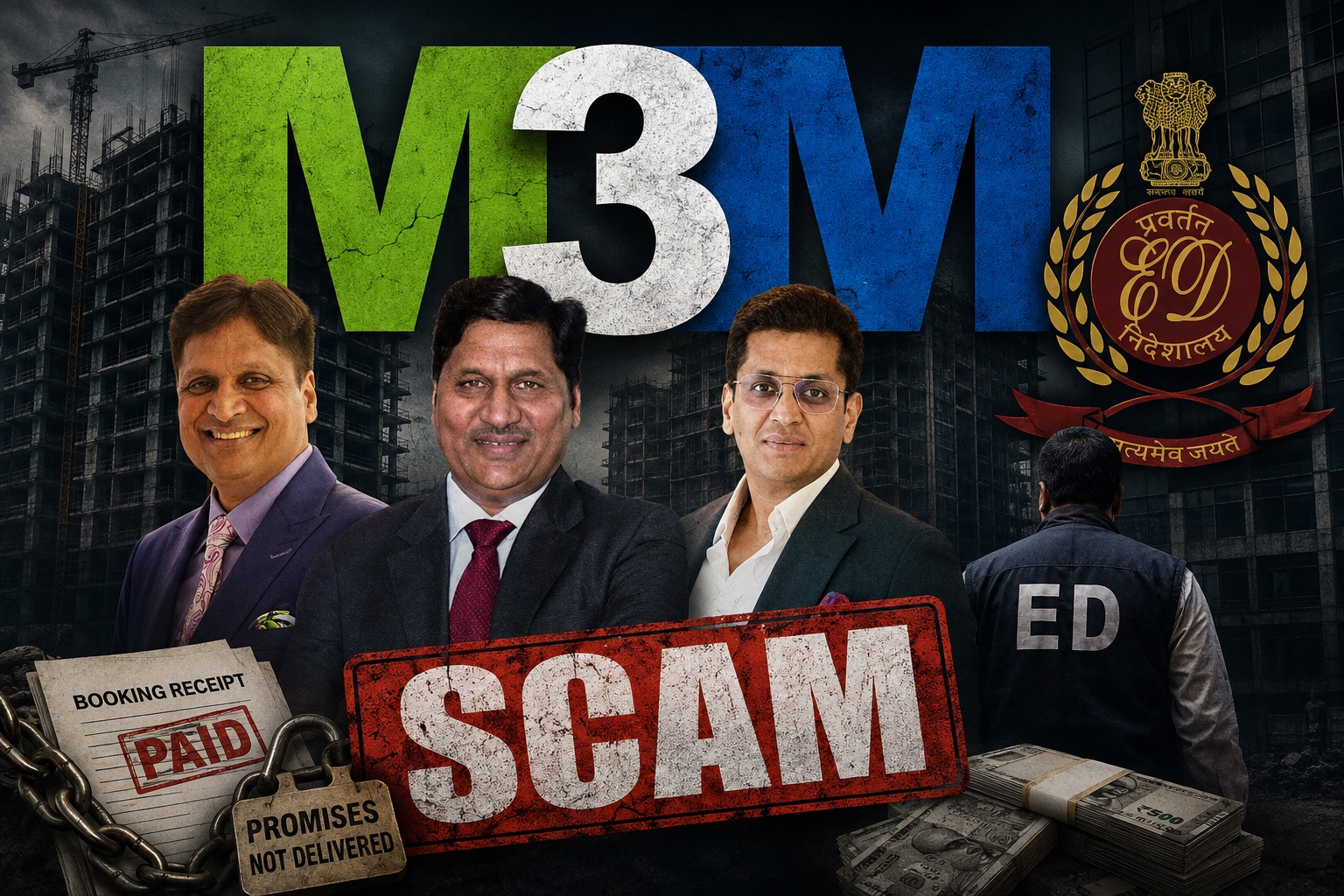
In the Karan Aggarwal matter concerning M3M Merlin, the complainant had paid approximately ₹1 crore. The Delhi State Consumer Commission in January 2026 found the termination of allotment unjustified and arbitrary, ordered refund with interest, and noted that M3M’s written statement had not even been taken on record because its delay application had been dismissed. Roop and Pankaj Bansal figured in the array of opposite parties. Recovery, again, is not automatic.
These are not isolated grievances. They sit alongside repeated Haryana RERA findings. For the unregistered Boutique Floors / City of Dreams project, HARERA imposed a ₹2.5 crore penalty under Section 59 after rejecting the claim that third-party brokers alone were responsible, recording that the promoter had repeatedly flouted Section 3. Separate ₹25 lakh penalties were imposed for pre-registration marketing of M3M Skywalk and for the M3M IFC / Gentle Realtors project. Regulatory orders against the companies, not personal criminal convictions of the three brothers — yet the pattern of non-registration and marketing before registration is established by the Authority itself.
The long trail of investigations that never quite die
The Bansal brothers and M3M-linked entities have been the subject of three separate Income Tax search cycles — September 2007, June 2011 and July 2016. In 2007 a collective disclosure of approximately ₹20 crore was made; the ITAT later deleted the additions, holding the disclosure involuntary and unsupported by sufficient incriminating material.
In 2011 a ₹314 crore disclosure was recorded in connection with the RS Infrastructure share transaction; a separate ₹155.75 crore capital-loss addition was also deleted by the ITAT. In 2016 the Punjab and Haryana High Court in October 2024 upheld ITAT relief on the ground that no incriminating material had been found in the M3M search itself and that reliance had been placed on third-party material. The searches happened. The major additions did not survive.

Enforcement Directorate action followed. In June 2023 Basant, Roop and Pankaj were arrested. The arrests were later held unlawful for want of written grounds. Assets were attached under PMLA in the Religare-linked and Haryana land-release matters; one attachment of approximately ₹300 crore was later substituted by Supreme Court-approved security. A separate Benami Prohibition Unit attachment of approximately 430 acres at Mangar, Faridabad, remains under challenge, with M3M asserting proprietary ownership and denying any benami character. Public notices named certain companies and individuals as benamidars; the six individual beneficiaries were not identified in the publicly available reports.
A 2022 FIR under Sections 304 Part II and 34 IPC named Basant and Roop after six children drowned in a rainwater-filled excavation at Bajghera. M3M denied ownership or possession. No chargesheet, closure report, quashing order, arrest or trial outcome has been located in the public record. A 2012 court-directed FIR alleging use of false documents to usurp land remains without a publicly traceable final outcome. A 2017 tree-felling and alleged bribery case named an M3M representative and forest officials; the three promoters were not named in the available reports.
In the Delhi EOW–MGF matter a chargesheet and summons have been issued. In the Haryana ACB judicial-corruption case Roop was chargesheeted; he obtained a discharge in April 2026 that is under challenge by the ED. Look-out circular proceedings were disposed of after the authorities agreed to furnish details.
The volume of proceedings is extensive. The number of final criminal convictions of the three directors on the core financial allegations is, on the available record, zero.
Who actually suffers?
Judges draw their salaries. Lawyers collect their fees. The state collects court fees. Builders continue to operate, launch new campaigns, and publicise tree plantations. The homebuyer who paid from lifetime savings, took a loan, paid rent for fifteen years, and still has neither house nor full refund, is the only party left permanently poorer.
Civil recovery is slow. Even after a decree, execution is frequently stayed or frustrated. Insolvency petitions have been filed; at least one remained pending without admission into CIRP through early 2026. Section 7 petitions do not, until admitted, establish insolvency or fraud, yet they add another layer of complexity while homebuyers wait.
The Indian justice system’s structural realities compound the injury. Bail remains the rule. Trials stretch across decades. Accused persons with resources can retain senior counsel and prolong proceedings. Witnesses face repeated adjournments. Matters involving thousands of crores often move at a pace that effectively protects the status quo. Whether this is systemic failure or something more deliberate is a question the system itself has never satisfactorily answered for ordinary citizens.
The irony that refuses to die
While M3M Foundation plants saplings in the name of children and speaks of emotional bonding and community stewardship, the documented history of delayed projects, regulatory penalties for non-registration, consumer findings of deficiency, multiple ED attachments, tax searches, land-related FIRs and pending chargesheets continues to unfold in courtrooms and police stations.
The Foundation’s press releases celebrate more than 6.7 lakh trees planted under Sankalp. The same group’s homebuyers are still counting the years since they handed over their life savings.
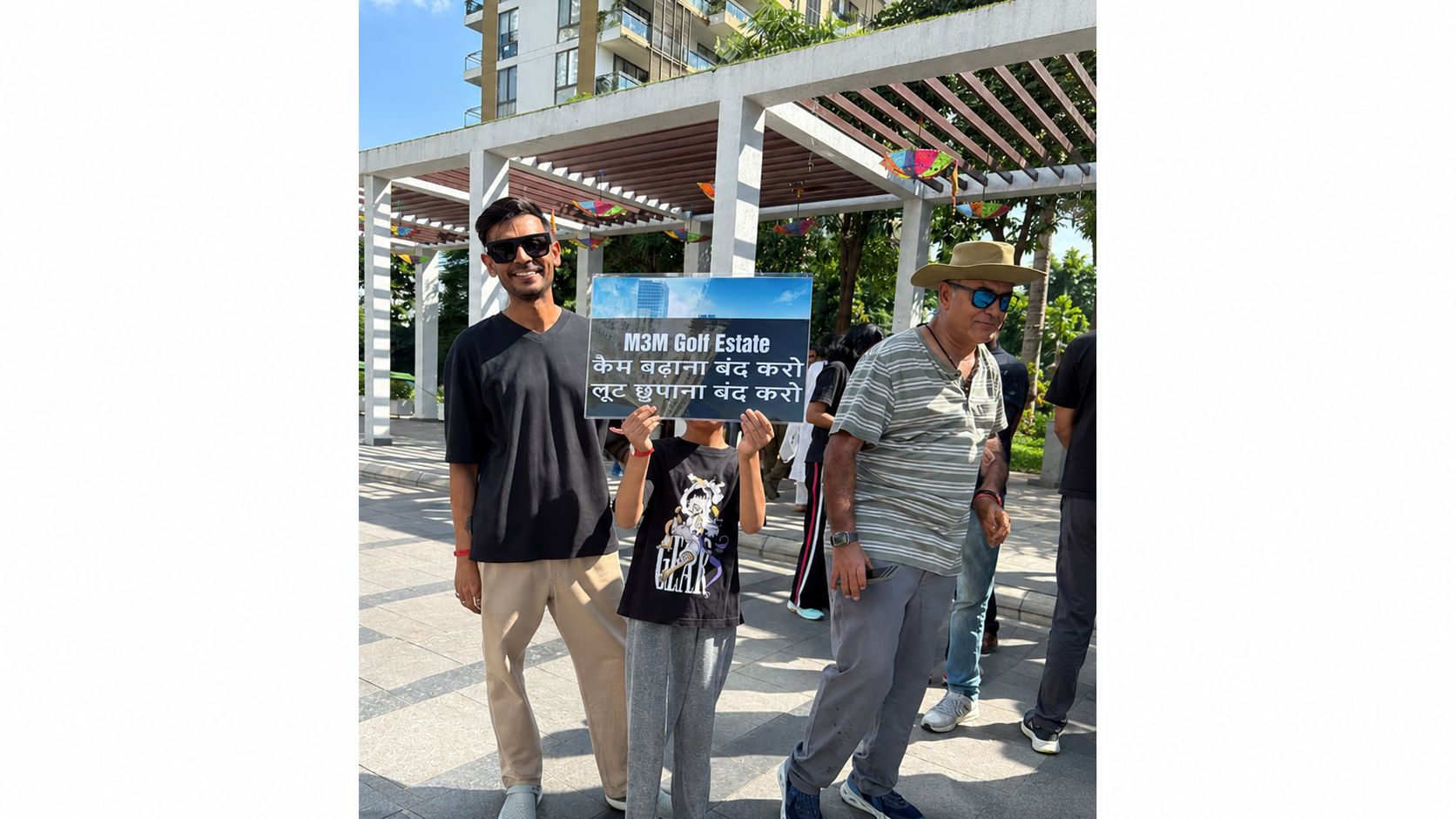
Trees can be planted in a monsoon. Homes that were promised in six months have, for many, still not materialised after fifteen or twenty years. The children in whose names the saplings are being planted will grow up. The question that remains unanswered is whether the homes their parents paid for will ever be delivered, or whether the only green cover those families will see is the one planted by the same group that took their money.
That is the record as it stands in August 2026. The plantations continue. The litigation continues. The homebuyers continue to wait.