The Food That Was Supposed to Be Destroyed. Inside India’s Growing Business of Fake Dates, Fake Labels and Real Profits – The ₹75-Lakh Warehouse And The Business Behind It
Expired food. Chemicals to erase dates. Machines to print new ones. Fake nutrition labels for foreign markets. And allegedly, a route to retail shelves, malls and e-commerce platforms. What looks like a ₹75-lakh warehouse raid may be something uglier: a business turning food meant for destruction into profit - at the cost of your health.

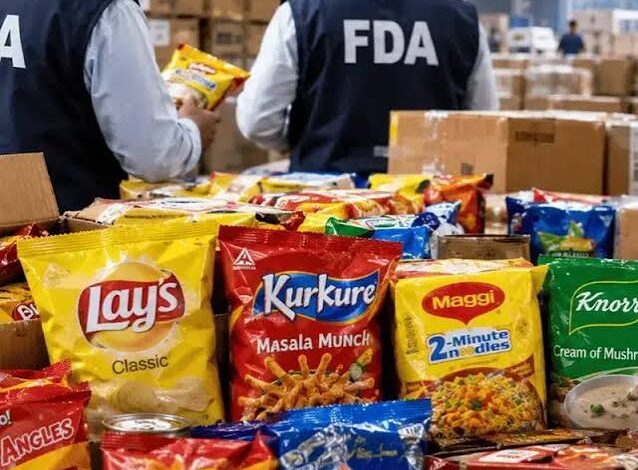
Food products that should have been nowhere near another consumer were sitting inside a warehouse in an industrial pocket of Navi Mumbai, roughly 25 kilometres from Mumbai’s international airport, stacked beneath a tin roof behind an otherwise unremarkable gate. Inside were nearly 5,000 cartons of branded products — the familiar packets and cans of some of India’s biggest food and beverage brands — waiting to be moved again.
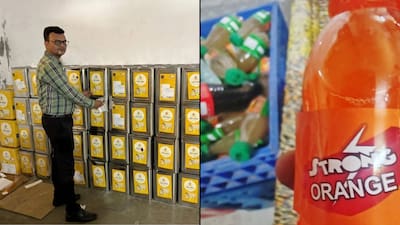
There were Lay’s and Kurkure chips, Maggi Masala Noodles, Knorr Mushroom Soup, Hellmann’s Mayonnaise, Thums Up and Limca cans. But many of the products had a problem that should have ended their commercial lives: they were expired or approaching expiry. Instead, investigators found evidence that someone had been trying to give them another one.
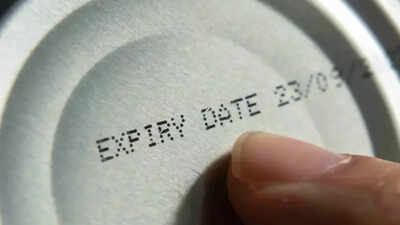
During a six-day investigation, food safety officials found chemicals that could be used to erase manufacturers’ original dates, machines capable of printing replacement information and stocks of labels prepared for products belonging to some of the world’s biggest food and beverage companies. On several packets and cans, the original manufacturing and expiry information had allegedly been scratched out or removed, leaving space for new information to be printed over it.
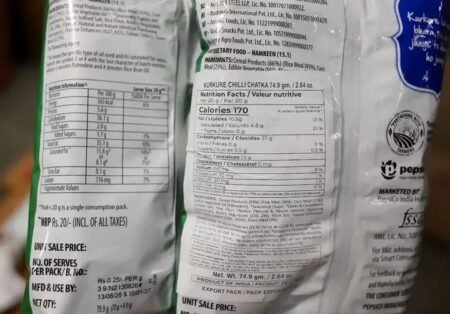
The operation was not simply about changing a number on a packet. Investigators also found replacement nutritional labels, including labels designed for foreign markets, raising the possibility that products were being altered not merely to appear newer but to appear compliant with requirements in countries where they were intended to be sold.
So much so – that labels were bilingual, in English and French. Another, found on a Maggi carton, altered nutritional information and ingredient proportions, while describing the product as a “Product of India”. The details matter because they suggest that the people operating the warehouse understood something fundamental about packaged food: once a product is inside a sealed branded packet, much of its commercial value rests not only in what is physically inside it, but in the information printed on the outside.
The expiry date determines how long the product can legally remain in commerce. The ingredients and nutrition panel tell regulators and consumers what they are buying. The manufacturing information establishes its traceability. Change those details, and an otherwise unsellable product can potentially acquire a new commercial life.
That appears to have been the logic behind the Navi Mumbai operation.
The warehouse was being run by privately owned Sadhana Enterprises, whose owner told authorities that the business was carrying out the work on behalf of 19 exporters. The police case did not accuse PepsiCo, Nestlé, Hindustan Unilever or Coca-Cola of involvement in the alleged fraud, and there is no indication from the investigation that the manufacturers themselves were responsible for what was happening to their products after they entered this secondary chain.
But the discovery raises a more uncomfortable question than who physically changed the labels.
Why was there a market for it in the first place?
The answer may lie in the economics of what happens to packaged food when it reaches the end of its legitimate shelf life.
A packet that can no longer legally be sold can quickly lose most of its value to a legitimate distributor, retailer or exporter; the same packet, if its expiry date can be removed and replaced, may suddenly become inventory again.
The cost of the food has already been incurred by someone further up the chain, the brand has already been established, the packaging has already been printed and the product already has a customer base.
For an illegal operator, the attraction is therefore not necessarily in manufacturing counterfeit food. It can be much simpler: acquire stock whose legitimate commercial value has collapsed, alter the information that makes it unsaleable, and place it back into a supply chain where the consumer may never know that the product was supposed to have disappeared.
That is what makes the ₹75-lakh stock seized in Navi Mumbai more than a single warehouse story. It offers a glimpse into a shadow economy built around an unusual commodity — food that has already lost its right to be sold, but which someone believes can still be made profitable.
The Pattern Across India
The Navi Mumbai warehouse becomes harder to dismiss as an isolated case when placed against the succession of food-safety raids carried out across Indian cities in recent months. In different states, the details have varied, but the underlying problem has been remarkably consistent: food that should have been discarded has instead been stored, altered or prepared for another sale, often after its original shelf life had run out.
In Delhi, investigators uncovered an operation in Okhla where near-expiry and expired branded food was allegedly being purchased at heavily discounted prices, its original manufacturing and expiry dates removed and new information printed in their place.
The operation reportedly extended beyond expiry dates, with fake nutrition labels, barcodes and MRP stickers also being prepared, and authorities seized products valued at more than ₹20 lakh while arresting seven people. What made the case particularly significant was where the products were allegedly headed – retail markets, malls and e-commerce platforms, rather than some clearly identifiable underground marketplace.
The implication was unsettling precisely because there was nothing inherently unusual about the products themselves. They were branded foods that consumers would recognise and potentially purchase without a second thought. The deception lay in the information surrounding them: the date, the label, the price and the appearance of legitimacy.
A similar operation emerged in Jaipur earlier this year, where authorities found thousands of cartons of expired food products, including noodles, ketchup, mayonnaise and energy drinks. Officials reported that expiry dates had been chemically erased from a large quantity of the stock, with fresh dates allegedly intended to be printed before the products were returned to the market. In that case too, investigators were told that the goods were intended for online sale.
Then there is the much larger enforcement activity taking place in Maharashtra, where food-safety authorities have been conducting raids across restaurants, hotels, food businesses and storage facilities, uncovering everything from expired ingredients and improper storage to pest infestations and visibly unhygienic conditions. The sheer number of inspections is significant, but the individual findings are perhaps more revealing: food does not always disappear from the formal supply chain when it becomes unsafe or commercially unusable. Sometimes it remains in warehouses, kitchens, vehicles and shops until an inspection forces the issue.
In Bengaluru, inspections of hotels and other food establishments have resulted in the seizure and destruction of expired meat, fish, chicken, vegetables and dairy products. In Uttar Pradesh, enforcement teams have reported finding food being transported under insanitary conditions and have destroyed substantial quantities of suspected adulterated or unsafe products. Across these cases, the scale ranges from a few kilograms seized from a restaurant to warehouses containing thousands of cartons, but together they expose a system in which the distance between legitimate food commerce and the disposal of unusable stock can be surprisingly difficult to police.
The enforcement numbers underline the scale of the challenge. During 2024-25, food-safety authorities across India analysed more than 170,000 samples and found over 34,000 to be non-conforming.
These figures cannot be treated as a measure of how much unsafe food exists in the country because enforcement samples are not a random representation of everything consumers buy, but they do show how frequently inspectors encounter products that fail to meet prescribed standards.
When Waste Becomes Inventory
The economics of the trade begin at the precise moment when legitimate commerce says a product has reached the end of its life. A distributor holding cartons of food close to expiry has a shrinking window in which to move them; once the date passes, the calculation changes completely, because the product can no longer be sold through the ordinary channels without violating food-safety requirements, and the owner is left with an awkward choice between taking a loss, arranging disposal or, where contracts permit, returning the stock to another party in the supply chain.
That loss is precisely what creates the opportunity for an illegal buyer.
Expired and near-expiry food can be acquired for a fraction of its original value because the seller’s priority is no longer necessarily to make a profit from the stock but to recover whatever value remains while getting rid of a commercial liability. The closer the product gets to its expiry date, the more difficult it becomes to move through a conventional distribution network, and once it has expired, its legitimate resale value can effectively collapse.
An operator who is prepared to falsify the date sees the same carton differently.
The food inside has not suddenly become worthless simply because the printed date has passed. The packaging remains intact, the brand remains recognisable, the product may still look perfectly ordinary and, most importantly, there is still a market for it. What has disappeared is the legal ability to sell it as fresh, compliant inventory. The business model exposed by the raids is built around attempting to restore that lost commercial value by changing the information printed on the product.
The numbers show why the temptation can be considerable, even before considering the additional possibilities created by export markets.
The Navi Mumbai authorities seized stock estimated at around ₹75 lakh. That does not tell us what Sadhana Enterprises paid for the products, what it expected to receive from exporters or what its eventual profit would have been, and there is currently no basis for assigning a precise profit figure to the operation.
But if inventory with a legitimate value of ₹75 lakh could be acquired for a small fraction of that amount because it was expired or near expiry, the difference between acquisition cost and resale value could provide a substantial margin even after paying for labour, storage, transport, printing equipment, chemicals and replacement packaging.
Consider a simple illustration. If ₹75 lakh worth of products were acquired at 20% of their legitimate value, the stock would cost ₹15 lakh. Even after another ₹10 lakh in hypothetical processing and distribution costs, selling the inventory for anything close to its original market value would leave a theoretical surplus of roughly ₹50 lakh. If the goods had to be sold to an intermediary at a discount, the margin would shrink, but it could remain attractive because the initial cost of the inventory was so low.
That is why the real value of the Mumbai seizure may not be the ₹75 lakh printed on the seizure report. It may be the gap between what the stock was worth before it expired, what somebody paid for it after it became unsaleable, and what somebody expected to earn by putting it back into circulation.
And this is where the business can become considerably larger than the warehouse itself.
If the Navi Mumbai operator was indeed processing goods for 19 exporters, as the owner reportedly told officials, then the warehouse may have been functioning less like a conventional food seller and more like a service provider within a secondary supply chain – one that sourced or received problematic inventory, altered the information required to make it commercially acceptable and handed it back to exporters who could then move it into another market.
The more people involved, the more important the economics become. Because for a business built around expired inventory, the product is cheap precisely because it should have no second life. The profit comes from creating one.
The Market for Food That Should Have Disappeared
The existence of a profitable business, however, depends on one thing that a warehouse alone cannot provide: buyers. Someone has to be willing to take the relabelled stock, move it through another layer of the supply chain and ultimately put it in front of a consumer, and that is where the Navi Mumbai investigation becomes particularly significant because the operation was not described as serving a single buyer or a single market.
Export markets can provide an especially attractive outlet for such stock because the distance between the manufacturer and the final consumer makes the supply chain harder to see.
A product can leave a warehouse in India, pass through an exporter and distributor, arrive in another country and sit on a foreign shelf long before anyone examines how its expiry date was produced. The further the product travels, the more difficult it can become for the final buyer to establish where it originated, who handled it and whether the information on its packaging is genuine.
That creates a second source of value.
The incentive becomes particularly strong when the underlying goods are established international brands. A packet of Lay’s, Kurkure or Maggi does not have to establish its identity from scratch. The brand has already spent years building recognition, the packaging already exists and consumers already know what the product is supposed to look like.
The person running the illegal operation is therefore not creating a counterfeit brand; they are attempting to exploit the value that the legitimate brand has already created.
This also helps explain why the operation reportedly contained thousands of cartons rather than a few dozen packets. The economics of relabelling are fundamentally volume-driven. The machinery, warehouse and labour required to alter a small number of packets would make little sense, but once thousands of cartons are passing through the same facility, the cost of each altered packet can fall dramatically.
A carton worth ₹1,000 in an ordinary retail market may be worth almost nothing to a legitimate business once it expires. But if someone can acquire that carton for ₹100, spend another ₹20 or ₹30 altering and moving it, and sell it to an intermediary for ₹400 or ₹500, the product has suddenly become a high-margin commodity again. Multiply that calculation across thousands of cartons and the incentive becomes clearer.
It also explains why the market does not necessarily have to be confined to small shops or informal street vendors. The Delhi case reportedly showed how relabelled products could be directed towards retail markets, malls and e-commerce platforms, while the Jaipur investigation pointed towards online resale. The more legitimate the final point of sale appears, the greater the potential value of the deception.
Why Export Makes the Equation More Attractive
The export angle adds another layer to the economics because the operator is no longer confined to the price a discarded packet might fetch in the Indian market. A product that has become difficult to sell domestically can potentially be moved into a market where the same branded goods command a higher price, provided the exporter can make the shipment appear compliant with the destination country’s rules.
That is not unusual in legitimate trade. Indian food companies routinely adapt packaging and labelling for different countries, changing language, nutritional declarations, serving information and other details to meet local requirements. The problem begins when those changes are made without the manufacturer’s authorisation or when information about the product’s actual age, composition or origin is falsified.
The labels found in Navi Mumbai therefore deserve to be viewed in the context of an enormous legitimate export industry rather than simply as evidence of a local food scam. India’s processed-food exports were worth about $10.1 billion in 2024-25, creating a vast network of exporters, freight operators, distributors and overseas buyers through which packaged food moves every year.
Within such a large system, the economics of a fraudulent shipment can be straightforward. The exporter acquires stock cheaply, pays for relabelling and logistics, and then attempts to sell it in a market where the final price is higher. Even after allowing for freight, customs-related costs, distributor margins and the fee charged by the relabelling operation, there can theoretically be room for profit.
The attraction becomes greater when the goods are familiar brands.
A consumer in another country may recognise Maggi, Lay’s, Knorr or Coca-Cola immediately. The exporter therefore does not need to create demand for an unknown product; the demand already exists. The branded packaging does much of the commercial work, while the altered label attempts to remove the information that could prevent the product from being sold.
The Cost of Looking the Other Way
For legitimate food companies, expired inventory is a cost that has to be absorbed somewhere in the supply chain. Products have to be recalled, returned, destroyed or otherwise taken out of circulation, and each of those steps carries a financial cost. The moment somebody discovers a way to turn that liability back into saleable inventory, however, the incentive changes for everyone prepared to participate.
That is why supply-chain accountability sits at the centre of the Navi Mumbai investigation.
Maharashtra’s food-safety chief Tukaram Mundhe has described the operation as systematic and has called on companies to take responsibility for what happens to their products after they leave the factory. The police case does not accuse the multinational companies whose products were found at the warehouse of involvement in the alleged manipulation, but the discovery raises legitimate questions about how expired and near-expiry branded stock moves through the distribution system before reaching an operation like this.
A company can control what happens inside its own factory. It has considerably less control once thousands of cartons have been sold to distributors and moved through layers of independent businesses. Yet the reputation attached to the product remains with the manufacturer long after the product has changed hands.
That creates an uncomfortable asymmetry.
The person who changes the expiry date may be operating out of a warehouse nobody has heard of. The exporter may be a relatively obscure company. The distributor may be several steps removed from the original manufacturer. But the packet on the shelf still carries the name of a globally recognised brand.
For the consumer, those distinctions are largely invisible.
The problem becomes particularly difficult when products enter secondary markets. A legitimate distributor may sell excess stock to another trader. A retailer may liquidate inventory approaching expiry. A business may attempt to recover money from goods it can no longer sell through its normal channels. Each transaction can be commercially legitimate in isolation, but once goods that should have been destroyed enter an uncontrolled chain of intermediaries, establishing where responsibility lies becomes much harder.
The Question Nobody Can Answer Yet
The most important facts in the Navi Mumbai case are now known: thousands of cartons were seized, original dates had allegedly been removed, replacement labels and printing equipment were found, and the operator said the warehouse was working for 19 exporters.
What remains unclear is the part that would determine whether this was a contained criminal operation or evidence of something considerably larger – how much product had already passed through the system before the raid.
A warehouse inspection can tell investigators what is sitting on the floor. It cannot, by itself, tell them what was there last month, what was shipped last year or how many similar consignments may have moved through other facilities.
That trail will have to come from documents.
Invoices could reveal where the products were acquired and what was paid for them. Transport records could establish how they reached Navi Mumbai. Export documentation could show whether consignments actually left India and where they were declared to be going. Bank transactions could potentially connect payments between exporters and intermediaries. Communications between the parties could establish whether the people ordering the work knew that expiry dates or nutritional information were being altered.
But there is a larger question beyond this individual investigation.
- How much food in India reaches the point where it should be destroyed, and how much of that food actually gets destroyed?
There is no simple national figure answering that question for packaged consumer food. Expiry, product returns, damaged stock, rejected consignments and excess inventory are handled through different commercial arrangements, and the available enforcement data captures only a portion of what happens across the country.
That absence of visibility is itself significant.
The legitimate food industry has a financial incentive to account for expired products because manufacturers and distributors cannot simply continue selling them. The illegal market has the opposite incentive: the less visible the disposal chain, the easier it becomes to acquire products cheaply and redirect them elsewhere.
A Market Built on the Gap
The difficulty in measuring this business is that its raw material does not appear in any single market report. There is no exchange for expired Maggi, no public price index for near-expiry Kurkure and no industry category tracking food that has been written off by a distributor but later finds its way into another supply chain.
The market exists in the gap between several legitimate activities — inventory liquidation, returns, waste disposal, export trading and secondary distribution — which makes it difficult to see until enforcement officers open a warehouse and find all of those worlds occupying the same space.
Yet the underlying pool of potentially unwanted inventory is large.
India’s packaged-food market runs on enormous volumes of products moving continuously through manufacturers, distributors, warehouses, retailers and exporters. Some percentage of that inventory will inevitably approach expiry before it can be sold, become damaged, be rejected by a buyer or be rendered commercially useless for some other reason. For a legitimate business, those products represent lost revenue and disposal costs; for someone willing to falsify records and labels, they represent a source of cheap raw material.
That difference is the foundation of the shadow market.
The operator does not need to convince a manufacturer to produce something. The product has already been made. Nor does the operator need to spend years building a brand. That work has already been done by companies whose names are recognised across India and, in many cases, overseas. The operator needs access to stock, a place to store it, equipment and labour to alter the packaging, and buyers willing to accept the finished goods.
The margins can therefore be generated from the difference between waste value and resale value.

The Risk the Consumer Cannot See
For all the attention that raids and seizures attract, the most consequential part of this business happens before an inspector arrives and after a product leaves the warehouse. A consumer does not see the chemical solvent used to remove an old expiry date, the machine that printed the replacement label or the invoice that may have recorded the product as damaged or expired; the consumer sees a sealed packet bearing a familiar brand and assumes that the information printed on it is genuine.
That assumption is the foundation on which packaged food commerce operates.
Consumers cannot independently verify when a packet was manufactured, whether it has been stored correctly throughout its journey or whether the ingredients and nutritional information on its label are the same information that appeared when the product left the manufacturer’s facility. They rely on the packaging because there is no practical alternative.
That makes deliberate relabelling particularly difficult to detect at the point of sale. This is also why the distinction between unsafe food and fraudulent food matters.
The Disposal Chain Is Where the Money Starts
The investigation may ultimately have to begin much earlier than the moment an expired packet reaches a relabelling warehouse, because the most valuable information may lie in the disposal chain that comes before it. Every manufacturer, distributor and large retailer has to make decisions about stock that is no longer fit for sale, and those decisions determine whether a carton becomes waste, a legitimate write-off or an opportunity for somebody operating outside the rules.
For large food companies, expired or damaged inventory is not an unexpected event. Shelf life is built into the business model, and companies routinely have to account for products that cannot be sold before their expiry dates. The legitimate process can involve returns, controlled destruction, disposal contractors and documentation designed to establish that the stock has been taken out of circulation.
That system creates an important paper trail.
If a manufacturer records a particular batch as destroyed but cartons from that batch later appear in a warehouse with new expiry dates, the question is obvious: where did the stock leak out?
It could have happened at several points. A distributor could have diverted goods instead of returning them. A trader could have acquired stock that was supposed to be destroyed. A disposal contractor could have failed to destroy it properly. An intermediary could have purchased inventory without knowing that it had already been written off. Or the products could have entered a secondary market before anyone formally classified them as waste.
Each possibility requires a different investigation.
The danger is greatest where the financial value of the discarded stock is high enough to encourage diversion but the controls around its disposal are weak enough to make that diversion difficult to detect. Branded packaged food is particularly suited to this because the product itself remains commercially recognisable even after its legitimate shelf life has ended.
A carton of an unknown product that has expired may have little resale potential. A carton bearing a globally recognised brand is different. The brand carries value even when the stock should have none.
That creates a strange market in which the people handling disposal may be dealing with something that is simultaneously worthless to one party and valuable to another.
There is also an important question around the origin of the stock.
If the exporters were sourcing products directly from legitimate distributors, investigators would need to establish whether those distributors knew what was going to happen to the goods. If the products were acquired from secondary traders, the investigation would move another step backwards. If they came from inventory that had already been written off, returned or designated for destruction, the chain would become even more significant.
Why the System Is Vulnerable
The uncomfortable reality is that a business like this does not require the entire food-supply chain to be corrupt. It only requires a few points in a very large chain where inventory, information and responsibility stop lining up neatly.
Modern food distribution is built for movement. Manufacturers produce at scale, distributors hold stock across multiple locations, retailers constantly replenish shelves and exporters consolidate consignments for different markets. The system works because thousands of transactions happen every day with relatively little friction. But the same complexity can make it difficult to establish what happened to a product once it leaves one company’s warehouse and enters another company’s hands.
Expiry dates make the problem particularly acute.
A product does not suddenly become physically worthless at midnight on its expiry date. Its commercial status changes because the law and food-safety standards say it should no longer be sold. That creates a gap between physical value and legal value and illegal operators are effectively attempting to monetise that gap.
For the legitimate industry, the solution is controlled disposal. For a criminal intermediary, disposal is precisely the problem to be defeated. The manipulation therefore happens at the level of information rather than manufacture.
That makes detection harder.
Inspectors cannot determine from the brand alone whether a packet has been altered. A retailer may have no access to the product’s original manufacturing records. A consumer certainly does not. Unless someone compares the physical packaging with manufacturer records, notices inconsistencies or examines the supply chain, the packet can look entirely legitimate.
This is particularly challenging for exports because the final regulator may be examining a product that has already crossed several commercial boundaries. The importing country may see an apparently compliant label, an established brand and an exporter with the appropriate paperwork. The history of the product inside India may be invisible.
The problem is compounded when different actors handle different parts of the process.
The Last Bit, The Crackdown Is Getting Bigger, But So Is the Question
The growing number of raids suggests that Indian food regulators are becoming more aggressive about what happens inside the country’s food businesses, but enforcement also exposes the limits of a system that often discovers a problem only after the product has already travelled a considerable distance through the market.
In Maharashtra, the current inspection drive has pushed food safety well beyond the traditional focus on adulterated milk and festive-season sweets, with officials entering restaurants, hotels, warehouses and other commercial establishments and documenting expired ingredients, poor storage, pest infestations and other violations. In other cities, authorities have found everything from large quantities of expired meat and dairy products to operations specifically equipped to remove expiry dates and replace labels.
The difference between those cases matters, but so does their common thread: food that should have stopped moving was still moving.
A restaurant storing expired chicken and a warehouse chemically removing expiry dates are obviously not the same offence. One may involve negligence, poor stock management or an attempt to avoid wastage; the other involves deliberate manipulation. But both demonstrate what happens when food remains in commerce after the controls intended to remove it have failed.
That makes the current crackdown useful for another reason. Every raid is also a snapshot of a much larger system that regulators cannot see in its entirety.
That is the uncomfortable arithmetic of enforcement.
If authorities inspect more premises, they will inevitably find more violations. But finding more violations does not necessarily mean the underlying problem has suddenly become larger; it can also mean that more of the existing problem is finally being seen.