Amidst ED Searches On TDI Group Regarding Manesar Land Scam, Where DLF “Chose To Dip Its Hands In Murky Waters” Stands?
In the shadow of Haryana’s industrial ambition, a sequence of land notifications, panic sales by farmers, intermediary accumulation, abrupt governmental retreats, and subsequent transfers to major developers has generated judicial findings of fraud on power, multi-crore price escalations, and unresolved investigations. DLF’s documented acquisitions—from 33.5 acres and licences via ABW for ₹150.95 crore to the Skylight 3.5-acre deal at a nearly eightfold premium and the contested 350-acre Wazirabad allotment—raise persistent questions about knowledge, timing, regulatory favour, and the incomplete separation of public purpose from private enrichment. As Enforcement Directorate searches continue into linked intermediaries in 2026, the central interrogative remains: how thoroughly has the system examined the downstream beneficiaries of processes the Supreme Court itself condemned as designed to confer advantages on builders?

From Farmers’ Distress Sales at ₹25 Lakh an Acre to DLF’s ₹4.5 Crore Acquisition: How Many Layers of Unholy Nexus Separated Public Power from Private Profit in Haryana’s Manesar Scandal?
The recent Enforcement Directorate searches at premises linked to the TDI Group in late September and early October 2026 have once again forced public attention onto the long, tangled history of land dealings in the Gurgaon-Manesar corridor. According to the agency’s own statements, the operations form part of an ongoing Prevention of Money Laundering Act investigation arising from the 2015 CBI case into the Gurgaon-Manesar land scam, focusing on transactions involving Atul Bansal’s ABW Infrastructure group.
Incriminating documents, digital devices and luxury vehicles were seized from TDI Grroup. The ED has alleged that more than 400 acres of land in Manesar, Naurangpur and Lakhnoula, notified for acquisition, were bought by private builders and intermediaries at depressed prices while farmers faced the threat of compulsory acquisition; the acquisition was later allowed to lapse, enabling resale or development at substantially higher values.
TDI-linked entities such as Indo Asian Construction Co., Divya Jyoti Enterprises and NCR Properties are said to have purchased notified land and transferred it onward to the ABW group. That group, in turn, is alleged to have sold development licences that ultimately reached DLF Home Developers.
Why does this chain matter so profoundly? Because it situates DLF not as an original land-accumulator during the critical 2004–2007 window, but as a significant downstream purchaser of rights that emerged from a process the Supreme Court would later brand a fraud on power.
How much did sophisticated corporate actors know about the upstream irregularities? At what point does market purchase of contaminated rights become knowing participation in the fruits of governmental abuse? And why, nearly two decades after the original notifications, do investigations into certain participants still appear incomplete while ordinary farmers and homebuyers have already paid the heaviest prices in lost land, delayed possession and prolonged uncertainty?
The original Manesar controversy began with a Section 4 notification under the Land Acquisition Act, 1894, issued on 27 August 2004 for approximately 912 acres across Manesar, Lakhnoula and Naurangpur for the Chaudhary Devi Lal Industrial Model Township. A Section 6 declaration followed on 25 August 2005 covering roughly 688 acres. The stated purpose was an integrated industrial, residential and recreational complex.
Yet the notification fundamentally altered the bargaining position of landowners. Farmers confronted the prospect of compensation at comparatively low rates. Private entities continued purchasing land even after proceedings had commenced. Contemporary accounts and the Supreme Court’s later reconstruction record purchases in the region of ₹20–25 lakh per acre shortly after the notification, rising toward ₹80 lakh per acre as the award stage approached.
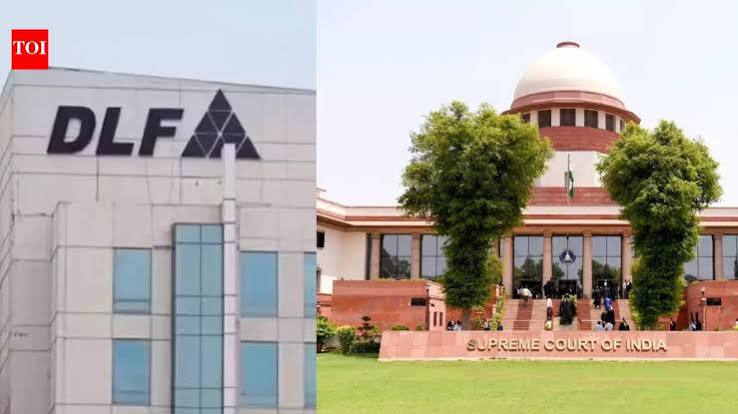
Then came the most controversial governmental act. On 24 August 2007, only two days before the scheduled pronouncement of the acquisition award, the Haryana Government decided to drop the proceedings. A further decision on 29 January 2010 closed the process. The Supreme Court, in its 12 March 2018 judgment in Rameshwar & Others v. State of Haryana, concluded that these decisions constituted a “fraud on power.”
The Court held that the exercise of state power had been guided by considerations extraneous to the statute and had been designed to enrich builders and private entities rather than to effectuate the public purpose for which acquisition had been commenced. The language was unsparing: an “unholy nexus between the governmental machinery and the builders/private entities.”
Into this environment stepped ABW and its associated companies. The Supreme Court recorded that ABW and related entities acquired more than 235 acres during the pendency of acquisition proceedings. These companies subsequently sought colonisation and group-housing licences covering approximately 190 acres. The policy position was already problematic: land purchased after acquisition proceedings had begun was being used as the foundation for development licences, something the relevant Haryana policy indicated should have been rejected. The Court did not treat this as a technical irregularity; it saw it as part of the mechanism through which the acquisition process was subverted.
It is at this point that DLF enters the documented chain with particular clarity. Two licences, Licence Nos. 283 and 284, and approximately 33.55 acres (more precisely recorded in later proceedings as 33.536 acres) were transferred by the ABW side to DLF Home Developers Pvt. Ltd. for a consideration of ₹150,95,55,301, approximately ₹150.95 crore. The Supreme Court itself examined the transaction. It noted that the underlying land had been acquired by ABW-related entities while acquisition proceedings were pending, that licences had been obtained, and that the rights had then been transferred to DLF. This was not a newspaper allegation; it appears in the judicial record. The land and rights ultimately underpinned DLF’s Express Greens project at Manesar.
The price trajectory is even more striking and demands multi-layered scrutiny. Landholders had parted with holdings at figures around ₹25 lakh per acre. Prices rose after the Section 6 declaration. Immediately before the acquisition was dropped, transactions hovered near ₹80 lakh per acre. DLF ultimately acquired the relevant land and development rights at approximately ₹4.5 crore per acre. The Supreme Court drew explicit attention to this escalation.
It observed that entities which had neither procured the lands from original landholders nor were the ultimate developers walked away with substantial sums—settlement money at rates that the Court found shocking. The Court asked whether such gains were a mere bonanza or denoted quid pro quo.
For every crore of appreciation, one must ask the human-impact questions that the numbers alone obscure. What did the original farmers receive relative to the value ultimately realised by successive private hands? How many families sold under the shadow of compulsory acquisition only to watch the same land support high-end residential development years later? When the Supreme Court later directed that affected lands vest in HUDA/HSIIDC under a deemed award dated 26 August 2007, ordinary homebuyers who had purchased apartments in good faith found themselves entangled in years of additional litigation.
The 2022 clarification proceedings recorded that DLF Express Greens comprised 1,348 constructed units, of which 1,223 had been sold, 510 sale deeds registered, 882 allottees given possession, 441 still awaiting possession, and 713 sale deeds still requiring execution. The Court protected genuine third-party purchasers, directing HSIIDC to validate titles and facilitate completion. Yet the very necessity of such protective directions underscores how thoroughly the upstream irregularities contaminated downstream rights.
In the 2022 judgment the Supreme Court made an observation about DLF that continues to resonate with particular force. It recorded the State’s argument that DLF had entered the transaction while the land remained under the cloud of the acquisition process, and stated that DLF had “chosen to dip its hands in murky waters” by acquiring the 33.536 acres and associated development rights from ABW. This is not a finding of criminal conspiracy against DLF executives.
It is, however, an unusually pointed judicial characterisation of the circumstances of entry. Why did a company of DLF’s scale and sophistication choose to acquire rights whose provenance was already contested? What due diligence was performed regarding the timing of ABW’s original purchases and the policy irregularity of post-notification licensing? The Court’s language leaves these questions hanging in the public record.
DLF’s counsel argued that the company had paid market value and that any disgorgement should fall on earlier purchasers. The Court nevertheless refused to place the DLF transaction outside the consequences of the defective process. The lands and licences remained subject to the deemed award framework, subject to protections for genuine allottees. The distinction between beneficiary and conspirator is real; it does not dissolve the interrogative force of the Court’s own description of murky waters.
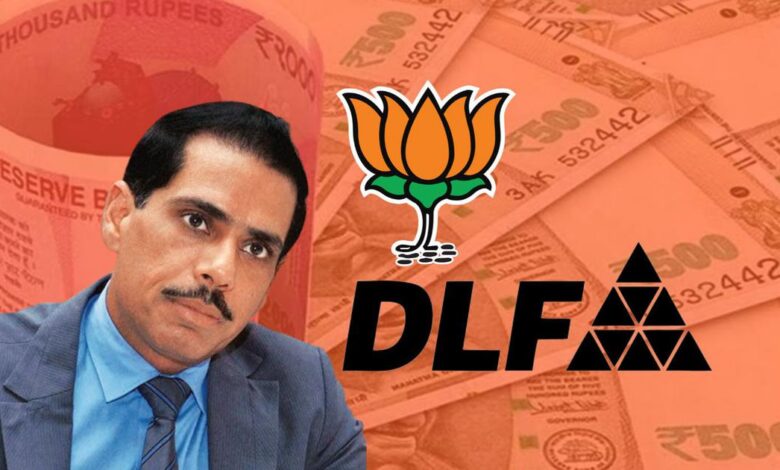
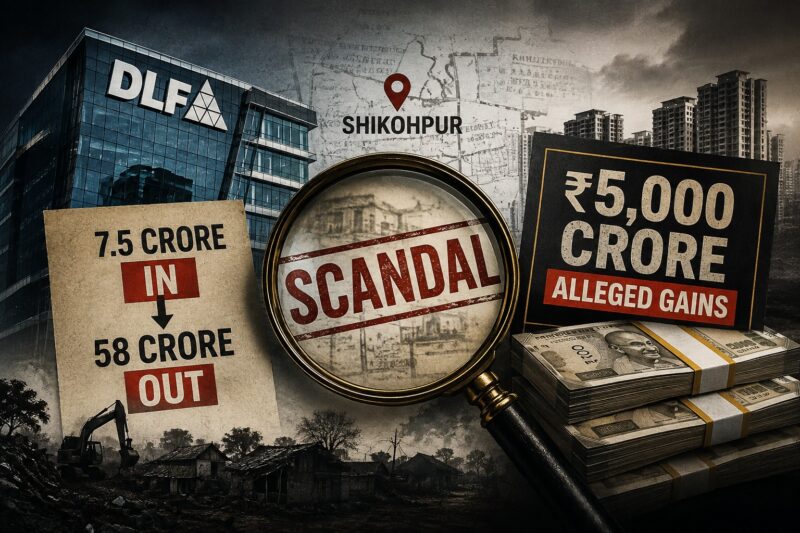
A second, distinct controversy has kept DLF under active investigative scrutiny into 2026. In February 2008, Skylight Hospitality Pvt. Ltd., a company previously associated with Robert Vadra, purchased approximately 3.5 acres in Shikohpur (now Sector 83, Gurugram) for approximately ₹7.5 crore. The land was subsequently sold to DLF for ₹58 crore. The Comptroller and Auditor General’s Haryana report recorded the difference of ₹50.50 crore.

The 2018 FIR named DLF, Robert Vadra, Bhupinder Singh Hooda and Onkareshwar Properties in connection with allegations of criminal conspiracy, cheating, forgery and corruption. This is not the core 912-acre Manesar acquisition case; it is a separate transaction involving development permissions and a dramatic valuation jump.
In April 2026 a Delhi court took cognisance of the ED’s prosecution complaint against Vadra and others under the Prevention of Money Laundering Act. The court noted that DLF was an accused in the predicate FIR but had not been arraigned in the initial PMLA complaint.
It observed allegations that DLF had paid ₹58 crore, that the payment was potentially connected with the broader transaction, that DLF had been allotted approximately 350 acres in Wazirabad, and that the FIR alleged DLF had derived approximately ₹5,000 crore in profit. The court did not pronounce guilt. It stated that investigation concerning DLF remained pending and directed or expected further investigation into DLF Universal and those responsible for any overt acts or omissions.
Subsequent developments confirmed the open status of that probe. In July 2026 the ED informed the court that DLF’s role was still under investigation. In August 2026 the agency filed another status report in sealed cover and sought additional time. As of the latest verified material, the investigation into DLF’s role in the Shikohpur transaction remains incomplete.
It would be inaccurate to claim that DLF has been cleared; it would be equally inaccurate to claim that guilt has been judicially established. The open status itself is the source of continuing concern: why does a transaction of this visibility and documentary clarity still require further time in 2026?
The third strand is the 350.715-acre Wazirabad allotment. In 2010 HSIIDC issued a Regular Letter of Allotment to DLF covering approximately 350.715 acres assembled through government acquisition (roughly 76 acres originally for HUDA and subsequently transferred, and approximately 275 acres of Panchayat land acquired for HSIIDC). DLF’s successful bid was reported at approximately ₹1,703–1,750 crore, based on ₹12,000 per square metre.
The CAG raised questions about valuation methodology and estimated a substantial opportunity loss to HSIIDC. The Punjab and Haryana High Court, examining the matter in 2014, set aside the allotment and directed a fresh international auction. The Court found the process neither transparent, fair, just nor reasonable, and held that it failed to meet the requirements of public interest or maximisation of state revenue.
The 2018 FIR concerning the Skylight transaction included allegations linking the 3.5-acre deal to the Wazirabad allotment as part of a larger quid-pro-quo arrangement. Those allegations have not been judicially established as fact. They remain relevant, however, because the 2026 Delhi court order specifically noted the Wazirabad allegations when directing further investigation into DLF’s role. Three geographically and chronologically overlapping controversies thus converge on the same corporate group without coalescing into a single adjudicated finding of criminal liability against DLF itself.
What the record does establish is clear. DLF Home Developers acquired approximately 33.5 acres and two development licences from the ABW group for ₹150.95 crore; the underlying land had been purchased during pending acquisition proceedings; the Supreme Court examined the transaction, criticised the circumstances of entry with the phrase “murky waters,” and subjected the project to the consequences of the deemed award while protecting genuine homebuyers.
A separate 3.5-acre transaction generated a ₹50.5 crore differential between Skylight’s purchase price and DLF’s payment, remains under active ED investigation, and prompted a court to call for thorough examination of DLF’s role. A third allotment of more than 350 acres was set aside by the High Court after questions of process and valuation. No reliable primary material establishes that DLF’s founders, Chaudhary Raghvendra Singh, K.P. Singh or Rajiv Singh, were personally charged or convicted in the core Manesar acquisition conspiracy. The connection is strongest at the corporate and transactional level.
The critical distinction between beneficiary and conspirator must be maintained. Government decision-makers who initiated, administered or abandoned the acquisition occupy one category. Intermediary purchasers who bought from farmers under the shadow of notification occupy another. ABW and associated entities that accumulated a substantial land bank and obtained licences form a third. Subsequent developers who purchased rights from earlier participants form a fourth.
The Supreme Court’s 2018 finding of fraud on power attaches primarily to the governmental process. It does not automatically convert every downstream purchaser into a criminal co-conspirator. Yet the same judgment’s language about unnatural gains, middlemen, and murky waters, combined with the still-open ED investigation into the Skylight transaction, prevents any comfortable conclusion that all questions have been answered.
The human cost continues to demand attention. Farmers who sold under the threat of acquisition received fractions of the values later realised. Homebuyers in Express Greens waited years for possession or title validation after the Supreme Court intervened. Public resources were diverted into prolonged litigation rather than into the industrial township originally promised.
Each rupee of the ₹150.95 crore paid by DLF, each crore of the ₹50.5 crore Skylight differential, and each element of the Wazirabad bid invites the same evaluative questions: what knowledge accompanied the purchase, what regulatory atmosphere facilitated the value creation, and why has the full mapping of intent and advantage across the chain remained incomplete?
As of early October 2026 the most accurate status assessment is that the core Manesar acquisition process has been judicially condemned as fraud on power, the ABW–DLF Express Greens transaction has been examined and subjected to restitutionary consequences while protecting third-party purchasers, the TDI intermediary role is under active ED scrutiny, and DLF’s role in the separate Skylight matter remains under investigation with the agency having sought further time.
The real investigative questions are therefore not crude labels but precise ones: How did land acquired under the shadow of acquisition proceedings ultimately reach DLF, what did DLF know of the circumstances of ABW’s acquisition and licensing, why was ₹150.95 crore paid for those specific rights, and what advantage, financial or regulatory, ultimately accrued? And why, in 2026, does the Enforcement Directorate still require additional time to complete its examination of DLF’s role in the Shikohpur transaction after a court has specifically directed thorough investigation?
Those questions connect the historical record to the contemporary probes without collapsing distinct legal matters into a single undifferentiated scandal. They keep the focus where it belongs: on the integrity of public power, the protection of ordinary landowners and homebuyers, and the still-unfinished task of determining how thoroughly downstream corporate actors examined, or ignored, the murky provenance of the rights they chose to acquire.