Loan Nahi, Samjho ‘Vipatti’ Hai: How FlexiLoans’ “Approved” SMS Trap Customers And Threaten Their CIBIL
FlexiLoans markets itself with the cheerful line “Loan Nahi, Samjho Tarakki Hai.” For many recipients of its unsolicited SMS and WhatsApp messages, the reality feels closer to “Loan Nahi, Samjho Vipatti Hai.” Public complaints, Reddit posts and Google reviews describe a repeating sequence: a sudden text declaring a large loan “approved,” a push to click and submit Aadhaar and PAN, a quick rejection, and later the discovery of hard credit enquiries that can weaken a CIBIL score. The pattern raises serious questions about consent, transparency and whether an RBI-registered NBFC is prioritising clicks over the fair treatment of customers.

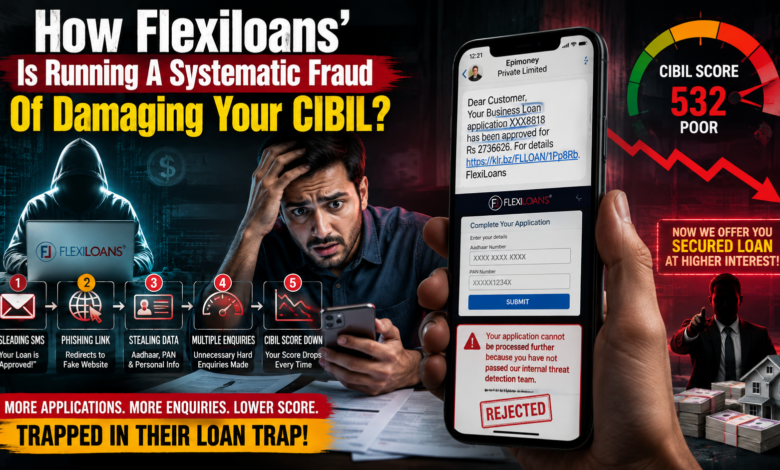
Loan Nahi, Samjho ‘Vipatti’ Hai: The FlexiLoans SMS Pattern That Turns Hope Into Credit Trouble
FlexiLoans sells a simple promise. Its public messaging presents business credit as progress, mobility and upward movement. The tagline “Loan Nahi, Samjho Tarakki Hai” frames borrowing as advancement rather than burden. Yet a growing body of customer accounts, Google reviews and forum posts describe a very different experience. For these people the first contact is not an invitation to grow. It is an unsolicited message that declares a substantial loan already approved. What follows, according to the complaints, is pressure to share identity documents, a swift rejection, and the lingering possibility that their credit score has been damaged in the process. The cheerful slogan begins to sound like irony. Loan nahi, samjho vipatti hai.
The sequence described across multiple public sources is strikingly consistent. A customer receives an SMS or WhatsApp text stating that a loan application has been approved for a specific large amount. One widely cited example involved a figure of approximately ₹27 lakh. The recipient had not applied recently. In some cases an older application from years earlier had already been rejected.
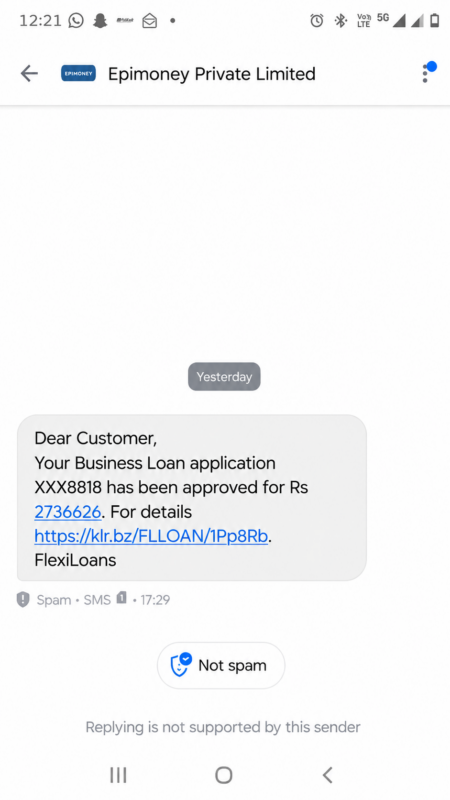
The message still arrives with the authority of a final decision. The customer is invited to click a link and complete formalities. Aadhaar and PAN are requested.
What makes the pattern more troubling is the alleged intermediate step. Once the customer submits identity documents, a formal application process can generate a hard credit enquiry. TransUnion CIBIL has noted that multiple enquiries in a short period can negatively affect a score.
Customers who respond to several similar messages, or who are pulled into repeated applications, may find their credit reports marked by recent searches they did not consciously initiate for loans they never intended to take. The original unsolicited text has set in motion a chain that leaves their standing weaker than before. For someone already operating near the edge of creditworthiness, even a modest drop can determine whether a future genuine loan is available and at what cost.
A further allegation appears in some accounts. After the rejection, the same customer is later approached with offers of secured or collateral-backed products, often at higher interest rates. The narrative presented by complainants is that the first “approved” message functioned as a high-intent lead generator. Data and a credit profile are captured. When the unsecured product is declined, the ecosystem is positioned to offer a more expensive alternative. Whether this second stage is centrally directed or the product of loosely supervised partner channels remains a matter of dispute. What the public complaints establish is that the full sequence — exciting approval claim, document submission, rejection, possible later higher-cost offer — is being experienced by multiple people and described in similar language.
The regulatory problems begin before the link is even clicked. Under the joint Digital Consent Acquisition framework of the Reserve Bank of India and the Telecom Regulatory Authority of India, promotional messages from financial entities require explicit, verifiable and revocable consent. A customer cannot be assumed to have given permanent marketing permission because of an old, rejected application or a generic terms-and-conditions checkbox signed years earlier. Every marketing communication is supposed to rest on specific consent that the customer can review and withdraw. When “loan approved” texts are broadcast without that consent, the communication sits outside the framework.
The violation becomes sharper when the recipient’s number is registered on the National Customer Preference Register, commonly known as DND. TRAI’s commercial communication regulations prohibit promotional SMS and calls to DND-registered numbers. Marketing credit products to a protected number is a direct breach and attracts corporate penalties on paper. Yet customers continue to report receiving FlexiLoans messages on numbers they deliberately registered for protection. The system designed to shield citizens from commercial spam is, in these accounts, being bypassed.
The content of the messages compounds the difficulty. The RBI Fair Practices Code requires transparency and honesty in the offering of financial products. A text that announces a loan as “approved” without a current application, without completed KYC, and without a formal underwriting decision creates a false impression of legitimacy and urgency. Regulators have previously flagged such “pre-approved” or “instantly approved” formats as deceptive bait. The recipient is pushed to click, share sensitive data, or enter a funnel they never sought. For many ordinary people the sudden appearance of an approval message triggers anxiety, the fear that personal information has already been compromised, or the temptation to engage out of confusion.
Technical routing rules add another layer. Regulated institutions are directed to separate marketing communications from transactional ones. Promotional messages are supposed to use designated number series. When unsolicited advertising arrives through ordinary mobile numbers or unregistered headers, accountability is diluted and reporting becomes harder. Customers who try to complain find the trail less clear than it should be.
FlexiLoans operates as the brand of an RBI-registered Non-Banking Financial Company. That status brings obligations, not exemptions. Registration does not grant permission to ignore consent requirements, DND registrations or the Fair Practices Code. When an NBFC sends unsolicited “loan approved” messages, it is not innovating in customer outreach. It is operating in tension with the rules written to prevent exactly this behaviour. The company maintains formal grievance channels and publishes policy documents. Those mechanisms exist. The continued volume of public complaints suggests that the operational reality has not fully closed the gap between policy and practice.
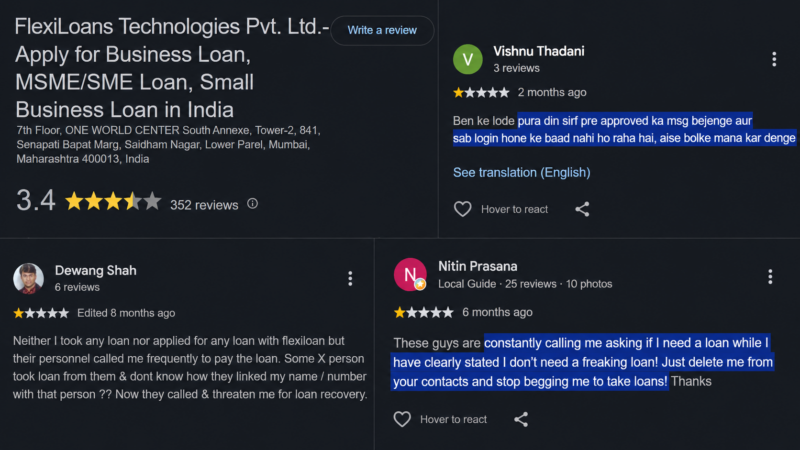
The human cost described in the reviews and forum posts is concrete. A person who never sought a loan finds the phone lighting up with messages. They share Aadhaar and PAN under the belief that money is already sanctioned. Their credit score may drop. Future borrowing becomes more expensive or more difficult. The original unsolicited message has set in motion a chain that leaves them worse off than before. When the sequence is repeated across large numbers of people, it ceases to look like isolated over-enthusiasm and begins to look like a repeatable process that extracts value from the customer’s data and attention while transferring risk and cost onto the customer’s credit profile.
Digital lending was promoted as a way to expand access to credit for small businesses and individuals who have been underserved by traditional banks. That purpose is undermined when the first contact is a message that creates a false sense of certainty, extracts identity data, and leaves the credit profile damaged. Trust is a scarce resource. Every time a regulated entity uses language that overstates the status of an application in order to secure a click, that trust is eroded. Customers who feel manipulated become less willing to engage with legitimate digital credit channels. The entire sector pays a reputational price.
The slogan “Loan Nahi, Samjho Tarakki Hai” presents credit as progress. The experiences documented in public complaints suggest a different translation for many recipients. Loan nahi, samjho vipatti hai. The message that was supposed to signal opportunity instead becomes the starting point of a process that can leave the customer’s credit standing weaker and their confidence in digital lending lower. Until the language of “approved” is reserved for genuine credit decisions, until consent is treated as a real requirement rather than a formality, and until the link between unsolicited messages and hard enquiries is tightly controlled, customers will continue to experience these texts as pressure rather than service.
The deeper issue is one of incentives. Aggressive digital acquisition rewards messages that maximise clicks. “Your loan is approved” converts more effectively than “you may be eligible.” Once the customer is inside the funnel, the commercial logic of capturing data and exploring alternative products is strong. Regulatory rules exist to constrain that logic. When customer after customer reports that those constraints are being stretched or ignored, the credibility of the channel suffers. An RBI-registered company that allows or runs a process experienced by so many as misleading and damaging is not merely marketing aggressively. It is, in the eyes of those who have lived through it, turning the promise of tarakki into the reality of vipatti.
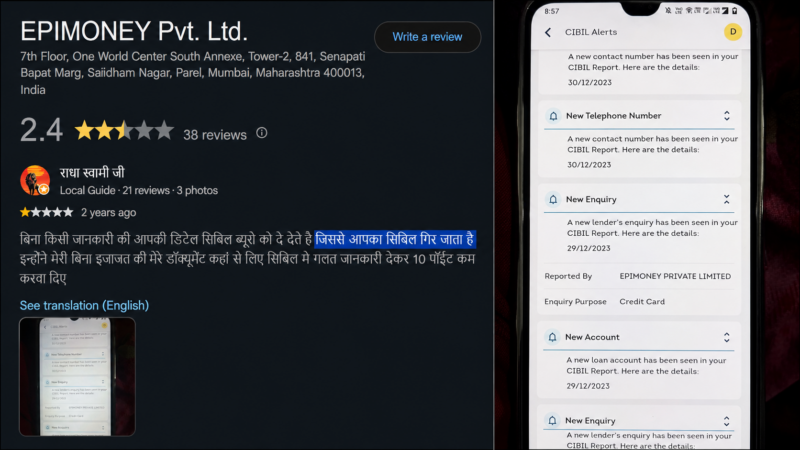
The public complaints, Reddit threads and Google reviews are enough to show how people are irritated enough. They do constitute a clear and consistent pattern of customer experience. That pattern deserves serious attention from the company, from its compliance function, and from the regulators charged with protecting consumers in the digital lending market. Until the practice of sending “approved” messages without genuine underwriting and without clear consent is stopped, the gap between the slogan and the lived experience will remain wide — and the customers caught in the middle will continue to pay the price.