Misplaced Court Files, Misplaced Trust: Kotak Mahindra Bank’s Latest Act of Shameless Negligence
Customer Has Filed A Criminal Complaint With Court In Dwarka As Well As A Civil Defamation Case Against Kotak Bank & Kotak Bank's Operation Manager Nisha Dayal

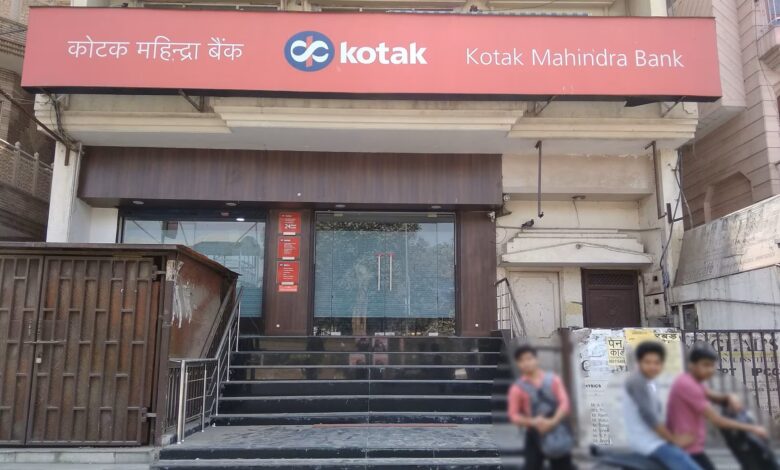
In the hallowed corridors of the Dwarka District Court in Delhi, a customer named Nitin Naresh has dragged Kotak Mahindra Bank and its Branch Operations Manager, Ms. Nisha Dayal, into the dock. The allegations are not minor. They are serious, disturbing, and deeply personal — harassment, torture, physical and verbal abuse, and the most cowardly threat of all: threatening the customer with a fake sexual harassment case if he dared to raise his voice.
The customer has sought a modest ₹5 lakh in damages for the mental agony, humiliation, and trauma inflicted upon him. This is not some abstract corporate dispute. This is a real human being who walked into a Kotak branch expecting basic dignity and walked out allegedly traumatised.
But the real insult to injury is not the alleged abuse itself. It is what happened next.
The bank’s legal team failed to file the Written Statement within the prescribed time. They were 34 days late. When they finally crawled into court with a condonation of delay application, they offered a defence so laughably pathetic that it would embarrass even a roadside paan shop owner.
Their reason?
“The official case files were misplaced and lost. The bank allegedly misplaced the office file containing documents relating to the suit.”
Let that sink in.
A bank that manages lakhs of crores of public money, claims to be one of India’s largest and most “trusted” private banks, and boasts of world-class digital systems… lost its own court case file.
This is not a joke. This is the actual excuse placed before a court of law.
The Questions That Kotak Must Answer
If Kotak Mahindra Bank can misplace its own court documents related to a serious civil suit involving allegations of abuse by its own manager, then answer these questions honestly:
- Can a bank that positions itself as a “premier” institution really expect customers to believe such a vague, lazy, and insulting excuse? “We lost the file” — is this the standard of professionalism we are supposed to accept from a bank that handles our life savings?
- If Kotak can lose its own critical legal documents, what guarantee does any customer have that the bank will safeguard their belongings, documents, jewellery, or important papers kept in lockers or safe deposit boxes?
- If the bank cannot even keep track of court papers related to a ₹5 lakh damages claim, how on earth can customers trust it with their hard-earned money sitting in savings accounts, fixed deposits, or mutual funds?
- When the bank itself admits it “misplaced” official records, isn’t this textbook negligence? And if this is negligence at the highest level of legal compliance, why should any customer believe their money is safe from internal fraud, mismanagement, or simple carelessness?
- Shouldn’t the employees responsible for “losing” these court files be immediately suspended or terminated? Or does Kotak believe that losing critical legal documents is just another “operational glitch” that deserves a promotion instead of punishment?
- Isn’t Kotak Mahindra Bank ashamed? Ashamed that in 2026, while claiming to be a modern, tech-driven bank, its legal department is still operating like a chaotic government office from the 1980s where files routinely go missing?
- Shouldn’t the Reserve Bank of India step in and ask the most basic question: Why should the banking licence of an institution that cannot even protect its own court records be allowed to continue without strictest scrutiny?
These are not rhetorical questions. These are questions that every existing and prospective Kotak customer should be asking right now.
This Is Not an Isolated “One-Off” Mistake
The “lost file” excuse is not a one-time embarrassment. It is part of a recurring pattern of negligence, arrogance, and systemic failure at Kotak Mahindra Bank.
Remember this?
In April 2024, the Reserve Bank of India was forced to take the extraordinary step of banning Kotak Mahindra Bank from onboarding new customers through its online and mobile banking channels. The bank was also barred from issuing fresh credit cards. The reason? Serious deficiencies in IT systems, risk management, data security, KYC processes, and anti-money laundering compliance. The RBI did not take this step lightly. It was a damning indictment of Kotak’s governance.
And yet, the bank carries on as if nothing happened.
Then there is the Panchkula Fixed Deposit scam — a massive ₹145–160 crore fraud involving the Panchkula Municipal Corporation’s funds at Kotak’s Panchkula branch. Fake fixed deposits were allegedly created using forged documents. Funds were siphoned off through unauthorised accounts. The Enforcement Directorate arrested Pushpinder Singh, a former Deputy Vice President of Kotak, calling him the alleged mastermind. Another former Relationship Manager, Dileep Kumar Raghav, was also arrested earlier. The Haryana Chief Minister publicly called it a “massive scam” and declared that “no one will be spared”.
So while one branch was busy “misplacing” court files in Delhi, another branch in Haryana was allegedly busy creating fake government fixed deposits worth hundreds of crores.
And who can forget the Ashneer Grover incident?
In 2022, BharatPe co-founder Ashneer Grover was caught on a leaked audio call allegedly abusing and threatening a Kotak Mahindra Bank employee over a financing dispute related to Nykaa’s IPO. The audio went viral. Instead of owning up to whatever service failure triggered such extreme frustration from a high-profile customer, Kotak chose to play the victim and threatened legal action against Grover.
The incident exposed something deeper: Kotak’s customer service and internal processes had deteriorated so badly that even powerful, well-connected individuals were driven to public outbursts of rage.
A Bank That Has Made a Habit of Letting Customers Down
Kotak Mahindra Bank has consistently featured among the banks reporting very high numbers of fraud cases in RBI data over the years. Customers have repeatedly complained about unauthorised transactions, poor grievance redressal, misleading product sales, and arrogant branch behaviour.
Time and again, the bank has shown a disturbing tendency to:
- Blame the customer (“You shared OTP”)
- Hide behind vague excuses
- Lose critical documents when accountability is demanded
- Allow serious frauds to fester in its branches
And now, in the Dwarka court, it has sunk to a new low — telling a judge that it lost the court file related to allegations of abuse by its own manager.
The Bottom Line
Kotak Mahindra Bank wants to be treated like a responsible, professional institution. But its actions scream otherwise.
When a bank loses its own court documents, it is not just an administrative lapse. It is a direct reflection of its internal culture — a culture of carelessness, lack of accountability, and contempt for processes.
If Kotak cannot be trusted to keep track of papers related to a small civil suit, how can millions of ordinary Indians trust it with their life savings, their documents, their gold, or their financial future?
The “misplaced file” excuse is not just pathetic. It is dangerous.
It tells every customer exactly how little Kotak values accountability.
The Reserve Bank of India must take note. Customers must take note. And Kotak Mahindra Bank must be made to answer — not with more excuses, but with real consequences.
Because when a bank starts losing its own court files, it has already lost something far more important: the trust of the people it claims to serve.
And no amount of slick advertising can ever bring that back.