The Ram Temple Donation Scandal When Those Entrusted To Serve God Turn Into Thieves
Every rupee dropped into a temple donation box carries something far more valuable than its monetary worth - it carries faith. That is precisely why the alleged embezzlement of devotees' offerings at the Ram Temple has resonated far beyond Ayodhya. The controversy isn't just about missing money; it strikes at the heart of faith itself.


For millions of Hindus, the Ram Temple in Ayodhya represents far more than a place of worship. It is the culmination of decades of legal battles, political movements and deeply held religious faith. Every day, tens of thousands of devotees walk through its gates, many leaving behind donations in the form of cash, gold, silver and jewellery – not merely as offerings, but as an act of devotion.
It is precisely this faith that now finds itself at the centre of an uncomfortable controversy.
The Shri Ram Janmabhoomi Teerth Kshetra Trust, which manages the temple, is facing allegations that donations worth more than ₹7 crore may have been siphoned off by individuals involved in handling temple offerings.
Following an inquiry by a Special Investigation Team (SIT) constituted by the Uttar Pradesh government, Ayodhya Police registered an FIR against eight individuals, all of whom have since been arrested. Investigators are now tracing the complete money trail, examining CCTV footage, financial records and banking transactions, while also probing whether bank officials may have played any role in facilitating or overlooking the alleged irregularities.
The allegations first surfaced after former accounts supervisor Mahipal Singh raised concerns over the handling of cash donations and precious offerings. The issue soon snowballed into a political flashpoint, with opposition leaders demanding an independent investigation, petitions being filed before the courts, and calls growing louder for the probe to be handed over to the Central Bureau of Investigation (CBI). Reports also suggest that local lawyers in Ayodhya have refused to represent the accused, reflecting the public anger the allegations have generated.
The temple trust, however, has categorically denied any wrongdoing. It maintains that the donation counting process is conducted under strict supervision, involving trustees, staff and officials from the State Bank of India, with regular audits and no discrepancies having been detected so far. The SIT’s investigation is still underway, and no court has established guilt against any of the accused.
Yet, irrespective of how the investigation eventually concludes, the controversy has already reignited a much larger debate.
When one of India’s most sacred religious institutions handles hundreds of crores in public donations every year, can faith alone be enough to safeguard those entrusted with managing it, or must transparency and oversight become just as sacred?

Why The Ram Temple Makes This Different
India has witnessed financial controversies involving religious institutions before. But the allegations surrounding the Ram Temple have struck a particularly sensitive nerve because this is no ordinary shrine.
The Ram Temple is arguably India’s most significant religious project in recent decades. Built at a site that remained at the centre of legal, political and social debate for decades, its inauguration in January 2024 marked the culmination of one of independent India’s most consequential movements. Today, it stands not only as a place of worship but also as a powerful national symbol for millions of devotees.
Its scale is equally extraordinary. The temple attracts an estimated five crore visitors annually, with nearly 70,000 to 80,000 devotees visiting on an average day and numbers swelling manifold during festivals. Along with this massive footfall comes an equally staggering flow of donations – cash, jewellery, gold, silver and other offerings made by devotees who believe they are contributing to a sacred cause.
That sheer volume of wealth inevitably transforms the challenges of managing the institution. This is no longer just about collecting offerings from a donation box. It involves counting, recording, transporting, depositing, auditing and safeguarding assets worth hundreds of crores every year. The systems required begin to resemble those of large corporations, financial institutions or public trusts rather than a traditional place of worship.
That is precisely why the current controversy has resonated so widely. The issue extends far beyond the alleged disappearance of money.
For devotees, every rupee dropped into a donation box is an act of faith. Any allegation that those offerings may have been misused (even before the facts are fully established) raises uncomfortable questions about whether institutions entrusted with enormous public devotion have evolved their governance mechanisms at the same pace as their growing wealth.
It is also why the outcome of the investigation matters. If the allegations are proven, they would represent a serious breach of the trust reposed by millions of devotees. If they are disproved, a transparent investigation will be equally important in restoring confidence. Either way, the episode has once again turned the spotlight on a question that extends well beyond Ayodhya: how should India’s wealthiest religious institutions safeguard not just their treasures, but the faith of the people who donate them?
Ayodhya Is Not The First Temple To Face Questions Over Its Finances
While the allegations surrounding the Ram Temple have dominated headlines, they are far from the first instance where one of India’s prominent religious institutions has found itself under scrutiny over the handling of money, assets or donations. Over the years, several temples have faced allegations of financial irregularities, prompting investigations, court intervention and, in some cases, sweeping administrative reforms.
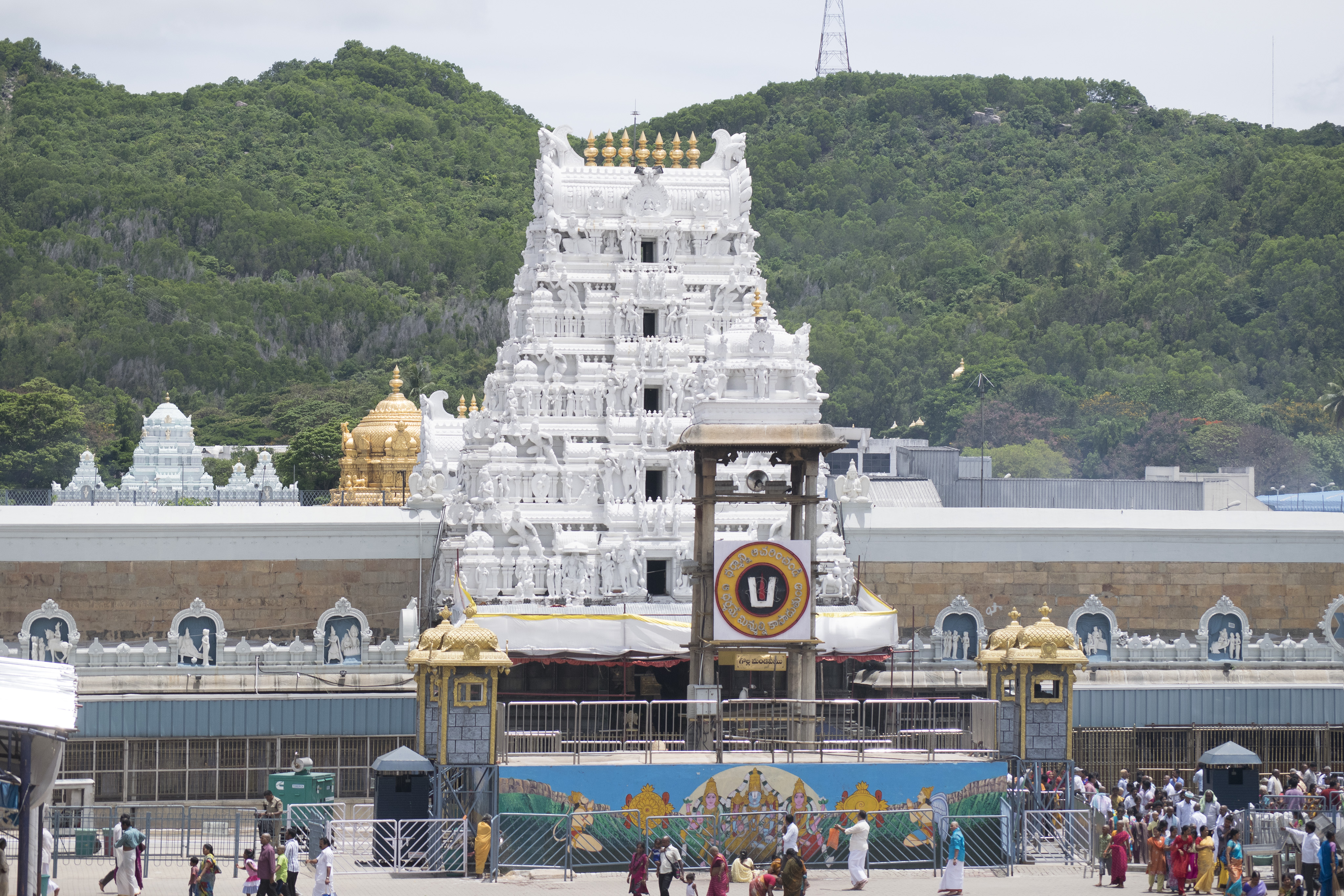
One of the most high-profile examples was the Tirumala Tirupati Devasthanams (TTD), which manages the famous Tirupati Balaji Temple.
Over the years, the temple has witnessed multiple controversies ranging from allegations of missing gold ornaments and irregularities in procurement to questions over the management of donations and trust funds. While various internal inquiries, vigilance investigations and audits were carried out, many of the allegations either remained unsubstantiated or resulted in administrative action rather than criminal convictions. Even so, the controversies led to tighter oversight, stronger inventory systems and greater public scrutiny of one of the world’s richest temple trusts.
Another landmark case involved Kerala’s Padmanabhaswamy Temple, though the controversy was less about embezzlement and more about control over one of the world’s greatest religious treasures. Following the discovery of priceless gold, jewellery and artefacts hidden inside the temple’s vaults, a prolonged legal battle reached the Supreme Court. In 2020, the apex court restored the temple’s administration to the Travancore royal family but also ordered the creation of administrative and advisory committees to ensure greater transparency and oversight in the management of its immense wealth.
The Shirdi Sai Baba Temple has also periodically found itself at the centre of controversy. Over the years, allegations relating to procurement contracts, financial management and administrative decisions have triggered government inquiries and audits. While these controversies generated considerable public attention, they largely resulted in departmental reviews and governance reforms rather than major criminal convictions.
Similarly, Odisha’s Jagannath Temple has repeatedly witnessed controversies over the management of temple funds, missing valuables, land records and administrative lapses. Several committees and state-led inquiries have examined these issues over the years, leading to recommendations aimed at strengthening governance, improving record-keeping and modernising the administration of one of India’s most revered shrines.
Each of these cases was different in its facts and legal outcome. Some allegations were disproved, others led to reforms, while a few remain subjects of continuing debate. Yet they all point towards the same reality. As India’s major temples have evolved into institutions managing assets worth thousands of crores, public expectations have evolved alongside them. Devotees today seek not only spiritual sanctity but also confidence that every offering entrusted in faith is being managed with integrity, transparency and the highest standards of governance.

When Temples Become Financial Powerhouses, Faith Alone Is No Longer Enough
For centuries, temples have depended on the faith of devotees. Today, many of India’s largest religious institutions depend on something else as well – robust financial management.
The country’s wealthiest temples collectively receive thousands of crores of rupees every year through cash donations, gold, silver, jewellery, land endowments and other offerings. Many also run hospitals, educational institutions, charitable trusts, guest houses and large-scale community kitchens, making them custodians of vast financial and physical assets.
In many respects, they function much like large public institutions, handling budgets that rival those of corporations and even smaller municipalities.
That reality brings with it a different set of responsibilities. Managing such enormous wealth requires systems that minimise human discretion at every stage—from collecting and counting donations to recording inventories, transporting valuables and depositing funds. While many temples have already adopted CCTV surveillance, digital accounting, independent audits and bank-assisted counting processes, recent controversies show that these safeguards may not always be sufficient or uniformly implemented.
Perhaps the biggest lesson from Ayodhya and the controversies that preceded it is that transparency should not be viewed as a response to scandal but as a permanent safeguard. Independent audits, real-time digital record keeping, periodic public disclosures and stronger oversight mechanisms are no longer corporate best practices – they are increasingly becoming essential for institutions that manage public wealth created entirely through public faith.
Ultimately, greater transparency is not about questioning religion or doubting devotees. It is about protecting both. Every rupee placed in a donation box is accompanied by trust, and preserving that trust is as important as protecting the temple itself. In an era where India’s richest religious institutions oversee assets running into thousands of crores, good governance is no longer optional – it is fundamental to ensuring that faith remains above suspicion.

The Last Bit,
Whether the allegations surrounding the Ram Temple ultimately stand the test of law or are disproved through the ongoing investigation, the episode has already served a larger purpose. It has forced an uncomfortable but necessary conversation about the governance of India’s richest religious institutions.
Faith may inspire devotees to donate without hesitation, but institutions entrusted with that faith cannot rely on devotion alone. The larger the donations become, the greater the responsibility to ensure that every rupee, every piece of jewellery and every offering is accounted for with complete transparency. After all, what devotees place in a donation box is not merely money – it is trust.
Perhaps that is the biggest lesson from Ayodhya. Temples have always been centres of spirituality, culture and community. Today, many are also custodians of enormous public wealth. Preserving their sanctity, therefore, is no longer just about safeguarding idols and traditions – it is equally about safeguarding integrity. Because when faith is shaken, restoring it is often far more difficult than recovering any amount of money