When The Rains Come, India Falls Apart. Why Does The World’s Fastest-Growing Major Economy Keep Failing The Same Test Every Year?
India is building faster than ever before. Expressways, metro networks, highways and bridges have become symbols of a nation racing towards its developed-economy ambitions. But then the monsoon arrives. Almost overnight, roads cave in, bridges crack, sinkholes appear and cities flood. The headlines fade, the promises return, and life moves on. But for the families who lose loved ones, those left nursing injuries, paying mounting medical bills or rebuilding lives after preventable accidents, the season's cost is measured far beyond damaged roads and waterlogged streets

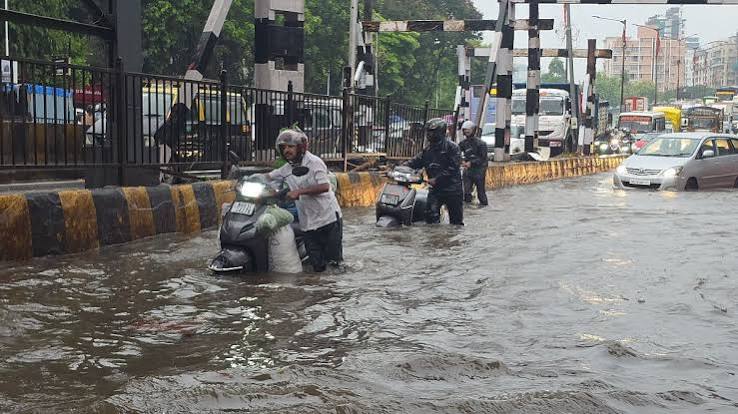
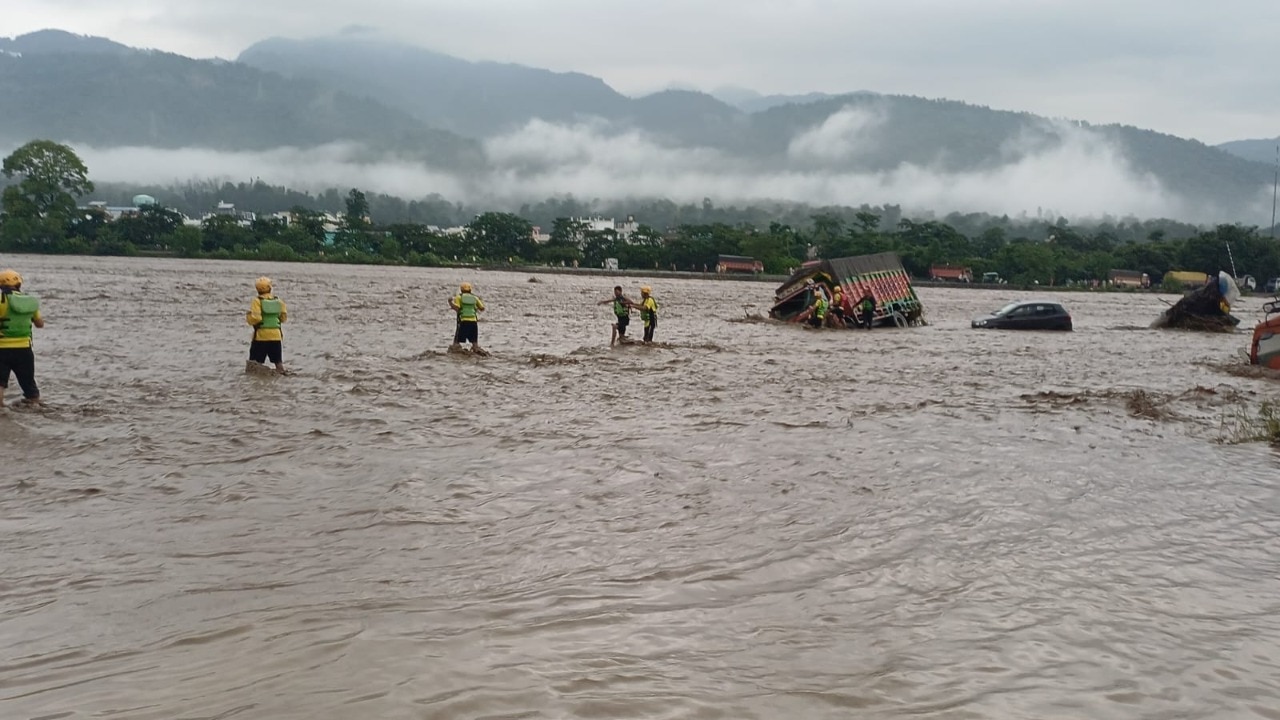
It has become one of the most predictable signs of the Indian monsoon. Before the rains have properly settled in, social media begins filling up with videos of roads caving in, vehicles disappearing into massive sinkholes, flooded streets turning into death traps, and commuters risking their lives simply to get home. Different cities, different governments, different civic bodies – but somehow, the same story unfolds with remarkable consistency every single year.
This monsoon has been no different.
—In Delhi, a section of the newly inaugurated Delhi-Dehradun Expressway (one of the country’s flagship infrastructure projects) caved in after heavy rainfall, forcing the National Highways Authority of India (NHAI) to suspend officials and issue notices to the contractor.
—In Surat, a newly built road suddenly gave way, swallowing a water tanker and raising uncomfortable questions about the quality of construction. Across Nagpur, the season’s first major showers exposed dug-up roads, unfinished infrastructure works and hazardous stretches that quickly became dangerous for motorists.
The list only grows longer. Ludhiana witnessed roads collapsing after heavy rain, while several towns across Saurashtra were left struggling with severe waterlogging and infrastructure failures. In Mumbai, an uncovered manhole claimed another life after a pedestrian fell through floodwaters that had concealed the opening – a tragedy that once again led to suspensions, official inquiries and promises of accountability only after disaster had struck.
None of these incidents occurred in isolation. They happened hundreds of kilometres apart, under different administrations, involving different contractors and agencies. Yet they all pointed to the same unsettling reality: the moment the monsoon arrives, India’s infrastructure begins to reveal just how fragile it really is.
Perhaps the most troubling part isn’t that these incidents occurred. It’s that almost every one of them was predictable. Roads that flood every year flooded again. Poor drainage once again gave way under heavy rain. Freshly built roads cracked, cave-ins appeared without warning, and civic authorities found themselves reacting to crises they have had months (if not years) to prepare for. The monsoon may have been the trigger, but the warning signs were always there.
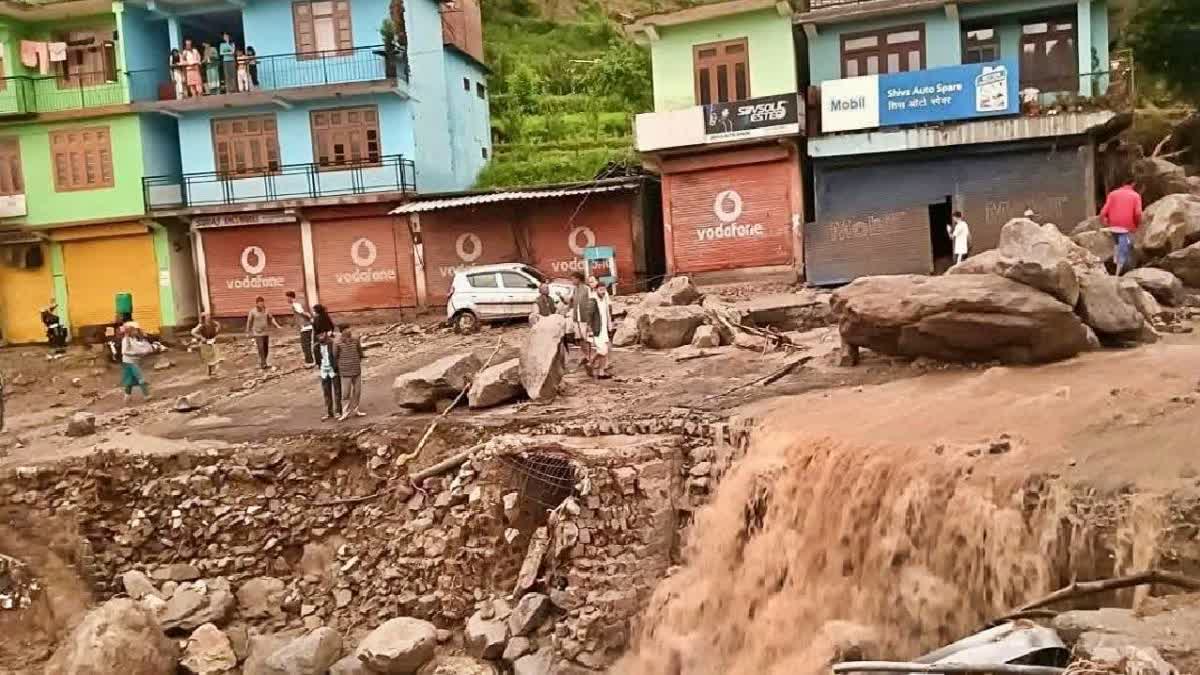
Every Year, The Same Story
If there is one area that has come to define India’s development story over the past decade, it is infrastructure.
Every Union Budget proudly announces bigger allocations for roads, highways, bridges, tunnels, railways and urban development.
The latest Budget continued that trend, with the government earmarking a record ₹12.2 lakh crore towards capital expenditure, including around ₹3.1 lakh crore for the Ministry of Road Transport and Highways. Simply put infrastructure is expected to power India’s journey towards becoming a developed nation.
And to be fair, the country has much to show for it. India has built some of the world’s longest expressways, expanded its national highway network at a remarkable pace, modernised airports, commissioned metro rail systems across multiple cities and dramatically improved connectivity in many parts of the country. These are tangible achievements that have transformed travel and logistics.
Yet, every monsoon, another side of that story emerges.
The first heavy spell of rain doesn’t just flood roads; it exposes them. Freshly laid stretches begin to crack, newly inaugurated roads develop cave-ins, bridges require emergency inspections, drains overflow, and entire neighbourhoods come to a standstill. It is difficult to ignore the contradiction.
If India is investing record sums into building infrastructure, why do so many citizens still find themselves navigating roads that become unsafe after a few days of rain?
Perhaps the question we should be asking is not whether India is building enough, but whether it is maintaining enough.
Infrastructure is not a one-time achievement. A highway that is inaugurated with fanfare today requires regular inspection tomorrow. Stormwater drains must be desilted before the rains arrive, not after streets are submerged. Bridges need periodic structural audits. Roads need preventive maintenance long before potholes appear. Without that continuous upkeep, even the most ambitious infrastructure projects eventually begin to deteriorate.
That brings us to more uncomfortable questions.
- Why do the same roads seem to be repaired year after year?
- Why do cities continue to float fresh tenders for stretches that were resurfaced only a few monsoons ago?
- Why do utility agencies repeatedly dig up newly laid roads, only for them to be patched back together and fail again?
In city after city, citizens have grown accustomed to seeing the same roads reconstructed, the same contractors back at work and the same promises of “permanent solutions” before the next rainy season arrives.
There may be perfectly legitimate reasons in some cases – rising traffic loads, ageing infrastructure, utility upgrades or extreme weather. But the recurring pattern also raises broader questions about planning, construction quality, project supervision and the effectiveness of public spending.
Are projects being designed with durability in mind? Are quality checks rigorous enough? Are contractors being evaluated on long-term performance rather than simply completing a project? And when infrastructure fails prematurely, who is ultimately held responsible?
Because the monsoon is neither unexpected nor unprecedented. It arrives every year with remarkable regularity. What should surprise us is not the rain itself, but how frequently it continues to expose the same weaknesses, in the same places, despite years of experience, growing budgets and repeated assurances that the lessons of previous monsoons have been learned.
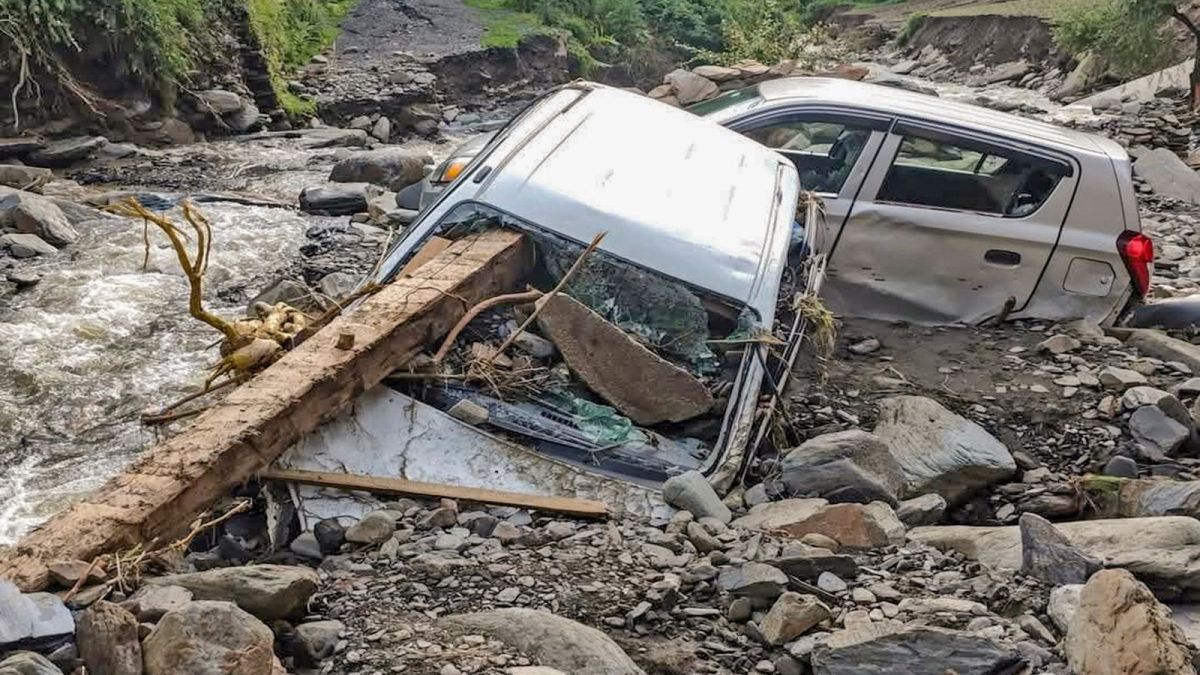
Citizens Pay The Bill. But Do They Get The Infrastructure They Were Promised?
For most Indians, infrastructure isn’t an abstract policy discussion. It is the road they drive to work every morning, the bridge they cross to take their children to school, the pavement they walk on, and the drain they hope won’t overflow when it rains. It is woven into everyday life so seamlessly that most people only notice it when it fails.
Yet, every year, citizens continue to pay for infrastructure long before they ever use it
Citizens pay income tax, pay GST. They pay road tax while purchasing vehicles, registration charges, municipal taxes and, in many cities, property tax. Every time they refuel their vehicles, a significant portion of the price goes towards taxes and duties. They pay tolls to use expressways and highways that promise faster, safer and better connectivity. In other words, Indians are not merely users of public infrastructure – they are among its biggest financiers.
Naturally, that comes with an expectation. Not of perfection, but of reliability.
A commuter should not have to wonder whether a freshly built road will survive the season. Parents should not fear that floodwater is concealing an open manhole outside their child’s school. A motorcyclist should not have to navigate roads where a pothole hidden beneath muddy water could prove fatal. These are not extraordinary expectations. They are among the most basic promises that any public infrastructure system is meant to fulfil.
And yet, every monsoon, those expectations are tested.
Vehicles are damaged by crater-sized potholes. Businesses lose valuable working hours as traffic grinds to a halt. Ambulances struggle through waterlogged streets. Families spend thousands repairing suspension systems and tyres after roads deteriorate. Some are forced to bear a far greater cost – the loss of a loved one in an accident that may have been entirely preventable.
Perhaps the greatest frustration is that these failures are rarely viewed through the lens of public service. A collapsed road is often dismissed as an inconvenience. A flooded street becomes another viral video. A cave-in prompts an inquiry, temporary repairs and a few days of public outrage before attention shifts elsewhere.
But for citizens, the issue is much simpler. They have upheld their end of the bargain. They have paid the taxes, the tolls and the cesses that fund public infrastructure. The question is whether the system is consistently delivering on its end of that same bargain.
Because at its core, this debate isn’t about potholes or waterlogging. It is about trust. Every collapsed road, every flooded underpass and every preventable accident chips away at the confidence that citizens place in the institutions responsible for keeping them safe. And once that trust begins to erode, rebuilding it becomes far more difficult than repairing a stretch of damaged asphalt.

Behind Every Collapse Is A Human Story
It is easy to reduce these incidents to numbers. One road caved in. Another bridge developed cracks. A city reported waterlogging. Traffic was disrupted for several hours. Officials issued notices. The news cycle moved on.
What often gets lost in that sequence is the human cost.
Behind every cave-in is a commuter who left home expecting an ordinary day. Behind every flooded road is a schoolchild trying to get to class, an ambulance attempting to reach a patient, a shopkeeper wondering if customers will make it through the traffic, or a daily wage worker who cannot afford to lose a day’s income because the city has come to a standstill.
Sometimes the consequences are measured in damaged vehicles and repair bills. At other times, they are irreversible.
Over the years, India has witnessed pedestrians falling into uncovered manholes hidden beneath floodwaters, motorists losing control after hitting potholes, bridges giving way without warning, retaining walls collapsing onto homes and vehicles, and roads opening up beneath unsuspecting commuters. These are not freak accidents in the conventional sense. They occur with unsettling regularity, particularly during the monsoon, when known vulnerabilities are placed under their greatest stress.
What makes these tragedies especially difficult to accept is that many are preventable.
No one can stop the rain. But open manholes can be covered. Drains can be cleaned before the monsoon arrives. Roads can be inspected before weak sections deteriorate into dangerous cave-ins. Bridges can undergo structural audits. Waterlogging hotspots can be identified months in advance because, in many cities, they are the same locations that flood every single year.
Instead, intervention often comes only after disaster strikes. Barricades appear once a vehicle has fallen into a sinkhole. Emergency repairs begin after a road has collapsed. Officials visit accident sites after lives have already been lost. The response is swift – but almost always reactive.
Perhaps that is the most troubling aspect of India’s annual monsoon story. It is not that nature is proving impossible to control. It is that citizens continue to pay the price for failures that were visible long before the first raindrop fell.
Because when preventable tragedies become routine, they cease to be isolated incidents. They become symptoms of a system that has grown accustomed to reacting to crises instead of preventing them.

The Annual Cycle Of Outrage
By now, the pattern is all too familiar. The monsoon arrives, roads cave in, neighbourhoods are flooded, vehicles disappear into sinkholes and tragic accidents make headlines across the country. Television channels run the visuals on loop, social media fills with videos of collapsing roads and stranded commuters, public outrage peaks, officials rush to inspection sites, inquiries are ordered, contractors receive notices and emergency repairs begin.
And then, almost as quickly as it started, the story fades.
Once the rains ease and the floodwaters recede, the barricades come down, traffic resumes and public attention shifts elsewhere. The inquiry reports rarely make headlines. Few people know whether the recommendations were ever implemented, whether construction standards were tightened or whether the same vulnerable roads and drains were permanently fixed before the next monsoon.
Perhaps that is why these incidents no longer shock us the way they should. Waterlogged streets, crater-sized potholes, flooded underpasses and roads giving way after heavy rain have become almost synonymous with the season itself. What should be treated as serious infrastructure failures are increasingly dismissed as inevitable consequences of the monsoon.
But they are not inevitable.
The rains may be seasonal, but this cycle of collapse, outrage and temporary action is entirely man-made. Citizens do not expect governments to control the weather. They do expect institutions to learn from experience, fix known weaknesses and ensure that preventable tragedies do not become annual events. Until that happens, every monsoon will continue to expose not just the cracks in India’s roads, but the cracks in a system that has become far too comfortable reacting to disasters instead of preventing them.
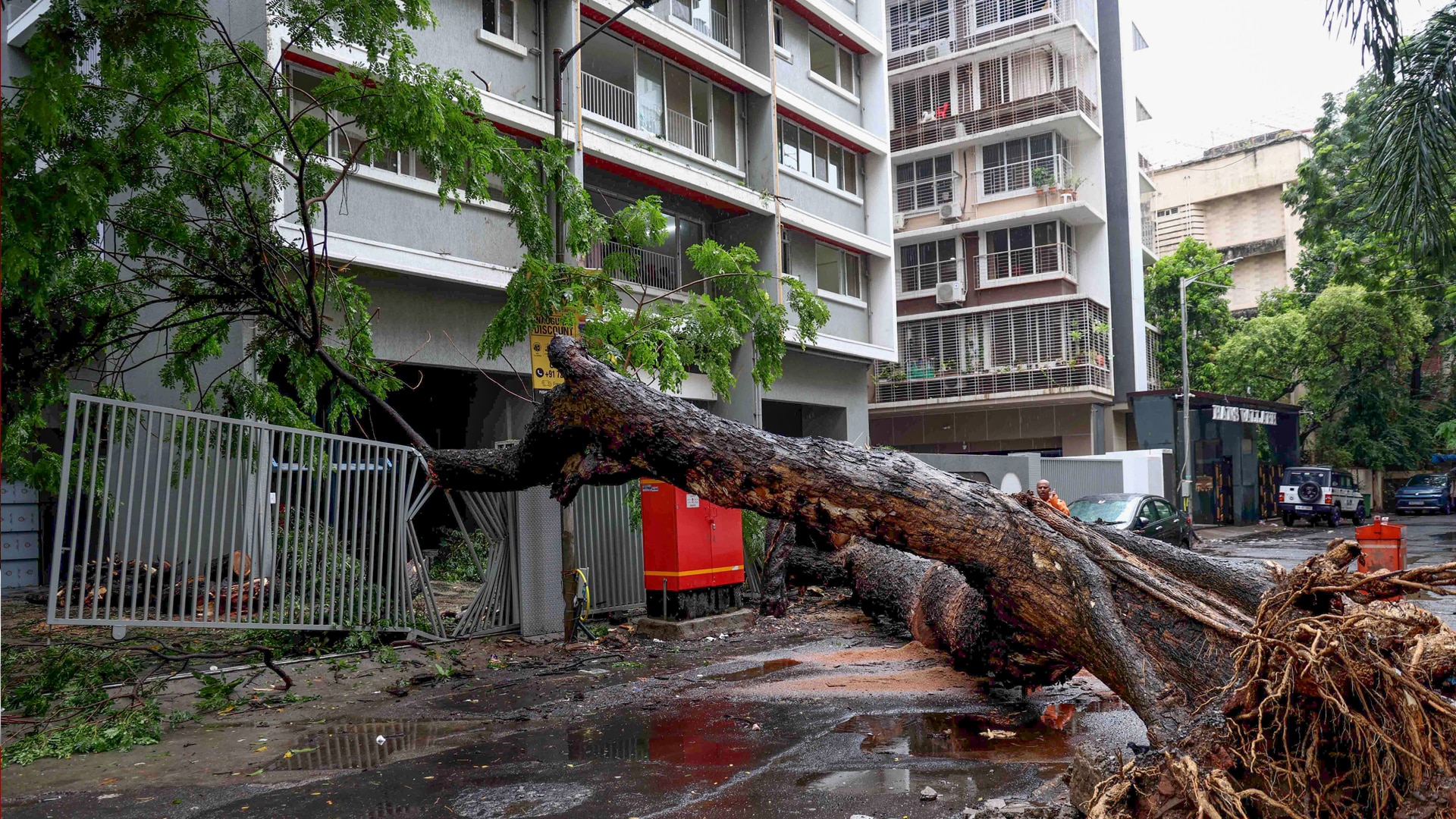
When Everyone Is Responsible, No One Really Is
One of the biggest challenges in fixing India’s infrastructure problem is that responsibility is often spread across so many agencies that accountability becomes remarkably difficult to establish.
Take something as ordinary as a city road. It may be constructed by one agency, maintained by another, dug up by a third to lay water pipelines, excavated again by a telecom company to install fibre-optic cables, and reopened months later by an electricity utility carrying out repairs. Add private contractors, consultants, engineers and multiple layers of government oversight, and the result is a web of overlapping responsibilities where everyone has a role, but no single entity owns the outcome from start to finish.
One agency points to faulty utility work. Another blames poor drainage. Contractors insist they built according to approved specifications. Officials cite unusually heavy rainfall. Politicians order inquiries, while civic bodies promise corrective action.
Some of those explanations may well be valid. Infrastructure projects are technically complex, and extreme weather is placing increasing pressure on cities across the country. But from the perspective of an ordinary citizen, those distinctions offer little comfort. The expectation is simple: if multiple public agencies are involved in delivering essential infrastructure, then they should also be capable of coordinating to ensure that infrastructure is safe and resilient.
Instead, what often emerges is a system where accountability becomes fragmented. By the time an inquiry is completed, responsibility has frequently been divided across departments, contractors, consultants and local authorities, making it difficult for the public to understand who, if anyone, is ultimately answerable.
That is perhaps the most frustrating aspect of the annual monsoon crisis. Citizens are rarely interested in which department issued the tender, which contractor executed the work or which agency was responsible for maintenance. They simply expect the road beneath their vehicle to remain intact, the bridge they cross to be structurally sound and the drains outside their homes to function as intended.
Infrastructure succeeds or fails as a system. Citizens experience it as one continuous service, not as a collection of government departments. Until planning, construction, maintenance and accountability are treated with the same level of coordination, India may continue to find itself confronting the same failures every monsoon – while responsibility remains scattered across offices, files and inquiry reports.
India’s Biggest Infrastructure Challenge Isn’t Building. It’s Sustaining It, Maintaining It And Eliminating Corruption.
India today stands at an important moment in its development journey. It is building expressways at record speed, expanding its railway network, modernising airports, investing in ports, metro systems and logistics corridors, and positioning itself as one of the world’s fastest-growing major economies. These are achievements that deserve recognition and have undoubtedly transformed the country’s infrastructure landscape.
But building infrastructure is only half the challenge. Sustaining it, maintaining it and ensuring that every rupee of public money is spent with integrity, transparency and accountability is what ultimately determines whether citizens benefit from those investments.
When roads repeatedly require repairs, freshly completed projects begin to deteriorate within a few seasons and the same stretches are reconstructed year after year, it is only natural for citizens to ask whether poor planning, weak oversight, corruption or a combination of all three is preventing India from getting the infrastructure it has already paid for.