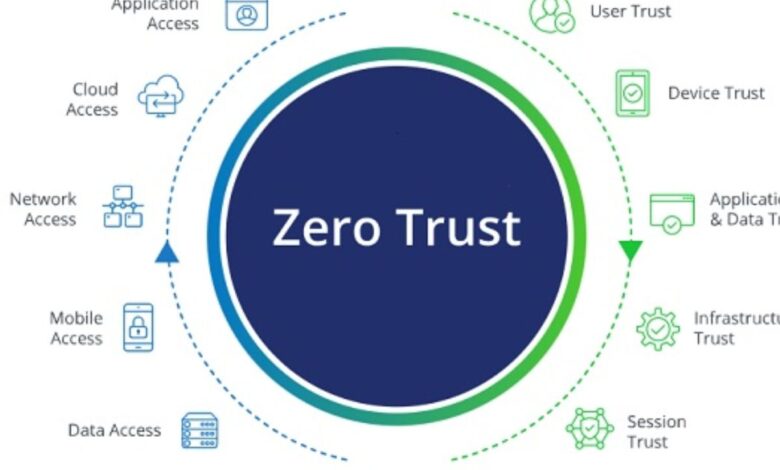
India’s cybersecurity market is on a steep upward trajectory. According to MarketsandMarkets, the Indian cybersecurity sector is projected to grow from USD 8.58 billion in 2025 to USD 16.86 billion by 2030, at a CAGR of 14.5%. At the heart of this growth is one architectural philosophy that has fundamentally changed how enterprises think about security: Zero Trust.
Unlike traditional perimeter-based security — which assumes everything inside a network is safe — Zero Trust operates on a single, uncompromising principle: never trust, always verify. Every user, device, application, and network request is continuously authenticated and authorized, regardless of where it originates. In a world where remote work, cloud adoption, and sophisticated cyber threats have made the concept of a “safe perimeter” obsolete, Zero Trust is no longer a luxury. It is a business imperative.
For Indian enterprises — from BFSI and healthcare to government and manufacturing — choosing the right Zero Trust partner is one of the most consequential technology decisions of 2026. This article presents a comprehensive, rigorously researched list of the Top 10 Zero-Trust Security Companies operating in India in 2026, evaluated on the basis of active service delivery, depth of Zero Trust capabilities, enterprise presence, and innovation track record.
1. Zscaler
Headquarters: San Jose, USA | India Presence: Mumbai, Bengaluru, Hyderabad
Zscaler is widely regarded as the gold standard in cloud-native Zero Trust, and its dominance in India’s cloud security sector reflects that reputation. With an estimated 30% share of India’s cloud security market, Zscaler’s Zero Trust Exchange platform is the most comprehensive end-to-end Zero Trust architecture available today. It operates across two primary pillars: Zscaler Internet Access (ZIA), which secures internet and SaaS access, and Zscaler Private Access (ZPA), which replaces legacy VPNs with identity-aware private application access.
What sets Zscaler apart is that it eliminates the network entirely as a trust boundary. Instead, users connect directly to applications through Zscaler’s cloud, with every session subject to continuous risk scoring, behavioural analysis, and policy enforcement. The platform includes microsegmentation, inline threat prevention (IPS/IDS, sandboxing, and anti-malware), and deep SSL inspection at cloud scale. For Indian enterprises navigating multi-cloud environments and distributed workforces, Zscaler remains the benchmark.
2. Palo Alto Networks (Prisma Access)
Headquarters: Santa Clara, USA | India Presence: Bengaluru, Mumbai, Delhi NCR
Palo Alto Networks brings one of the most complete Zero Trust ecosystems to the Indian market through its Prisma Access and Prisma Cloud platforms. Prisma Access delivers SASE (Secure Access Service Edge) capabilities, combining ZTNA, SD-WAN, CASB, and FWaaS into a unified cloud-delivered platform. Prisma Cloud, meanwhile, addresses Zero Trust for cloud-native workloads — securing containers, Kubernetes clusters, serverless functions, and multi-cloud infrastructure.
What makes Palo Alto particularly compelling for enterprises is its AI-powered Cortex engine, which provides risk-based authentication, deep user and entity behaviour analytics (UEBA), and automated threat response. Its tight integration across network, endpoint, and cloud security layers means organisations can enforce a consistent Zero Trust policy without stitching together disparate tools. Palo Alto is extensively deployed across Indian BFSI, telecom, and public sector institutions.
3. Cisco
Headquarters: San Jose, USA | India Presence: Bengaluru, Mumbai, Pune, Hyderabad
Cisco holds approximately 15% of India’s enterprise security market and brings a uniquely integrated approach to Zero Trust through its Cisco Secure portfolio. Its Zero Trust framework spans three core pillars: Workforce (securing user and device access via Cisco Duo), Workload (securing application-to-application communication via Tetration and Secure Workload), and Workplace (securing network access via Cisco SD-Access and Identity Services Engine).
Cisco Duo, its multi-factor authentication and device trust platform, is particularly widely adopted among Indian mid-market and enterprise organisations for workforce Zero Trust. Cisco’s strength lies in the breadth of its portfolio — it is one of the few vendors capable of delivering Zero Trust across every layer of the IT stack from a single vendor relationship, which significantly reduces operational complexity for enterprise IT teams in India.

4. Wipro (CyberTransform)
Headquarters: Bengaluru, India | India Presence: Pan-India
Wipro is India’s most significant home-grown player in enterprise Zero Trust services. Through its CyberTransform platform, Wipro delivers Zero Trust security not as a product but as a comprehensive managed service — covering security consulting, risk management, managed security services (MSS), SOC modernisation, cloud security, and AI-enabled threat detection and response. This services-led approach is particularly valuable for Indian organisations that need Zero Trust architecture designed, deployed, and operated end-to-end rather than off-the-shelf.
Wipro’s Managed Cyber Defense Centers integrate Zero Trust principles into continuous monitoring operations, applying behavioural analytics and automated response capabilities at scale. The company serves large enterprises across BFSI, healthcare, utilities, and government in India, and its deep understanding of Indian regulatory frameworks (RBI, SEBI, IRDAI, DPDPA 2023) makes its Zero Trust advisory services especially relevant for compliance-driven sectors.
5. Infosys Cybersecurity
Headquarters: Bengaluru, India | India Presence: Pan-India
Infosys approaches Zero Trust through the lens of enterprise-wide digital transformation, making it one of the most strategically oriented providers on this list. Its Cyber AI platform integrates Zero Trust principles with artificial intelligence to deliver continuous identity verification, adaptive access controls, threat detection, and automated compliance management. Infosys specifically focuses on application security, data protection, and cloud security — areas where Zero Trust is increasingly mandated by regulatory bodies.
A key differentiator for Infosys is its emphasis on Zero Trust maturity assessment — helping organisations understand where they currently sit on the Zero Trust adoption curve and building a phased roadmap rather than forcing a disruptive overnight overhaul. This pragmatic, advisory-first approach has made Infosys a trusted partner for Indian enterprises in the early to mid stages of Zero Trust adoption, particularly in manufacturing, retail, and financial services.
6. TCS (Tata Consultancy Services) Cybersecurity
Headquarters: Mumbai, India | India Presence: Pan-India
TCS brings the scale and institutional trust of India’s largest IT services company to the Zero Trust domain. Its cybersecurity practice spans identity and access management (IAM), endpoint security, cloud security, threat intelligence, and secure digital transformation — all anchored in Zero Trust principles. TCS’s Cyber Defense Suite provides enterprise-grade Zero Trust capabilities integrated with its broader IT services delivery, making it particularly effective for organisations already running large-scale digital transformation programmes with TCS.
TCS’s strength is its delivery depth. With dedicated security practices in over 20 countries and deep relationships with major Indian public sector undertakings, banks, and conglomerates, TCS can embed Zero Trust architecture into large, complex, multi-geography IT environments that smaller, more specialist providers cannot serve. It is also one of the few Indian providers with significant government Zero Trust mandates under its belt.

7. HCL Technologies (HCLSecurity)
Headquarters: Noida, India | India Presence: Pan-India
HCL Technologies has built its cybersecurity identity around its Cybersecurity Fusion Centers — real-time, intelligence-driven security operations centres that deliver continuous monitoring, rapid incident response, and proactive threat hunting. Zero Trust is embedded into the Fusion Center model as an operational principle: every access request, internal or external, is treated as untrusted until verified by context-aware policies.
HCL’s cybersecurity services include Zero Trust network access, identity governance, cloud security posture management (CSPM), and secure DevOps — making it a strong choice for technology companies and digital-native enterprises in India. Its partnership ecosystem with Palo Alto, Microsoft, and CrowdStrike ensures that HCL’s managed Zero Trust services are built on best-of-breed underlying technology rather than proprietary lock-in.
8. IBM Security (India)
Headquarters: Armonk, USA | India Presence: Bengaluru, Mumbai, Delhi NCR, Hyderabad
IBM Security commands approximately 7% of the Indian enterprise cybersecurity market and brings a uniquely data-and-AI-centric perspective to Zero Trust. Its IBM Security QRadar platform integrates Zero Trust with security information and event management (SIEM), enabling organisations to correlate access events with threat intelligence in real time. IBM’s Cloud Pak for Security provides a unified Zero Trust dashboard across hybrid and multi-cloud environments, which is increasingly relevant as Indian enterprises run workloads simultaneously across on-premise data centres, AWS, Azure, and GCP.
IBM’s Security Identity Governance and Intelligence (IGI) platform rounds out the portfolio with identity-centric Zero Trust — ensuring that access rights are continuously recertified, anomalous behaviour triggers immediate reviews, and least-privilege principles are enforced dynamically. For Indian enterprises in highly regulated sectors like banking and insurance, IBM’s compliance-aligned approach to Zero Trust is a particularly strong fit.
9. Seqrite (Quick Heal Technologies)
Headquarters: Pune, India | India Presence: Pan-India
Seqrite is the enterprise cybersecurity division of Quick Heal Technologies, India’s most established home-grown security company, and it represents the most authentically Indian player in enterprise Zero Trust. Its product portfolio has matured significantly to include AI-powered endpoint protection, EDR/XDR (Extended Detection and Response), Zero Trust network access, and unified threat management — all developed with deep awareness of the Indian enterprise and SME environment.
What makes Seqrite uniquely valuable is its accessibility. While global vendors often price their Zero Trust solutions beyond the reach of Indian mid-market companies, Seqrite delivers Zero Trust-aligned security at price points and support models tailored for the Indian market, including tier-2 and tier-3 city deployments. Its government and education sector presence is unmatched among Indian cybersecurity vendors, and it is one of the most actively used security platforms by Indian SMEs making their first move toward Zero Trust architecture.
10. Indusface
Headquarters: Vadodara, India | India Presence: Pan-India
Indusface occupies a distinctive niche in India’s Zero Trust landscape: it is the leading provider of fully managed Web Application and API Protection (WAAP), which is a critical and often overlooked component of a complete Zero Trust strategy. In a Zero Trust architecture, protecting applications at the perimeter — ensuring that only authenticated, authorised, and verified requests reach application layers — is as important as securing internal network access. Indusface’s AppTrana platform delivers exactly this.
AppTrana provides managed WAF (Web Application Firewall), DDoS protection, bot management, API security, and continuous penetration testing as a managed service — meaning organisations without dedicated security teams can still maintain application-layer Zero Trust. Indusface serves a wide range of Indian enterprises, SMEs, fintech companies, and healthcare providers, and its approach of combining automated vulnerability detection with human expert validation has earned it recognition from Gartner as a notable vendor in the WAAP space.
The Road Ahead: Zero Trust in India’s Digital Future
India’s Zero Trust adoption is accelerating, driven by the Digital Personal Data Protection Act (DPDPA) 2023, increasing ransomware incidents targeting critical infrastructure, and RBI’s cybersecurity directives for the financial sector. The Indian government’s own push toward secure digital public infrastructure — from UPI to ONDC to DigiLocker — is raising the security baseline across the ecosystem.
For enterprises evaluating their Zero Trust journey in 2026, the key is to think of Zero Trust not as a product to purchase but as an architectural philosophy to adopt progressively. Whether you begin with identity and MFA hardening, move to ZTNA for remote access, or start with application security through a managed WAAP provider, every step toward Zero Trust meaningfully reduces your attack surface.
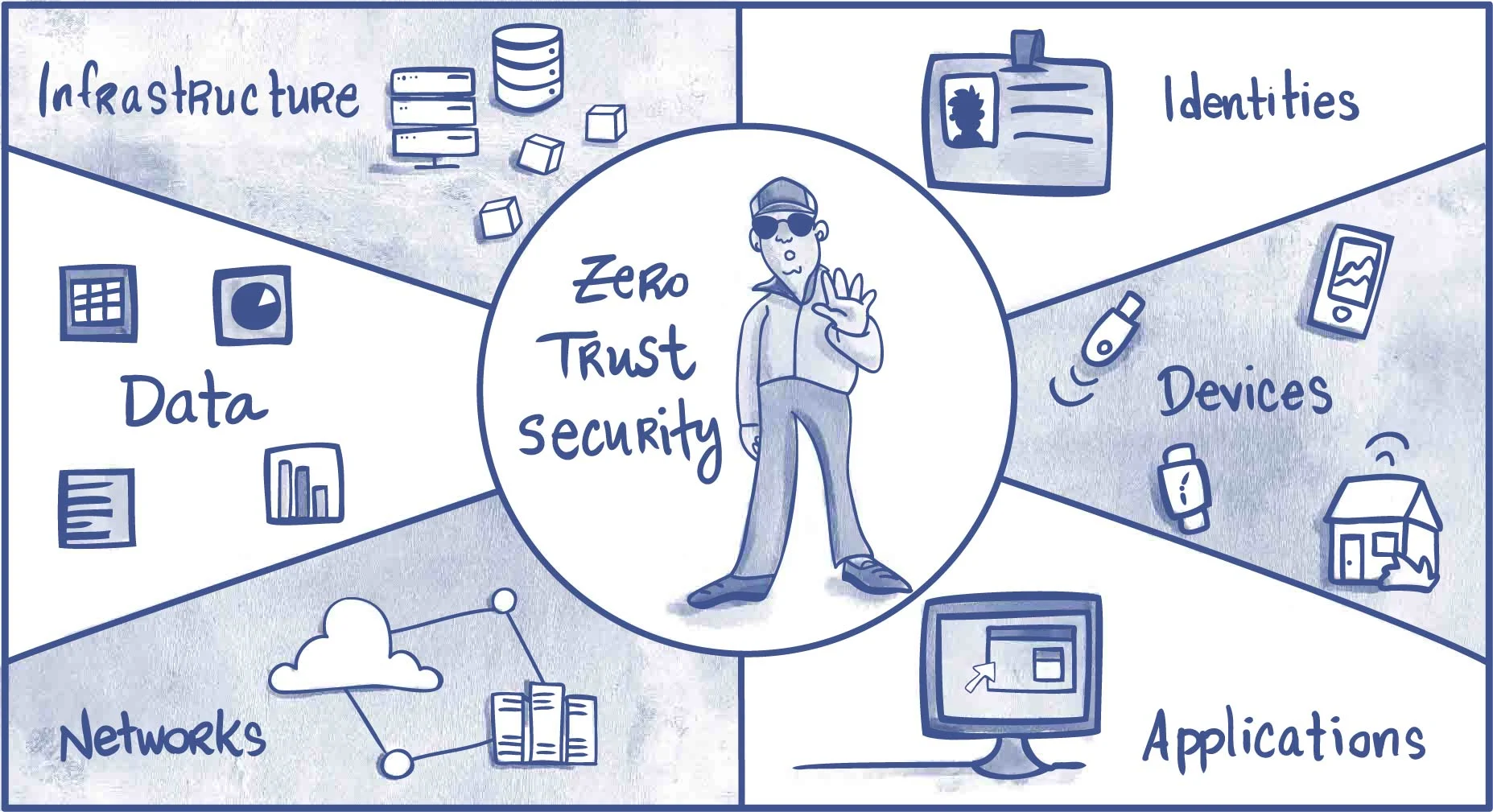
The companies listed above represent the most credible, actively operating, and capability-proven Zero Trust partners available to Indian organisations today. The right choice depends on your organisation’s size, sector, existing infrastructure, and maturity — but in every case, the journey toward Zero Trust is a journey worth beginning now.