Will UPI Payments Above ₹2,000 Become Costlier? Here Is What the MDR Debate Actually Means
The ₹2,000 UPI payment has suddenly become a talking point, with reports of a possible return of merchant discount rate (MDR) sparking questions over whether digital payments could become costlier. But before users panic, there is an important catch: ₹2,000 is not yet an official MDR threshold.

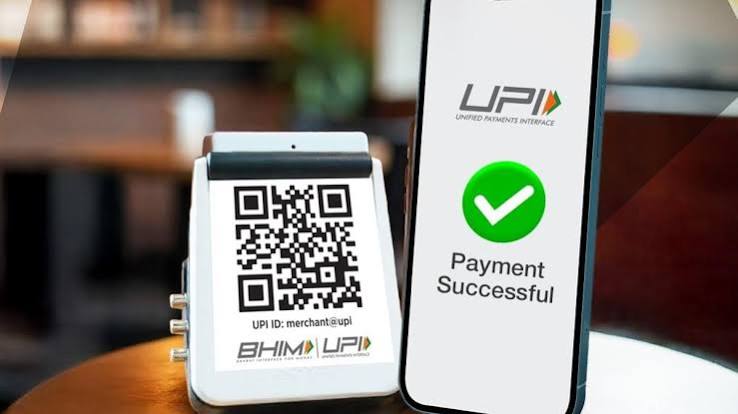
A ₹2,000 UPI payment is not about to suddenly come with a fee. Yet the figure has found itself at the centre of a growing debate over whether merchants could once again be charged for accepting UPI. The confusion stems from an old government incentive rule, a recent change in law and reports of a possible new MDR framework.
Why Is ₹2,000 Suddenly Being Discussed?
The ₹2,000 figure has been around in the UPI ecosystem for years, but not as a transaction limit for consumers.
It was originally used by the government to determine which low-value UPI payments made to merchants would qualify for incentives. The threshold dates back to FY2021-22, when the government introduced its incentive scheme to promote RuPay debit cards and low-value BHIM-UPI person-to-merchant transactions.
The objective was fairly straightforward: encourage digital payments while helping smaller merchants and other participants in the payments ecosystem deal with the costs associated with processing transactions.
The scheme was subsequently renamed the Incentive Scheme for Promotion of Low-Value BHIM-UPI Transactions (Person to Merchant – P2M) in FY2024-25. It carried an estimated outlay of ₹1,500 crore.
Under the scheme, UPI P2M transactions of up to ₹2,000 at small merchants were eligible for an incentive equivalent to 0.15% of the transaction value.
That distinction matters because the ₹2,000 threshold was created for government incentives, not for charging users or determining when MDR applied.
Tanvi Kanchan, associate director at Anand Rathi Share and Stock Brokers, told Business Standard that the government was essentially trying to support smaller and more price-sensitive merchants without allowing the subsidy bill to become too large.
“₹2,000 was originally a fiscal-targeting line for subsidy, not a payments-cost line,” she said.
UPI Was Already Zero-MDR
There is another important piece of the puzzle.
The government incentive scheme did not establish the zero-MDR system that consumers currently associate with UPI.
UPI has been under a zero-MDR framework since January 2020, following amendments to Section 10A of the Payment and Settlement Systems Act, 2007, and Section 269SU of the Income-tax Act, 1961.
So, under the FY2024-25 incentive scheme, a small merchant received an incentive for an eligible UPI transaction up to ₹2,000. If the transaction crossed ₹2,000, the incentive disappeared.
But that did not mean MDR suddenly kicked in. The transaction continued to carry zero MDR. The same applied to large merchants. They were not eligible for the incentive regardless of transaction value, but UPI remained zero-MDR.
This is where much of the current confusion around the ₹2,000 figure begins.
So What Changed With the New Bill?
Parliament’s passage of the Taxation and Other Laws (Amendment) Bill, 2026 has reopened the question of how electronic payment charges could be structured in the future.
The amendment changes the wording of Section 10A. Instead of relying on the earlier reference to payment modes prescribed under Section 269SU of the Income-tax Act, the amended provision allows the central government to specify, through notification, one or more electronic payment modes on which banks and system providers cannot impose charges.
But the amendment itself does not introduce MDR. It does not prescribe an MDR rate. And crucially, it does not declare ₹2,000 to be the point at which UPI charges will begin.
That distinction is important because reports have suggested that policymakers are exploring ways to make UPI financially sustainable for banks and payment providers.
Reuters reported earlier this month that several approaches were being considered, including a possible charge on transactions above a particular value and a system linked to merchant turnover.
One proposal reportedly under discussion uses ₹2,000 as the transaction threshold for larger merchants. But there is no final framework yet.
Kanchan therefore said the figure should be treated as a possible reference point rather than an existing rule. “As of now, the finance ministry has said MDR, even if introduced, would apply only to a limited set of merchant transa ctions above a specified threshold, at a nominal rate. RBI Governor Sanjay Malhotra has said talks of imposing the fee are still at a premature stage,” she said.

Why Policymakers Could Be Looking at ₹2,000
The appeal of ₹2,000 is not entirely arbitrary.
The number could allow policymakers to separate routine, low-value UPI spending from larger transactions while potentially capturing a significant share of the money flowing through the system.
According to Kanchan, only around 4% of P2M UPI transactions were above ₹2,000 in FY2025-26. Yet those transactions represented roughly two-thirds of the total transaction value.
That creates an interesting trade-off.
A threshold at ₹2,000 could leave the vast majority of UPI transactions untouched by a potential MDR regime while still bringing a large proportion of the overall transaction value into its scope.
As Kanchan explained, the approach would protect everyday payments such as purchases of milk, vegetables and groceries while focusing on the part of the payments ecosystem where transaction values are significantly higher and costs may be easier to recover.
In other words, ₹2,000 could be useful as a dividing line because it affects relatively few transactions but covers a large share of the money being moved. That, however, remains a policy argument – not a rule.
Will Customers Have to Pay MDR?
This is perhaps the biggest question for UPI users.
MDR, or merchant discount rate, is fundamentally a charge imposed on the merchant side of a digital payment transaction. It is not automatically a fee that gets deducted from the customer’s bank account every time they make a payment.
The government’s stated intention is to keep UPI free for consumers, even if a limited MDR framework is eventually introduced for certain merchant transactions.
Under the potential structure being discussed, larger merchants could bear the cost, while banks and payment service providers could receive a share of the fee. The idea would be to give banks and payment companies a way to recover some of the costs involved in processing, settling and maintaining the infrastructure behind UPI.
“Banks and payment providers would get a legal route to recover processing, settlement and infrastructure costs directly from large merchants, rather than relying solely on central incentives,” Kanchan said.
But there is still a question over what happens after that.
If merchants have to absorb an additional cost, some may choose to pass part of it on to customers through prices. Whether that happens would depend on how the final framework is designed and how merchants respond.
The ₹2,000 Confusion Explained
The easiest way to understand the current debate is to separate three different things.
First, ₹2,000 has historically been used as an eligibility cut-off under the government’s UPI incentive scheme.
Second, UPI currently operates under a zero-MDR framework, meaning crossing ₹2,000 does not automatically trigger a fee.
Third, policymakers are reportedly considering ₹2,000 as one possible threshold for a future MDR framework.
These are not the same thing.
Kanchan said this overlap has created the impression that the government has already decided where UPI charges will begin.
“Because both reference the same number, it reads in public discourse as if the government has already decided ₹2,000 is where UPI charges kick in,” she said. “In fact, policymakers are considering a ₹2,000 threshold, but the government has not officially confirmed this limit.”
The Last Bit, What UPI Users Need to Know
For now, nothing changes simply because a UPI transaction crosses ₹2,000.
A payment of ₹2,001 does not automatically attract MDR. Nor has the government announced that consumers will be charged for making high-value UPI payments.
The ₹2,000 figure has an established history in the government’s incentive system and is now being discussed as a possible benchmark for a future merchant-fee structure.
Whether it actually becomes the threshold – and what kind of merchants or transactions would fall under such a system – will depend on the framework the government eventually notifies. Until then, ₹2,000 is a number at the centre of the UPI MDR debate, not a new UPI fee limit.