HDFC Bank Chairman Exit: What Did Atanu Chakraborty See – From Denial To Recalibration, What’s Really Going On?
The HDFC Bank chairman exit was supposed to be a one-line update. Instead, it has turned into a lingering puzzle. A reference to “ethics,” followed by denial, and now a shift in tone - raising a sharper question: what exactly changed, and why does the story still feel incomplete?

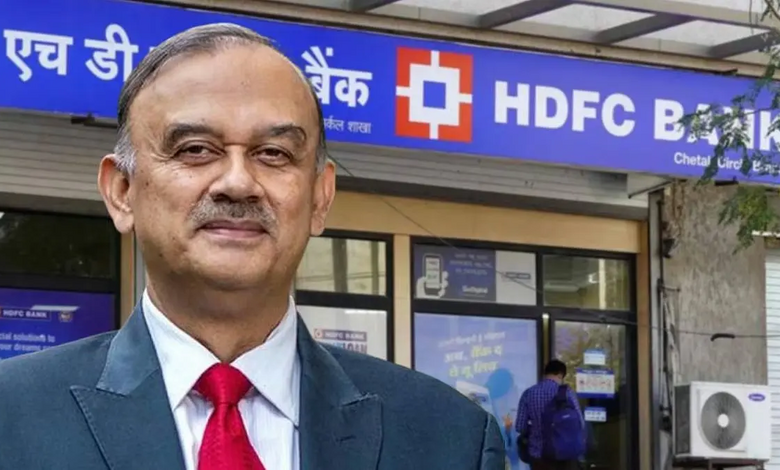
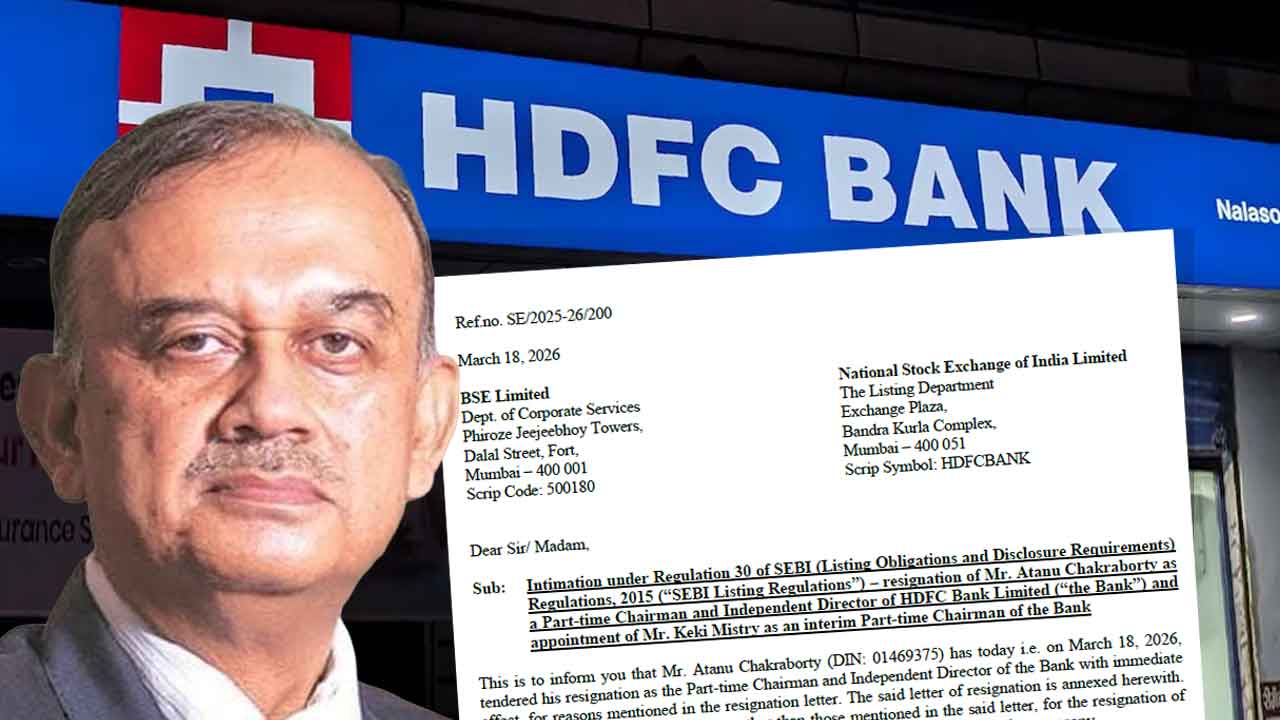
Atanu Chakraborty’s resignation as chairman of HDFC Bank arrived abruptly, without the usual signalling or transition. But it wasn’t just the timing that stood out; it was the language. His reference to “certain happenings and practices” not being in line with his “values and ethics” immediately set this apart from a routine departure.
In banking, leadership exits are rarely dramatic. They are structured, timed, and communicated with precision – designed to reassure rather than unsettle.
This one did the opposite.
Such phrasing is not accidental. In a sector where credibility is everything, words are chosen carefully and avoided even more carefully. To invoke “ethics” is to move the conversation beyond performance or strategy into something far more fundamental.
And yet, almost as quickly as the statement raised questions, it was followed by an attempt to soften it. Within hours, Chakraborty described his resignation as “routine,” distancing it from any suggestion of wrongdoing.
That contrast – between a sharply worded exit and a quick walk-back – only deepened the intrigue. Because if this was routine, it didn’t sound like it. And if it wasn’t, the obvious question remained – what exactly had prompted such a statement in the first place?
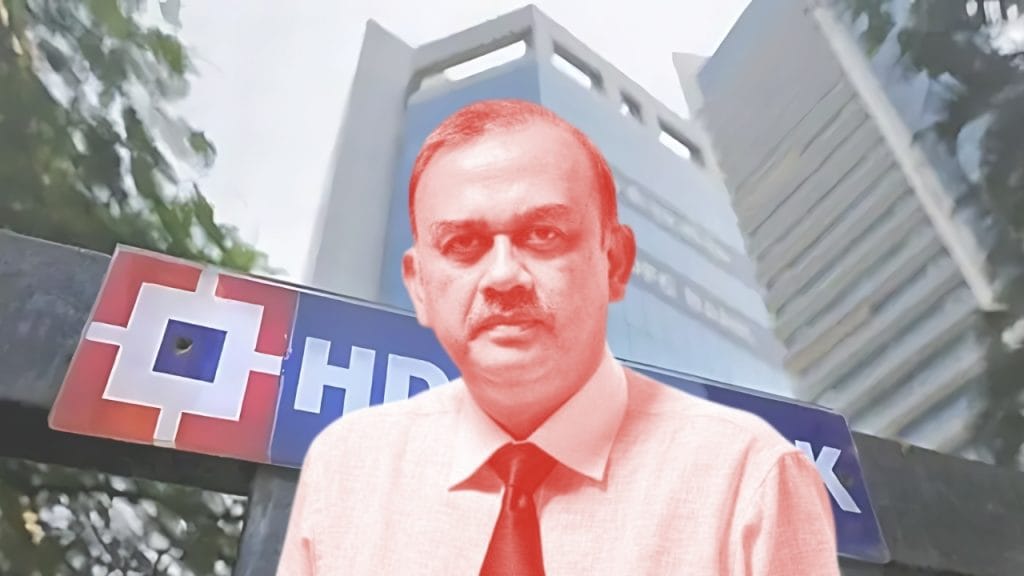
The Moment Of Disbelief, When Investors Pushed Back
If the resignation created unease, what followed turned it into a credibility test.
Within hours, HDFC Bank’s leadership was on a call with investors, attempting to steady sentiment. The message was firm: there was nothing material behind the chairman’s exit, no governance concerns, and no reason to read beyond what had been officially communicated.
But the reassurance didn’t land.
As the call progressed, the gap between what was being said and what investors were willing to accept became increasingly visible. Questions sharpened. Clarity was demanded. And the lack of specifics began to stand out more than the assurances themselves.
One investor summed up the mood bluntly – after everything that had been said, they were no wiser than before the call began.
That moment mattered.
Because it marked the shift of this story – from a corporate development to a question of credibility. The issue was no longer just the resignation itself, but the inability to explain it in a way that aligned with the gravity of the words used.
For a chairman to step down citing “ethics” is significant. For a board to follow that with “nothing to see here” without elaboration is even more so. And somewhere between those two positions, the story began to fracture.
The Word That Changed Everything
In corporate communication, words are rarely casual. They are filtered, measured, and often designed to reveal as little as possible.
Which is why one word stood out.
“Ethics.”
Its inclusion in Atanu Chakraborty’s resignation letter shifted the entire frame of this episode. This was no longer about tenure, transition, or timing. It hinted at something more fundamental – a discomfort not with outcomes, but with processes; not with results, but with how they were being arrived at.
That distinction matters, especially in banking.
Because institutions like HDFC Bank operate on trust as much as they do on numbers. Governance is not just a function; it is the foundation. And when a chairman invokes “ethics,” it inevitably raises questions that go beyond the individual.
What exactly did he disagree with?
Was it a matter of oversight? Of decision-making? Of boundaries?
None of those questions were answered.
And yet, the strength of the word ensured they could not be ignored either.
That is what made the situation particularly complex – an assertion strong enough to trigger concern, but incomplete enough to resist interpretation.
Markets React – When Uncertainty Becomes The Story
If the resignation created unease, the markets made that unease visible.
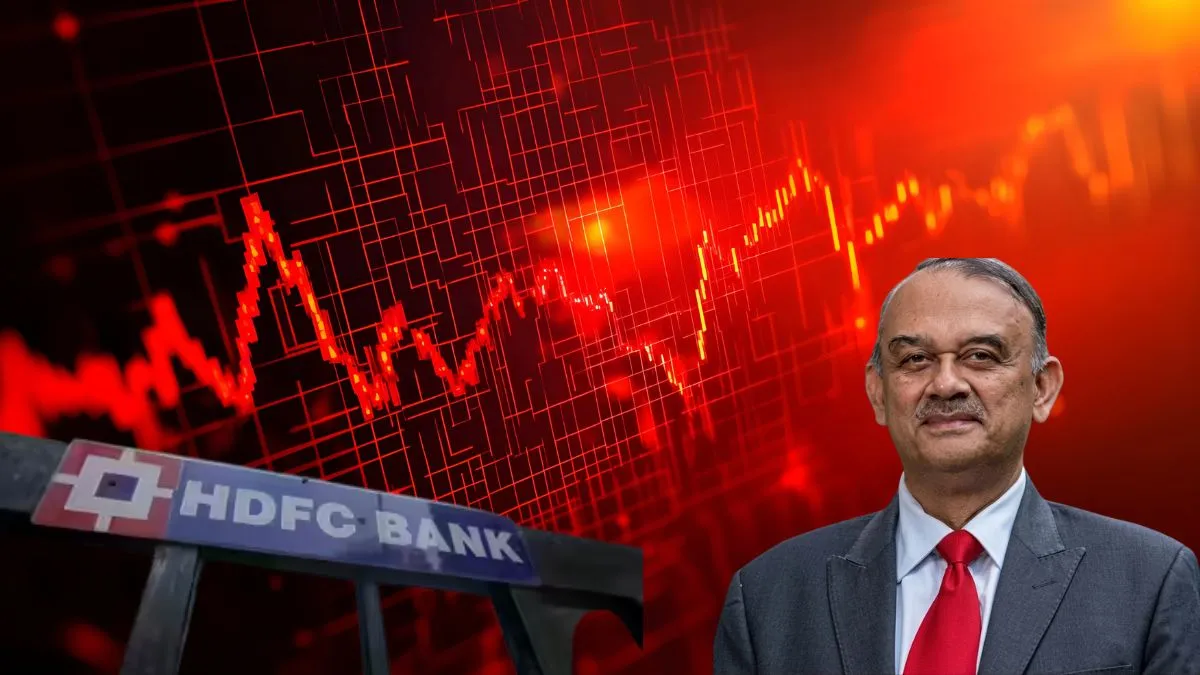
HDFC Bank’s shares fell sharply, wiping out billions in market value in a single trading session. It was a reaction that went beyond the event itself – it reflected the discomfort around what wasn’t being said.
There was no confirmed governance lapse. No regulatory action. No financial irregularity.
What investors were responding to was uncertainty.
Markets are built to process risk – they do it every day. But ambiguity is harder to price. When a senior figure exits with a statement that hints at deeper issues, yet offers no clarity, it creates a vacuum. And markets tend to react quickly to such vacuums.
The investor call, intended to reassure, only reinforced that discomfort. Questions were met with confidence, but not detail. Assurances were repeated, but not expanded upon.
And in situations like this, it is often not the event itself, but the absence of a clear explanation that drives sentiment. Because in banking, clarity builds confidence.
And in its absence, even a single word can be enough to unsettle both markets and minds.
The First Response, Assurances Without Answers
As the questions mounted, the response from the bank and even the regulator remained steady, almost unwavering.
There were no governance concerns. No internal conflict. No material issue that warranted alarm.
The Reserve Bank of India moved quickly to reinforce that position, describing HDFC Bank as a systemically important institution with strong fundamentals, a professional board, and a competent management team. Internally, the transition was swift. Keki Mistry stepped in as interim chairman, signalling continuity and control.
On the surface, everything appeared contained. But beneath that composure lay an uncomfortable gap.
Because while the assurances were firm, the explanations were thin. Board members themselves admitted they had sought clarity from Chakraborty and received none. There was no specific incident to point to, no defined issue to explain the language used in the resignation.
That created a peculiar situation.
—-A chairman had stepped down citing “ethics.”
—-The board had accepted it without a clear explanation.
—-And the institution was asking stakeholders to move on, without connecting those dots.
For many investors, that was difficult to reconcile.
The Story Shifts – From Denial To Recalibration
If the initial response was about containment, what followed signalled something more nuanced.
In his subsequent remarks, CEO Sashidhar Jagdishan struck a noticeably different tone. Governance, he said, cannot function in a “yes-sir” environment. Differences of opinion are not only natural – they are necessary.
It was a subtle but important shift.
From insisting that there was nothing to explain, the conversation moved towards acknowledging that disagreement exists within a healthy system. That divergence of views, rather than being a red flag, could be part of normal functioning.
At the same time, the bank indicated that it would undertake a review – examining decisions, identifying gaps, and strengthening processes where needed. There was also an assurance that nothing would be concealed, and that any issues, if found, would be addressed firmly.
Taken together, this marked a transition in how the situation was being presented.
Not as an anomaly to be dismissed, but as something to be examined and contextualised. And yet, even as the tone evolved, the central question remained untouched.
What exactly triggered the resignation in the first place?
Because acknowledging that differences exist is one thing.
Explaining what those differences were – and why they led to such a strongly worded exit – is another.
And that distinction continues to define this story.
Beneath The Surface, Was There Friction?
While there has been no formal acknowledgement of any conflict, fragments of information and industry conversations suggest that the situation may not have been as straightforward as it first appeared.
At the centre of it lies a familiar fault line – one that exists in many large institutions, but rarely becomes visible.
The role of a non-executive chairman is, by design, one of oversight. The management, on the other hand, is responsible for execution. When those roles remain clearly defined, the system functions smoothly. But when boundaries begin to blur, friction is almost inevitable.
There have been indications that Chakraborty’s involvement may have extended beyond oversight into areas typically handled by management – ranging from strategic decisions to senior-level matters. Over time, such overlaps can create discomfort, not necessarily because of disagreement alone, but because of differing interpretations of authority.
Moments of strategic importance often amplify such tensions.
Discussions involving HDB Financial Services, including potential stake sales and capital market plans, were seen as key inflection points. While no direct link has been established, such developments tend to test alignment within leadership teams – particularly in institutions inviting scale and scrutiny.
There are also suggestions that the relationship between the chairman and the executive leadership was not always seamless. Interactions that are expected to be collaborative may have, at times, turned cautious or distant.
None of this has been officially confirmed. And that distinction matters.
But when viewed alongside the nature of the resignation – and the absence of a clear explanation – it does point to a possibility: that what appeared sudden on the surface may have been building quietly over time.
The Post-Merger Pressure Cooker
To view this episode in isolation would be to miss the broader context it sits within.
The merger between HDFC Ltd. and HDFC Bank was not just a transaction; it was a structural transformation. It brought together two large institutions with distinct operating styles, risk approaches, and decision-making cultures.
While the strategic logic was clear, the integration was always going to be complex.
Such mergers demand alignment across multiple layers – business priorities, capital allocation, regulatory expectations, and leadership vision. And in that process, even small differences can become more pronounced.
Questions around growth versus caution, autonomy versus oversight, and speed versus control begin to carry greater weight.
It is in such environments that alignment is tested most.
Seen through this lens, the chairman’s exit may not simply be an isolated development, but part of a larger phase of adjustment – where the institution is still recalibrating after a transformation of this scale.
And in that recalibration, not every difference finds resolution within the same framework.
When Governance Stops Being Abstract
At one level, this episode is about a resignation. At another, it is about how governance actually plays out inside large institutions.
On paper, the structure is clear.
Boards oversee. Management executes. Roles are defined, responsibilities separated.
In practice, it is rarely that simple.
Decisions are shaped by individuals – their experience, their judgment, and at times, their convictions. Differences do not always emerge as disagreements in meetings; they build gradually, through interpretation, emphasis, and approach.
—How cautious should the institution be?
—How aggressively should it grow?
—Where should the line between oversight and involvement be drawn?
These are not technical questions. They are philosophical ones.
And when such differences are rooted in personal conviction, they tend to surface in ways that are difficult to document, but hard to ignore. That is where words like “values” and “ethics” begin to appear – not necessarily as accusations, but as markers of divergence.
What makes this instance unusual is not that such divergence may have existed.
It is that it surfaced so publicly and with so little explanation.

Rift, Reset Or Something Less Visible?
There are, broadly, two ways to read what has unfolded.
The first is the more cautious interpretation – that this episode reflects a deeper misalignment within the institution, one that has not yet been fully articulated but has made its presence felt through an unusually worded exit and the questions that followed.
The second is more measured – that this is a phase of transition. In a post-merger institution of this scale, leadership dynamics evolve, differences emerge, and not all of them are resolved within the same structure. Sometimes, change at the top is part of that process.
The recent shift in messaging – from outright reassurance to acknowledging the role of dissent – adds another layer to this reading. It suggests that the situation may not be as binary as it first appeared.
Both interpretations can exist at the same time.
Because institutions are rarely defined by a single moment. They are shaped over time – through decisions, adjustments, and occasionally, departures that signal change without fully explaining it.
The Last Bit, The Question That Still Lingers
HDFC Bank has long been seen as a benchmark for stability – measured growth, disciplined execution, and a reputation built carefully over decades.
That reputation does not unravel overnight. But moments like these do not pass unnoticed either.
Because in banking, numbers build confidence, but it is trust that sustains it. And when a chairman steps away citing “ethics,” followed by a phase of denial and then recalibration, it leaves behind a question that is difficult to dismiss.
Not just why he left. But whether what prompted that decision has been fully understood or is still unfolding beneath the surface.