Trump’s Next Move On Iran Could Decide More Than The War – It Could Rattle The Global Economy. Why Markets Should Be Worried
As Donald Trump weighs his next move on Iran, markets are behaving as if the worst is already behind us. But economist Nouriel Roubini warns the real risk lies ahead - where escalation, not restraint, could define both the conflict and its global economic fallout.

As tensions rise around Donald Trump’s handling of the Iran conflict, markets are still leaning toward the hope of de-escalation. But according to Nouriel Roubini, that expectation may be fundamentally misplaced.
Roubini’s argument is blunt: escalation is not just possible, it may now be the most likely outcome. And the reasoning is not rooted in military strategy alone, but in political compulsion.
For Trump, the cost of backing down may now outweigh the risks of pushing forward. The damage – economic, geopolitical, and reputational – has already begun to surface. A ceasefire on terms that appear favorable to Iran would not be seen as a strategic pause, but as a retreat. And in a political environment where perception often defines reality, that distinction matters.
This is where the situation becomes counterintuitive. Conventional wisdom suggests that rising economic costs, volatile oil prices, and electoral pressures should force restraint. But Roubini flips that logic – arguing that these very pressures may eliminate the option of de-escalation altogether.
If the conflict ends without a decisive outcome, it risks weakening credibility at home and abroad – a risk that may be politically unacceptable. In that context, escalation stops being a reckless choice and starts looking like a calculated gamble, one where the downside is severe, but the alternative is almost certainly worse.
What makes this even more precarious is that markets are still operating under the assumption that an off-ramp exists – that diplomacy will eventually prevail, and tensions will ease. But if that assumption is flawed, then the entire risk assessment collapses with it.

The Binary Outcome – A Win, Or A Shock The World Isn’t Ready For
At the heart of Roubini’s warning lies a sharp reality: this is no longer a situation with a wide range of outcomes. It is, increasingly, a binary bet.
In the more optimistic scenario, escalation leads to a decisive shift – potentially even a collapse of Iran’s current leadership structure. In that case, the short-term pain of higher oil prices and prolonged conflict could give way to a more stable geopolitical environment. Markets, in hindsight, would justify the risk.
But the alternative is far more disruptive and far more plausible than markets seem willing to acknowledge.
If escalation triggers retaliation that disrupts critical energy infrastructure or restricts flows through the Strait of Hormuz, (which is already happening) the consequences would be immediate and global. Oil prices have spiked sharply, supply chains have come under stress, and inflationary pressures would resurface at a time when central banks are already struggling to maintain balance.
This is where the reference to “1970s stagflation” becomes particularly relevant – not as a dramatic exaggeration, but as a historical parallel. A sustained oil shock, combined with slowing growth, creates a toxic mix that is difficult to contain and even harder to reverse.
What makes this dynamic dangerous is the asymmetry of outcomes. The upside – a geopolitical reset – is uncertain and contingent on multiple variables aligning perfectly. The downside, however, is direct, immediate, and far-reaching.
And yet, despite this imbalance, markets appear to be pricing in a far more benign trajectory – one where escalation is limited, disruptions are contained, and resolution comes sooner rather than later.
That may prove to be the biggest miscalculation of all.
The Ground Reality – What the Military Build-Up Actually Signals
While the rhetoric around the conflict continues to escalate, the movement on the ground tells a more measured, but no less significant, story.
The deployment of roughly 3,000 U.S. troops, including elements of the 82nd Airborne Division and Marine Expeditionary Units, does not indicate preparation for a full-scale invasion. The absence of heavy armour, deep logistics chains, and sustained command structures makes that much clear. This is not Iraq. This is not Afghanistan.
Instead, what is taking shape is something far more precise – limited, targeted operations designed to achieve specific strategic objectives without committing to a prolonged ground war.
Three potential targets stand out.
The first is Qeshm Island, positioned near the Strait of Hormuz and believed to house missile systems, drones, and naval assets in underground facilities. Neutralizing this would significantly weaken Iran’s ability to disrupt maritime traffic.
The second is Kharg Island, the backbone of Iran’s oil exports, through which nearly 90% of its crude shipments pass. Seizing or disabling this would strike directly at Iran’s economic lifeline – but it would also mark a sharp escalation with immediate global repercussions.
The third, and perhaps most ambitious, is a targeted raid to secure nuclear material. While strategically significant, this option appears the least feasible without a far larger and sustained military presence.
Taken together, these possibilities point to a strategy of controlled escalation – actions that are limited in scope but potentially massive in consequence. This is not about occupying territory. It is about altering leverage.
And that is what makes the situation volatile. Because even limited actions, when executed in a region this sensitive, rarely remain contained for long.
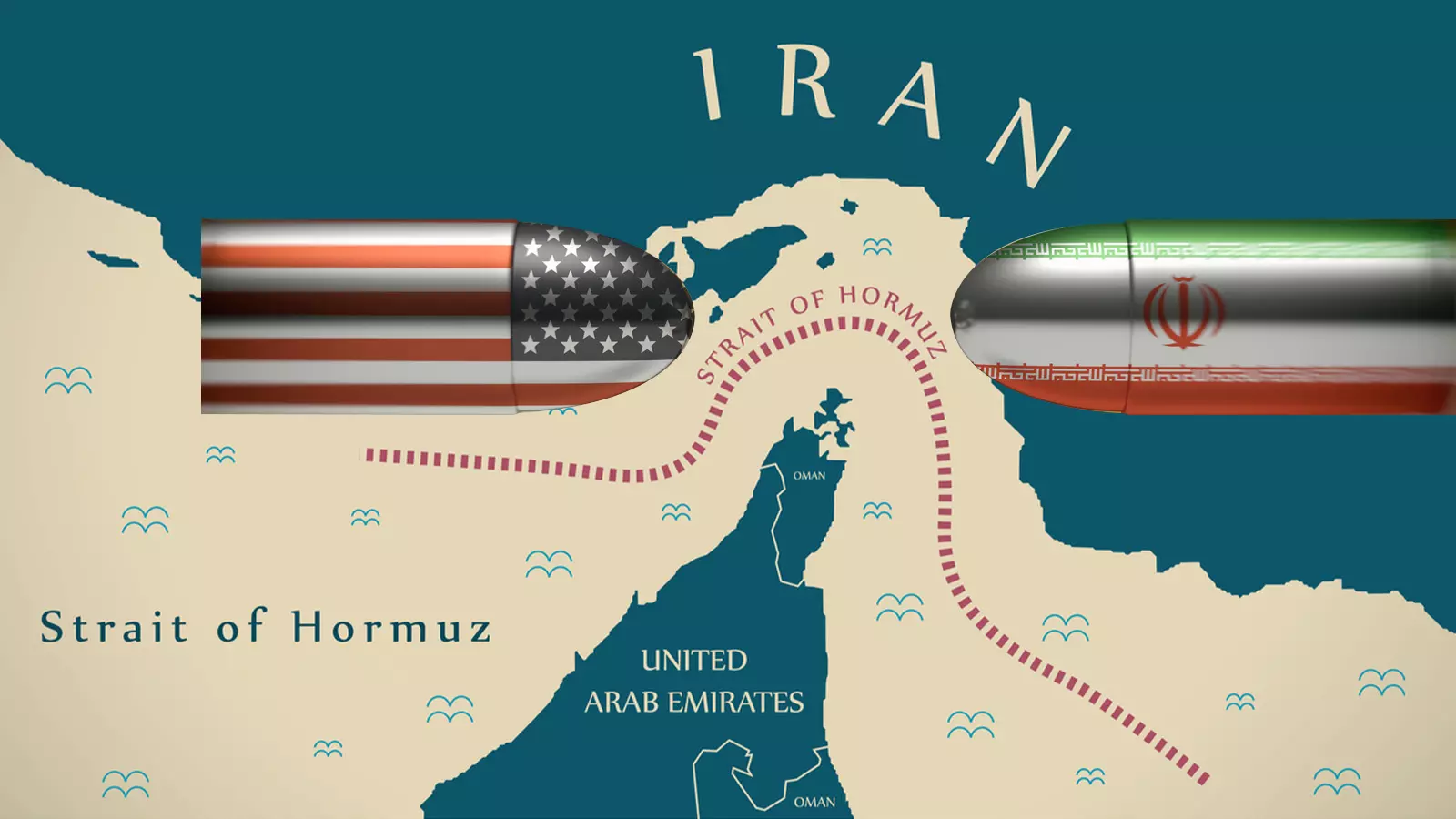
The Oil Trigger – Why Everything Hinges on Hormuz
If there is a single fault line that could turn this conflict into a global economic shock, it is the Strait of Hormuz.
Roughly a fifth of the world’s oil supply flows through this narrow stretch of water. Any disruption here – whether through blockades, mines, or attacks on tankers – does not remain a regional issue. It becomes a global one, almost instantly.
Recent price movements already hint at the fragility beneath the surface. Brent crude has surged past $110 per barrel, while U.S. crude has hovered near the $100 mark – levels not seen since the early phases of the Russia-Ukraine war. And this is happening even without a full-scale disruption.
What is more telling, however, is not just the price increase, but the shift in underlying conditions.
For weeks, global oil markets managed to absorb the shock – supported by surplus supply, inventory buffers, and strategic reserves. But that cushion is now eroding. According to market estimates, nearly 17.8 million barrels per day of flows through Hormuz have already been disrupted, with cumulative losses approaching 500 million barrels.
In other words, the system is moving from being buffered to increasingly fragile. And in a fragile system, even a small escalation can trigger outsized consequences.
This is precisely where the stagflation risk begins to take shape. A sustained spike in oil prices feeds directly into inflation, raises input costs across industries, and slows economic activity – all at the same time. It is the kind of shock central banks have limited tools to counter.
The assumption that energy flows will continue uninterrupted is not just optimistic—it may be dangerously complacent.
Markets Are Too Comfortable – The Mispricing Problem
Despite the growing list of risks, financial markets continue to behave as though a resolution is not just possible, but likely.
Equities remain relatively stable, with only modest corrections in major indices. Bond yields, while rising, do not yet reflect the kind of stress one would expect in a scenario where global energy supply is under threat. Volatility exists, but it is contained.
This is exactly what concerns Roubini.
The core issue is not that markets are unaware of the risks – it is that they are underestimating their probability and impact. In financial terms, this is known as a failure to price in tail risk—the low-probability, high-impact events that can reshape entire economic cycles.
Right now, markets appear to be pricing in a controlled outcome: limited escalation, contained disruptions, and eventual de-escalation through diplomacy.
But what if that assumption is wrong?
What if escalation does not remain contained? What if retaliation disrupts oil flows in a meaningful way? What if the conflict drags on longer than expected?
In that scenario, the adjustment would not be gradual. It would be abrupt and potentially severe. Markets are, in essence, making a bet. And like all bets, the risk is not in what is known, but in what is being ignored.

The Political Constraint – Why Backing Down May No Longer Be Viable
At the center of this unfolding situation is a political reality that cannot be ignored.
For Trump, this is no longer just a geopolitical decision – it is a domestic one. With elections approaching and credibility on the line, the room for retreat has narrowed significantly.
Backing down now, after weeks of escalation and rising tensions, risks being perceived not as restraint, but as defeat. And in politics, perception often carries more weight than outcome.
This creates a dangerous incentive structure.
If de-escalation guarantees political damage, while escalation at least offers a chance – however uncertain – of a decisive outcome, the rational choice may tilt toward taking that risk.
This is the “no off-ramp” scenario that Roubini alludes to. Not because diplomacy is impossible, but because it may no longer be politically acceptable.
And when decisions are driven by constraints rather than choice, the margin for error narrows considerably.
The Bigger Picture – A Conflict That Refuses To Stay Contained
What makes this situation particularly difficult to assess is that it sits in a grey zone – neither full-scale war nor genuine peace.
It is a state of controlled escalation, where actions are calibrated, signals are managed, and thresholds are tested. But history suggests that such states are inherently unstable.
The longer this persists, the greater the risk of miscalculation.
A targeted strike triggers a broader retaliation. A disruption meant to be temporary becomes prolonged. A signal intended as deterrence is interpreted as provocation.
And suddenly, a controlled situation spirals into something far less predictable.
The reference to the 1970s is not incidental. That period was defined not just by oil shocks, but by the inability of policymakers and markets to respond effectively once those shocks took hold.
The risk today is not just that history repeats itself but that it does so in a more interconnected and fragile global system.
The Last Bit,
This is no longer a conflict where outcomes sit on a spectrum. It is a high-stakes wager with sharply uneven consequences.
If escalation delivers a decisive shift, markets may eventually justify today’s calm. But if it triggers a deeper disruption – particularly through energy supply – then the adjustment will be swift, severe, and global.
The real danger is not escalation alone. It is the belief that escalation will remain controlled. Because in moments like these, risks don’t build gradually – they reveal themselves all at once. And by the time markets begin to price that in, it is usually already too late. What remains to be seen is what direction Trump is likely to take.