Is BYD Still Leading The EV Race Or Just Running Harder To Stay In place? If BYD Is Struggling, What Does It Say About The EV Boom It Helped Create?
BYD may have overtaken Tesla in global EV sales, but the victory appears far less convincing on closer inspection. Revenues are rising and volumes are expanding, yet profits are declining and visible cracks are beginning to emerge. The question is no longer who is leading the race, but what it is costing to stay ahead.

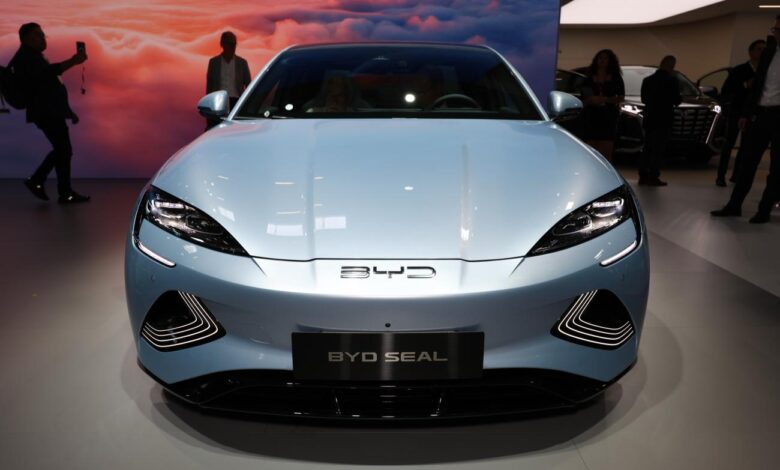
On paper, BYD’s performance continues to appear formidable.
The company reported record revenues of $116 billion, surpassing Tesla and reinforcing its position as the world’s largest electric vehicle maker by volume. Its sales have continued to grow, its global expansion is accelerating, and its push into new technologies, including next-generation fast-charging batteries, suggests that innovation remains central to its strategy.
However, a closer look reveals a far more uncomfortable reality.
BYD’s profit declined for the first time since 2021, falling nearly 20% year-on-year. At the same time, revenue growth has slowed sharply to just 3.5%, which is a significant departure from the rapid expansion that once defined the company’s rise. The implication is clear: even as BYD sells more vehicles, it is earning less from each one.
This is where the story begins to shift meaningfully.
Growth that is driven by aggressive pricing, relentless expansion, and shrinking margins begins to lose its quality over time. While the topline numbers continue to rise, the strength underpinning them is weakening.
In this context, outselling Tesla does not necessarily reflect dominance. Instead, it shows a strategic trade-off, where scale is being prioritised, even if it comes at the expense of profitability.
China Turns From Fortress To Battlefield
For years, China served as BYD’s greatest advantage, offering a vast, subsidy-driven market where scale could be achieved with relative ease and competitive pressures remained manageable.
That advantage is now turning into a significant liability.
BYD’s domestic sales have declined for six consecutive months, and early 2026 data indicates a sharp drop in volumes. At the same time, its market share has fallen noticeably as competitors continue to gain ground. A position that once appeared secure is now being actively challenged from multiple directions.
This shift is being driven in large part by an increasingly brutal price war.
As government subsidies are scaled back and the market becomes saturated with competing models, automakers are being forced to cut prices to maintain their positions. For BYD, which built its dominance on affordability and scale, this dynamic creates a difficult cycle in which lower prices are required to defend market share, thereby placing further pressure on already weakening margins.
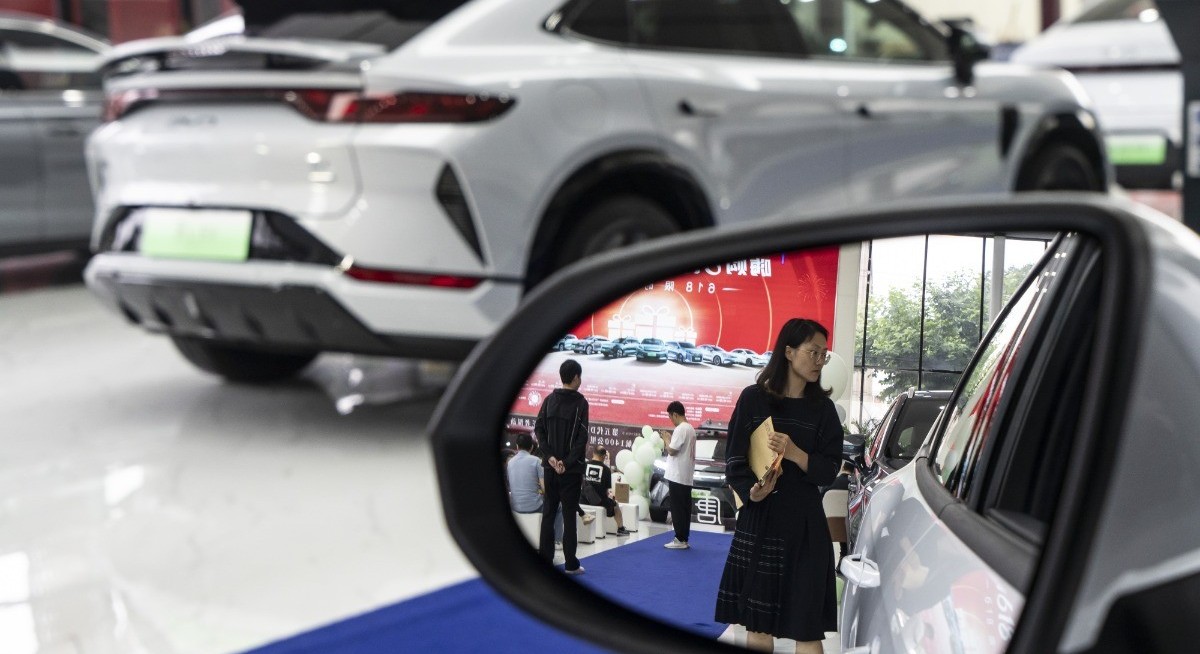
Compounding this challenge is the rapid rise of competition.
Domestic players such as Geely, Leapmotor, Nio, and other emerging entrants are closing the gap quickly by offering competitive technology, aggressive pricing, and faster product cycles. The technological edge that once distinguished BYD is no longer as pronounced as it once was.
China’s electric vehicle market has clearly entered a new phase, one defined less by expansion and more by survival. And for BYD, the very market that once powered its rise is now testing the resilience and sustainability of its business model.
Competition Closes In And BYD Is No Longer Untouchable
The pressure on BYD is not emerging in isolation. It is the result of a rapidly changing competitive ecosystem where the gap between the leader and the rest is narrowing at an uncomfortable pace.
For years, BYD benefited from a combination of scale, cost efficiency, and early technological momentum. That combination allowed it to dominate the mass-market EV segment while many competitors were still trying to establish themselves. That phase, however, appears to be coming to an end.
Rivals and other domestic manufacturers are no longer playing catch-up. They are launching vehicles with comparable features, competitive pricing, and increasingly sophisticated technology. In several segments, the differentiation that once worked in BYD’s favour is becoming harder to sustain.
At the same time, the competitive intensity is being amplified by the sheer number of players in the market. China’s EV ecosystem is crowded, aggressive, and evolving quickly, which leaves little room for any single company to remain comfortably ahead.
In contrast, Tesla appears to be taking a different approach. While its vehicle deliveries have slowed and its volumes have declined, the company is increasingly shifting its focus toward autonomous driving, artificial intelligence, and a broader mobility ecosystem. Tesla is, in effect, attempting to redefine the game rather than compete purely on volume.
This divergence is important.
BYD is competing harder within the existing structure of the EV market, while Tesla is attempting to move beyond it. As a result, BYD finds itself in a position where it must defend its leadership against multiple fast-moving competitors, all while operating in a market that is becoming less forgiving.
The implication is difficult to ignore.
BYD is no longer operating from a position of clear advantage. It is operating in a space where leadership must be constantly defended, and where the margin for error continues to shrink.

The Margin Trap – Selling More, Earning Less
The most telling pressure point in BYD’s current trajectory is not its sales volume, but the quality of its earnings.
The company has been forced to implement sweeping price cuts across a wide range of its models in order to remain competitive in an increasingly crowded market. While this strategy has helped sustain sales volumes, it has come at a significant cost.
Profitability has declined sharply, with net profit falling by nearly 20% year-on-year. Revenue growth, while still positive, has slowed considerably, indicating that the company’s ability to convert scale into meaningful financial returns is weakening.
This creates a structural problem.
When a company is required to continuously lower prices in order to maintain demand, it enters a cycle where growth becomes dependent on sacrificing margins. Over time, this erodes not only profitability but also financial flexibility, particularly as costs related to innovation, expansion, and supply chains continue to rise.
There are already signs of strain.
Operating cash flows have weakened, while borrowing has increased as the company continues to invest in growth and capacity expansion. Although BYD retains sufficient liquidity for now, the combination of rising debt and declining margins introduces a level of financial pressure that cannot be ignored.
The underlying question, therefore, becomes increasingly difficult.
What is the value of market leadership if it cannot be translated into sustainable profitability?
For BYD, this is no longer a theoretical concern. It is a reality that is beginning to reflect in its financial performance, and one that will likely shape its strategic decisions in the years ahead.
The Global Push – Expansion or Escape?
As pressures mount in its home market, BYD has increasingly turned its attention to global expansion as a key driver of future growth.
The company has made significant inroads into markets such as Europe, Latin America, and Southeast Asia, where pricing power is relatively stronger and competitive intensity, at least for now, is less severe than in China. Overseas sales have grown rapidly, and BYD has outlined ambitious targets to further scale its international presence in the coming years.
At one level, this strategy appears logical.
Expanding into higher-margin markets offers a pathway to offset the pressure on domestic profitability. It also allows BYD to diversify its revenue base and reduce its dependence on a single, increasingly volatile market.
However, this shift also raises important questions.

Global expansion, particularly at the scale BYD is attempting, is not without its own set of challenges. Regulatory scrutiny in international markets is intensifying, geopolitical considerations are becoming harder to ignore, and local competition is beginning to respond more aggressively to the entry of Chinese manufacturers.
In addition, building manufacturing capacity and distribution networks overseas requires significant capital investment, which adds to the financial strain at a time when margins are already under pressure.
This makes the nature of BYD’s global push more complex than it initially appears.
It is not merely an expansion strategy driven by opportunity. It is also, to some extent, a response to constraints at home. The need to look outward is being shaped as much by domestic weakness as by international potential.
In that sense, global markets are not just a growth avenue for BYD. They are becoming an increasingly necessary counterbalance to the challenges it faces within China.
A Timely Lifeline – Oil Shock And Renewed EV Interest
The broader macroeconomic environment has, in the near term, provided a degree of support to the electric vehicle sector.
Rising oil prices, driven in part by the ongoing tensions linked to the Iran war, have begun to shift consumer attention back toward electric mobility. Higher fuel costs tend to make internal combustion engine vehicles less attractive, thereby improving the relative appeal of EVs.
There are already indications that consumer interest in electric vehicles has increased in several markets as a result of this shift.
However, it would be premature to view this as a structural turning point.
Changes in consumer behaviour within the automotive sector tend to unfold gradually rather than abruptly. While higher fuel prices can influence purchasing decisions, factors such as upfront cost, charging infrastructure, range anxiety, and broader economic uncertainty continue to play a significant role.
Moreover, sustained inflationary pressures and supply chain disruptions could offset some of the demand-side benefits by increasing the overall cost of ownership, including electricity and vehicle prices.
As a result, the current oil-driven boost to EV interest is best understood as a temporary tailwind rather than a lasting solution.
For BYD, this may provide some near-term support to demand, particularly in international markets. However, it does not fundamentally address the structural challenges the company is facing in terms of margins, competition, and market saturation.
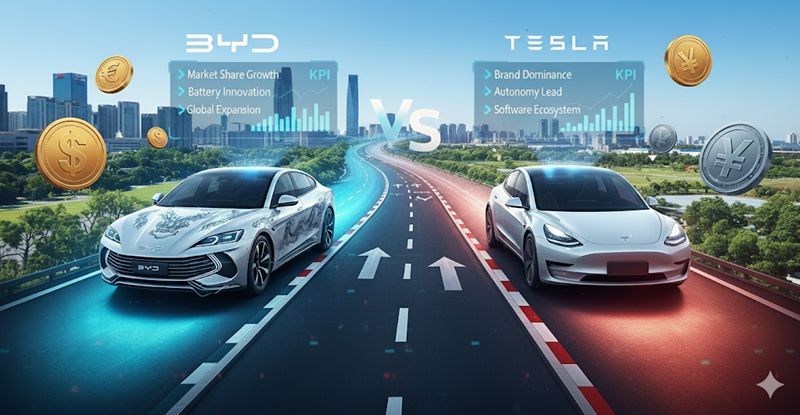
The Bigger Shift – The EV Industry Enters Its Most Brutal Phase
What is unfolding around BYD is not merely a company-specific slowdown. It reflects a broader transition taking place across the electric vehicle industry.
For much of the past decade, the EV sector was driven by favourable conditions. Government subsidies, policy support, and strong investor enthusiasm created an environment where growth was prioritised, and scale could be achieved relatively quickly.
That phase is now coming to an end.
Subsidies are being reduced or withdrawn, excess capacity is becoming more visible, and competition is intensifying across all segments. The industry is shifting from a phase of expansion to one of consolidation, where only those players with sustainable cost structures and genuine technological differentiation are likely to endure.
BYD’s own leadership has described the current environment as a “brutal knockout stage,” which is an unusually candid acknowledgment of the pressures facing the sector.
Within this new phase, the contrast between BYD and Tesla becomes even more pronounced.
Tesla appears to be repositioning itself beyond traditional automotive boundaries, focusing on autonomy, artificial intelligence, and a broader ecosystem that extends beyond vehicle sales. BYD, on the other hand, remains deeply anchored in the core EV market, competing aggressively on volume and price.
Both approaches carry risks.
However, the emerging dynamics suggest that simply producing and selling more vehicles may no longer be sufficient to sustain long-term leadership. The industry is evolving toward a model where profitability, differentiation, and strategic direction matter as much as scale.
For BYD, this shift represents a critical test.
The company that once defined affordable EV dominance must now prove that its model can withstand a far more demanding and unforgiving environment.
When Growth Begins To Show Its Fault Lines
As BYD continues to expand rapidly across markets, the pressures of operating at such scale are beginning to surface in ways that go beyond financial performance.
The company has recently faced scrutiny over labour practices linked to its overseas operations, particularly in Brazil, where contractors were accused of subjecting workers to conditions described by authorities as “slave-like.” Reports indicated that workers were living in overcrowded accommodations, had limited control over their wages, and, in some cases, had their passports withheld.
While BYD has stated that it was not directly aware of these violations and has since taken corrective steps, the episode raises broader concerns.
Large-scale, cost-driven expansion often depends on complex supply chains and third-party contractors. When oversight weakens or accountability becomes diluted, operational risks can quickly translate into reputational damage.
For a company whose competitive advantage is closely tied to cost efficiency, this introduces an uncomfortable question.
How sustainable is a model that depends on maintaining low costs at an ever-expanding global scale?
Because cost leadership, while effective in driving growth, can also create pressure points where compromises (whether operational, financial, or ethical) begin to emerge.
This is not merely an isolated controversy. It is a reflection of the strain that accompanies rapid expansion, and a reminder that growth, when pursued aggressively, often reveals its own fault lines.

The Last Bit,
BYD remains, by several measures, the most dominant electric vehicle manufacturer in the world today. It leads in volume, it has expanded globally at an impressive pace, and it continues to push forward with new technologies.
However, leadership, when stripped of profitability, pricing power, and clear differentiation, becomes increasingly fragile.
The company is now witnessing declining margins, intensifying competition, a weakening domestic market, rising global risks, and growing scrutiny over its operations. Each of these challenges, on its own, may be manageable. Taken together, they begin to point toward a deeper shift.
At the same time, Tesla, despite its own struggles with slowing deliveries, appears to be repositioning itself for a different future – one that is less dependent on vehicle sales alone.
This contrast is difficult to ignore.
If BYD, the company that helped define the era of affordable electric mobility, is now being forced to cut prices, defend market share, and expand aggressively just to sustain growth, then the question extends beyond a single company.
It forces a reassessment of the broader EV ecosystem itself. When growth comes this quickly, at this scale, and under such pressure, it is rarely without consequence. And if those consequences are already beginning to surface at the very top of the industry, then the real question is no longer whether BYD is still leading.
It is whether the model that built its dominance can endure what comes next.