Delhi’s Janakpuri School Case Raises A Terrifying Question; Are Indian Schools Really Safe For Children, And Why Is The Government Equally Responsible?
The Delhi Janakpuri school case has reignited fears surrounding child safety inside India’s educational institutions at a time when crimes against children have risen sharply nationwide. NCRB figures show such cases increasing from nearly 1.49 lakh in 2021 to around 1.87 lakh in 2024, deepening parental anxiety around school safety.


The molestation of a nursery-class student inside a Delhi Janakpuri school has once again exposed a deeply uncomfortable reality that India continues to confront with alarming regularity – educational institutions entrusted with the safety of children are repeatedly finding themselves under scrutiny for serious lapses only after abuse incidents have already occurred.
The case emerged from Delhi’s Janakpuri area, where the Directorate of Education (DoE), Government of Delhi, issued a show-cause notice to S.S. Mota Singh Senior Secondary Model School after a nursery-class girl was molested within the school premises during school hours. The incident has since triggered widespread concern, not merely because of the nature of the crime itself, but because of what the subsequent inquiry reportedly revealed about the school’s safety and supervisory mechanisms.
According to reports, the Education Directorate cited “grave lapses” in the functioning of the institution, raising serious concerns about child safety compliance, campus supervision and administrative accountability. The notice reportedly sought detailed explanations from the school management regarding the circumstances surrounding the incident, the deployment of staff, CCTV monitoring systems, internal reporting protocols and the broader implementation of child protection mechanisms on campus.
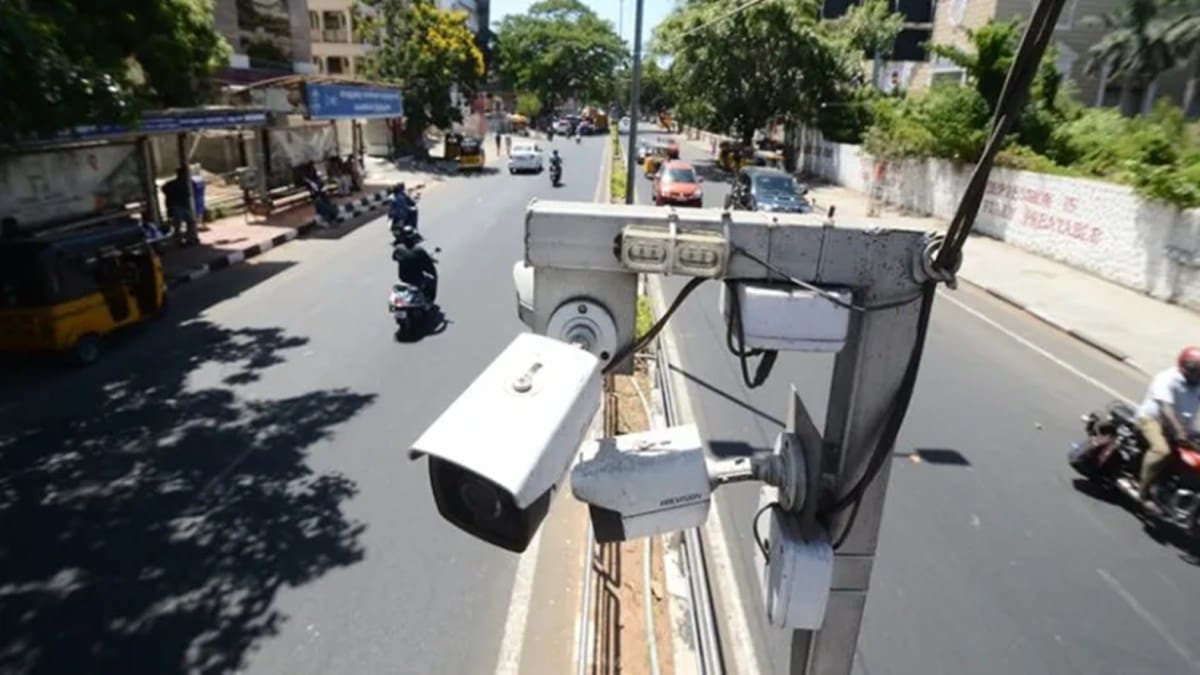
One of the most troubling aspects flagged during the inquiry reportedly involved surveillance infrastructure within the school premises. Authorities questioned the absence or inadequate installation of CCTV cameras in sensitive locations, an issue that has repeatedly surfaced across multiple school safety investigations in India over the years.
In institutions dealing with very young children, surveillance systems are often considered among the most basic layers of preventive oversight, particularly in vulnerable or isolated sections of campuses.
The inquiry also reportedly raised concerns regarding the functioning of nursery and pre-primary classes from an alternate premises located nearly a kilometre away from the school’s main recognised campus. According to reports, the Directorate questioned whether the arrangement complied with the Delhi School Education Act and Rules (DSEAR), while also examining whether the premises met the necessary fire safety, structural safety and health-related compliance requirements expected from recognised educational institutions.
The Delhi government’s response has indicated that the matter is being treated seriously at the administrative level. Reports suggest that authorities warned the school management that failure to provide satisfactory explanations could invite stringent action, including possible withdrawal of recognition, takeover of management and even recommendations related to cancellation of land allotment by the Delhi Development Authority (DDA).
Yet even as the administrative machinery now moves into action, the larger public unease surrounding the case continues to grow. The alleged victim in this case is not a teenager or an older student capable of clearly articulating trauma and events in legally structured language. The allegation involves a nursery-class child — a reality that intensifies both the emotional gravity of the incident and the disturbing questions surrounding supervision inside spaces meant to be among the safest environments for children.
The case has also reignited a broader national conversation around whether many educational institutions in India remain genuinely prepared to prevent, detect and respond to child safety threats proactively, or whether meaningful accountability still arrives only after public outrage, media scrutiny and administrative escalation force institutions into response mode.

Why Does Accountability In India Often Begin Only After Public Outrage?
The Delhi Janakpuri school case has once again pushed a familiar and deeply uncomfortable question into public view – why do serious institutional responses in India so often arrive only after a child has already been harmed, parents begin protesting, or media scrutiny forces authorities to intervene?
In case after case involving schools, hostels, coaching centres and educational campuses across the country, the pattern rarely appears accidental anymore.
The first instinct of many institutions confronting abuse allegations is often not transparency, immediate escalation or proactive accountability, but containment. Administrative silence settles in quickly. Internal discussions begin before police complaints are filed. Families are frequently told to remain patient while “inquiries” are conducted. Institutions move into damage-control mode long before the system moves into child-protection mode.
The Janakpuri case reflects many of these larger anxieties. The Directorate of Education’s show-cause notice reportedly highlighted “grave lapses” involving supervision, CCTV coverage and compliance concerns linked to the school’s functioning. Yet these questions inevitably lead to another troubling one — if such gaps existed, were they invisible before the incident occurred, or were they simply not treated with urgency until public attention made them impossible to ignore?
Educational institutions occupy a uniquely sensitive position in society because they function on an implicit promise of safety. Parents hand over children to schools believing that classrooms, buses, corridors and activity spaces are supervised environments designed to protect vulnerable young students. Every incident that exposes failures in that system therefore damages something much larger than the reputation of one institution – it weakens public trust in the educational ecosystem itself.
What makes such incidents particularly disturbing is that many of the lapses identified after abuse cases are often basic in nature and have repeatedly surfaced across investigations nationally over the years. Yet these concerns frequently become visible only after a major incident forces scrutiny onto an institution.
The concern therefore extends beyond one school in Delhi. The larger fear is whether India’s educational institutions, regulators and enforcement systems are still operating within a framework where preventive safety remains secondary to post-incident administration.
India Has Seen This Pattern Before
What makes the Delhi Janakpuri school case especially disturbing is that it does not feel unfamiliar. Over the past several years, India has witnessed a steady stream of incidents involving schools, colleges, hostels and educational campuses where questions around child safety, institutional accountability and delayed responses surfaced only after enormous public outrage had already erupted.
Different cities, different institutions and different victims – yet the underlying patterns often appeared strikingly similar.
One of the most defining cases that continues to shape public memory remains the murder of seven-year-old Pradyuman Thakur at Ryan International School in Gurugram in 2017. The child was found with his throat slit inside the school premises shortly after arriving for classes.
What followed transformed the incident from a horrifying crime into a national conversation about institutional failure itself. Questions emerged around surveillance systems, supervision, handling of evidence and the speed with which narratives were constructed around the case.
The controversy deepened further after the Central Bureau of Investigation later contradicted the initial theory presented by local police, exposing serious concerns surrounding the investigation’s early handling.
Even years later, the Ryan International case continues to be cited whenever conversations emerge around school safety in India because it exposed something larger than one institution’s failure – it revealed how quickly systems move toward damage control once a tragedy erupts inside an educational campus.
A similarly disturbing pattern resurfaced in Maharashtra’s Badlapur case in 2024, where two four-year-old girls were allegedly sexually assaulted inside a school by a male cleaner.
Public outrage intensified not only because of the nature of the crime, but because of allegations surrounding delayed reporting and institutional attempts to manage the fallout internally before decisive police action followed. Massive protests later erupted in the region, with many citizens accusing both institutional authorities and law enforcement agencies of failing to respond with urgency during the initial stages.
Then came the Gargi College molestation case in Delhi in 2020, where women students attending a college festival alleged harassment and molestation after large groups of men entered the campus premises. The incident once again raised troubling questions around campus security, institutional preparedness and delayed administrative responses despite the scale of the chaos that unfolded publicly.
Across multiple school bus assault cases, hostel abuse allegations and coaching-centre harassment complaints reported between 2020 and 2026, certain themes continued to repeat themselves with unsettling consistency: delayed FIRs,
surveillance failures, lack of supervision in vulnerable areas, attempts to minimise incidents initially, and institutions appearing more concerned about reputational damage than immediate transparency.
The Delhi Janakpuri school case now enters this broader and increasingly disturbing timeline.
The concern is no longer confined to isolated incidents involving individual institutions. Instead, a larger perception has steadily taken root among many parents across India – that educational institutions often appear administratively prepared to respond to outrage after an incident, but insufficiently prepared to prevent the incident itself.

The Youngest Victims Often Become The Most Invisible
What makes cases like the Delhi Janakpuri school incident particularly disturbing is not only the crime itself, but the age of the child involved. The victim in this case was a nursery student – a child so young that articulating trauma in coherent, legally understandable language becomes extraordinarily difficult. And that reality exposes one of the deepest structural weaknesses within India’s child protection framework.
Very young children do not process abuse the way adults expect victims to describe it.
A nursery child cannot always explain: what exactly happened, when it happened, who was involved, or why something felt frightening or wrong.
Instead, trauma often appears through behaviour. A child may suddenly become fearful of school, unusually withdrawn, emotionally distressed, unable to sleep properly or resistant to being touched or separated from parents. Sometimes the signs are subtle. Sometimes they are dismissed entirely as mood swings, adjustment problems or childish anxiety.
This is where the burden on families becomes immense.
Parents are often forced into the impossible position of trying to interpret fragmented behavioural changes while simultaneously confronting institutions that may demand clarity, timelines and evidence before acknowledging that something serious may have occurred. In many such cases across India, families have repeatedly alleged that their concerns were initially met not with urgency, but with hesitation, skepticism or procedural distancing.
That institutional hesitation becomes especially dangerous in cases involving children below the age of ten.
Experts and child-rights advocates have repeatedly warned that younger children remain among the most vulnerable victims precisely because they are dependent almost entirely on adult interpretation and intervention. Unlike older students, nursery and primary-school children are rarely capable of independently navigating reporting systems, identifying legal violations or persistently communicating trauma over long periods. The entire responsibility of recognition therefore shifts onto parents, teachers, school administrators and authorities.
And yet, many educational institutions in India still appear inadequately equipped to deal with trauma involving very young children.
The broader problem is that India’s child safety architecture often still functions within systems designed around conventional evidence and clearly articulated testimony. Very young victims rarely fit neatly into those expectations. They may communicate fear without language, trauma without sequence and distress without detail. In such situations, institutional sensitivity and proactive intervention become absolutely critical.
But when institutions instead move slowly, respond defensively or prioritise reputational management over immediate transparency, the youngest victims effectively become the least visible within the system meant to protect them.
This is perhaps one of the most unsettling realities emerging from repeated school safety controversies across India. The children most dependent on adult protection are often the ones least capable of demanding accountability for themselves. And when safety mechanisms fail around them, the consequences extend far beyond one institution or one incident – they shake the very foundation of trust upon which parents send their children into schools every morning believing they will return safe.

The Numbers India Can No Longer Ignore
One important complication while examining the scale of the problem is that India does not maintain a separate nationwide database specifically categorising “school-based molestation” or “school-campus sexual abuse” cases.
Most incidents are recorded under broader legal classifications involving crimes against children, sexual assault, harassment or offences under the Protection of Children from Sexual Offences (POCSO) Act. This means the actual number of incidents occurring inside or around educational institutions may be significantly larger than publicly visible case records suggest.
Even the available data, however, paints a deeply troubling picture.
According to NCRB figures, crimes against children in India have steadily risen over recent years, increasing from roughly 1.49 lakh recorded cases in 2021 to nearly 1.87 lakh cases by 2024.
A substantial portion of these cases involved sexual offences registered under the POCSO Act, where annual case volumes crossed tens of thousands nationwide. The scale of these numbers effectively means that India has been witnessing hundreds of child sexual offence cases being reported every single day in recent years.
And while these crimes occur across multiple social environments, recurring investigations and child-rights reports repeatedly revealed patterns that surfaced with disturbing consistency inside educational spaces.
One of the most alarming patterns involved the identity of perpetrators themselves.
In an overwhelming number of child sexual abuse cases nationally, the accused was not a stranger. Instead, the individuals involved were often people already within the child’s environment — teachers, school staff, drivers, wardens, caretakers, relatives or other familiar figures. This becomes especially significant in school-related incidents because educational institutions function fundamentally on trust. Parents assume schools are supervised and protected environments precisely because children interact there with adults considered institutionally verified and accountable.
In many cases, institutions appeared compliant on paper while vulnerable zones within campuses remained insufficiently supervised in practice. One particularly worrying trend emerging over recent years has involved the increasing visibility of cases concerning very young children, including nursery and primary-school students.
Experts repeatedly warned that institutions dealing with younger children require significantly stronger supervision systems because children below the age of ten are often unable to clearly articulate abuse, identify perpetrators or communicate trauma in conventional ways. This makes preventive vigilance and institutional sensitivity even more critical.
The judicial system has also struggled under the growing burden of child abuse litigation. POCSO courts across India continue to face significant backlogs, delayed trials and overburdened infrastructure, creating situations where justice often takes years. Experts and child-rights advocates have repeatedly argued that slow legal processes weaken deterrence and deepen trauma for affected families already navigating emotionally devastating circumstances.
At the same time, specialists caution that rising numbers do not necessarily mean such crimes suddenly emerged in recent years alone. Increased awareness, greater media attention, improved reporting mechanisms and wider familiarity with POCSO provisions have likely contributed to more cases being formally reported. Yet underreporting remains a major concern. Meaning the visible numbers may still represent only a fraction of the actual problem.
Why Show-Cause Notices Alone Cannot Solve This Crisis
The Delhi government’s show-cause notice to the Janakpuri school may signal that authorities are taking the matter seriously, but it also exposes a much larger structural problem – a show-cause notice, by design, is reactive.
It is an administrative instrument issued after authorities identify possible violations or failures serious enough to demand explanation from an institution. In the Janakpuri case, the notice reportedly sought answers regarding child safety protocols, CCTV infrastructure, staff supervision and the functioning of an alternate campus allegedly operating outside approved norms. Those are undeniably serious concerns.
Yet the larger and more uncomfortable question remains unavoidable: if such vulnerabilities existed within the institution, why were they not identified and corrected before a nursery child was harmed inside the campus?
This is where India’s school safety debate moves beyond one incident and into the larger issue of preventive governance itself.
Across multiple high-profile school safety controversies over the years, investigations repeatedly revealed that many institutions appeared compliant until a crisis forced closer scrutiny. Safety certificates existed. Internal committees existed. CCTV systems technically existed. POCSO guidelines existed. Yet once investigations began, authorities often uncovered serious monitoring gaps.
One of the biggest criticisms repeatedly raised by child-rights experts and legal observers is that school oversight in India often remains heavily dependent on documentation rather than sustained ground-level enforcement. Institutions submit paperwork, declarations, compliance records and periodic certifications, but independent surprise inspections and rigorous child-safety audits remain inconsistent across large sections of the education system.
This creates a dangerous gap between procedural compliance and actual safety preparedness.
The larger issue is that educational institutions occupy an unusually protected space within public trust. Schools are not factories, offices or ordinary commercial establishments. Parents send children into these spaces with the assumption that safety systems are continuously functioning even when no one is watching closely. When repeated incidents expose serious lapses only after a child has suffered harm, that foundational trust begins to erode.
This is why many experts argue that India’s child safety framework within educational institutions requires a far more preventive and enforcement-driven approach rather than one primarily activated after public outrage erupts.
The fear is no longer only about one school or one incident. It is the growing perception that institutional accountability in India often arrives only after children have already paid the price for its absence.

What Real Accountability Would Actually Look Like
If the Delhi Janakpuri school case eventually fades from headlines the way many similar incidents before it have, India will once again risk mistaking administrative response for structural reform. The larger problem is no longer a lack of awareness.
The country has witnessed enough cases, enough outrage and enough investigations to understand where the failures repeatedly emerge. The real issue is whether institutions and regulators are willing to move from reactive governance to preventive accountability. And that requires far more than issuing notices after a crisis erupts.
One of the most urgent reforms repeatedly demanded by child-rights experts involves regular, unannounced child-safety inspections across schools and educational campuses.
This becomes especially critical in institutions dealing with younger children.
Nursery sections, transport facilities, activity rooms, isolated corridors and washroom areas require far stricter supervision standards than what many schools currently maintain. The Delhi Janakpuri case itself reportedly raised questions around CCTV coverage and campus oversight, concerns that have surfaced repeatedly across multiple investigations nationally over the years.
Experts have also consistently argued for stronger mandatory reporting obligations within educational institutions. In several high-profile cases across India, allegations emerged that schools initially attempted to internally manage complaints before law enforcement agencies became formally involved. Child protection specialists argue that any allegation involving abuse or serious misconduct against a minor should trigger immediate and compulsory escalation protocols rather than discretionary institutional handling.
Another major concern involves staff verification and training. Across multiple investigations involving schools and hostels, questions repeatedly surfaced around: incomplete police verification, temporary staff hiring practices, outsourced personnel oversight, inadequate child-sensitivity training, and weak internal monitoring systems.
In environments involving very young children, even small supervisory failures can carry devastating consequences. This is why many experts now advocate periodic behavioural training, mandatory child-protection workshops and independent oversight mechanisms rather than relying solely on administrative compliance documents.
Mental health and counselling systems within schools also remain critically underdeveloped across large sections of India’s education ecosystem.
Children experiencing trauma often communicate distress indirectly through behavioural changes rather than formal complaints. Yet many institutions still lack: trained counsellors, child psychologists, dedicated child-protection officers,
or safe internal reporting mechanisms sensitive to younger students.
As a result, warning signs may remain unnoticed until situations escalate into crises.
The judicial side of the system requires urgent strengthening as well. POCSO courts across India continue to face enormous pressure from rising case volumes, delayed trials and limited infrastructure. Families navigating abuse cases often find themselves trapped in emotionally exhausting legal processes stretching across years.
Faster investigation timelines, specialised handling mechanisms and improved victim-support systems therefore remain crucial if accountability is to become meaningful rather than symbolic.
Perhaps most importantly, experts increasingly argue that India needs to move away from treating child safety as a secondary compliance issue within schools. Safety cannot remain another checklist item alongside infrastructure certificates and administrative documentation.

The Question India Keeps Avoiding
At the heart of the Delhi Janakpuri school case lies a question India has repeatedly confronted after every major institutional failure involving children, yet never answered decisively – are educational institutions ultimately structured to protect children first, or to protect themselves first?
The uncomfortable reality is that many of the patterns now visible in the Janakpuri case have surfaced repeatedly across India over the years.
The issue is no longer whether India has laws, regulations or guidelines relating to child protection. The POCSO Act exists. School safety frameworks exist. CCTV advisories exist. Staff verification requirements exist. Child protection committees exist. On paper, the architecture appears extensive.
Yet case after case continues to expose a troubling disconnect between written compliance and actual preparedness on the ground.
This disconnect becomes especially dangerous in institutions dealing with younger children. A nursery child cannot advocate for herself within a system designed around formal reporting, legal articulation and administrative escalation. She depends entirely on adults – parents, teachers, administrators and authorities – to recognise danger early and respond with urgency. When those systems move slowly, defensively or procedurally, the consequences become devastating.
The larger fear now emerging among many parents across India is not merely that isolated incidents occur. No system anywhere in the world can eliminate every risk completely. The deeper fear is whether educational institutions in India are genuinely prepared to prioritise child safety before reputational management, administrative convenience or regulatory paperwork.
For generations, schools in India occupied a space of unquestioned moral assurance. Parents may have worried about grades, discipline or academic pressure, but the assumption that children would physically return home safe from school remained largely unquestioned. Repeated incidents over recent years have begun unsettling that assumption in ways that are socially profound and psychologically damaging.
Every controversy involving a child harmed inside an educational institution leaves behind more than administrative consequences. It leaves behind hesitation in parents dropping children to school, anxiety surrounding transport systems, fear around unsupervised campus spaces and growing skepticism about whether institutions are truly equipped to detect and respond to danger before irreversible harm occurs.

And until accountability becomes proactive rather than reactive, many parents across the country are likely to continue asking the same deeply uncomfortable question after every new case emerges — if schools cannot consistently guarantee safety for the children entrusted to them, then where exactly does that trust go?