A ₹2 Crore Canal Failed A Hammer Test; The Bigger Question Is Why Nobody Tested It Earlier And How Much Of India’s Infrastructure Would Survive One?
If a canal could allegedly disintegrate under a simple hammer strike, where were the engineers, inspectors, consultants, quality auditors, and department officials while the project was being built?

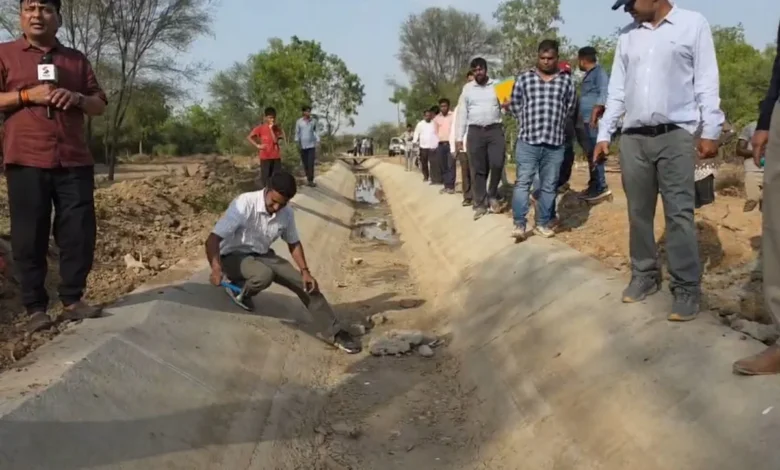
What began as a local grievance from farmers in Gujarat’s Vanthvali village has now turned into a much larger conversation about the condition of public infrastructure projects across India and the systems that are supposed to monitor them before taxpayer money is signed away as “completed work.”
The controversy erupted after repeated complaints were allegedly raised regarding the quality of construction of the Mahi Irrigation Minor Canal in Kheda district, a project reportedly built at a cost of approximately ₹2 crore and intended to improve irrigation access for local farmers.
Concerns had reportedly been circulating among villagers for some time, with many questioning whether the materials being used in the canal’s retaining walls and overall structure were capable of withstanding long-term usage, particularly in a region where such infrastructure directly affects agricultural livelihoods.
The issue escalated dramatically when the local MLA conducted a site inspection following these complaints, an exercise that would soon capture statewide attention after visuals emerged showing the legislator striking the canal wall with a hammer, only for portions of the structure to reportedly crumble almost instantly under the impact.
What was perhaps expected to be a symbolic inspection soon transformed into a deeply embarrassing moment for the authorities and contractors involved, as the visuals appeared to suggest that a publicly funded infrastructure project had failed a test of basic structural integrity with shocking ease.
The state government subsequently ordered the demolition of the canal stretch and directed that the project be rebuilt, while JCB machines were deployed to tear down portions of the approximately four-kilometre-long structure. Officials have reportedly assured local farmers that reconstruction will now take place under stricter quality controls, though the larger questions raised by the incident remain far from resolved.
The canal itself may eventually be rebuilt, but the incident has already exposed something far more serious than weak concrete or poor workmanship. A project of this scale does not simply emerge overnight without administrative approvals, engineering clearances, material certifications, inspections, and payment authorisations passing through multiple layers of the system.
Which is precisely why the most disturbing aspect of the controversy may not be that the canal failed a hammer test, but that it allegedly cleared every other test before reaching that point.
If local villagers could reportedly identify visible flaws during construction and a simple physical strike could expose the weakness so dramatically, then difficult questions naturally begin to emerge regarding how the project progressed through various stages of approval, whether inspections were conducted thoroughly or merely documented on paper, and whether the oversight mechanisms designed to protect public money and public safety are functioning in the manner they are intended to at all.

The Inspection Question Nobody Can Ignore
The visuals from Gujarat may have lasted only a few seconds, but they opened up a far larger and deeply uncomfortable question that sits at the heart of India’s infrastructure ecosystem: how does a public project reportedly weak enough to crumble under a hammer strike make its way through an entire chain of approvals, inspections, certifications, and financial clearances without anyone raising serious objections earlier?
Government infrastructure projects, particularly those involving irrigation systems, bridges, roads, canals, and public utilities, are theoretically designed to pass through multiple stages of scrutiny before being declared complete.
From the preparation of Detailed Project Reports and technical feasibility assessments to the approval of material specifications, contractor supervision, structural inspections, billing verifications, and final completion certificates, the system on paper appears layered with safeguards intended to ensure that public money is spent on durable and safe infrastructure.
In practice, however, the gap between paperwork and physical reality often appears disturbingly wide.
During the construction phase of most public works projects, engineers and supervising officials are expected to periodically inspect the quality of materials being used, monitor the progress of work, verify measurements, and certify that construction standards are being maintained before contractors receive payments linked to project milestones.
Concrete samples are supposed to be tested, reinforcement quality is expected to be checked, and site inspections are meant to ensure that the finished structure can safely perform the function for which it was sanctioned.
Which raises an obvious question in the Gujarat case: if the defects were allegedly visible enough for farmers to repeatedly complain about them and obvious enough for a hammer strike to expose almost instantly, then where exactly were the quality checks that should have identified these problems much earlier?
The issue here extends far beyond one canal or one contractor.
The incident touches upon a larger concern that has surfaced repeatedly across infrastructure projects in India, where inspections often appear rigorous on paper but questionable in implementation.
Audit reports from the Comptroller and Auditor General over the years have repeatedly pointed toward deficiencies in monitoring, irregularities in procurement processes, inadequate supervision, poor documentation, and failures in enforcing quality standards across various public works departments.
In several instances, projects have reportedly received approvals and payments despite visible deficiencies, delayed execution, or questionable compliance with technical norms.
Another uncomfortable aspect lies in the timing of such interventions.
Public outrage and political attention frequently emerge only after a structure collapses, cracks, caves in, or becomes impossible to defend visually, by which stage the financial damage has already occurred and public safety may already have been compromised.
The Gujarat canal controversy has become particularly striking precisely because the alleged failure was exposed before a major collapse or tragedy took place, though even that revelation reportedly required a dramatic public demonstration rather than the routine inspection systems already embedded within the project process.
This is where the incident begins to reflect a much larger institutional problem.
If oversight mechanisms function effectively only after citizens complain loudly, videos go viral, or structures visibly fail in front of cameras, then the purpose of having technical supervision and inspection frameworks in the first place comes under serious scrutiny.
The hammer test in Gujarat may have exposed weak construction material, but it also exposed the growing fear that many public infrastructure projects may not truly be subjected to meaningful scrutiny until something goes visibly wrong.
India’s Infrastructure Boom And The Relentless Race To Build
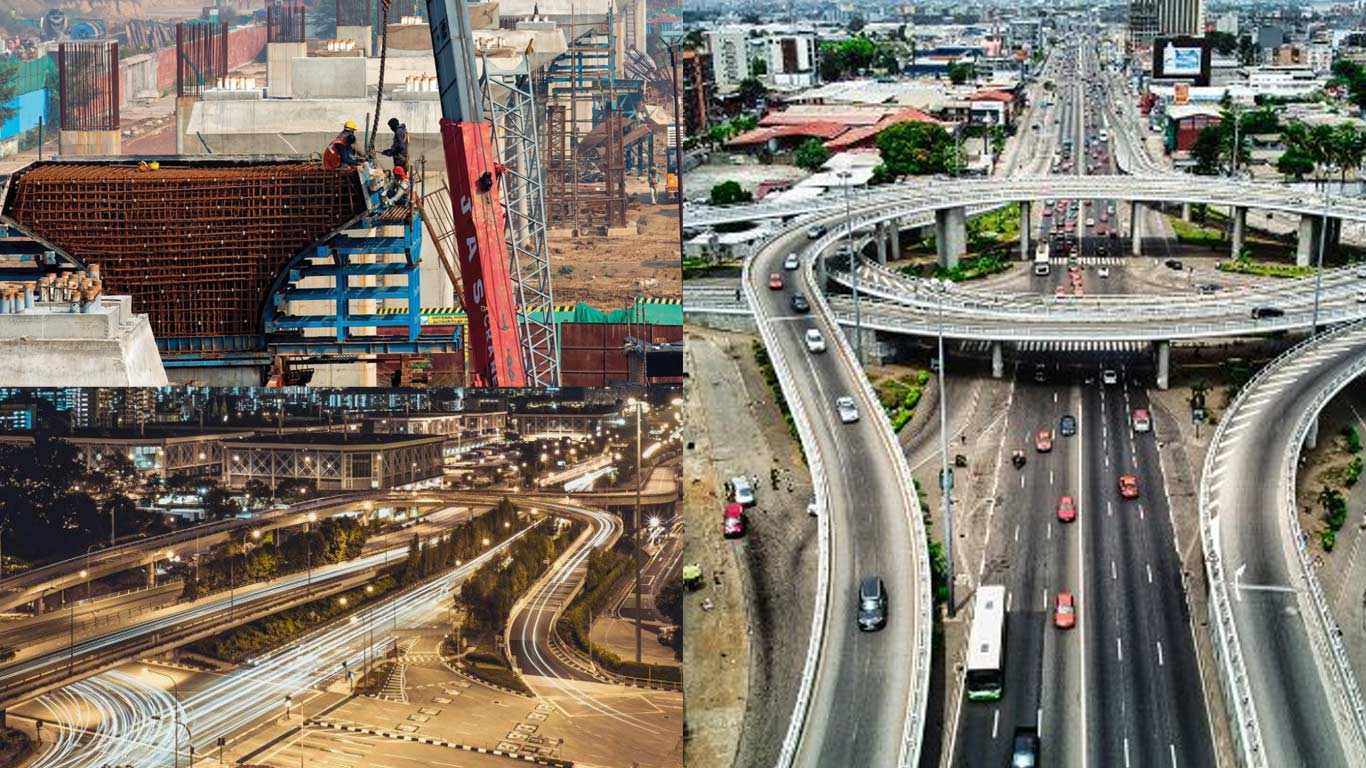
The questions emerging from Gujarat arrive at a time when India is witnessing one of the largest infrastructure expansion drives in its modern history, with the central and state governments aggressively pushing highways, rail corridors, irrigation systems, ports, airports, tunnels, industrial corridors, smart cities, logistics parks, and urban redevelopment projects as symbols of economic ambition and national growth.
Over the past several years, infrastructure spending has increasingly moved to the centre of India’s development strategy, with successive Union Budgets allocating record sums toward capital expenditure in an effort to accelerate connectivity, manufacturing, logistics efficiency, and employment generation.
The government’s PM Gati Shakti initiative, Bharatmala highway programme, Dedicated Freight Corridors, railway modernisation projects, and rapid urban expansion efforts have collectively transformed infrastructure into one of the defining pillars of contemporary governance and political messaging.
India’s capital expenditure allocation in recent budgets has crossed several lakh crore rupees annually, while the pace of highway construction, railway electrification, airport expansion, and urban infrastructure development has been repeatedly highlighted as evidence of the country’s accelerating economic transformation.
Across states, public works projects have also become politically visible assets, often showcased through inaugurations, foundation stone ceremonies, promotional campaigns, and high-profile announcements that present infrastructure growth as proof of administrative efficiency and developmental intent.
Yet beneath this ambitious expansion lies a far more complicated reality, one where the pressure to build quickly can sometimes collide with the equally important requirement of building responsibly.
Infrastructure projects are rarely judged only on long-term durability in the public imagination. Political systems often operate within election cycles, administrative targets, budget deadlines, and public expectations that reward visible completion far more immediately than invisible quality control.
Roads need to be inaugurated, canals need to become operational, bridges need to open to traffic, and urban projects need to demonstrate visible progress within limited timelines, creating an environment where speed frequently becomes the dominant metric of success.
Such pressure can gradually distort incentives across the execution chain.
Contractors competing for government projects often bid aggressively to secure tenders in an intensely competitive environment, while officials simultaneously face expectations to ensure rapid project execution and utilisation of allocated funds.
Under these conditions, maintaining strict quality standards may become more difficult, particularly when oversight mechanisms are weak, staffing shortages exist within departments, or supervision itself becomes vulnerable to political and administrative pressures.
The result is a system where impressive infrastructure numbers can coexist alongside recurring reports of cracks in newly constructed roads, collapsed bridges, weakened retaining walls, cave-ins at construction sites, flooding caused by poor drainage planning, and public assets requiring expensive repairs not long after completion.
In many instances, projects that are celebrated during inauguration ceremonies later return to the headlines under very different circumstances, often after structural failures, safety lapses, or allegations of corruption emerge.
The Gujarat canal controversy has resonated so strongly precisely because it punctured the larger image of modern infrastructure growth with a moment that appeared alarmingly primitive in its simplicity.
A publicly funded structure worth crores allegedly failed not under extreme weather conditions, seismic activity, or years of wear and tear, but during a basic physical inspection involving a handheld hammer. That symbolism has intensified public concern regarding whether the race to build infrastructure across India is being matched by an equally serious commitment to ensuring that what is being built can genuinely withstand the test of time.

How Government Tenders Work, And Where The System Begins To Fracture
Public infrastructure projects often appear straightforward from the outside, with governments announcing roads, canals, bridges, flyovers, housing projects, or irrigation systems as developmental milestones that will soon materialise on the ground.
Behind every such project, however, exists a vast administrative and financial machinery involving feasibility studies, departmental approvals, technical estimates, contractors, subcontractors, engineers, procurement systems, consultants, auditors, and payment clearances, all functioning within a structure that is theoretically designed to balance competition, efficiency, transparency, and accountability.
The process generally begins with the preparation of a Detailed Project Report, commonly referred to as a DPR, where technical specifications, cost estimates, timelines, material requirements, and execution plans are laid out before a project is formally approved. Once sanctioned, the project is typically opened for bidding through a tendering process in which contractors compete for the work based on financial quotations and technical qualifications.
In principle, competitive bidding is intended to ensure fairness and cost efficiency, preventing arbitrary allocation of public contracts and encouraging wider participation. In practice, however, the system has long faced criticism for creating incentives that can sometimes undermine quality rather than protect it.
One of the most debated aspects of government procurement is the “L1” model, where contracts are frequently awarded to the lowest bidder among technically qualified applicants. While the approach is meant to reduce costs for the government, critics have argued for years that excessively aggressive bidding often places contractors under immense financial pressure from the very beginning of a project.
Once profit margins become extremely thin, the temptation to recover costs through cheaper materials, reduced labour expenses, compromised construction practices, or manipulated compliance mechanisms can become significantly stronger.
The problem becomes even more layered once subcontracting enters the picture.
Large contractors who secure government projects often outsource portions of the work to smaller firms or local subcontractors, creating multiple levels between the original contract and the actual execution on the ground. By the time labour, material procurement, site management, and technical supervision filter through these layers, accountability can become fragmented and difficult to trace clearly when problems emerge later.
Responsibility frequently disperses across contractors, consultants, engineers, suppliers, and departmental officials, allowing systemic failures to be explained away as isolated lapses rather than symptoms of deeper structural problems.
Over the years, multiple audit findings and investigations have also pointed toward recurring concerns surrounding bid manipulation, cartelisation, collusive tendering practices, politically connected contractors, inflated project estimates, irregular approvals, and weak enforcement of blacklisting provisions.
The Comptroller and Auditor General has repeatedly spotlighted deficiencies in procurement oversight and project execution across sectors, while anti-corruption agencies in different states have periodically uncovered cases involving alleged kickbacks, forged quality reports, ghost measurements, and irregular billing practices within public works departments.
The challenge becomes particularly serious in sectors where technical complexity intersects with weak local oversight.
Rural infrastructure projects, smaller irrigation works, district-level construction contracts, and rapidly executed urban projects often operate far away from sustained public scrutiny, despite involving significant sums of taxpayer money. Once work begins on the ground, many citizens may only see the finished structure, with little visibility into the chain of decisions, approvals, inspections, and compromises that shaped its construction.
This is precisely why the Gujarat canal controversy has triggered such a strong public reaction. The visuals did not merely appear to expose a poorly built structure; they appeared to expose the possibility that a publicly funded project may have travelled through an entire administrative pipeline where every checkpoint functioned formally, yet the final outcome allegedly remained structurally weak enough to collapse under minimal force.
Such incidents intensify fears that the problem may not lie solely in isolated acts of corruption, but in a system where compliance itself can sometimes become procedural rather than meaningful.

Cheap Materials, Weak Oversight, And The Quiet Normalisation Of Compromise
Infrastructure failures rarely begin at the moment a wall collapses, a bridge cracks, or a construction site caves in. In many cases, the actual deterioration starts much earlier, during procurement decisions, material substitutions, cost-cutting measures, rushed execution schedules, ignored warnings, and inspection processes that may exist more convincingly on paper than on the ground.
Once contractors secure projects through highly competitive bidding, the pressure to maintain profitability can significantly alter how work is ultimately executed.
Construction materials account for a substantial portion of project costs, which means that even small compromises in cement quality, steel reinforcement, aggregate composition, curing practices, waterproofing, or soil preparation can create significant savings for those executing the work. Over time, such compromises may not always remain hidden, particularly when structures are exposed to pressure, weather conditions, water flow, heavy traffic, or prolonged usage.
Reports and investigations surrounding failed infrastructure projects across India have repeatedly pointed toward familiar patterns: low-grade materials allegedly being used in construction, poor reinforcement practices, inadequate curing of concrete, unskilled labour handling technically demanding tasks, structural designs being altered during execution, and supervision mechanisms failing to identify or prevent visible deficiencies before projects are approved for public use.
The concerns become even more serious when oversight itself appears vulnerable to compromise.
Quality control in public infrastructure projects theoretically depends upon periodic inspections conducted by engineers, consultants, departmental officials, and independent agencies responsible for certifying that construction standards are being followed.
Yet audit reports from the Comptroller and Auditor General over the years have repeatedly documented instances where inspections were incomplete, documentation was inadequate, testing procedures were not properly followed, penalties were not imposed despite deficiencies, and projects continued to receive payments despite serious irregularities being observed during audits.
A research paper published by the CAG on collusion in public procurement also highlighted the risks posed by cartelisation, bid rigging, and coordinated manipulation within tendering ecosystems, warning that such practices can severely undermine competition, inflate project costs, and weaken the overall quality of public works.
When procurement systems become vulnerable to collusion and supervision mechanisms simultaneously weaken, the result can be an environment where compliance appears technically complete while the physical structure itself remains deeply compromised.
This broader culture of adjustment and compromise has slowly become one of the most dangerous aspects of India’s infrastructure problem.
When Infrastructure Failures Stop Being Accidents
The consequences of poor construction, compromised supervision, and weak accountability do not always remain limited to financial losses or embarrassing viral videos.
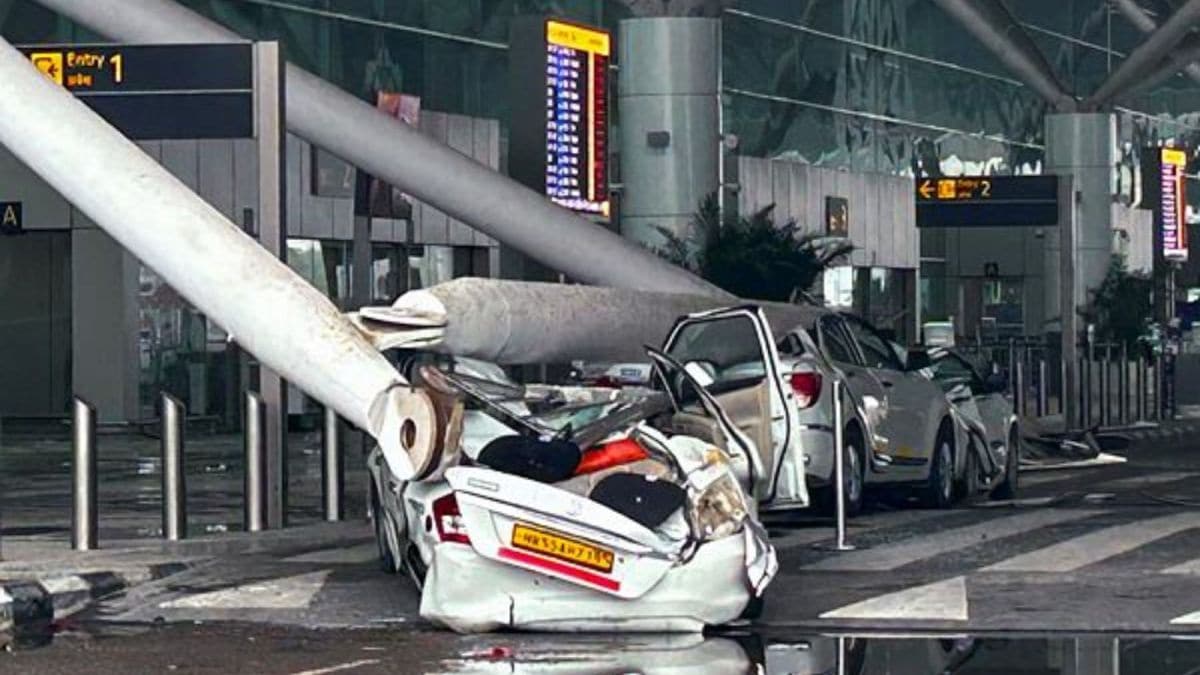
Across India, infrastructure failures have increasingly carried a far heavier cost measured in injuries, deaths, disrupted livelihoods, and public tragedies that often follow a disturbingly familiar pattern: a structure collapses, outrage erupts, officials announce inquiries, compensation is declared, contractors face temporary scrutiny, and public attention gradually shifts elsewhere until the next failure arrives.
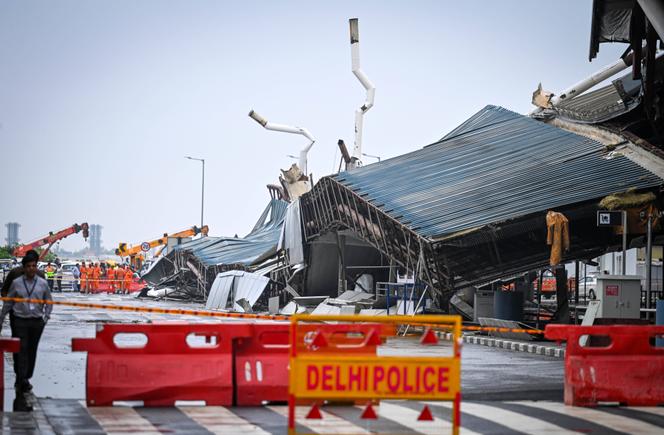
Over the past few years alone, multiple incidents involving bridges, flyovers, excavation sites, retaining walls, and under-construction structures have exposed the dangers associated with weak execution and inadequate oversight in public works projects.
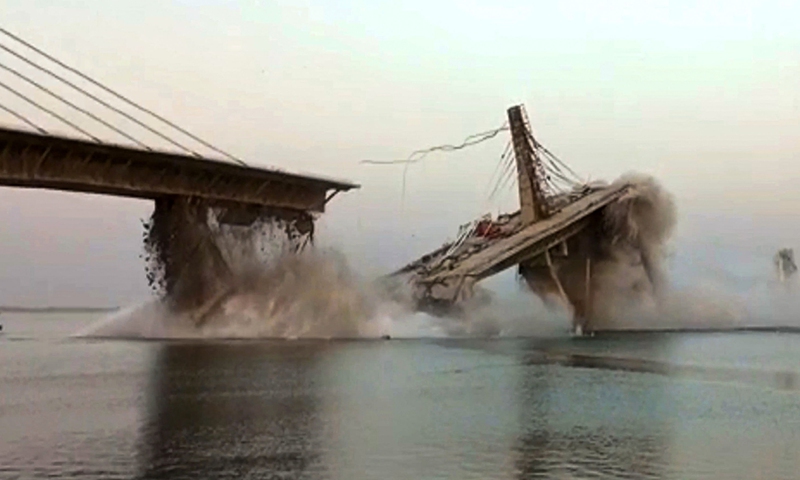
In Bihar, a section of the Vikramshila Setu bridge in Bhagalpur recently collapsed into the Ganga river, forcing authorities to halt movement across the structure and triggering concerns regarding maintenance standards and structural monitoring of ageing infrastructure.
In Jammu, an under-construction bridge collapsed during execution, reportedly trapping labourers beneath debris and resulting in fatalities that once again drew attention toward safety practices and supervision at construction sites.
Mumbai witnessed another tragedy when a piling rig collapsed at an under-construction flyover site, leading to the death of a police constable, while in Gurgaon, seven workers reportedly lost their lives after soil caved in at an under-construction sewage treatment plant project, raising serious concerns regarding excavation safety and contractor negligence.
Similar incidents have surfaced repeatedly across states. Individually, each of these incidents may appear isolated, shaped by unique local circumstances and different administrative failures. Collectively, however, they reveal a recurring pattern that is becoming increasingly difficult to ignore.
Infrastructure failures in India are no longer confined to rare or unpredictable events caused solely by natural disasters or extraordinary conditions. Many collapses now emerge from environments where questions regarding construction quality, inspection standards, material integrity, safety compliance, and project oversight had either already surfaced earlier or became visible almost immediately after the incident occurred.
The scale of the problem has also become difficult to dismiss statistically.
Investigations and media analyses tracking bridge collapses and structural failures across the country have documented hundreds of incidents over recent years involving injuries and fatalities, often exposing glaring inconsistencies between official assessments of infrastructure safety and conditions observed on the ground.
These numbers have intensified concerns that many public structures may remain vulnerable not only due to ageing or environmental stress, but also due to systemic weaknesses embedded during construction itself.
What makes this trend particularly alarming is that infrastructure failures do not affect abstract systems or financial spreadsheets alone.
Farmers lose irrigation access, commuters risk their lives on weakened bridges, labourers work in hazardous construction environments, and ordinary citizens become dependent upon public assets that are expected to provide safety and stability. When those structures fail, the damage extends far beyond broken concrete and collapsed steel. Public trust in governance itself begins to erode.
The Accountability Cycle That Rarely Changes
One of the most troubling aspects of infrastructure failures in India is not merely that they continue to occur, but that the institutional response surrounding them has itself become painfully predictable. Almost every major collapse, construction accident, or quality controversy is followed by an immediate burst of administrative activity involving suspensions, inquiries, compensation announcements, FIRs, technical committees, and promises of strict action, yet very few incidents appear to fundamentally alter how projects are monitored, executed, or approved in the future.
The pattern repeats with striking consistency across states and sectors.
A structure collapses or a major defect is exposed, local authorities rush to contain public outrage, officials order investigations, contractors deny wrongdoing, engineers are questioned, and preliminary reports begin identifying lapses in supervision or deviations from prescribed standards.
Political leaders frequently assure citizens that accountability will be fixed and that those responsible will face consequences. Over time, however, public attention fades, investigations slow down, and systemic reform rarely appears with the same urgency that accompanied the initial outrage.
In many cases, the individuals facing immediate scrutiny are junior engineers, site supervisors, local officials, or subcontractors operating closest to the project, while larger questions surrounding institutional oversight, procurement culture, political influence, and approval mechanisms receive comparatively limited examination.
This fragmented accountability structure often makes it difficult to determine where responsibility truly begins and ends once multiple layers of contractors, consultants, officials, and departments become involved in a single public works project.
Another recurring concern involves the effectiveness of blacklisting and enforcement mechanisms against contractors accused of poor-quality execution or negligence.
Across various states, allegations have repeatedly surfaced suggesting that firms facing scrutiny sometimes continue operating through associated entities, renamed companies, proxy arrangements, or fresh bidding structures that allow them to re-enter the system despite earlier controversies. Weak enforcement, lengthy legal disputes, administrative delays, and inconsistent monitoring frequently dilute the deterrent effect that penalties are supposed to create within the infrastructure ecosystem.
Audit findings over the years have also repeatedly pointed toward situations where deficiencies identified during inspections failed to result in timely corrective action.
In several cases, irregularities documented in reports either remained unresolved for extended periods or resurfaced later in the form of structural failures, delays, cost escalations, or additional public expenditure required for repairs and reconstruction.
This raises a deeply uncomfortable question regarding whether India’s infrastructure oversight system is genuinely designed to prevent failures proactively or whether it often functions reactively after public embarrassment or tragedy has already taken place.
The Gujarat canal incident fits into this larger cycle in a revealing manner. Demolition orders were issued only after the structure became a public controversy and visual evidence triggered wider outrage. Yet the canal had already reportedly passed through multiple stages of construction, approvals, and administrative supervision before reaching that point.
Such incidents intensify public suspicion that accountability within public infrastructure projects often becomes strongest only after a failure becomes impossible to deny publicly. This recurring gap between failure and reform has gradually contributed to a wider trust deficit among citizens.
Public infrastructure projects are funded through taxpayer money and presented as instruments of development, yet repeated controversies surrounding construction quality, corruption allegations, cost overruns, and structural failures have created growing scepticism regarding whether oversight systems are functioning independently and effectively enough to protect public interest.
The larger concern extends beyond individual collapses or defective projects. A system where failures repeatedly generate outrage without generating sustained structural reform risks normalising mediocrity within sectors that directly affect public safety, economic activity, and everyday life.
Once that normalisation sets in, the danger is no longer limited to isolated incidents of corruption or negligence; it begins to affect the credibility of governance itself.
Taxpayer Money, Public Risk, And India’s Growing Trust Deficit
Every collapsed bridge, damaged canal, weakened flyover, failed retaining wall, or poorly executed public project ultimately represents far more than an engineering lapse or an isolated administrative controversy.
At the centre of every such failure lies public money, collected from taxpayers with the expectation that it will be used to create durable infrastructure capable of improving lives, strengthening connectivity, supporting livelihoods, and sustaining economic growth over the long term.
When such projects fail prematurely, the consequences extend in multiple directions simultaneously. Citizens often end up paying twice for the same infrastructure, first through the original allocation used to construct the project and then again through fresh expenditure required for repairs, reconstruction, compensation, emergency response, litigation, or renewed tendering processes.
The Gujarat canal controversy illustrates this problem with uncomfortable clarity. A project reportedly built at a cost of nearly ₹2 crore now faces demolition and reconstruction, turning what was originally presented as developmental expenditure into a symbol of waste, inefficiency, and suspected institutional failure.
The financial burden, however, is only one dimension of the problem.
Infrastructure projects are not abstract administrative exercises disconnected from ordinary life. Farmers depend upon irrigation systems for agricultural stability, commuters rely on roads and bridges for daily mobility, labourers risk their safety at construction sites, and entire communities often structure economic activity around the assumption that public infrastructure will function reliably once completed. When these systems fail, the disruption affects livelihoods, productivity, safety, and public confidence simultaneously.
Repeated failures also create a dangerous psychological effect within society, gradually weakening trust in the credibility of public institutions themselves.
Citizens witnessing newly constructed roads deteriorating within months, bridges requiring repairs shortly after inauguration, or canals allegedly collapsing under minimal force naturally begin questioning whether infrastructure announcements are being driven more by visibility and political urgency than by long-term quality and accountability.
Over time, this scepticism can erode confidence not only in specific projects but in the larger governance structures responsible for executing them. This trust deficit becomes particularly damaging in a country undergoing rapid infrastructure expansion. India’s ambitions regarding logistics, industrial growth, urbanisation, manufacturing, and economic transformation depend heavily upon the creation of reliable public infrastructure capable of sustaining growth for decades.
Roads, ports, irrigation systems, railways, airports, and urban utilities are not merely construction projects; they form the physical backbone upon which broader economic ambitions rest. Weak execution within such sectors therefore carries consequences that extend beyond corruption scandals or viral controversies and begin affecting developmental credibility itself.
Public frustration surrounding such incidents is not rooted solely in anger over corruption or wasted expenditure. It is rooted in the growing perception that ordinary citizens are often expected to place trust in systems that sometimes appear to scrutinise projects rigorously only after failures become visible enough to provoke outrage.
The Last Bit, The Hammer Test India May Need
The canal in Gujarat may eventually be rebuilt with stronger materials, stricter supervision, and closer scrutiny, but the questions raised by the incident are unlikely to disappear as easily as the rubble now being cleared from the site.
What unfolded in Kheda district was not merely an embarrassing construction failure captured on camera; it became a rare moment where the weaknesses of an entire system appeared to reveal themselves in public view with unsettling simplicity.
A ₹2 crore structure allegedly collapsed under the force of a handheld hammer, yet the more disturbing reality lies in the possibility that it had already survived far more important tests before that moment ever occurred.
Administrative approvals had reportedly been granted, inspections were presumably completed, engineers and officials had likely signed documents certifying progress, payments moved through the system, and the project itself was close enough to completion to be presented as functioning public infrastructure. The hammer did not create those failures; it merely exposed them visibly.
India’s infrastructure ambitions remain enormous and undeniably important. A country attempting to modernise rapidly, improve logistics, strengthen manufacturing, expand connectivity, and support long-term economic growth requires aggressive investment in roads, railways, irrigation systems, urban utilities, bridges, ports, and public works projects.
Yet the credibility of that transformation cannot rest solely on the number of kilometres built, projects inaugurated, or budgets announced. It ultimately depends upon whether the infrastructure being created can endure safely, reliably, and honestly long after the ceremonies and headlines have passed.
The larger danger emerging from repeated infrastructure controversies across the country is not simply financial waste or political embarrassment. A far more serious risk begins to emerge when citizens gradually lose confidence in the systems responsible for certifying public safety and safeguarding taxpayer money. Once people begin assuming that inspections may be superficial, oversight may be compromised, and accountability may arrive only after collapse or tragedy, trust in governance itself begins to weaken.
The Gujarat canal controversy struck such a deep chord precisely because it forced an uncomfortable thought into public consciousness.
If one structure reportedly failed so visibly under a basic physical test, how many others across the country would withstand the same scrutiny if they were examined with equal honesty?
The canal failed a hammer test. The larger question now confronting India is whether its infrastructure oversight system may be failing a far bigger one.