Trump And Xi Reveal Positive Signals In Beijing As Putin Waits In The Wings; But What Happens To Iran Now?
Donald Trump is leaving Beijing just as Vladimir Putin prepares to arrive, placing China at the centre of an increasingly unstable global order. Yet beneath the trade optics, investment promises and diplomatic choreography, a far more uncomfortable question is beginning to emerge: where exactly does all this leave Iran?

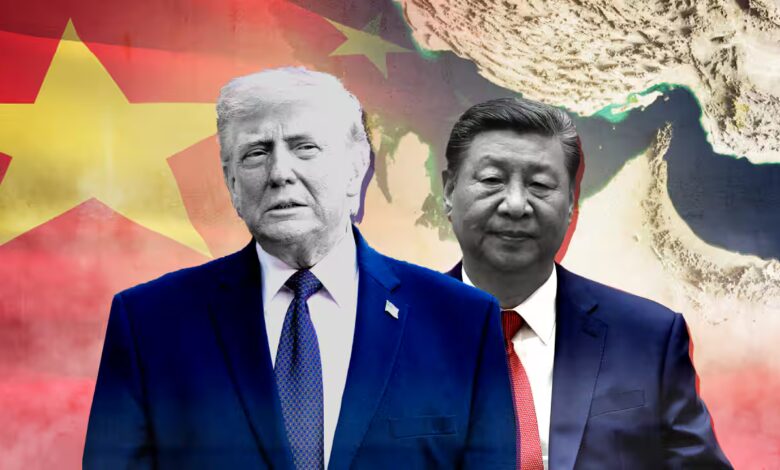
Relations between the United States and China, for much of the past decade, have been defined by tariffs, technology wars, sanctions, semiconductor restrictions and growing distrust over Taiwan. Expectations ahead of Donald Trump’s latest visit to Beijing were therefore cautious at best, with many analysts predicting symbolism rather than substance.
And yet, the summit produced enough positive signals to suggest that both Washington and Beijing may be attempting to stabilize at least parts of an increasingly fragile relationship.
Trump emerged from the talks claiming China had agreed to purchase 200 Boeing aircraft, expand purchases of American oil and agricultural products and potentially deepen investment cooperation with the United States. Chinese President Xi Jinping, meanwhile, spoke of cooperation, “win-win” outcomes and wider economic engagement.
Trump arrived in Beijing accompanied by some of America’s most influential corporate leaders, including Tesla’s Elon Musk and Nvidia’s Jensen Huang, underlining how central artificial intelligence, semiconductors, manufacturing and supply chains have now become to the US-China relationship. The presence of business heavyweights also reflected a larger reality: despite years of strategic rivalry, the world’s two largest economies remain deeply intertwined.
But the summit was never only about trade.
Hovering quietly over the discussions were three explosive geopolitical flashpoints: Taiwan, the Strait of Hormuz and Iran.
Reports also indicated that Beijing had privately cautioned the Trump delegation against making statements on Taiwan that could inflame tensions, reinforcing how central the issue remains to China’s strategic thinking. At the same time, discussions surrounding the Strait of Hormuz revealed another shared concern between Washington and Beijing – neither side can afford a prolonged disruption in global energy flows.
That detail may ultimately prove more important than the trade announcements themselves.
According to summit readouts, both sides agreed that the Strait of Hormuz must remain open to ensure the free flow of energy. Trump later indicated that Xi had expressed willingness to help stabilize the situation if possible.
That is significant because nearly a fifth of the world’s seaborne oil passes through the Strait of Hormuz, making it one of the most critical maritime chokepoints on the planet. Any instability there immediately threatens shipping costs, oil prices, inflation and global trade itself.
And that is where the Iran question begins to quietly loom over the entire Beijing summit.
For years, Tehran believed its strategic partnership with Beijing would provide economic breathing room against Western pressure and sanctions. China became one of the largest buyers of Iranian oil, while Beijing often positioned itself as a counterweight to American influence in the region.
But the current Hormuz crisis may be exposing a deeper contradiction inside China’s global strategy.
Beijing may want American influence constrained, but it also needs Gulf oil flowing, shipping lanes functioning and global commerce stable. Those interests become increasingly difficult to balance if tensions around Iran continue escalating. The result is a geopolitical balancing act that may soon become far harder for China to sustain – especially as Trump departs Beijing and Vladimir Putin prepares to arrive next.
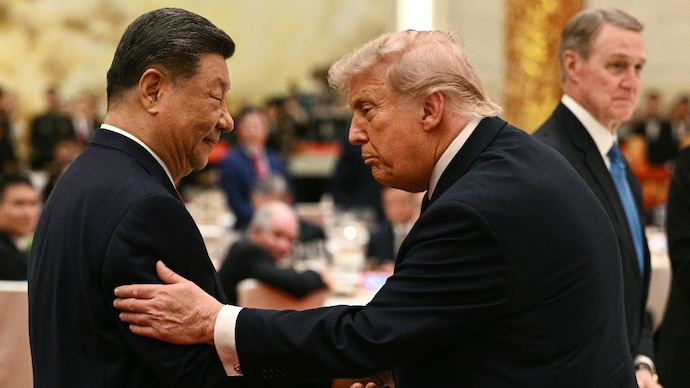
The Iran Question Quietly Hovered Over The Entire Beijing Summit
While trade dominated the headlines emerging from Beijing, the more consequential developments may have been unfolding elsewhere – in the Gulf, around Tehran and across the Strait of Hormuz.
Even as Trump and Xi projected cautious optimism on economic cooperation, Iran appeared to be moving in the opposite direction.
Tehran formally rejected the reported American 14-point proposal, describing it not as a peace framework but as a demand for surrender. Around the same time, the Islamic Revolutionary Guard Corps launched a large-scale five-day military exercise around Tehran under the codename “Martyr Commander,” signaling that Iran was preparing for prolonged confrontation rather than immediate de-escalation.
Then came perhaps the most revealing message of all.
An IRGC-linked officer reportedly broadcast over open marine radio that the Strait of Hormuz “will not be opened by American tweets,” a remark that was both symbolic and strategic. On the surface, it was a direct dismissal of Washington’s pressure tactics. More importantly, however, it reinforced the reality that Iran continues to view Hormuz as one of its most powerful geopolitical pressure points.
That leverage is substantial.
The Strait of Hormuz is not merely another shipping route. It is effectively the energy artery of the global economy. Iran understands this reality well. Any disruption there instantly reverberates across oil prices, shipping insurance, commodity markets, inflation and supply chains stretching from Asia to Europe.
For decades, Tehran’s strategic doctrine has relied partly on the assumption that its ability to threaten disruption in Hormuz gives it deterrence power far beyond its economic size. The mere possibility of instability in the strait has historically been enough to unsettle global markets and force major powers to pay attention.
But the geopolitical environment surrounding Iran may now be changing in subtle yet important ways.
The same China that has long purchased Iranian oil and helped soften the impact of Western sanctions is also one of the world’s largest importers of Gulf energy. Beijing’s economy depends heavily on uninterrupted maritime trade, stable commodity prices and functioning supply chains. A prolonged Hormuz crisis may hurt China almost as much as it hurts the West.
That is the contradiction quietly emerging beneath the Beijing summit diplomacy.
China may still oppose Western attempts to isolate Iran entirely, but Beijing also has little appetite for a wider Gulf conflict that destabilizes energy markets and damages its already fragile economic recovery. Unlike Russia, which can often benefit from higher oil prices and prolonged geopolitical instability, China remains deeply dependent on global economic stability.
And that changes the equation for Tehran.
For years, Iran could reasonably assume that growing tensions with Washington would naturally push Beijing closer toward Tehran. Now, however, the Hormuz crisis risks placing China in an uncomfortable middle position – one where its strategic rivalry with the United States collides directly with its economic dependence on stable global trade.
That may explain why the language emerging from Beijing during Trump’s visit appeared far more focused on “stability,” “energy flows” and “keeping shipping lanes open” than on openly backing Iran’s hardline position.
The larger question now is whether Tehran is beginning to discover the limits of strategic partnerships in a world increasingly driven not by ideology, but by economic self-interest.
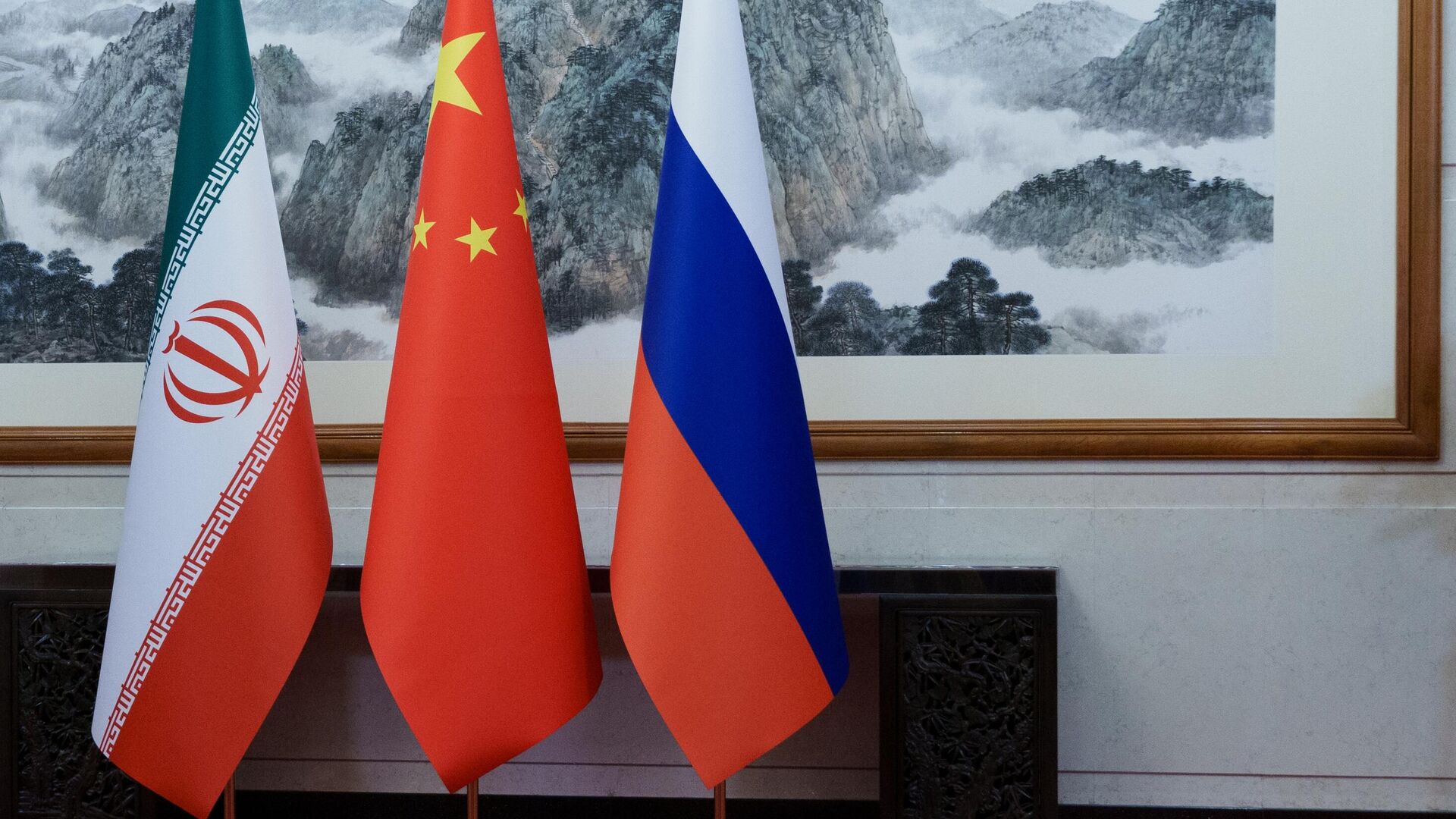
China’s Iran Dilemma Is Very Different From Russia’s
One of the biggest mistakes in understanding the current geopolitical scenario is assuming that China and Russia view the Iran crisis through the same strategic lens.
They do not.
While both countries oppose unchecked American dominance and often coordinate diplomatically against Western pressure, their economic structures, geopolitical priorities and tolerance for instability are fundamentally different. The deeper the Hormuz crisis grows, the more visible those differences become.
For Moscow, prolonged global instability can often create strategic advantages.
Higher oil prices strengthen Russian revenues. A distracted West reduces pressure on Russia’s position in Ukraine. Growing geopolitical fragmentation weakens NATO cohesion and forces Washington to spread its diplomatic and military attention across multiple theatres simultaneously. In many ways, a prolonged crisis in the Middle East can serve Russian interests by stretching American strategic bandwidth.
China’s calculations are far more complicated.
Beijing may want a world in which American influence is reduced, but China’s economic rise was built within a relatively stable global trading system. Chinese manufacturing depends heavily on uninterrupted shipping lanes, predictable energy supplies and functioning export markets. Unlike Russia, China cannot easily insulate itself from large-scale disruptions to global commerce.
This distinction matters enormously in the context of Iran.
China imports massive quantities of oil from the Gulf region and remains deeply vulnerable to volatility in energy markets. Repeated disruptions around the Strait of Hormuz would not simply hurt Western economies; they would also increase China’s import costs, damage industrial output and place additional pressure on an economy already grappling with slowing growth, property market stress and weakening global demand.
That is why Beijing’s incentives increasingly differ from Moscow’s.
Russia can survive, and in some cases even benefit, from a fractured world order. China’s economic system still depends heavily on a functioning one.
This may explain why Beijing’s public messaging around the Iran crisis has remained noticeably cautious. Chinese officials have repeatedly called for ceasefires, reopened shipping lanes and regional stability rather than overt escalation. Even during Trump’s visit, Chinese readouts appeared more focused on stabilizing energy flows and preserving economic order than on aggressively confronting Washington over Iran.
That does not mean China is abandoning Iran.
Beijing still views Tehran as strategically useful: a supplier of discounted oil, a regional counterweight to American influence, and an important node within China’s broader Eurasian ambitions.
However, usefulness and unconditional alignment are not the same thing.
China’s relationship with Iran increasingly appears transactional rather than ideological. Beijing may support Tehran diplomatically up to a point, but there are clear signs that China does not want the Iran crisis spiraling into a prolonged economic shock capable of destabilizing global trade itself.
And that creates a growing strategic dilemma for Beijing.
If China pressures Iran too openly, it risks weakening an important regional partner and appearing aligned with American objectives. Yet if Beijing fully backs Iranian escalation around Hormuz, it could endanger the very shipping routes and energy flows that fuel China’s economy.
In effect, China is attempting to balance two competing ambitions simultaneously:
challenging American influence while preserving the stability of the global economic system that enabled China’s rise in the first place. The deeper the Gulf crisis becomes, the harder that balancing act may become to sustain.
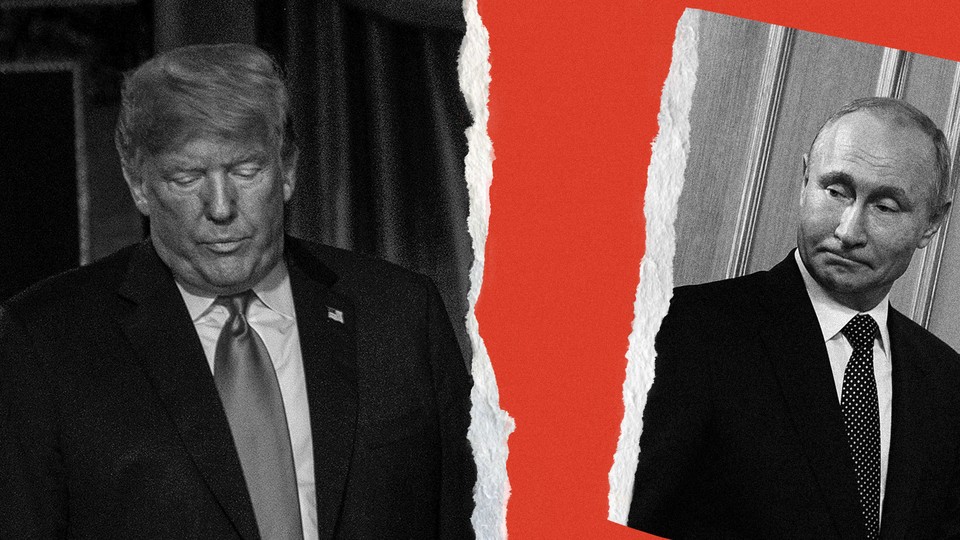
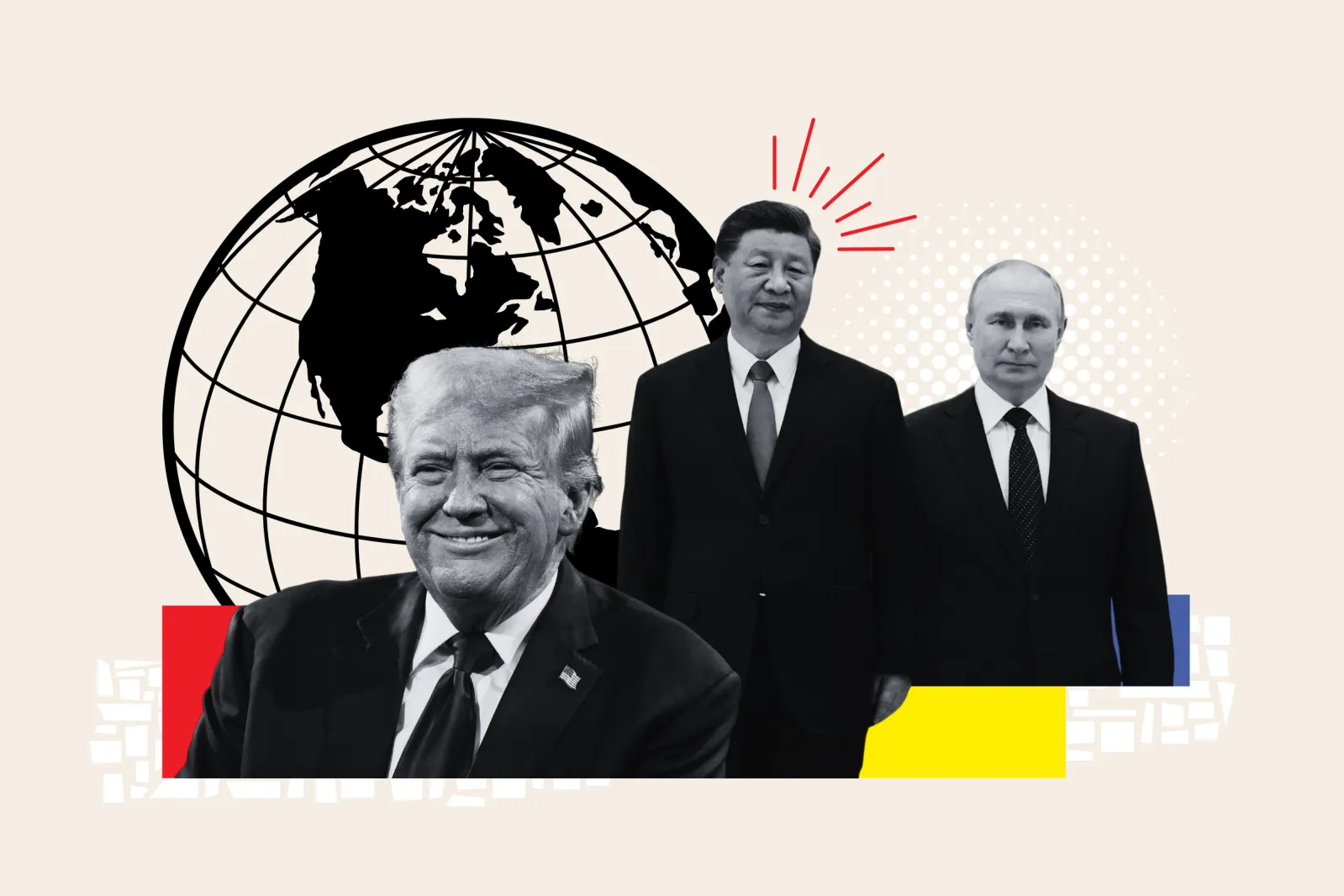
Trump Leaves Beijing, Putin Prepares To Arrive, And Xi Sits At The Center Of It All
If the Trump visit showed China’s effort to stabilize relations with the United States, Vladimir Putin’s upcoming arrival in Beijing may reveal the other side of Xi Jinping’s global balancing strategy.
Within the span of just a few months, Beijing would have hosted leaders from nearly all the other permanent members of the United Nations Security Council. French President Emmanuel Macron visited China late last year, British Prime Minister Keir Starmer followed earlier this year, Trump has now concluded his high-stakes Beijing summit, and Putin is expected to arrive next.
That sequence is not merely diplomatic coincidence.
It reflects China’s growing ambition to position itself at the centre of global power politics at a moment when the international order appears increasingly fractured. Beijing is attempting to project itself not simply as another major power, but as an indispensable balancing force capable of engaging rival camps simultaneously.
And that may be exactly what makes the current moment so strategically delicate.
Trump arrived in Beijing seeking trade stabilization, investment commitments and cooperation on energy security. Putin, meanwhile, comes from a vastly different geopolitical context — one shaped by the Ukraine war, deepening confrontation with the West and Moscow’s increasing dependence on Beijing after years of sanctions and isolation.
Yet Xi is engaging both.
Can China Really Balance Trump, Putin, Iran And Global Trade Simultaneously?
For much of the past two decades, China benefited from a relatively predictable global environment. Beijing could expand trade, deepen manufacturing dominance, secure energy supplies and steadily increase geopolitical influence without being forced into sharp ideological confrontations.
That world is beginning to change.
The Ukraine war, the Iran crisis, semiconductor restrictions, tensions over Taiwan and the growing fragmentation of global trade are all pushing major powers into increasingly uncomfortable strategic positions. Nations are no longer being judged merely by the alliances they build, but by the contradictions they can successfully manage.
And few countries today face contradictions as complex as China’s.
Beijing wants stable trade ties with the United States while simultaneously reducing American influence over the global order. It wants deeper coordination with Russia without becoming trapped inside Moscow’s confrontational posture toward the West. It wants access to Iranian energy and strategic connectivity while avoiding a prolonged Gulf crisis capable of destabilizing shipping lanes and oil markets.
Those objectives may not remain compatible forever.
The Hormuz crisis is particularly revealing because it exposes the tension between China’s geopolitical ambitions and its economic dependencies. Beijing may support a more multipolar world politically, but economically it still relies heavily on the stability of global commerce, maritime trade and international supply chains.
That creates limits to how far China can go in backing disruptive escalation.
This is also why the current global environment increasingly feels less ideological and more transactional.
Strategic partnerships today are often shaped less by shared values and more by overlapping interests that can shift rapidly when economic realities change. Countries cooperate where convenient, compete where necessary and avoid commitments that threaten core national priorities.
Iran may now be confronting that reality directly.
For years, Tehran believed closer ties with Beijing and Moscow would help offset Western sanctions and diplomatic isolation. To a large extent, that calculation worked. China continued purchasing Iranian oil, Russia deepened military and economic cooperation with Tehran, and both powers frequently criticized American pressure campaigns.
But the current crisis may be revealing the limits of that arrangement.
Neither China nor Russia necessarily wants Iran weakened completely. Yet neither power appears eager to absorb the economic consequences of a wider regional conflict either. Moscow’s priorities remain focused heavily on Ukraine and its broader confrontation with NATO. China, meanwhile, appears increasingly preoccupied with preserving energy stability, trade flows and economic recovery.
That leaves Tehran in a more uncertain strategic position than before. The irony is striking. And that may be the deeper significance of the Trump-Xi summit.
The Last Bit,
The positive rhetoric surrounding trade, investment and cooperation may have projected temporary stability, but beneath the surface, the summit exposed the increasingly difficult balancing act facing Beijing. China is trying to simultaneously manage rivalry with Washington, partnership with Moscow, strategic ties with Tehran and dependence on a stable global economy.
The problem is that the current world order may no longer allow all those positions to coexist comfortably forever.
Neither Beijing nor Moscow appears eager to abandon Iran entirely. Yet neither seems willing to fully subordinate its own national interests to Tehran’s regional strategy either. And that may be the deeper lesson emerging from the extraordinary diplomatic sequence unfolding around Beijing.
Trump arrived seeking trade stabilization, investment commitments and cooperation on global energy security. Putin now prepares to visit China as Moscow continues relying on Beijing economically and strategically.
Xi Jinping, meanwhile, is attempting to position China as the balancing power capable of engaging all sides simultaneously. That may ultimately explain why the Iran question hovered so quietly yet so heavily over the Trump-Xi summit.