The Managed Silence: Why Indian Schools Treat Child Safety As A PR Problem Instead Of A Governance Failure?

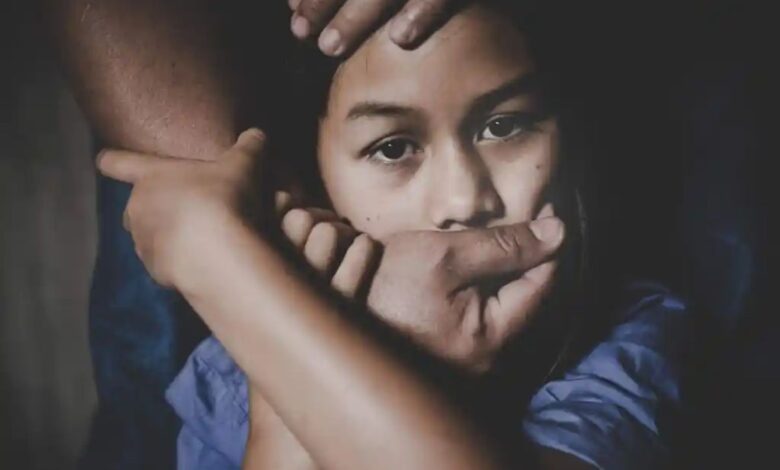
There is a particular kind of silence that descends on an Indian school campus after a child has been harmed inside it. It is not the silence of grief. It is not the silence of shock. It is the silence of strategy, the measured, deliberate quiet that settles over the administrative offices while lawyers are called, while CCTV recordings are reviewed not by investigators but by the institution itself, while carefully worded press statements are drafted, while parents are advised, sometimes gently, sometimes not, to “resolve this internally.”
It is the silence of an institution protecting itself. In Indian schools, the first instinct after abuse allegations is often institutional self-preservation, not institutional accountability. This is not a cynical overstatement. It is the documented, repeated, overwhelmingly consistent pattern of how Indian schools, whether they are elite, semi-elite, and ordinary, respond when the safety of a child they were entrusted with has been violated on their premises. The script barely changes.
There is the initial denial or minimisation. There is the quiet attempt to manage the family before they speak to the police. There is the pivot to bureaucratic process, which says “we have constituted an internal committee,” “the matter is under inquiry”, which are nothing but languages, that are carefully engineered to sound responsible while doing nothing to protect the next child. And then, only when the noise becomes too loud to manage, when the media arrives and the cameras roll, does accountability suddenly appear in the form of a show-cause notice, an SIT, a judicial intervention.
The question this country must stop avoiding is this: why does it always take outrage to produce responsibility?
SS Mota Singh and the Nursery Child No One Heard
In May 2026, the Directorate of Education, Government of Delhi, issued a show-cause notice to SS Mota Singh Senior Secondary Model School in Janakpuri. The notice, sent by the Deputy Director of Education, District West-B, cited “grave lapses” in school management, supervision, and child safety protocols. The reason: a nursery-class girl had allegedly been molested within the school premises during school hours.
Read that again. A nursery-class girl. A child barely old enough to tie her shoes. Allegedly molested. Inside a school. During school hours. In a school covered with classrooms full of staff, with administrative personnel present, presumably with CCTV infrastructure that the government is now demanding recordings of.
The notice was detailed and procedurally sound. It demanded incident reports, CCTV records, staff duty details, child safety compliance data, FIR copies, fire safety certificates, building safety certificates, and documentation on an apparently unapproved alternate campus the school was using to run classes — a detail that reveals an institution already in violation of basic recognition norms even before the abuse allegation. The Delhi Education Directorate warned of possible management takeover, withdrawal of recognition, and cancellation of the school’s land allotment from the DDA.
It sounds serious. It is, in fact, almost entirely reactive.
That show-cause notice is a bureaucratic response to a child’s suffering that has already occurred. It is the education governance apparatus finally looking up from its desk because someone screamed loudly enough. The preliminary inquiry found “prima facie violations” of the Delhi School Education Act and Rules, which means that those violations were almost certainly in place before the alleged molestation occurred. The safety lapses that enabled this incident did not appear overnight. They were present, unmonitored, uninspected, and unpenalised, until a child was harmed. Perhaps, a show-cause notice after molestation is like checking fire exits after the building has burned.
What the notice does not and cannot do is answer the question that gnaws at the centre of this entire tragedy: where were the adults when a nursery child was being hurt? If schools are covered with cameras, why do children still remain invisible when they need protection most?
There is a profound cruelty embedded in how India’s child protection system relates to very young victims, and it is a cruelty born of structural design, not individual malice. The system, from the school administration to the police to the courts, is built on the presumption of articulable testimony. It expects victims to narrate their trauma in recognisable, legally legible language. It wants a timeline. It wants a sequence of events. It wants the child to say what happened, when it happened, who did it, how many times, and what words were used.
A nursery child cannot do this. This is not a limitation of the child. It is a fundamental truth of how very young children process and communicate trauma. A three- or four-year-old who has been violated does not have the neurological framework, the vocabulary, or the emotional organisation to produce a coherent narrative of abuse. She may act out. She may become fearful of going to school. She may flinch at certain names or certain kinds of touch. She may regress, like begin bedwetting again, stop eating, become unable to sleep. She may say something fragmentary and strange that, to a trained ear, is everything, but to an untrained institutional ear sounds like nothing at all.
The Nursery Child Cannot Speak — So Why Is the Burden of Proof Still on the Victim?
When parents of such children approach school administrations with concerns, the institutional response is almost universally one of suspicion directed at the family rather than at the school. “Are you sure she isn’t imagining things?” “Children say all sorts of things.” “This is a very serious allegation; do you have evidence?” Schools often demand “evidence” from traumatized families before accepting negligence. The parents are made to feel that they are the problem, that their protectiveness is irrationality, that their child’s behavioural changes are parenting failures rather than symptoms of institutional ones.
Badlapur case of 2024
In the Badlapur case of two four-year-old girls were allegedly sexually assaulted by a male cleaner at a school in Thane district, Maharashtra. The assaults occurred on different days within ten days of the cleaner’s employment. When parents reported what had happened, school officials did not call the police. Instead, they told parents the child may have been assaulted “by an outsider,” deflecting in the crudest possible way. The parents were then made to wait eleven hours at the Badlapur police station before anyone took their complaint. The Maharashtra State Commission for Protection of Child Rights chairperson later confirmed unambiguously: the school administration had attempted a cover-up.
This is not an aberration. This is the template. When the smallest children, aka the future of the nation, are harmed, India’s child safety system proves structurally biased toward institutions because very young victims cannot articulate violence in legally comfortable language. A nursery child is expected to survive trauma, communicate it clearly, and trigger a bureaucracy designed to doubt her.

The Ryan International Blueprint: When Schools Frame the Innocent
The murder of Pradyuman Thakur on September 8, 2017, at Ryan International School in Gurugram is perhaps the most damning case study in how Indian educational institutions, when faced with catastrophic safety failures, prioritise narrative control over truth. Pradyuman was 7 years old. He was found bleeding from wounds to his throat outside a washroom on the school premises at 8:08 a.m., barely 13 minutes after his father had dropped him at the school gate.
What followed was institutional catastrophe compounded by law enforcement complicity. The Haryana Police arrested Ashok Kumar, a school bus conductor, within hours of the murder, announcing a “confession” and claiming Kumar had attempted to sexually assault Pradyuman and killed him when the boy resisted. This narrative, amplified without scrutiny by a sensation-hungry media, performed a crucial institutional function. It made the murder the act of a low-caste, low-status, easily disposable outsider figure, and displaced responsibility cleanly away from the school itself.
There was no discussion of why there were no functional CCTV cameras in the washroom corridor. No discussion of why a 7-year-old was unsupervised in a school washroom at 8 in the morning. No reckoning with the fact that, as would later emerge, Ryan International Group had a troubling history — in 2016, a six-year-old at Ryan International’s Vasant Kunj campus was found unconscious in a water tank beneath the school’s amphitheater during school hours. He died. That case, too, had been absorbed into the institution’s PR machine without transformative accountability.
When the CBI took over the Pradyuman case, it dismantled the Haryana Police’s fabrication entirely. Forensic reconstruction, CCTV analysis, and scientific evidence implicated a Class XI student at the same school, not the bus conductor. 4 police officers were later charged with framing Kumar. Witnesses said they had been physically assaulted to force false statements. A bus driver said he had been pressured to claim the murder weapon was part of the bus toolkit. The crime scene, according to Pradyuman’s family lawyer, had been cleaned before proper investigation.
The school’s owners, the Pinto family, had sought anticipatory bail even as the CBI was still collecting their records. The CBI opposed bail, noting that the school management “cannot be ruled out” of the investigation. Institutions have lawyers. Murdered seven-year-olds do not.
After the public outrage peaked, Ryan International installed metal detectors and female security guards. Bathrooms were kept locked between periods. These cosmetic responses, announced with the quiet confidence of institutions that know how to perform accountability without delivering it, became the closing chapter of a case that should have permanently restructured how private schools are governed in India. This act of circus is similar to Kota hostels using nets across ceiling fans so that students don’t do suicide. Rather than administering the root cause of problem, the hostel tried to shield the institutional and societal failure which tortures students on the name of career and success.
Ryan International schools, under their brand and their associated chains, continued to operate. The children continued to attend. And the governance reforms that should have followed remained recommendations, circulars, guidelines — paper built upon paper, watched over by nobody.
Gargi College and the Elastic Definition of Institutional Failure
In February 2020, during the college’s annual cultural festival, dozens of women inside Gargi College in Delhi’s South Campus were molested by a mob of men who had barged through the college gates in large numbers. For hours, women were assaulted while security failed to intervene. The administration’s first public position was to downplay the scale of what had happened, to question why students hadn’t reported it immediately, and to suggest procedural incompetence rather than systemic failure.
Gargi is not a school. But the institutional response it modelled is the same one that schools deploy everywhere. The language of minimisation. The demand that victims produce documentation while their attackers are still inside the gates. The implicit suggestion that women who attended a cultural festival at their own college — their own campus, their own space — somehow bore some portion of responsibility for what happened to them in it.
The Gargi case forced two reckoning-level questions into national conversation. First: if elite institutions cannot protect the young people inside them during normal institutional functions, what exactly is the value of their prestige? Second: if institutions reflexively protect their reputation at the cost of their community members’ safety and dignity, at what point does prestige become complicity?
The answers were never satisfactorily given. Delhi Police made arrests. Investigations proceeded. The college issued statements. And then, as always in India when institutional shame becomes too loud to avoid and just quiet enough to wait out, the next news cycle arrived.
The Culture of Damage Control in Elite and Semi-Elite Schools
India’s private school ecosystem often behaves like a corporate reputation machine and not a child safety institution. This is not an accident of culture. It is a consequence of structural incentives so thoroughly misaligned with child welfare that accountability, when it comes at all, comes from outside the system rather than within it.
Consider the economics. A private school, particularly an elite or semi-elite institution charging substantial fees, with real estate assets, brand equity, and influential alumni and management networks, has enormous structural incentives to suppress, manage, and narrativise any incident of child abuse or death on its premises. The alternative, genuine transparent accountability, exposes the institution to legal liability, regulatory action, fee exodus, and reputational collapse. These are not abstract risks. They are existential ones for institutions whose primary product is the perception of safety and quality.
This is why the first calls after abuse allegations are typically not to the police but to lawyers. This is why internal committees are formed before FIRs are filed. This is why parents are sometimes offered informal “resolutions” — counseling, transfers, compensation discussions — before the formal machinery of child protection is engaged. This is why, in a pattern so consistent it must be called deliberate, schools are the last institutions in the chain to contact law enforcement.
In the Badlapur case, the assault occurred. The parents went to the school. The school did not call the police. The parents then went to the police station, where they waited eleven hours. The school’s first instinct was not to protect the children. It was to protect itself.
This pattern was present in the SS Mota Singh case, where preliminary inquiry revealed that the school had been operating from an unapproved alternate site, which is a brutal fundamental violation of recognition conditions, without regulatory detection or consequence. The school had already been cutting corners on child safety before the alleged molestation. The corner-cutting was invisible to regulators. The molestation was not.
It is only when the invisible becomes undeniably visible; when it lands on the front pages, when the railway tracks are blocked, when the hashtags trend, when the high court takes suo motu cognisance that regulators act. And when they do act, they reach for the show-cause notice, the SIT, the judicial committee, the revised guidelines circular. All of these instruments share one characteristic: they are responses to harm that has already occurred. None of them prevent the next one.
Show-Cause Notices Don’t Protect Children — Structural Reform Does
Let us be precise about what a show-cause notice is and what it is not. It is a document asking an institution to explain why regulatory action should not be taken against it. It is, in its essence, an invitation for the institution to respond. It is the beginning of a process, not the end of one. It gives the institution more time. It does not immediately protect any child currently inside that institution’s premises.
The Delhi Education Directorate’s notice to SS Mota Singh School gave the school a particular date to respond with detailed documentation. On that same day, children presumably continued attending classes in the allegedly unapproved alternate premises. The molestation had already occurred. The alleged victim is a nursery student, perhaps three or four years old, whose life has been altered. The show-cause notice does not undo that. It does not prevent the next incident. It documents that the government noticed, on record, after the fact.
Regulators in India often intervene symbolically after media pressure instead of enforcing preventive governance. The problem with symbolic intervention is that symbols cannot protect children. What would structural reform actually look like? It would mean mandatory, unannounced safety inspections of all school premises including alternate or annexed campuses, conducted by independent bodies rather than the schools themselves.
It would mean mandatory and immediate police reporting obligations on school staff — not options, but non-negotiable legal duties — when any allegation of child abuse is made, with criminal liability attaching to those who delay or suppress. It would mean child protection officers at all schools above a certain size who are not employees of the school but are appointed and supervised by an independent regulatory body. It would mean POCSO compliance reviewed annually, not when a complaint triggers review. It would mean whistleblower protections for school staff who report safety failures. It would mean public dashboards of compliance and violation records for every recognised school.
None of this is administratively impossible. All of it is politically inconvenient for institutions with powerful management trusts and regulatory connections. This is why it does not exist. And this is why children keep getting hurt in the same kinds of places, in the same kinds of ways, while the same kinds of notices are issued and the same kinds of press statements are read.
Till When, We Expect This Unfortunate, Splendid Architecture of Repeated Betrayal To Stand Tall And Kill Innocence Under His Stature?
What connects the murder of Pradyuman Thakur at Ryan International in 2017 to the molestation of two four-year-olds in Badlapur in 2024 to the alleged abuse of a nursery student at SS Mota Singh in 2026 is not merely a theme. It is an architecture, where a specific, reproducible pattern of institutional failure that the Indian state has never systematically dismantled, despite knowing, each time it occurs, exactly what has happened.
The architecture has four pillars. The first is regulatory non-presence: inspections are rare, unannounced inspections rarer still, and schools are largely self-certifying on safety compliance. The second is incident suppression: when harm occurs, institutional incentives push strongly toward containment rather than disclosure, and the legal architecture does not punish suppression swiftly enough to change this calculus.
The third is victim invisibility: the younger and less powerful the victim, the more difficult it is for them to navigate a system designed for articulable adult complainants, and the more leverage the institution has in the silence that follows. The fourth is reactive regulation: government bodies respond to media-amplified outrage rather than conducting preventive oversight, creating a perverse system in which abuse must first be spectacular enough to trend before it becomes serious enough to act upon.
These four pillars hold each other up. They are mutually reinforcing. Removing one without addressing the others produces marginal change. A stricter POCSO amendment means nothing if inspectors never visit. More inspectors mean nothing if incidents are suppressed before they reach the inspection cycle. Better reporting obligations mean nothing if police stations replicate the eleven-hour wait of Badlapur. And all of it means nothing if the youngest victims — the nursery children, the three-year-olds, the four-year-olds who cannot yet string together the sentence that the system requires of them — remain functionally invisible to the institutions designed to protect them.
What We Owe to the Children We Cannot Hear
There is a particular moral weight that attaches to violence against very young children — not because older children or adults deserve less protection, but because the very young are utterly dependent on the adults and institutions around them. They cannot leave. They cannot report. They cannot understand what is being done to them or why. They can only react — in their bodies, in their behaviours, in the terrible language of symptoms that trained adults can read and that untrained or unwilling adults can ignore.
A nursery child who has been violated does not come home with evidence. She comes home with something wrong in her eyes, in how she holds herself, in the way she responds to names or words or kinds of touch. She comes home changed. The burden of reading that change, of believing it, of fighting for her through a system that will methodically doubt you at every stage — that burden falls entirely on the parents, who must simultaneously manage their own devastation and navigate bureaucracies designed for a different kind of victim.
And then the school, which failed to protect her, has the structural audacity to demand evidence from her parents before it will acknowledge its own negligence.
This is the grotesquerie at the heart of India’s child protection system in educational institutions. The institution that failed is also, by default, the first gatekeeper of the investigation into its own failure. It controls the CCTV footage. It controls which staff members are accessible. It controls the narrative before the FIR exists. It has lawyers before the parents even know they need them. The power asymmetry between a traumatised family and an institution protecting itself is so extreme that it should be a matter of national shame — and it is, briefly, every time one of these cases breaks into public view, and then it is not again.
The Verdict That India Keeps Refusing to Deliver
The Bombay High Court, when it took suo motu cognisance of the Badlapur case, drew an explicit parallel to the RG Kar Medical College incident in Kolkata — another institution, another delayed FIR, another attempted cover-up, another victim swallowed by the machinery of institutional self-preservation. The court saw the pattern. Judges across India see the pattern. Investigative journalists see the pattern. Child rights activists have been shouting the pattern for decades.
The pattern is: an institution harms a child or fails to protect one. The institution suppresses. A parent or group of parents breaks through the suppression through sheer persistence or public spectacle. Media picks it up. Regulators issue notices. Politicians make statements. Police — sometimes the same police who initially refused to file a complaint — conduct visible arrests. Courts intervene. Committees are formed. Guidelines are revised. The storm passes. And then, in the next school, in the next district, in the next year, it begins again.
The reason it begins again is that India has never decisively answered the question of who schools are ultimately for. If schools are for children, then every institutional incentive — legal, financial, regulatory, reputational — must be restructured so that the protection of children is the non-negotiable first priority, not an afterthought managed after the reputation is secured. If schools are for their managements, their trustees, their brand equity, and their fee income, then what we have now is appropriate — a system that protects institutions first and children when the pressure becomes too great to ignore.
Every policy response India has produced — the POCSO Act, the school safety guidelines, the CBSE circulars, the state education act provisions — has operated on the assumption that institutions will comply in good faith and that oversight will catch those who don’t. This assumption has been catastrophically wrong. Institutions do not comply in good faith with regulations that threaten their survival. They comply with enforcement. They comply with the certainty of consequence. And in India’s school governance ecosystem, the certainty of consequence remains a fiction.
The parents of a nursery child in Janakpuri are living proof of this. They sent their daughter to school during school hours and she was allegedly molested on school premises. The school was operating from an unapproved site. The government’s response was a notice asking the school to explain itself. This is the full extent of what India’s child protection architecture produced in the immediate aftermath of that child’s harm.
Conclusion: The System Was Always Warned
The real scandal is not that one school failed. It is that every time a child is harmed, India reacts as though the system itself was never warned before. It was warned in 2016, when a six-year-old drowned in a water tank at Ryan International’s Delhi campus. It was warned in 2017, when a seven-year-old’s throat was slit in a washroom at Ryan International’s Gurugram campus, and police framed an innocent man to protect institutional reputations.
It was warned in 2020, when dozens of women were molested inside Gargi College while security stood by. It was warned in 2024, when two four-year-olds in Badlapur were assaulted by a school cleaner and their parents were made to wait eleven hours for a police complaint to be filed, while the school attempted to suppress what had happened. It is being warned again now, in 2026, in Janakpuri, in the case of a nursery child who could not speak the language that the system required of her.
None of these cases produced the structural transformation that would have prevented the next one. Each produced outrage, which produced regulatory theatre, which produced the illusion of accountability, which faded, which left the architecture intact, which enabled the next failure.
India does not have a child safety problem in its schools. It has a child safety system that was designed, structurally and by incentive, to fail children while appearing to protect them. The cameras are there. The rules are there. The acts and the guidelines and the committees and the notices are there. What is missing — what has always been missing — is the genuine, enforceable, uncompromising commitment to treating the safety of children as the foundational non-negotiable of institutional existence.
Until that commitment is embedded not in circulars but in consequence — not in notices but in prosecutions, not in guidelines but in governance — every school in India will continue to make the same calculation, consciously or not: that managing the aftermath of a child’s harm is cheaper, simpler, and more survivable than preventing it in the first place.

And children, who cannot vote, cannot trend on their own, cannot block railway tracks, and cannot always even speak clearly about what was done to them, will keep paying the cost of that calculation. They have always been the ones paying it. We just rarely stay outraged long enough to change that.