Where Is Madhabi Puri Buch The Most Controversial Chairman Of SEBI And What Is She Doing Now A Days?

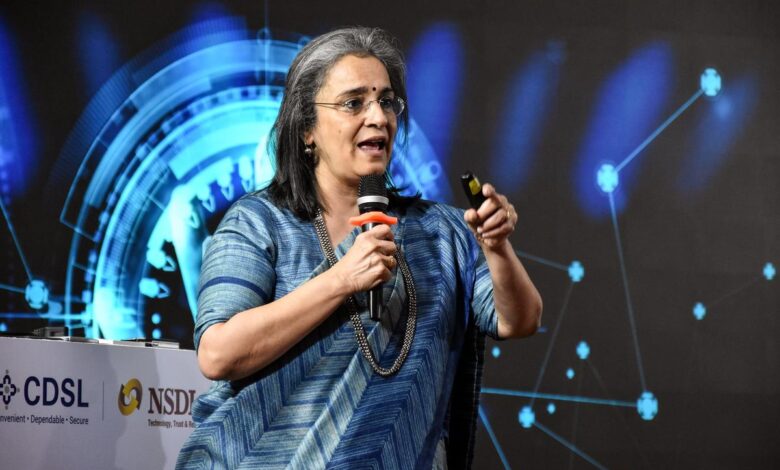
In the sordid chronicles of Indian financial regulation, no name stands out as more synonymous with alleged conflicts of interest, regulatory capture, family entanglements, and institutional erosion than Madhabi Puri Buch — the first woman, the youngest, and the first private-sector appointee to chair the Securities and Exchange Board of India (SEBI) from March 2022 to February 28, 2025. Her tenure was not one of quiet stewardship; it was a relentless storm of explosive scandals that critics across the political spectrum, investor forums, governance watchdogs, and even sections of corporate India have branded as the darkest chapter in SEBI’s history. From offshore fund overlaps mirroring the very Adani structures she was supposed to investigate, to a husband’s suspiciously timed high-paying advisory roles with policy beneficiaries, a family consulting empire billing crores from regulated entities, perpetual payouts from a regulated bank, and even a court-ordered FIR probe into alleged fraud — Buch’s record is a masterclass in how personal and family financial interests allegedly hijacked a public regulator.
And where is she now, in late May 2026? Far from any accountability, Madhabi Puri Buch has comfortably reinvented herself as Director of The BioStack Research Council, a Mumbai-based not-for-profit entity ostensibly dedicated to “data empowerment, tech-driven innovation, and biomedical research” with a focus on cancer-related data. Shockingly, she is not alone. Her husband, Dhaval Jitendra Buch, serves alongside her as a fellow Director (he has held the position since 2019, while she joined as Additional Director in March 2026). The couple’s seamless pivot from dominating India’s ₹500-lakh-crore capital markets to steering obscure health-tech data initiatives — a domain utterly disconnected from their finance and supply-chain backgrounds — has triggered fresh waves of outrage. Critics and opposition voices openly allege this is the classic elite escape hatch: amass influence and questionable wealth during years in power, then retreat into a low-scrutiny “research” sinecure while small investors continue to pay the price of eroded market trust.
Worse, many sharp critics and public voices charge that Madhabi Puri Buch and Dhaval Jitendra Buch are now enjoying the looted money from their alleged scams and frauds — the proceeds of regulatory favoritism, undisclosed conflicts, consulting windfalls, and policy boosts that allegedly enriched connected corporates and the family itself, all while ordinary investors and market integrity suffered. Dhaval Jitendra Buch himself does not have a very clean past; his own controversies, meticulously documented in reports, paint him as central to the web of alleged influence-peddling.
The Full Scandal Sheet: A Forensic Catalogue of Every Allegation, Controversy, Scam, and Fraud Claim
Buch’s era was defined by an unrelenting cascade of accusations that went far beyond “perception issues.” Here is the exhaustive, damning list:
- Hindenburg Offshore Fund Allegations (August 2024): The nuclear explosion. Hindenburg Research revealed that the Buch couple held stakes in obscure Mauritius-registered entities — IPE Plus Fund 1 and Global Dynamic Opportunities Fund (GDOF) — nested in the exact same opaque structure allegedly used by Vinod Adani for money-siphoning. Damning details: Singapore account opened 2015 (net worth ~US$10 million, source “salary”); Dhaval emailed for sole control in March 2017 (weeks before Madhabi’s SEBI Whole-Time Member appointment); 2018 statements sent to Madhabi’s private email showing ~US$872,762; swift redemption in Dhaval’s name. While SEBI claimed “difficulty” tracing Adani offshore trails, the regulator’s own chief allegedly swam effortlessly in the same waters. The couple denied wrongdoing, citing disclosures and calling it “character assassination” with “illegally obtained” data. Lokpal later gave a clean chit (May 2025), but critics dismissed it as a whitewash.
- Adani Conflict of Interest: The core betrayal. SEBI was probing Hindenburg’s Adani exposé, yet the chairperson allegedly had family exposure to identical offshore vehicles. Opposition parties screamed in Parliament: how could impartiality exist? This single issue shattered investor confidence more than any other.
- Dhaval Jitendra Buch’s Blackstone Senior Advisor Role & REIT Policy Windfall (July 2019 onward): Dhaval — with zero prior experience in real estate, funds, or capital markets (his background: procurement at Unilever) — was appointed Senior Advisor at Blackstone while Madhabi was already a powerful SEBI member. Blackstone then sponsored blockbuster REITs (Mindspace IPO 2020, Nexus Select 2023) that received swift SEBI nods. Under Madhabi, SEBI issued seven consultation papers, micro-REIT frameworks, offer-for-sale relaxations, and more. She publicly called REITs her “favourite products” without disclosure. Blackstone denied Dhaval’s involvement in REITs; the couple called allegations baseless. Critics label this one of the most blatant cases of alleged indirect regulatory capture in Indian history.
- Agora Advisory Family Cash Machine: Madhabi reportedly held 99% ownership (later transferring her Singapore entity fully to Dhaval right after becoming Chairperson in March 2022). Dhaval was director. The firm allegedly earned ₹19.8 million in 2022 — 4.4 times her SEBI salary — including ~₹4.78 crore from Mahindra & Mahindra (2019–21) plus work for Dr Reddy’s, Pidilite, ICICI, and other regulated giants. A regulator’s family firm billing crores from entities it oversaw? The stench of influence-peddling remains overwhelming despite denials of wrongdoing.
- ICICI Bank Perpetual Golden Handshake: Questions over continuing ESOPs, deferred compensation, and retirement payouts from her former employer (ICICI Bank), now heavily regulated by SEBI. ICICI called them legitimate; critics saw eternal financial dependence on a regulated behemoth.
- Rental Income Allegations: Opposition claimed rental ties to entities facing SEBI scrutiny, raising fresh disclosure and ethics red flags.
- Blackstone-REIT & Broader Policy Favoritism: Repeated claims that SEBI’s aggressive REIT push directly benefited family-linked interests.
- Zee-Sony Merger Fallout: Zee founder Subhash Chandra publicly accused Buch of corruption and regulatory bias after the deal collapsed — accusations that dominated headlines.
- SEBI Employee Revolt & Toxic Culture: Reports of nearly 1,000 staff protesting extreme pressure, fear-based management, burnout, and aggressive leadership. SEBI dismissed it as resistance to reforms.
- Mumbai Court FIR Order (March 2025): Days after her exit, a special ACB court ordered an FIR against Buch and five others (SEBI/BSE officials) over alleged 1994 Cals Refineries listing fraud, market manipulation, regulatory collusion, and investor losses. Though the Bombay High Court stayed it (calling the RTI-activist complainant “habitual”), the judicial move itself was unprecedented and damaging.
- Larger Institutional Failures: Slow-walking the Adani probe, perceived deference to big corporates, opacity, and overall damage to SEBI’s credibility as a watchdog.
No final court conviction or proven fraud has stuck — the Lokpal chit dismissed complaints as “frivolous” and lacking “an iota of credible evidence,” the FIR remains stayed — yet the sheer volume, timing, documentation (emails, revenues, appointments), and public outrage have left an indelible stain. Dhaval Jitendra Buch’s own record is equally tainted by these overlapping, unproven-but-devastating claims of riding his wife’s regulatory power for personal gain.
The Buch Couple Today: Luxuriating in BioStack While Critics Cry “Looted Money”
As of May 2026, Madhabi Puri Buch and Dhaval Jitendra Buch sit together as Directors at The BioStack Research Council (formerly Aarnaira Development Foundation), a Section 8 company focused on biomedical data and cancer research innovation. Madhabi proudly describes herself on LinkedIn as “Committed to Data Empowerment and Tech-driven Innovation. Migrating from the world of Finance to the world of Biomedical Research for Cancer.”
For many outraged citizens, opposition leaders, and investor activists, this transition reeks of impunity. They allege the couple is now peacefully enjoying the looted money from their alleged scams and frauds — the accumulated benefits of years where policy, approvals, and oversight allegedly tilted in favor of powerful networks, family consulting fees flowed freely, and conflicts were never truly resolved, all while SEBI’s reputation lay in ruins and small investors questioned the system’s fairness.
India’s capital markets deserve far better than a regulator whose personal and spousal financial universe allegedly intersected so deeply with the entities she policed. Until genuine, independent probes cut through the denials, clean chits, and stayed orders, Madhabi Puri Buch’s name will remain etched not as a trailblazer, but as the most controversial — and for many, the most compromised — SEBI chairperson ever. The BioStack chapter may be her new beginning, but for critics, it is merely the latest act in a story of elite insulation from consequences. The question lingers: who really protected the markets when the watchdog herself was allegedly entangled? The answer, for millions of disillusioned Indians, is painfully obvious.