Paytm, Byju’s, Ola Electric, Zepto: A Decade Of Indian Startups Proving Attrition Predicts Disaster
Before the Bell Rings: Why Mass Employee Exodus Is the Biggest Red Flag Investors Ignore Pre-IPO?

When the Exits Outnumber the Applause: Why Mass Attrition Before an IPO Is a Governance Red Flag, Not a Footnote
There is a particular kind of silence that falls over a startup’s PR machine when someone asks: “Why have six CXOs left in five quarters?” The answer is almost always some version of “they pursued personal growth opportunities” or “we wish them well in their future endeavors.” It is corporate Esperanto for we’d rather you didn’t look too closely.
India’s new-age startup ecosystem has now run this experiment enough times — Byju’s, Ola Electric, Paytm, and now Zepto — that the pattern is no longer a coincidence. It is a playbook. And the markets, regulators, and retail investors who keep funding the next iteration of it deserve to understand exactly what they’re buying into.
The Zepto Case Study: 51% Corporate Attrition, 73% Including Gig Workers
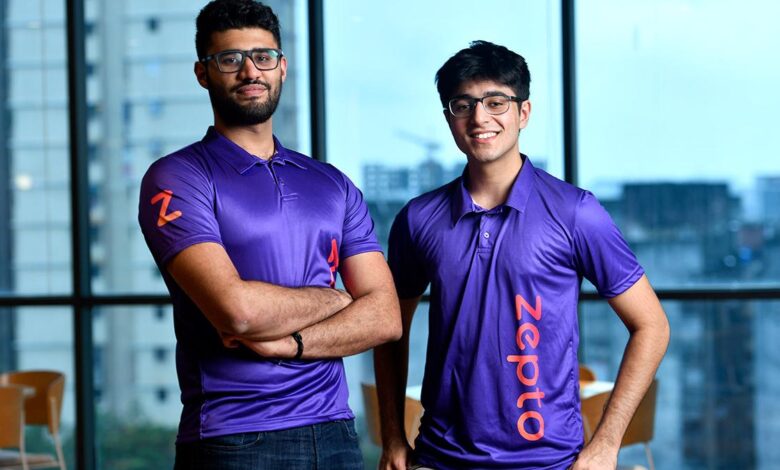
Zepto is the freshest example, and the numbers are simply not subtle. According to its updated Draft Red Herring Prospectus (DRHP) filed with SEBI, Zepto’s corporate attrition climbed to 51.28% in FY26, up from 40.48% in the previous fiscal. That alone should stop any serious investor mid-scroll. When you fold in its operational workforce of 48,011 pickers, packers, and delivery associates, the overall attrition rate reached 73.22%.
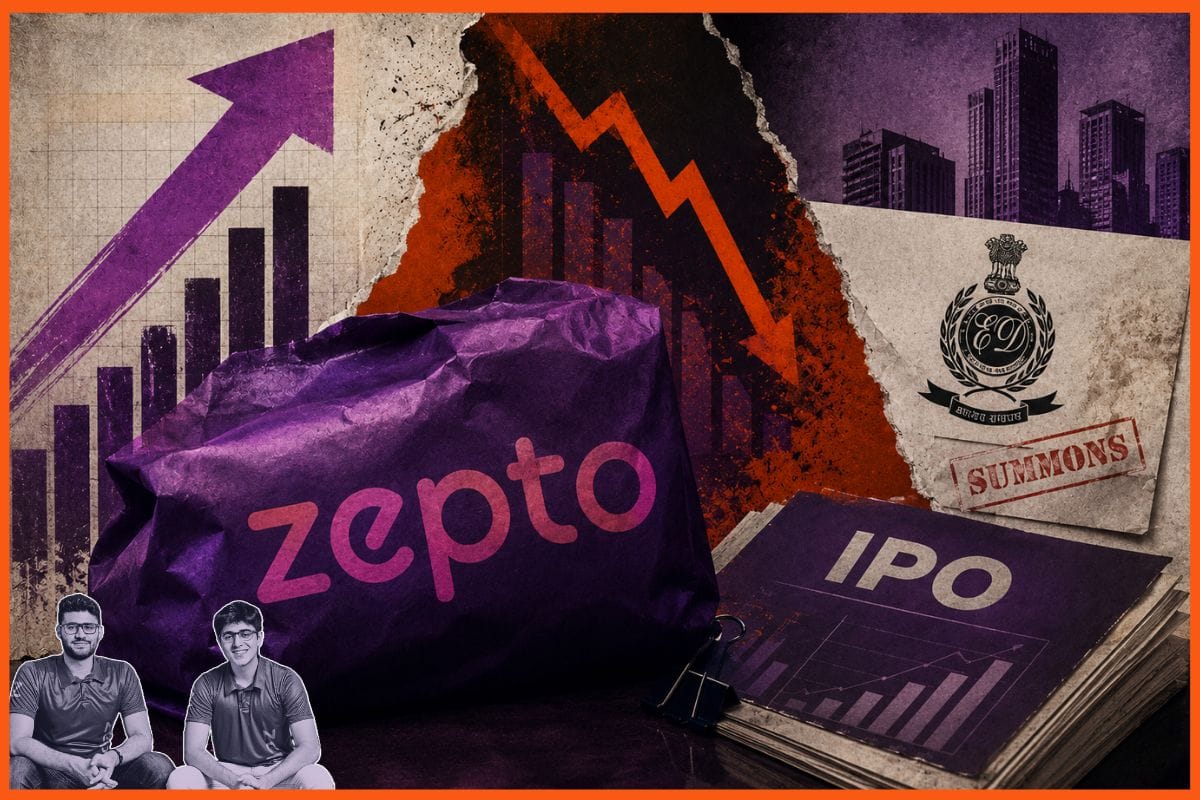
Zepto’s official explanation leans on the naturally high-turnover nature of quick-commerce gig roles, alongside corporate streamlining, supply chain optimizations, and increased automation. That’s a tidy explanation for warehouse churn. It does not explain why the company has been hemorrhaging senior leadership at the same time.
The departure list reads like a corporate obituary column: Chandan Rungta, CEO of Zepto’s meat vertical Relish, resigned in November 2025, alongside Apoorv Pandey, Senior Vice President of Strategy, and Chandresh Dedhia, Vice President and Head of IT. Add to that Shashank Shekhar Sharma, CXO at Zepto Cafe, Senior Director of Brand Anant Rastogi, Business Heads Suraj Sipani and Vijay Bandhiya, and Strategy Director Roshan Shaikh.
Go back further and you find CMO Amritansu Nanda, CBO Viral Jhaveri, and VP of Growth Manik Oberoi among the earlier casualties. An independent analysis of the DRHP separately flagged that senior executives like CHROs, CXOs, VPs of operations and strategy exited in droves, right as the IPO paperwork was being finalized.
Meanwhile, Zepto is asking the public market for a fresh issue of Rs 8,010 crore, with the total IPO size expected between Rs 11,000 crore and Rs 12,000 crore. The company has been growing the top line impressively, revenue from operations more than doubled to Rs 22,623.58 crore in FY26, compared with Rs 11,109.94 crore in FY25, but growth and governance are not the same axis, and conflating them is exactly how retail investors get hurt.
There is also the matter of who benefits and who pays. One market analysis pointed out that Zepto’s last private round valued the company at $7 billion in October 2025, and that if the offer-for-sale (OFS) component of the IPO is as large as reported, the IPO becomes primarily an exit ramp for VCs and promoters rather than capital for genuine expansion; a structure the same analysis says mirrors what happened with Paytm, Nykaa, Policybazaar, and Delhivery.
Ola Electric: The Textbook “Attrition Before, Crash After” Sequence
If Zepto is the live case study, Ola Electric is the closed one, and the verdict is in. Before its August 2024 listing, Ola Electric’s attrition numbers were already alarming analysts. One IPO analysis flagged that employee attrition stood at 44% in FY24 and 47% in FY23, figures described as “very high,” including senior-level exits like the Company Secretary and Chief Marketing Officer within a two-year span.
The exits weren’t limited to mid-management. It was reported in 2021 that three years before the IPO, that Ola was set to lose its CFO Swayam Saurabh and COO Gaurav Porwal, according to an internal memo from CEO Bhavish Aggarwal himself. By 2023, the exodus bleeding continued when Slokarth Dash, head of strategy and planning, and Saurabh Sharda, head of growth and corporate affairs, both with over seven years at the company, exited together, prompting the company to publicly deny that more C-suite departures were imminent.
Around the same period, the company also disclosed an operating loss of $136 million (roughly Rs 1,116 crore) on revenue of $335 million (roughly Rs 2,750 crore), missing its publicly stated revenue target. A separate report from that window noted that Ola’s founding member Pranay Jivrajka, Ola Electric co-founders Ankit Jain and Anand Shah, Ola Financial Services CEO Nitin Gupta, and Chief Business Officer Sanjay Bhan had all departed within roughly two years of each other.
Promoter holding had declined from 36.78% to 34.59% by December 2025, and Q3 FY26 revenue plunged 55% year-on-year to Rs 470 crore from Rs 1,045 crore. By April 2026, the rout had wiped out nearly Rs 57,000 crore in market capitalization from its peak. And the executive churn never actually stopped post-listing either — as recently as December 2025, Head of Cell Operations Vishal Chaturvedi resigned, following the earlier departures of CMO Anshul Khandelwal and CTO Suvonil Chatterjee.
This is not a coincidence of timing. It is a leading indicator that the people closest to the operational and financial truth of the company chose to leave before the public was invited to buy in.
Byju’s: When Attrition Becomes an Existential Crisis, Not Just a Metric
If Ola Electric shows what happens after listing, Byju’s shows what happens when the rot is left entirely unaddressed and there’s no IPO bailout valve at all.
Byju’s was once India’s most valuable startup. Then came the unraveling. Between June 2023 and September 2023 alone, the company saw nearly 2,500 layoffs, the departure of three key investor representatives, and the exit of five top-level executives. The casualty list spanned the whole org chart: Prathyusha Agarwal (Chief Business Officer), Himanshu Bajaj (business head of tuition centres), Mukut Deepak (business head for Classes 4–10), and Cherian Thomas (SVP of international business), plus Mrinal Mohit, the founding partner and CEO, and Ananya Tripathi, CEO of subsidiary WhiteHat Jr. At the subsidiary level, Abhishek Maheswari (CEO) and Vipin Joshi (CFO) of Aakash Education Services also departed.
Crucially, this wasn’t happening in a vacuum; it triggered a chain reaction in governance credibility. Auditor Deloitte Haskins & Sells resigned, citing the company’s lack of cooperation in finalizing financial results, and immediately after, representatives of Byju’s top three investors, Prosus, Peak XV Partners (formerly Sequoia India), and the Chang Zuckerberg Initiative also resigned from the board. One report noted that this entire spiral coincided with US-based Baron Capital slashing Byju’s valuation by 44.6% to $11.7 billion.
By 2024, internal accounts described a workforce in crisis, not just churn: “There is tremendous stress among employees. Byju’s has decided to hold off its staff salaries for the second month in a row,” with employees actively job-hunting despite a difficult market. At its peak the company had roughly 50,000 employees across its subsidiaries; by 2024 it was conducting further rounds of terminations, in some cases informing staff over phone calls on their last working day.
Byju’s never made it to a public listing. But the sequence, auditor exit, investor-board exits, executive flight, employee distress, mass layoffs, valuation collapse, is the same sequence visible in compressed form at Zepto and Ola Electric, just without an IPO to obscure it with fresh public capital.
Paytm: The Cautionary Tale Everyone Cites and Nobody Heeds
No conversation about Indian startup IPO governance is complete without Paytm, because it is the case that proved attrition-adjacent red flags can coexist with a “successful” listing on paper, and still end in disaster for retail money.
Paytm’s IPO was India’s largest ever at the time, raising 183 billion rupees ($2.5 billion). It promptly became the worst-performing large IPO in a decade, falling 27.4% on listing day and wiping out roughly Rs 38,000 crore of investor wealth in a single session, worse than any large US IPO that year, including Robinhood’s 8.34% opening-day decline. By 2024, the stock had fallen further still, hitting an all-time low of Rs 317.45, down 68% from its 52-week high, around the same time that Bhavesh Gupta’s resignation marked the third senior departure in a few months following RBI regulatory action against Paytm Payments Bank.
The lesson from Paytm isn’t that attrition alone sinks a stock. It’s that attrition is a symptom of the same underlying disease that eventually sinks the stock: leadership that doesn’t believe in the long-term story enough to stay for it.
A 51% corporate attrition rate at Zepto, or a 73% blended rate, is not “the cost of scaling fast.” Scaling fast is Amazon in 2000 or Flipkart in 2012. Scaling fast does not require your CHRO, three CXOs, and a CFO to all leave within the same fiscal year you’re filing your DRHP. People with the most informed view of a company’s internal health, its senior executives are voting with their resignation letters. Retail investors reading a glossy prospectus rarely get to see that vote before they buy in.
What “Good Governance” Actually Requires Here
Good governance before an IPO isn’t a press release with a diversity statistic and an ESG slide. It’s leadership stability, audit continuity, and a workforce that isn’t actively fleeing the building. SEBI’s disclosure norms require attrition figures in the DRHP precisely because they are material information, and yet they routinely get buried under growth metrics that make for better headlines.
Until institutional investors start pricing attrition data as seriously as they price revenue growth, founders will keep treating a 51% attrition rate as a footnote rather than what it actually is: an unambiguous signal that the people who know the company best don’t want to be there when it’s somebody else’s money on the line.