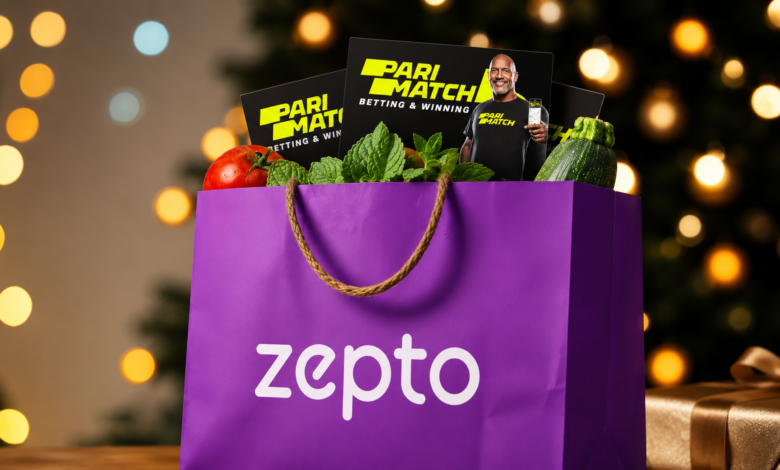
You’ve seen the IPO buzz. You’ve seen the 151% ad revenue number being celebrated as proof that Zepto has finally found its golden goose ahead of going public. What you probably haven’t seen connected in the same breath is this: India’s Enforcement Directorate is currently investigating whether Zepto’s delivery network was used to physically distribute advertising for a banned offshore betting platform, straight into people’s homes, alongside their groceries.
As part of a larger money-laundering probe into Parimatch, a Cyprus-based betting platform that has been banned in India since 2022, the Enforcement Directorate widened its net to include Zepto. According to multiple reports citing officials familiar with the matter, investigators found that Parimatch advertisements appeared on Zepto’s app, and that physical flyers promoting the platform were distributed alongside customer grocery orders.
This isn’t a vague, secondhand rumor. It’s been reported with consistent detail across several outlets, where a digital ad inside the app, reportedly placed as a ₹0 cart item during the March 2025 IPL season, which is a placement type specifically designed to sit quietly in a shopping cart without triggering the scrutiny a price tag would invite, and printed flyers that went out the door in physical delivery bags, reaching households across different parts of the country.
The ED’s interest sits inside a much bigger case. The agency had already raided 17 locations linked to Parimatch, seizing roughly ₹1.2 crore in cash and freezing close to ₹3.8 crore in bank balances, while alleging the platform generated more than ₹3,000 crore annually in India through mirror websites and surrogate branding- operating under cover names like “Parimatch Sports” and “Parimatch News” while sponsoring sports teams across more than 15 states. Zepto is one of the channels the ED is now examining as part of understanding how that money and that brand recall got built.
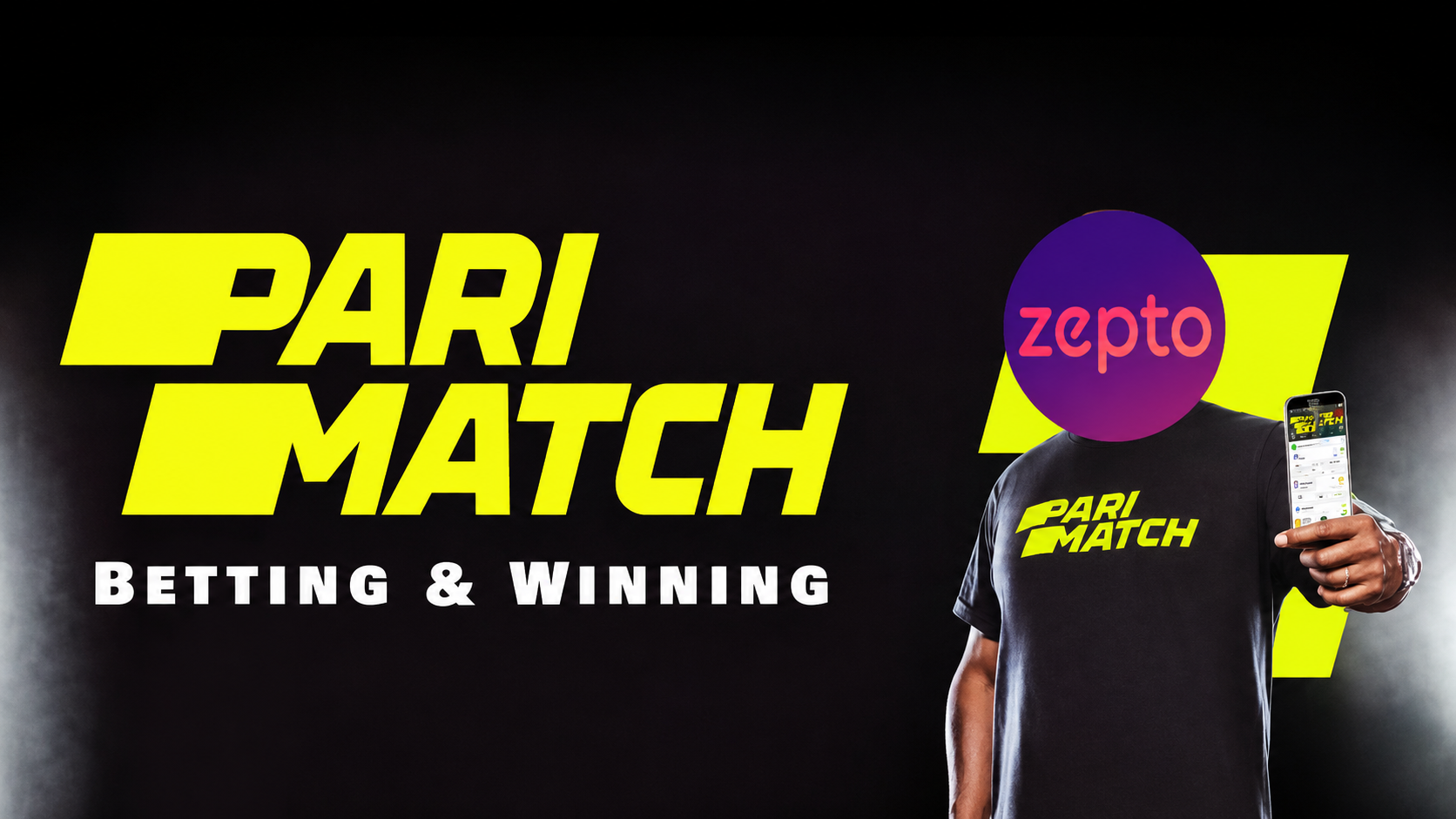
To be precise about where things stand, Zepto has not been named an accused in the case. There’s no indication, as of now, that the company faces allegations of direct involvement in the money-laundering operation itself. The ED reportedly reached out by email, not summons, and no Zepto executive has been called in for questioning.
This matters, and any honest account of the story has to say so plainly, because the gap between “a banned betting platform’s ads ended up in Zepto’s delivery bags” and “Zepto laundered money for a betting platform” is enormous, and conflating the two would be its own kind of dishonesty. But the first part, the ads-in-the-bags part, is not in serious dispute across the reporting. That’s the part worth sitting with.
Zepto’s Defence
Zepto’s position, as relayed to the ED and to journalists, is straightforward: the advertisement traced back to a March 2025 placement made through a third-party media and vendor arrangement, for what the company describes as a merchandise entity. Zepto says it did not onboard, contract with, or directly manage the advertiser, and had no role in any betting, gaming, payments, or user-acquisition activity linked to it. The company says it cooperated fully, shared what information it had, and connected investigators with the vendor in question.
This is a coherent defence, and it may well hold up. Modern ad-tech is layered with programmatic networks, resellers, agency arrangements, and it’s entirely possible for a brand name to slip through several intermediaries before it lands on a platform’s own real estate. That’s not a hypothetical; it’s how a meaningful share of digital advertising actually works, and it’s exactly why regulators are now testing whether “a vendor did it” is a viable shield at all.
Here’s the problem with leaning on that defence too comfortably, though: scale. This wasn’t one ad slipping through one feed. According to the reporting, the campaign ran across the app during a high-visibility cricket season and extended into a separate, physical channel like printed flyers, which someone had to design, print, and physically insert into delivery bags before those bags left the warehouse. That’s not a single point of failure in an automated ad auction. That’s two different distribution mechanisms, digital and physical, both carrying the same advertiser, over a sustained period.
If a vendor relationship can produce that- a coordinated presence across an app and a delivery network simultaneously, then the actual question isn’t just “did Zepto manage the client directly.” It’s “what exactly does Zepto’s vetting process check before letting any advertiser anywhere near delivery bags and shopping carts,” because whatever that process was, it didn’t catch this. As one analysis following the story put it: a TV channel that airs a banned betting ad knows it has broken a rule, but the entire point of the ED’s questions is to test whether claiming an outside agency placed the ad lets a platform sidestep that same standard of accountability.
It’s worth being specific about how long and how clearly this has been flagged, because the “we didn’t know” framing only works if the rule was buried somewhere nobody reads.
The Ministry of Information and Broadcasting first issued an advisory against betting and gambling advertisements in June 2022. It wasn’t a one-time notice that got lost in an inbox. The MIB followed up with further advisories in October 2022, April 2023, and March 2024, plus a separate letter in May 2023 specifically asking state governments to act against outdoor betting advertisements. That’s four rounds of explicit regulatory warning over roughly two years, escalating in scope each time, before the period this Parimatch campaign reportedly ran in.
And the legal terrain has since hardened further. Under the Promotion and Regulation of Online Gaming Act, 2025, betting-ad promotion isn’t just discouraged, it’s criminalised. So the stakes for whoever is found to have facilitated this kind of advertising aren’t limited to reputational embarrassment or a regulatory advisory. They extend into actual legal exposure.
Anyone who has worked in or around digital advertising in India knows betting and gambling ads are treated as a known red line, not a grey area open to interpretation. Ad agencies, media buyers, and platforms operating at any scale build compliance checks specifically around this category, precisely because the warnings have been repeated, public, and increasingly backed by enforcement consequences. That’s the context in which “we didn’t onboard the advertiser directly” has to be evaluated, not as an excuse in isolation, but against a backdrop where everyone serious in the industry has known the rule for four years.
Here’s where the two stories actually meet, and where the picture needs care, because it’s easy to overstate the connection.
Zepto’s updated IPO filing shows advertising revenue surging 151% year-on-year to roughly ₹1,636 crore in FY26, up from ₹651 crore in FY25 and just ₹49 crore in FY24. That growth significantly outpaced the company’s already strong 104% growth in core operating revenue. Ad income now makes up more than 7% of Zepto’s total operating revenue, up from around 6% the year before, and the company has been explicit that this shift — leaning harder on high-margin advertising to offset thinner commissions — is a deliberate strategic pivot, not an accident. Zepto points to a genuine retail-media operation behind that number: an in-house ad-tech stack and over 2,400 brand partners, including names that don’t even sell products directly on the platform.
So it would be inaccurate to claim the Parimatch flyers single-handedly produced a 151% jump in ad revenue. They almost certainly didn’t, as that number reflects a much broader retail-media business that Zepto has been building for two years. No public reporting ties the specific Parimatch campaign to a meaningful share of that growth.
What the Parimatch episode does illustrate, though, is the kind of pressure sitting underneath that headline figure. Quick commerce is a cash-burning business by design. Zepto posted an adjusted EBITDA loss of over ₹5,000 crore in the same fiscal year it reported that ad revenue surge.
Advertising is one of the only genuinely high-margin levers available to platforms like this, and the temptation to grow that lever fast, especially in the run-up to an IPO where every growth metric gets scrutinized by prospective investors, is real and well understood across the industry. When ad revenue becomes a core part of the growth story you’re selling to the public market, the incentive to be less curious about who’s actually buying that ad space, and through what vendor, at what margin grows right alongside it.
That’s the structural point, and it doesn’t require proving that Parimatch ad dollars specifically inflated the IPO numbers. It only requires recognizing that a company under real pressure to show ad-revenue growth, operating through layered vendor arrangements it claims not to fully control, created exactly the conditions where something like this becomes more likely to slip through, and did.
The Actual Question
Strip away the corporate language and the question is uncomfortably simple: if betting ads have been an explicit, repeatedly-reiterated regulatory red line since 2022, and everyone in the Indian advertising industry knows it, how did a banned platform’s promotional material end up running inside one of the country’s biggest quick-commerce apps and printed in flyers tucked into grocery deliveries reaching households across the country?
There are really only two honest answers. Either the vetting controls genuinely failed at a scale that should worry every investor about to buy into this IPO, or somewhere in the chain, someone chose not to look too closely at a revenue stream that was growing fast and looked good on a filing. Neither answer is comfortable. Neither answer is disqualifying on its own, either, vendor failures happen, and Zepto may well be telling the truth about its limited direct role.
But “we didn’t manage the client directly” is a legal defence, not a satisfying account of what happened. It explains who might be liable. It doesn’t explain how a campaign with this kind of reach — app placements during peak cricket season, plus a physical flyer operation running in parallel — moved through Zepto’s systems without anyone asking the one question that four government advisories had already answered for them: is this a betting ad?
That’s the part the celebratory ad-revenue headlines are skipping past. Both stories are true at once. A company can be building a genuinely impressive retail-media business and still have failed, however it happened, to keep a banned betting platform’s promotions out of people’s grocery bags. Investors weighing the IPO, and customers who got a flyer they didn’t ask for, deserve to see both halves of that picture — not just the half that flatters the prospectus.