The Flipkart Hamper Fight Wasn’t About Freebies. It Exposed The Growing Desperation Inside India’s Creator Economy.
What began as a showcase of Flipkart's creator and beauty ambitions quickly spiralled into a public relations disaster. Viral videos of influencers scrambling for gift hampers sparked outrage online, but the controversy exposed far more than poor event planning. It revealed the growing pressures, shrinking opportunities and uncomfortable realities lurking beneath India's booming creator economy

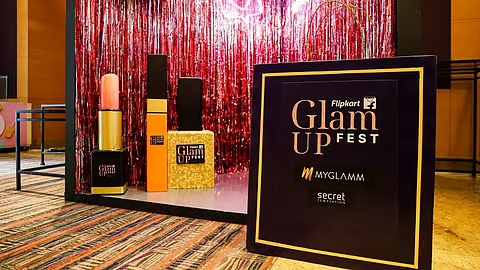
For Flipkart, Glamp Up Fest 2026 was supposed to be a statement of intent. Held at Delhi’s Bharat Mandapam, the two-day event brought together more than 6,000 creators and over 100 beauty brands under one roof. The Walmart-backed ecommerce giant positioned it as one of the country’s largest creator gatherings, a reflection of both its growing beauty ambitions and the increasing importance of influencer-led commerce.
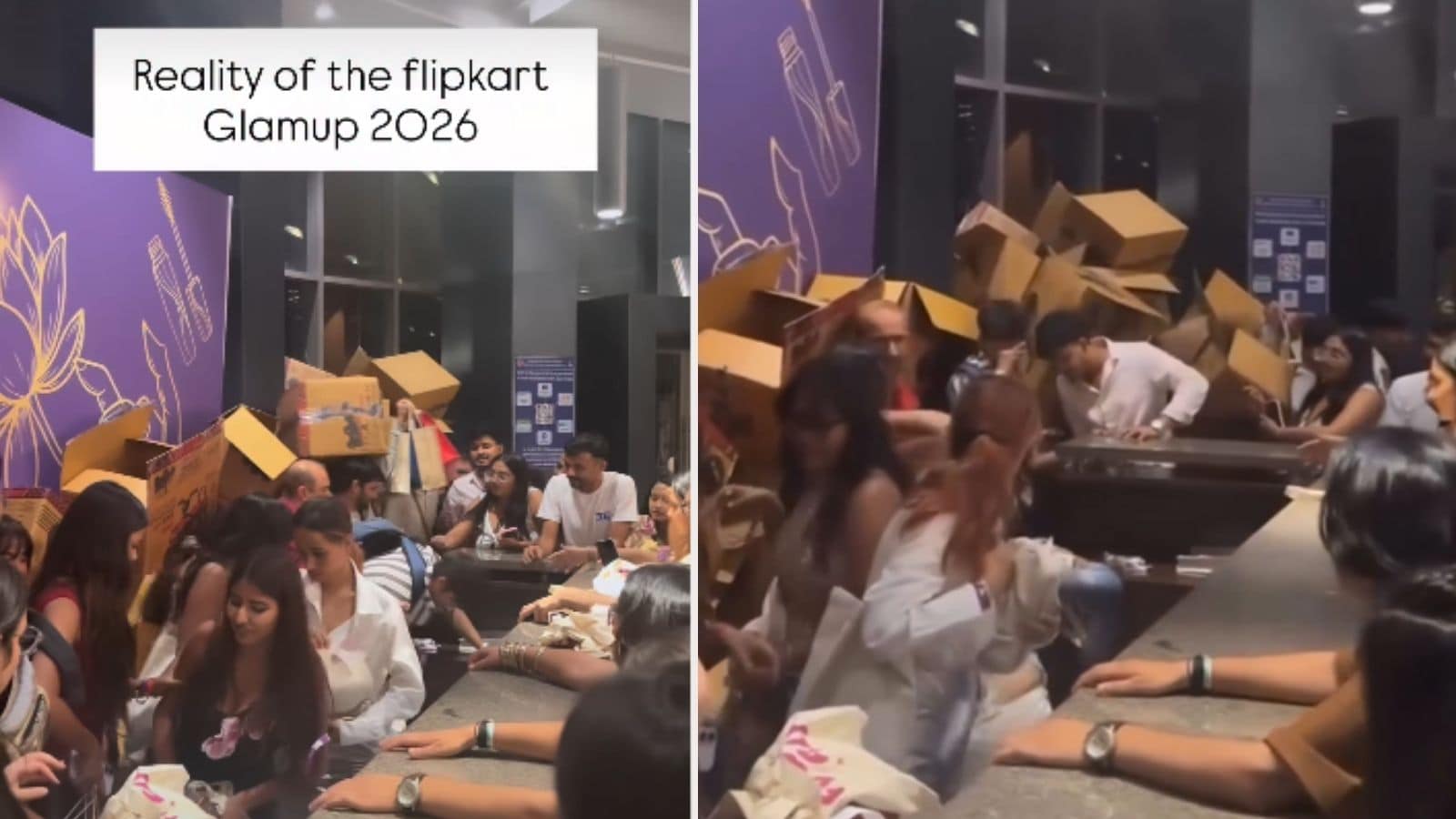
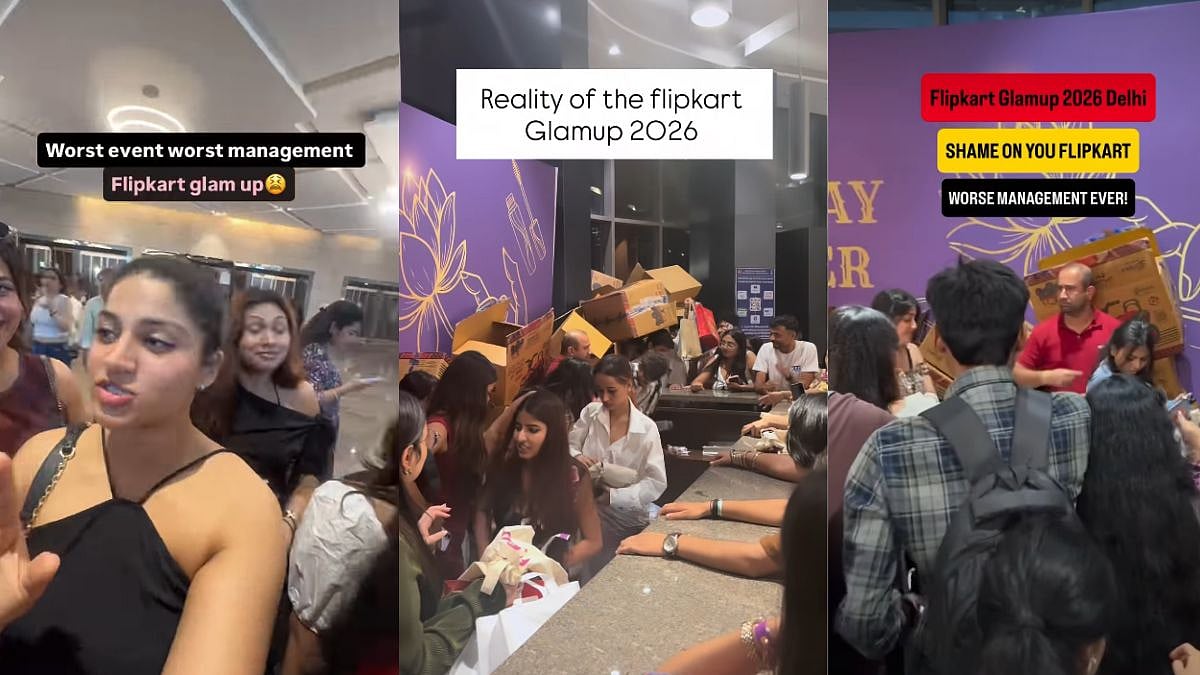
Instead, the event has become synonymous with viral videos showing creators scrambling for gift hampers, arguing over merchandise and alleging that promised products ran out before distribution could be completed. What should have been a carefully curated celebration of India’s creator ecosystem quickly spiralled into a social media controversy, drawing criticism from creators, consumers and industry observers alike.
The backlash was not merely about the value of the hampers, reportedly worth around ₹6,000. Rather, it was about expectations. Several attendees claimed they had agreed to participate in barter collaborations, creating content and promoting the event with the understanding that they would receive gift hampers in return. When some creators alleged that the promised merchandise was unavailable by the time they reached distribution counters, frustration quickly spilled online.
To be fair, not every attendee had a negative experience. Many creators reportedly received their hampers without issue and shared positive feedback from the event. Yet for a gathering of this scale, perception often matters as much as execution. The images that ultimately dominated social media were not of beauty brands, product launches or creator networking sessions. They were of confusion, crowding and disappointment.
That raises uncomfortable questions for Flipkart. How does an event designed to showcase the strength of its creator ecosystem end up generating headlines for all the wrong reasons? Was the controversy simply the result of logistical miscalculations, or did it reveal deeper flaws in how large-scale creator events are being planned and executed?
Whatever the answer, a platform that reaches millions of Indian consumers now finds itself defending an event that appears to have undermined the very image it was meant to promote.

Why Flipkart Needed Glamp Up Fest To Succeed
Viewed in isolation, the Glamp Up Fest controversy may appear to be little more than an event management failure. Yet the stakes for Flipkart were significantly higher. The event was not merely a gathering of influencers; it was part of a broader effort by the ecommerce giant to strengthen its position in one of India’s fastest-growing consumer categories.
Over the past few years, beauty and personal care has emerged as a fiercely contested battleground. Specialist platforms such as Nykaa have built dedicated beauty ecosystems, while marketplaces including Amazon and Flipkart have been investing aggressively to capture a larger share of consumer spending. Flipkart itself recently highlighted the rapid growth of its beauty business, reporting a 50% year-on-year increase in the category and noting that Gen Z consumers now account for a significant portion of purchases.
That helps explain the scale of Glamp Up Fest. Bringing together thousands of creators and more than a hundred beauty brands was not simply about generating social media buzz. It was an attempt to position Flipkart as a serious destination for beauty products, connect brands with creators and tap into the growing influence of digital personalities on purchasing decisions.
The strategy itself is hardly surprising. Influencer marketing has become one of the most important customer acquisition tools for consumer brands worldwide. A recommendation from a creator often carries more weight with younger audiences than a traditional advertisement, particularly in categories such as beauty, skincare and fashion. For platforms competing for attention in an increasingly crowded market, creators have become an extension of the marketing department.
That is precisely why the controversy has proven so damaging. Instead of reinforcing Flipkart’s image as a platform at the centre of India’s creator economy, the event generated questions about planning, communication and execution. The conversation shifted away from beauty products, brands and partnerships towards viral clips of attendees competing for gift hampers.
For a company seeking to showcase the strength of its creator ecosystem, that represents more than a temporary public relations setback. It risks undermining the credibility of the very marketing model that events like Glamp Up Fest are designed to promote.
If Creators Are Partners, Why Were They Treated Like A Crowd?
Large-scale creator events are hardly a new phenomenon. From VidCon in the United States and BeautyCon in Los Angeles to creator summits organised by TikTok, Amazon and major beauty brands, thousands of influencers routinely attend events designed to connect creators with brands, agencies and platforms.
What separates successful creator events from viral embarrassments, however, is often not the guest list or the venue. It is logistics.
Globally, creator-focused events typically rely on systems designed to avoid precisely the kind of scenes that emerged from Glamp Up Fest. Gift kits are often pre-assigned, QR codes are used for collection, access is staggered across time slots and inventory is tracked in real time. Many events separate networking activities from merchandise distribution altogether, ensuring that creators leave with what they were promised without competing against one another.
The reason is simple. Creators are not merely attendees; they are the product. Their content, reach and engagement are what brands are ultimately paying for. A creator event succeeds when participants feel valued as partners rather than treated as members of a crowd.
That is why the Glamp Up Fest controversy struck such a nerve. The criticism was not solely about whether some attendees received hampers while others did not. It was about the optics of the situation. Videos showing creators rushing towards stacks of merchandise transformed what was meant to be a premium brand experience into something many online observers compared to a clearance sale.
If the allegations made by attendees are accurate, the more troubling question is not whether demand exceeded supply. It is why a company with Flipkart’s resources and experience appeared unprepared for a scenario that should have been entirely predictable.
After all, if thousands of creators were invited with the expectation of receiving merchandise, then the distribution of that merchandise should have been among the easiest aspects of the event to plan.
Instead, the controversy left many wondering whether scale had become the primary objective. The bigger the attendance figures looked on paper, the greater the marketing impact. But when execution fails to keep pace with ambition, impressive numbers can quickly become liabilities.
In the end, the viral videos may have exposed a fundamental contradiction. Events like Glamp Up Fest are designed to make creators feel valued and influential. Yet the scenes that emerged suggested many attendees felt neither.
Everyone Is A Creator. Very Few Are Getting Paid.
The most uncomfortable question raised by the Glamp Up Fest controversy has little to do with event management. It is this: why were thousands of aspiring creators willing to attend, create content and promote brands in exchange for gift hampers in the first place?
The answer lies in the dramatic transformation of the creator economy over the past decade. Social media has lowered the barriers to entry to almost zero. A smartphone, an internet connection and a few thousand followers are often enough for someone to call themselves a creator. As platforms such as Instagram, YouTube and TikTok-inspired short-video formats exploded, so too did the number of people hoping to turn content creation into a career.
The result is an ecosystem that has become increasingly crowded. Every year, more creators enter the market than there are meaningful sponsorship opportunities available. While a small group of top influencers continue to command lucrative brand deals, millions of nano and micro creators are competing for visibility, engagement and collaborations in an environment where attention is finite.
That reality was reflected in many of the reactions that surfaced online following the Glamp Up Fest controversy. Several commenters questioned why creators were willing to fight over products that many consumers could purchase outright. Others argued that the incident illustrated a growing willingness among aspiring influencers to accept barter arrangements and unpaid collaborations simply to gain exposure or establish relationships with brands.
Harsh as some of those criticisms may sound, they point towards a larger shift within the industry. As the number of creators grows, bargaining power increasingly shifts towards brands and platforms. For every creator who refuses an unpaid collaboration, there are often dozens willing to accept one. In such an environment, compensation can gradually move from cash payments to free products, event invitations and promises of future opportunities.
This is not to suggest that barter collaborations are inherently exploitative. For smaller creators, product-based partnerships can provide a pathway into the industry and help build a portfolio of work. The problem arises when barter becomes the norm rather than the exception, particularly when creators are expected to invest time, effort and audience trust without receiving meaningful financial compensation in return.
Seen through that lens, the Glamp Up Fest controversy begins to look like a reflection of broader market dynamics. The scramble for hampers was not merely about cosmetics or skincare products. It was a visible manifestation of an increasingly crowded creator economy where opportunities are scarce, competition is intense and many participants are still searching for a sustainable way to turn influence into income.
The Rise Of The Barter Economy And The Devaluation Of Influence
Not too long ago, influencers occupied a position of considerable leverage. Brands actively sought them out, negotiated sponsorship deals and paid significant sums for access to their audiences. The logic was straightforward: creators who had managed to build trust and engagement with their followers possessed something valuable that traditional advertising often struggled to deliver.
Today, that equation appears to be changing.
As the creator economy has expanded, influence itself has become increasingly abundant. Every niche, from beauty and fitness to finance and food, is crowded with creators competing for the same audience attention and the same pool of marketing budgets. While brands have gained access to a larger and more diverse creator base, creators have found themselves competing against an ever-growing number of peers.
The consequences are becoming increasingly visible. Many brands are shifting portions of their influencer budgets away from a handful of large creators and towards hundreds of smaller accounts. Others are relying more heavily on barter collaborations, gifting campaigns and event-based partnerships. From a business perspective, the approach makes sense. Why pay one creator a substantial fee when dozens of smaller creators may be willing to generate content in exchange for products alone?
The result is a gradual erosion of creator bargaining power. Exposure has increasingly become a form of compensation. Event invitations are marketed as opportunities. Product samples are presented as rewards. The promise of future collaborations often replaces immediate payment. For creators trying to establish themselves, rejecting such arrangements can feel difficult, particularly when competitors appear willing to accept them.
This dynamic was impossible to ignore in the aftermath of Glamp Up Fest. Much of the public reaction focused not on the value of the products themselves but on what the incident revealed about the industry’s changing economics. Commenters questioned how an ecosystem built around influence and aspiration had reached a point where creators were competing for sample-sized products and gift hampers.
The uncomfortable reality is that influence becomes less valuable when it is no longer scarce. If thousands of creators are capable of producing similar content, brands gain more negotiating power while individual creators become increasingly replaceable. The creator economy has not stopped growing, but growth alone does not guarantee prosperity for those participating in it.
That may be the deeper lesson behind the controversy.
The videos from Glamp Up Fest were not simply embarrassing because they showed people fighting over merchandise. They were unsettling because they exposed a widening gap between the glamorous image often associated with content creation and the economic realities faced by many aspiring creators.
Behind the carefully curated posts, brand tags and follower counts lies a marketplace that has become far more competitive, far more crowded and, for many participants, far less rewarding than it once appeared.
The Hamper Fight Was Never Really About The Hampers
At first glance, the scenes from Glamp Up Fest appear difficult to comprehend. Why would people argue, push or compete over products that, in many cases, were worth far less than the effort required to create content around them? Why would a sample-sized face wash or a beauty hamper become the centre of such intense frustration?
The answer may have less to do with the products themselves and more to do with what those products represented.
Human behaviour has long been shaped by scarcity. The moment something appears limited, exclusive or difficult to obtain, its perceived value often increases. In the case of creator events, gift hampers are rarely viewed as mere merchandise. They become symbols of access, recognition and belonging. Receiving one is validation that a creator has been noticed by a brand, included in an ecosystem and deemed worthy of participation.
That is what made the Glamp Up Fest controversy resonate far beyond the creator community. The viral videos appeared to strip away the carefully curated image of influencer culture and reveal something much more human underneath: the desire for recognition. What audiences witnessed was not simply a scramble for cosmetics or skincare products. They were watching thousands of individuals competing in an increasingly crowded economy where visibility itself has become a valuable currency.
This may also explain why the public reaction was so unusually harsh. Many viewers were not merely criticising Flipkart’s execution. They were reacting to what the incident seemed to symbolise. For years, influencer culture has been marketed as aspirational, glamorous and entrepreneurial. The videos presented a very different image, one defined by scarcity, competition and frustration.
Ironically, the products at the centre of the controversy were almost irrelevant. Had the hampers contained different brands or carried a higher price tag, the conversation would likely have remained the same. The real issue was never the contents of the bag. It was the perception that thousands of creators were competing for a form of validation that should arguably have been accompanied by something more substantial than free merchandise.
That is what transformed a logistical failure into a cultural moment. The controversy forced people to confront a question that rarely receives attention amid discussions about follower counts and viral content: in a creator economy built on visibility and recognition, what happens when too many people are chasing too little of both?
The answer may be uncomfortable. As more individuals enter the industry and competition intensifies, the value of being noticed inevitably rises. The Glamp Up Fest videos did not create that reality. They simply made it impossible to ignore.
Is India’s Creator Economy Approaching A Tipping Point?
It would be unfair to draw sweeping conclusions about an entire industry from a single event. India’s creator economy remains one of the fastest-growing digital sectors in the country, attracting brand spending, venture capital and millions of aspiring participants. New creators continue to emerge every day, while businesses increasingly rely on influencer-led marketing to reach younger consumers.
Yet the Glamp Up Fest controversy has shown tensions that have been building beneath the surface for years.
The first is saturation. As barriers to entry have fallen, the number of creators has grown exponentially. While this has democratised content creation, it has also intensified competition for brand partnerships, audience attention and monetisation opportunities. Simply creating content is no longer enough. Standing out has become harder than ever.
The second is economics. Influencer marketing continues to grow as an industry, but that growth is not necessarily being distributed evenly. A relatively small group of established creators command the bulk of brand budgets, while thousands of smaller creators compete for a shrinking share of opportunities. For many, barter collaborations, gifting campaigns and unpaid partnerships have become stepping stones rather than exceptions.
The third is technology. Artificial intelligence is making content creation faster, cheaper and more accessible. While AI is unlikely to replace human creators entirely, it is adding yet another layer of competition to an already crowded ecosystem. As the volume of content continues to rise, the challenge of capturing audience attention becomes even greater.
None of this means the creator economy is collapsing. Far from it. Brands will continue to invest in influencer marketing because creators remain one of the most effective ways to engage consumers in an increasingly fragmented digital space.
What may be changing, however, is the nature of success within that ecosystem. The era when almost anyone could build an audience and quickly attract lucrative collaborations may be giving way to a far more competitive environment where only those with genuine influence, differentiated content and strong audience relationships are able to thrive.
That is what makes the Flipkart controversy significant. The incident was undoubtedly a public relations setback for one of India’s largest ecommerce companies and raised legitimate questions about event planning and creator engagement. But it also revealed something larger. Behind the filters, sponsorships and aspirational narratives lies an industry grappling with the consequences of its own success.
The hamper fight was never really about free products. It was about scarcity in a market overflowing with participants. It was about the widening gap between the promise of the creator economy and the realities experienced by many trying to build a place within it. Most of all, it was a reminder that influence, like any other commodity, loses value when supply begins to outpace demand.
The viral videos from Glamp Up Fest will eventually disappear from timelines and social media feeds. The questions they raised, however, are unlikely to fade so quickly.