When The Guardian Becomes The Predator: Police Brutality, Custodial Torture, And Public Punishment In India
Mob Justice in Khaki: Why Public Policing and Street Beatings Are a Threat to Indian Democracy?

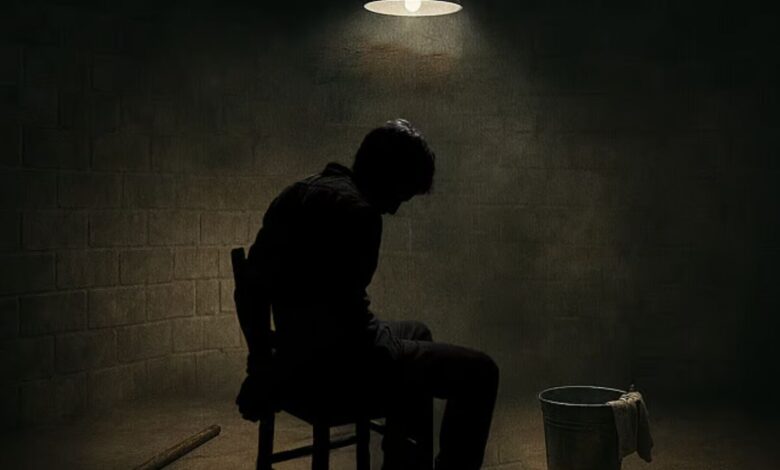
The Viral Video That Sparked A Nation
In June 2026, a short video clip began circulating across Indian social media platforms with alarming speed. Shot on a mobile phone somewhere on the sun-baked streets of Visakhapatnam, Andhra Pradesh, it showed three young men, barefoot, hunched over, visibly distressed, being caned with police lathis in full public view. Officers in uniform are seen striking the accused repeatedly as onlookers gather on the roadside, some recording on their phones, some watching with apparent approval. The accused, reportedly picked up for harassing college girls, were made to sit on the pavement and endure the punishment in a scene that looked less like policing and more like a medieval village tribunal.
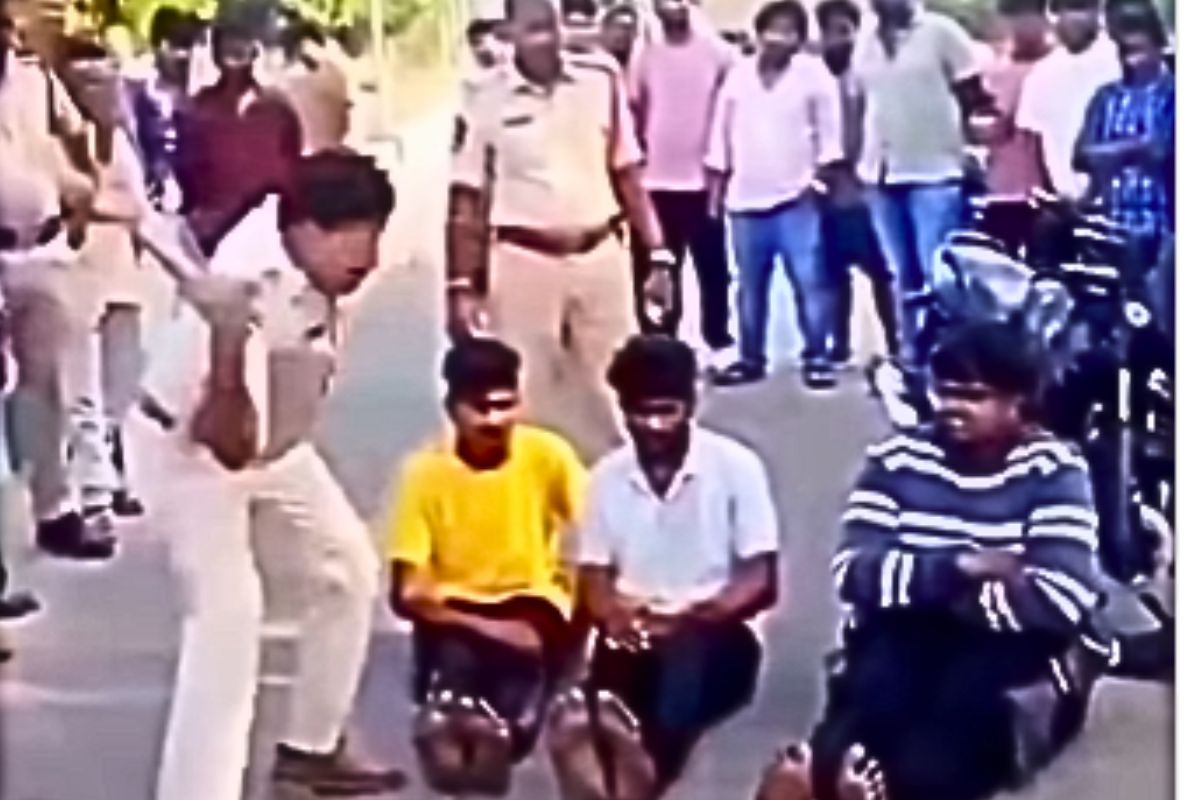
The clip divided public opinion instantly. A segment of social media users praised the police, calling it a necessary lesson. “This is what these boys deserve,” read one viral comment. “Finally, police are doing their job,” said another. But civil liberties activists, lawyers, and constitutional scholars raised a sharp alarm. What was captured on video, they said, was not justice, but it was a crime.
Because no matter how reprehensible the alleged offence, no police officer in India has the legal authority to beat a person as a punishment. Not on the street. Not in a station. Not anywhere. The Constitution of India guarantees every citizen, including the accused, the right to dignity, the presumption of innocence, and protection from cruel or degrading treatment. When officers take that right away with a lathi and a crowd watching, the rule of law does not triumph. It collapses.
The Visakhapatnam incident is not isolated. It sits in a long, dark, and deeply troubling continuum of police excess in India; a pattern so entrenched that the National Human Rights Commission reported 2,739 custodial deaths in 2024 alone. That is more than seven people dying every single day while in police or judicial custody. These are not statistics. They are fathers, sons, shopkeepers, labourers, students. And their stories demand to be told.
The Legal Framework: What The Law Actually Says
India’s legal framework is unambiguous. Article 21 of the Constitution guarantees every person the right to life and personal liberty. The Supreme Court of India, in the landmark D.K. Basu v. State of West Bengal (1997), laid down binding guidelines that every police officer must follow upon arrest, including informing the arrestee of their rights, producing them before a magistrate within 24 hours, maintaining an arrest memo, and allowing access to a lawyer.
The court in that case declared clearly: “Custodial violence, including torture and death in the lock-up, strikes a blow at the rule of law.” It is not merely a human rights issue, but it is a constitutional violation. Every act of custodial torture is, technically, a violation of Article 21.
More recently, the Bharatiya Nyaya Sanhita (BNS) 2023, which replaced the Indian Penal Code, includes Section 120 which explicitly criminalises voluntarily causing hurt or grievous hurt to extract a confession or information. The Bharatiya Nagarik Suraksha Sanhita (BNSS) 2023 mandates documented arrest procedures. Despite these provisions, enforcement remains woefully inadequate.
Critically, India signed the United Nations Convention Against Torture in 1997 but has never ratified it. This means India has accepted the principle in theory while refusing to be legally bound by it in practice — a contradiction that 31 countries raised at India’s Universal Periodic Review at the UN Human Rights Council in 2023.
“Between 2017 and 2022, out of 345 judicial inquiries into custodial deaths, there were 123 arrests and 79 chargesheets, but zero convictions.” That figure says everything. The system protects itself. And in that impunity, the violence continues.
These numbers paint a devastating portrait of institutional failure. Uttar Pradesh leads the country in custodial deaths with 2,630 recorded between 2016 and 2022. Tamil Nadu, despite being a relatively developed state, reported 490 custodial deaths in the southern region during the same period. Andhra Pradesh alone registered between 48 and 50 custodial deaths per year in 2020-21 and 2021-22.
The Global Torture Index 2025 has classified India as facing a high risk of torture and ill-treatment, citing severe beatings, forced confessions, and extrajudicial killings, particularly targeting marginalised communities such as Dalits, Adivasis, Muslims, LGBTQ+ individuals, and migrant labourers. The report further notes that police officials labelled as ‘encounter specialists’ receive promotions for conducting extrajudicial killings, revealing not just failure of oversight but institutional endorsement of murder.
As of March 15, 2026, the NHRC had already recorded 170 new custodial death cases in just the first two and a half months of the year. The numbers are not declining. They are rising.
Ten Cases That Changed, Or Should Have Changed, India
Case 1: P. Jayaraj and J. Bennix — Sathankulam, Tamil Nadu (June 2020)
On 19 June 2020, P. Jayaraj (59) and his son J. Bennix (31) were picked up by police at Sathankulam in Thoothukudi district on the pretext of violating COVID-19 lockdown rules by allegedly keeping their mobile accessories shop open past curfew hours. The CBI’s subsequent investigation found they had not actually violated any rule.
What followed was a night of horror. Both men were sexually assaulted and subjected to prolonged, savage beatings inside the Sathankulam police station. They were allegedly forced to clean their own blood. A sanitation worker was later called to clean the station floor to destroy evidence. Bennix died on June 22; Jayaraj died on June 23.
The CBI chargesheeted nine policemen, an inspector, three sub-inspectors, two head constables, and four constables for murder, criminal conspiracy, wrongful confinement, and destruction of evidence. In April 2026, in a rare and landmark verdict, the First Additional District and Sessions Court in Madurai sentenced all nine convicts to death. Judge G. Muthukumaran found the accused had acted in a planned, coordinated manner to torture and kill the two men in cold blood.
“The violence was deliberately meant to ‘teach them a lesson.’ The accused forced the victims to clean their own blood before calling a sanitation worker to destroy evidence.”- CBI Chargesheet
The Sathankulam case became a national watershed, a reminder that custodial murder can happen to ordinary, law-abiding citizens for the pettiest of reasons, and that accountability, even when it comes, takes years.
Case 2: The Disha Encounter — Hyderabad, Telangana (December 2019)
On 27 November 2019, a 26-year-old veterinarian was gang-raped and murdered on the outskirts of Hyderabad. The nation erupted in outrage. Four accused, Mohammad Arif, Jollu Shiva, Jollu Naveen, and Chintakunta Chennakeshavulu, were arrested within days based on CCTV footage.
On 6 December 2019, barely a week after their arrest, all four were shot dead by Cyberabad police in what was described as a confrontation during a late-night site visit. The police claimed the accused had snatched firearms and tried to escape. The public celebrated. Politicians praised the police. Legislators in Parliament stood and clapped.
But the Supreme Court was not satisfied. It appointed a three-member commission headed by former Supreme Court Justice V.S. Sirpurkar to probe the killings. The commission’s report, submitted in 2022 and made public in 2023, concluded that the encounter was staged. The accused were deliberately fired upon with intent to kill. Police records were falsified. Attempts were made to shield the officers involved. The commission recommended murder charges against 10 policemen.
The Disha encounter crystallised a profound and dangerous truth about Indian society: when a crime is horrific enough, the public not only tolerates extrajudicial killing, it demands it. And police oblige. The consequences for the rule of law are catastrophic. Now, this is a case worth of debate!
Case 3: Mahendra Singh Rathod — Bengaluru, Karnataka (2016)
Mahendra Singh Rathod, a domestic helper in Bengaluru, was detained by police in 2016 on suspicion of theft. He never walked out of that police station alive. Rathod was allegedly beaten so severely during interrogation that he died of his injuries. Years later, four policemen were convicted for his death and sentenced to seven years in prison, fined Rs 50,000 each, and ordered to pay Rs 2 lakh in compensation to his family. While this represented a rare instance of accountability, it also underscored the scale of the problem, Karnataka alone reported five custodial deaths in 2022-23 according to data provided to the Lok Sabha.
Case 4: Daud Seikh — West Bengal (April 2024)
On 7 April 2024, 27-year-old Daud Seikh, a day labourer, a father of two young children, and a resident of West Bengal was apprehended by the Samshergunj Police. According to reports, police attempted to recruit him as an informant. He refused. He was then allegedly subjected to severe torture and verbal abuse while in custody.
Seikh died while in police detention. The World Organisation Against Torture (OMCT) and its partner MASUM called for immediate, transparent investigation into his death. No comprehensive accountability followed. His case was one of hundreds that year that barely made national headlines, swallowed by the sheer volume of similar deaths.
Case 5: Professor G.N. Saibaba — Maharashtra (2014–2024)
Professor G.N. Saibaba of Delhi University was arrested in 2014 on charges under the draconian Unlawful Activities (Prevention) Act, accused of having alleged Maoist links. He was 90% physically disabled, confined to a wheelchair, suffering from multiple serious ailments.
Despite his severe disability, Saibaba was held in a high-security prison in Nagpur for years under conditions that international human rights groups described as tantamount to torture. He was denied adequate medical care, kept in solitary confinement, and repeatedly denied bail. He was eventually acquitted by the Bombay High Court in 2022 and then re-arrested by the state in a brazen move that drew widespread condemnation. Saibaba died in October 2024 — his health having been irreparably destroyed by a decade of incarceration.
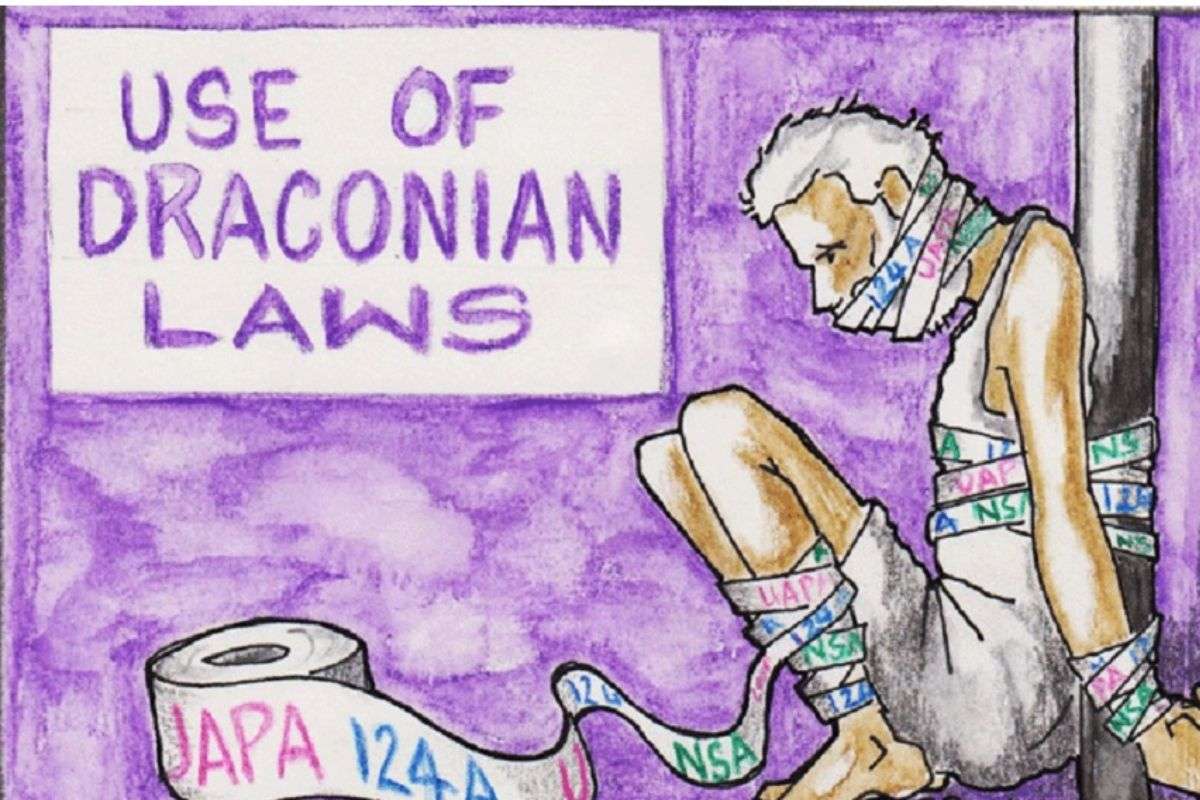
His case exemplifies how custodial violence is not always overt beatings. Denial of medical care, prolonged solitary confinement, and the deliberate destruction of a person’s health through incarceration are all forms of custodial torture — less visible, harder to photograph, but equally lethal.
Case 6: Siddique Kappan — Uttar Pradesh (2020–2022)
Journalist Siddique Kappan was arrested in October 2020 while travelling to report on the Hathras gang rape case in Uttar Pradesh. He was booked under UAPA and multiple other sections, and spent two years in Mathura jail — primarily, critics argued, for doing his job as a journalist.
During his incarceration, Kappan was reportedly denied access to legal counsel for extended periods and held in harsh conditions. His case was flagged by the Global Torture Index 2025 as a high-profile example of preventive detention being weaponised against civil society voices. He was eventually granted bail by the Supreme Court in 2022, but the damage to his health and career was done.
Case 7: Unnao Rape Survivor’s Father — Uttar Pradesh (2019)
In one of India’s most disturbing illustrations of custodial death being used as retaliation, the father of the Unnao rape survivor was arrested by Uttar Pradesh police on what was widely seen as a false case of illegal arms possession. He died in judicial custody in April 2019, just days after his arrest. His daughter had accused a sitting BJP MLA, Kuldeep Sengar, of raping her.
The Supreme Court, horrified by the sequence of events, transferred the case to Delhi, ordered a CBI probe, and demanded accountability. Sengar was eventually convicted of rape and the murder of the survivor’s father. But the case exposed how custodial mechanisms can be weaponised by the politically powerful to silence victims and their families.
Case 8: Selvakumar, Punithan and Aakash — Tamil Nadu (2025–2026)
The Wire’s investigative report from 2026 highlighted three names, Selvakumar, Punithan, and Aakash, as the most recent custodial death victims in Tamil Nadu, their cases forming part of the 170 custodial deaths recorded by the NHRC in just the first two and a half months of 2026. Each died while in police or remand custody. In each case, visible injuries on their bodies upon remand were either ignored by judicial magistrates or explained away by police.
“The deaths of Selvakumar, Punithan and Aakash are not merely statistics; they are a reminder that the fight against custodial torture remains urgent and unfinished.” Their deaths illustrate the deeply systemic nature of the problem — it is not the work of a few rogue officers. It is the product of a culture of impunity that pervades entire police stations, that is tolerated by magistrates who look away, and that is enabled by a political establishment that rarely punishes its own.
Case 9: Vikas Dubey Encounter — Uttar Pradesh (July 2020)
Gangster Vikas Dubey, who was wanted in connection with the killing of eight police officers in Kanpur, was shot dead by Uttar Pradesh police in July 2020 during what officials described as an escape attempt after a vehicle overturn. The circumstances were immediately questioned — police vehicles rarely overturn in perfect sequence, and the accused is rarely shot in the same predictable manner each time. The Supreme Court ordered a judicial inquiry. While Dubey was a documented criminal and his victims were police officers, the system’s answer to crime cannot be extrajudicial execution, however convenient, and however popular, such an outcome might be.
Case 10: The Jamia Millia Islamiana and JNU Police Brutality (December 2019 – January 2020)
In December 2019, Delhi Police entered the Jamia Millia Islamia library and beat students who were reading and sheltering inside, in connection with protests against the Citizenship Amendment Act. Videos showed police assaulting students in library aisles, destroying property, and dragging individuals out. In January 2020, masked men entered the Jawaharlal Nehru University campus and attacked students and faculty with rods and sticks while police reportedly stood at the gates doing nothing.
These incidents shocked even those who would normally defend police action. Academic campuses are constitutionally protected spaces. The spectacle of uniformed officers beating students in a library — and of universities left vulnerable by state inaction — represented a different but equally alarming form of police brutality: the use of force, or deliberate absence of force, as a political tool.
What Courts Have Said: Condemnation In Strong Words
India’s higher judiciary has, on multiple occasions, condemned police brutality and custodial torture in terms that leave no room for ambiguity. The problem is not a lack of judicial clarity. The problem is enforcement.
Why Public Policing And Street Punishment Must Stop?
The Visakhapatnam lathi beating, celebrated in some quarters as a “warning” to harassers, is symptomatic of a deeply dangerous social tendency — the desire for instant, visible, theatrical punishment. This desire is understandable in a society frustrated by slow courts and a perception of leniency. But it is also profoundly corrosive to the foundations of democracy.
When police beat suspects in public, several things happen simultaneously. First, the presumption of innocence, a cornerstone of criminal law, is destroyed. The accused has been punished before any trial, before any evidence has been tested, before any defence has been heard. Second, it normalises violence as a tool of social control, making the public increasingly comfortable with extrajudicial punishment. Third, it destroys any possibility of rehabilitation — replacing a system that asks “how do we prevent this again?” with one that asks only “how much can we hurt this person right now?”
There is also the question of error. What if the accused are innocent? What if the identification was mistaken? Public beatings cannot be undone. The courts of law exist precisely because human certainty about guilt, without due process, is dangerously unreliable.
Moreover, public policing and street punishment have historically been applied disproportionately to the poor, the lower castes, religious minorities, and the powerless. The young men beaten in Visakhapatnam were barefoot — a detail that speaks volumes about who bears the brunt of these spectacles.
Conclusion: Justice In A Uniform Is Still Justice
The three young men beaten on the roadside in Visakhapatnam may well be guilty of harassment. The behaviour they are alleged to have engaged in is reprehensible and deserves serious legal consequence. But the officer who strikes a barefoot accused with a lathi in front of a watching crowd is not delivering justice. They are performing power. And that performance, applauded, shared, celebrated, chips away at the very idea that India is a nation governed by laws rather than by the whims of those who carry weapons.
The thousands who die in custody every year — in UP, in Tamil Nadu, in West Bengal, in Andhra Pradesh and across this vast, complex country — are not martyrs to some abstract principle. They are real people who entered a police station or jail and never returned. They are Jayaraj and Bennix, who wanted nothing more than to run their mobile shop. They are Daud Seikh, a day labourer who simply refused to become a police informant. They are fathers and sons and brothers who trusted a system that failed them catastrophically.
A democracy that permits its police to torture, to execute, and to punish in public is a democracy in name only. India has the laws. India has the constitutional framework. India even has, as we have seen, judges willing to deliver historic verdicts when the evidence compels them to.

What India needs now is the political will, the institutional courage, and the civic consciousness to say clearly and without equivocation: a person in custody is a person with rights. And a police officer who violates those rights is not a hero. They are a criminal in uniform.
The crowd that applauded in Visakhapatnam should be careful what it cheers for. Because when the state is permitted to punish without trial, none of us are safe.