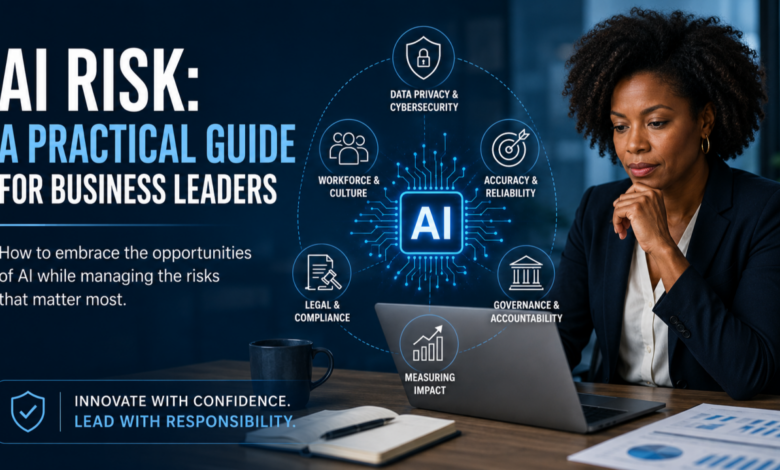
Artificial intelligence has become an essential tool for businesses of every size. From streamlining operations to enhancing digital experiences, including platforms that feature GameZone Jili games, AI continues to shape how organizations operate. However, adopting AI without proper governance can expose businesses to operational, legal, financial, and reputational risks.
AI governance refers to the framework of policies, processes, and responsibilities that ensure AI systems are developed, deployed, and used responsibly. It helps organizations balance innovation with risk management while promoting transparency, compliance, and ethical decision-making. Without these safeguards, businesses may unintentionally create problems that outweigh the benefits of AI adoption.
Poor Decision-Making from Unverified AI Outputs
AI systems are highly effective, but they do not guarantee accuracy in every situation. Large language models and similar tools may generate incorrect information, outdated advice, or false facts that seem plausible and trustworthy. If employees act based solely on AI-generated content, their decisions may lead to poor outcomes.
For instance, a marketing team can use AI to provide false information in its publications, or a finance team can create plans based on inaccurate calculations. Such mistakes can result in financial losses, loss of credibility, or business inefficiency.
Companies should implement a review process that requires human verification for every AI-generated information before its utilization in vital processes.
Data Privacy and Security Risks
There are plenty of apps of AI which needs data from users so that useful results can be obtained. With proper governance in place, employees may unintentionally reveal some sensitive information of the company, customers, financial records or intellectual property to the AI systems.
Such situations can cause some dreadful privacy issues and also violate the data governance regulations or contracts. While the AI companies have adequate security practices, businesses are still liable for protecting sensitive data.
A robust AI governance policy needs to explain what data might and might not be used by the employees.
Compliance and Regulatory Challenges
The governments around the world are making new regulations focused on the responsible application of artificial intelligence. In general terms, these regulations target aspects such as accountability, fairness, privacy, and risk management.
Companies that do not implement frameworks of good governance are not likely to prove compliance with changing laws, which is especially critical in fields like insurance, healthcare, finance, and law, where AI-assisted decisions have a direct impact on people.
The documentation of AI usage, monitoring its application, and systematic checking of AI systems can assist companies in coping with their future legal obligations.
Bias and Ethical Concerns
AI systems build on already available data that may have historical biases. Without control of AI systems, there can be unintended implications in terms of producing unfair outcomes with hiring, lending, customer service, and recommendations.
For instance, an AI-based recruitment assistant programmed on biased historical information may favor some candidates over others. Even if the firm did not intend to discriminate against some people, the unintended results could be damaging for their reputation.
It is essential for organizations to undertake audits of AI systems on a regular basis regarding their fairness, accuracy, and consistency.
Reputational Damage
Trust is one of the most crucial assets of the company. Mistakes made by AI, wrong content, and unethical decisions can easily become public knowledge nowadays.
One event with wrong AI-sourced information or personal data mismanagement can harm the customers’ trust and tarnish the brand’s reputation. Recovering from reputational damage could take a lot of time and resources.
Well-developed governance minimizes these threats by ensuring that machines do not generate content without a proper human review of the output generated.
Lack of Accountability
One of the most common difficulties encountered by companies is identifying who is accountable for the outcomes of the AI decisions. In situations where governance structures are not adequately defined, accountability is lost whenever a problem arises.
Oh organization should have clear accountability for the implementation of AI. This means that each business should reveal who is responsible for selecting algorithms, authorizing their implementation, monitoring their efficiency, managing risks, and reacting to incidents.
Accountability provides an organization with better foundation for responsible adoption of AI.
Building an Effective AI Governance Framework
AI governance does not have to be overly complex. Even small and medium-sized businesses can establish practical safeguards that support responsible AI adoption.
Key elements include:
- Create clear policies for acceptable AI use.
- Define which business data can be used with AI tools.
- Require human review for important AI-generated decisions.
- Provide regular employee training on responsible AI practices.
- Monitor AI performance and update policies as technology evolves.
- Assign clear ownership for AI governance and risk management.
These measures help organizations maximize AI’s benefits while reducing unnecessary exposure to operational and regulatory risks.
Looking Ahead
Artificial intelligence will continue transforming the way businesses operate. Organizations that adopt AI responsibly are likely to gain lasting advantages through improved efficiency, better decision-making, and stronger customer experiences. However, successful AI adoption requires more than implementing powerful tools. It also requires governance that promotes accountability, transparency, and responsible use.
Rather than viewing governance as a barrier to innovation, businesses should see it as a foundation for sustainable growth. By establishing clear policies, protecting sensitive information, maintaining human oversight, and continuously evaluating AI systems, organizations can confidently embrace AI while minimizing the risks that accompany this rapidly evolving technology.